


More news on this day
With Europe’s peak holiday season under way and reports pointing to another summer of strained airports, understanding how to handle flight delays is becoming as essential as packing a passport. Fresh changes to European air passenger rules, together with persistently high disruption from strikes and staff shortages, mean that travelers who know their rights can move faster, spend less out of pocket, and salvage more of their holiday when flights run late.
Get the latest news straight to your inbox!
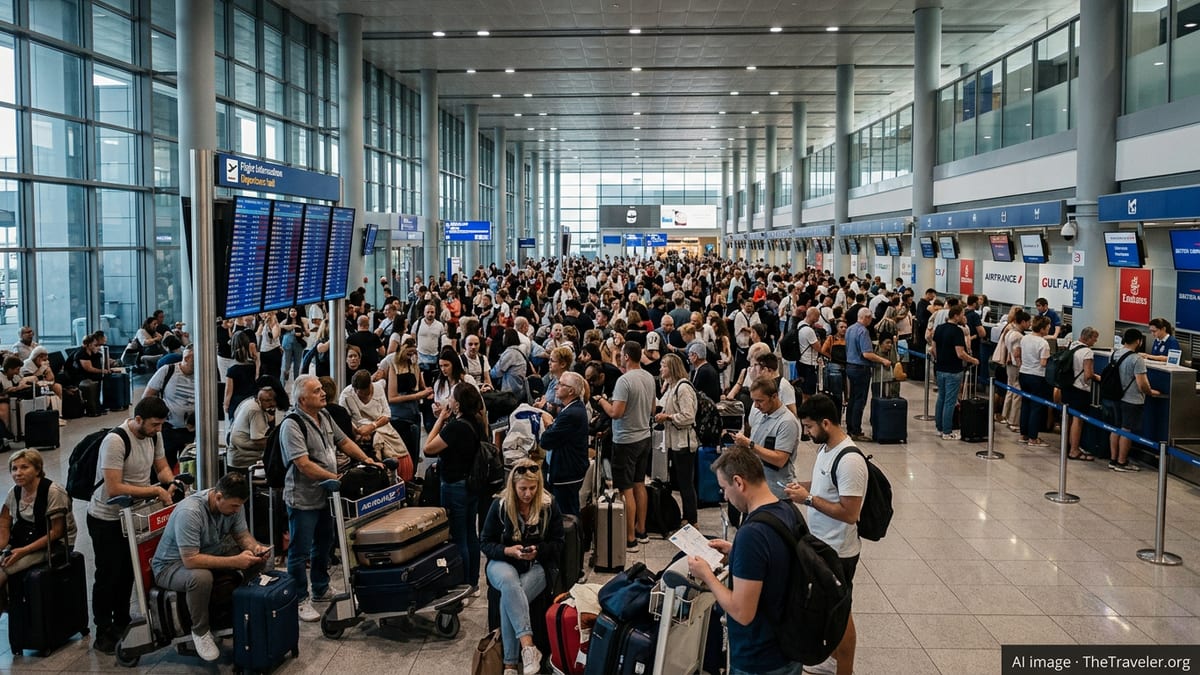
A New Summer of Disruption Across Europe
Recent summers in Europe have brought rolling disruption, with data from aviation authorities and travel industry monitoring showing elevated levels of delays and cancellations driven by high demand, staffing gaps and industrial action. Coverage across European outlets indicates that, despite investments in operations, pressure points remain at major hubs and in air traffic control networks during peak travel weekends.
Reports from 2025 and early 2026 highlight that strikes by air traffic controllers and airport staff, particularly in countries such as France, Italy, Spain and Portugal, have triggered repeated rounds of last-minute schedule changes. In some cases, hundreds of flights have been cancelled or heavily delayed across a single weekend, affecting hundreds of thousands of passengers during school holidays.
Industry analysis suggests that even when full-scale strikes are not in place, chronic staff shortages can slow ground handling, security and baggage operations, creating knock-on delays throughout the day. As planes and crews fall out of position, later departures and missed connections become more likely, especially on complex itineraries involving multiple European hubs.
For travelers planning trips in July and August, this pattern means that disruption is no longer an outlier but a recurring feature of high season. Against this backdrop, the practical question is shifting from whether a delay might occur to how prepared passengers are to navigate it when it does.
What EU Rules Actually Guarantee When Flights Run Late
Most flights in or out of Europe are covered by a common framework known widely as EU air passenger rights, currently based on Regulation 261/2004 and now the subject of an update agreed in June and July 2026 between EU institutions. Publicly available documents from the Council of the EU and the European Parliament indicate that lawmakers have chosen to retain the core principle that passengers are entitled to compensation when their flight arrives at its final destination more than three hours late, provided the delay is within the airline’s control.
Under the existing rules, the level of compensation depends largely on distance. For flights under roughly 1,500 kilometers, amounts start at 250 euros, rising for medium-haul and long-haul journeys. The latest political agreement in 2026 preserves these bands and the three-hour arrival-delay threshold for compensation, resisting earlier proposals that would have raised the delay limits and reduced payouts for many passengers.
The rules distinguish between compensation, which is a fixed cash payment for time lost, and what is often called “right to care.” Even when a delay is caused by extraordinary circumstances such as severe weather or airspace closures, airlines that fall under EU rules generally must provide meals, refreshments and hotel accommodation when passengers are stranded for long periods. Policy summaries published by the European Commission emphasize that this obligation to care is separate from the question of whether cash compensation is owed.
Another significant element of the 2026 reforms is a push for clearer communication. Council documents show that airlines will be required to inform passengers more systematically when a delay could become eligible for compensation, including electronic notifications after arrival when thresholds are met. For travelers on the ground, this should, in time, reduce the uncertainty around whether a disruption qualifies and how to start the claim process.
Immediate Steps to Take When Your European Flight Is Delayed
When a delay appears on the departure board in Europe, the first priority for travelers is to document everything. Screenshots of flight-status updates, emails and app notifications, along with photos of airport displays, can become important later when filing a claim. Consumer-rights organizations advising passengers across the continent consistently stress the value of keeping boarding passes and booking confirmations until a trip is fully completed and any disputes are settled.
At the airport, travelers are generally entitled to assistance once delays pass certain hourly thresholds, which vary by flight distance. In practice, this often means meal vouchers or reimbursement for reasonable food and non-alcoholic drinks. If an overnight stay becomes necessary, passengers covered by EU rules can typically expect the airline to arrange or reimburse hotel accommodation and transport between the airport and the hotel.
For those with connections inside Europe, the critical time marker is the delay at the final destination, not only at the first leg. If a missed connection causes arrival to be pushed back by three hours or more, and the disruption is not due to extraordinary circumstances, the itinerary may fall within the scope of compensation. Public guidance on the official “Your Europe” portal notes that this applies even where flights are operated by different carriers under a single booking, provided the journey originated in the EU or is flown by an EU airline.
Passengers facing lengthy delays should also check, while still at the airport, whether rerouting options are available at no extra cost. Under EU rules, airlines usually must offer a choice between a refund and alternative transport to the final destination at the earliest opportunity. In a busy summer, that might involve rebooking on a different airline or routing through a less congested hub, something that can materially change how much of a holiday is salvaged.
Claiming Compensation and Getting Your Money Back
Once home or safely at the hotel, travelers can begin the formal process of seeking compensation where eligible. Specialist claim sites and legal-tech firms that monitor case law around EU air passenger rights suggest that the majority of valid claims still hinge on a few core questions: whether the flight falls under the EU regime, whether the final delay exceeded three hours, whether the airline was responsible, and whether passengers were properly informed.
The revised framework agreed in June 2026 aims to streamline this process rather than overhaul it. According to published coverage summarizing the negotiations, airlines will be required to provide clearer, standardized information on how to submit claims, including digital channels. The agreement also reinforces the role of national enforcement bodies, which handle disputes that passengers cannot resolve directly with carriers.
Travelers should be aware that not every disruption gives rise to compensation, even if it is highly inconvenient. Events such as extreme weather, sudden airspace closures or certain security-related incidents are typically classified as extraordinary circumstances beyond the airline’s control. In those cases, passengers usually retain their right to care and rerouting but may not receive a cash payout for time lost.
For delays that do qualify, consumer advocates often advise dealing first with the airline directly using its official claim form. If responses are delayed or a claim is rejected despite appearing valid, passengers can escalate to national enforcement authorities or choose to use claim-handling services that work on a commission basis. While that route can reduce the final amount received, it may appeal to travelers who prefer not to manage a cross-border dispute during or after a holiday.
Planning Ahead to Reduce the Impact of Delays
While no amount of preparation can remove the risk of disruption from a European summer trip, planning choices can make delays less damaging. Travel-analysis pieces in European media have repeatedly highlighted the importance of avoiding tight connections, especially through major hubs at peak times of day. Booking slightly longer layovers, even at the cost of some convenience, can prevent a minor delay from cascading into a missed long-haul flight.
Travel insurance is another layer of protection that has gained prominence as delays have become more common. Policy comparisons in consumer reporting indicate that some products now specifically cover costs from extended delays, including extra hotel nights and missed prepaid activities. Travelers are advised to check carefully which types of disruption are covered, what documentation is required and whether compensation from airlines might reduce or interact with insurance payouts.
Passengers can also mitigate stress by keeping digital tools up to date before departure. Airline apps, independent flight-tracking services and airport notifications can provide early warning of disruption, sometimes before information reaches departure boards. Having airline and insurer contact details stored offline, along with a clear record of booking references, can speed up rebooking or claim processes when airport Wi-Fi is overloaded.
For visitors from outside the EU, including many transatlantic travelers, the key is to recognize that European passenger-rights rules may offer stronger protections than those at home. By understanding the current framework, tracking developments in the 2026 reforms and taking a proactive approach at the first sign of trouble, travelers can turn a confusing delay into a managed inconvenience rather than a ruined holiday.