


More news on this day
Air travelers across the United States faced another day of widespread disruption today as 86 flights were reported cancelled and 1,951 delayed, with airports in Massachusetts, Michigan and Florida among the hardest hit and services operated by Delta Air Lines, JetBlue and regional carrier Endeavor Air significantly affected.
Get the latest news straight to your inbox!
Nationwide Disruption Centered On Key Regional Hubs
The latest wave of flight disruption has built on several days of operational strain in the US aviation system, according to published coverage tracking cancellations and delays. Reports indicate that the newest figures, covering flights operating within, into or out of the country, reflect growing pressure on major coastal and Midwestern hubs that connect large volumes of domestic traffic.
Massachusetts, Michigan and Florida feature prominently in the data, with Boston Logan International Airport, Detroit Metropolitan Wayne County Airport and multiple Florida airports including Orlando and Miami appearing among locations experiencing schedule problems. These hubs funnel passengers onto both short-haul and long-haul routes, magnifying the impact when aircraft or crew are out of position.
Publicly available tracking platforms show that when disruptions cluster at a handful of major nodes, the knock-on effects can quickly cascade across airline networks. Late-arriving aircraft, crews reaching duty-time limits and constrained spare capacity combine to turn an isolated weather or technical issue into a broader operational challenge.
Industry analysts note that this latest day of 86 cancellations and nearly two thousand delays follows earlier episodes this week in which US airports recorded several hundred cancellations and many more delays, suggesting persistent strain rather than a one-off event.
Delta, JetBlue And Endeavor Networks Under Pressure
Among the carriers most visibly affected are Delta Air Lines, JetBlue Airways and Endeavor Air, a key regional operator flying under the Delta Connection brand. Public data and media reports indicate that these airlines have seen clusters of delayed and cancelled departures on routes linking the Northeast, Midwest and Southeast.
Delta, which operates major hubs in Atlanta, Detroit, Minneapolis and Boston, relies heavily on coordinated banked schedules and tight aircraft utilization. When irregular operations arise at one hub, connecting passengers may miss onward flights, forcing rebookings and increasing pressure on already busy later services.
JetBlue’s concentration at Boston, New York and South Florida leaves it particularly exposed when weather or congestion affects those regions. The carrier’s published customer guidance highlights how thunderstorms, air traffic control programs and ground delays can trigger extended waits, followed by a scramble to accommodate disrupted travelers on limited remaining seats.
Endeavor’s role as a regional feeder for Delta means its cancellations or lengthy delays can sever the link between smaller cities and long-haul flights departing from major hubs. According to recent operational summaries, disruptions on regional legs can quickly ripple outward, affecting passengers with international connections even if long-haul aircraft are ready to depart.
Weather, Congestion And Crew Limits Drive Ongoing Delays
While detailed cause data for today’s disruptions is still being compiled, recent patterns across the national airspace system point to a familiar mix of triggers. Thunderstorms in the Northeast and Southeast, low-visibility conditions and heat-related performance constraints have all prompted ground stops, reroutes and reduced arrival and departure rates at busy airports in recent days.
Air traffic management advisories published by federal aviation authorities show periodic flow restrictions around major hubs, where runway and airspace capacity must be reduced whenever convective weather or reduced visibility raises safety margins. These measures, while necessary, can quickly generate queues of departing and arriving aircraft.
Once initial delays take hold, airlines face additional challenges tied to crew duty-time limits and aircraft rotation plans. If a crew times out after extended waiting on the ground or in holding patterns, flights may be cancelled outright or significantly rescheduled. A late inbound aircraft can also delay its subsequent legs, propagating disruptions well beyond the original weather cell or airport bottleneck.
Industry data compiled in recent government air travel consumer reports underscores that a significant share of delays and cancellations now fall into categories linked to air carrier operations and national airspace constraints, with extreme weather acting as an important but not exclusive driver.
Impact On Travelers And What Passengers Can Expect
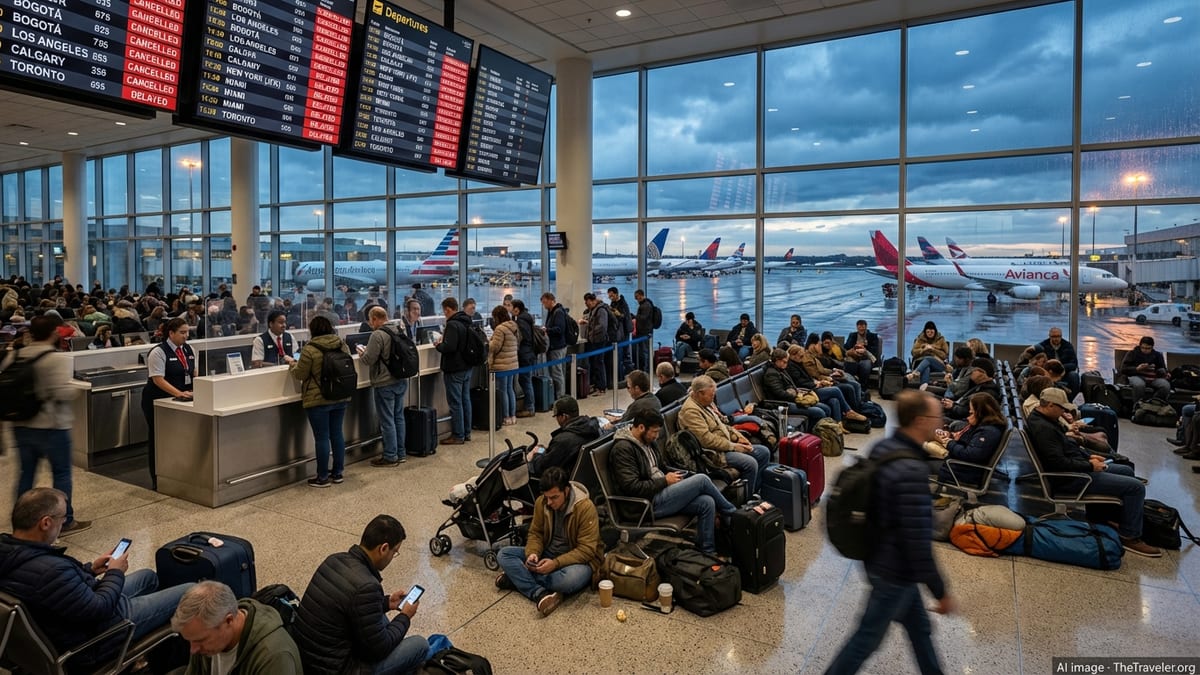
For passengers, the practical consequences of today’s disrupted operations include missed connections, extended waits in terminals and challenges securing alternative itineraries during peak summer travel. Travelers departing from or connecting through Massachusetts, Michigan and Florida report longer-than-expected queues at check-in and customer service counters as airlines work through backlogs.
Travel advisory services note that same-day rebooking options can be limited once large numbers of flights are delayed or cancelled, especially on popular leisure routes. Many aircraft are already operating near full capacity during the summer season, which limits airlines’ ability to absorb displaced passengers onto later flights.
Publicly available guidance from major carriers encourages travelers to monitor mobile apps and airport information screens closely, arrive early at the airport and be prepared for gate or schedule changes at short notice. Some consumer-rights resources also remind passengers that compensation or refunds may be available in specific circumstances, depending on whether the disruption falls within the airline’s control and on the carrier’s own written policies.
For those yet to travel, analysts suggest building additional buffer time into itineraries that rely on tight domestic connections, particularly when routing through airports that have experienced repeated disruptions this week. Flexible planning, early-morning departures where possible and awareness of alternative routings may help reduce the risk of severe knock-on disruption.
Ongoing Monitoring As Summer Travel Peaks
With US air travel demand running high and the peak summer season under way, operational resilience remains a central concern for airlines, airports and passengers. The clustering of cancellations and delays across multiple days this week indicates that even modest weather disturbances can quickly strain a tightly scheduled system.
Published data from aviation tracking and consumer-reporting platforms is being closely watched for signs of improvement or further deterioration across key hubs, including those in Massachusetts, Michigan and Florida. Any sustained pattern of disruption could prompt schedule adjustments, additional capacity on heavily affected routes or renewed debate over staffing levels and infrastructure investment.
For now, the figures reported today, with 86 cancellations and 1,951 delays nationwide, underline the extent to which even incremental shocks can ripple through interconnected airline networks. Travelers planning journeys in the coming days are likely to continue facing an elevated risk of last-minute changes as carriers work to stabilize operations.
As airlines review performance and adjust schedules, observers note that the combination of strong demand, congested airspace and increasingly volatile summer weather will keep punctuality under pressure across much of the United States, particularly at the coastal and Midwestern hubs currently at the center of the latest disruption.