


The launch of Royal Caribbean Group’s new premium credit card with Bank of America has many cruise fans wondering whether it finally makes sense to put a cruise line card in their wallet. On paper, the Royal Caribbean premium card promises accelerated MyCruise rewards, priority boarding, anniversary credits and even TSA PreCheck reimbursement. In practice, though, the value depends heavily on how often you sail, how you redeem your points and which cards you are comparing it to. This guide looks at how the new premium product fits into the broader Royal Caribbean credit card ecosystem and whether you should trust it as your primary tool for earning cruise rewards.
Get the latest updates straight to your inbox!
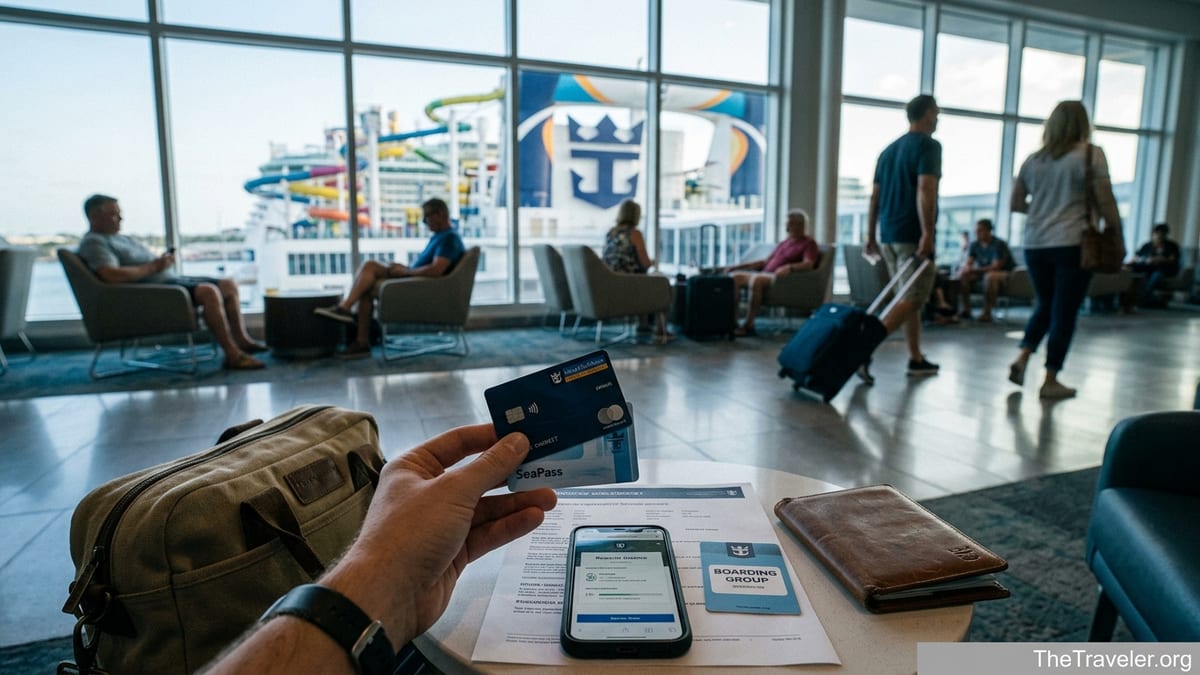
How the Royal Caribbean Premium Card Fits Into the New Royal ONE Program
Royal Caribbean Group and Bank of America recently rolled out a refreshed, tri-branded credit card lineup that ties together Royal Caribbean International, Celebrity Cruises and Silversea under a unified Royal ONE rewards framework. The premium card is the top tier in that lineup, positioned above the no-annual-fee version with richer earning rates and added travel perks. For loyal cruisers who split their vacations among these three brands, the idea is simple: concentrate your everyday spending on one card and redeem the resulting points toward future sailings, upgrades and onboard extras.
Like the legacy Royal Caribbean Visa Signature that many travelers still carry, the new products earn MyCruise points on every purchase. Where the premium card differs is in the multipliers and the breadth of bonus categories. Instead of only earning an elevated rate on direct cruise purchases, the premium version offers a higher multiplier when you book with Royal Caribbean Group brands and also awards extra points on broad travel and dining spend. That means paying for a Delta flight to Miami, a pre-cruise hotel in Fort Lauderdale or a seafood dinner in San Juan can all earn more points than everyday errands.
For a typical Caribbean cruise guest sailing a seven-night itinerary every year or two, the premium card’s structure is designed to make it plausible to cover meaningful onboard spending with rewards. If a couple charges their cruise fare, flights, pre-cruise hotel and most dining to the card throughout the year, their annual earnings can translate into a few hundred dollars of value when used strategically. The key question is whether that value is competitive with what they could have earned by putting the same expenses on a flexible travel rewards or cash back card instead.
Earning MyCruise Points: What You Actually Get
With both the new premium card and the still-available legacy Royal Caribbean Visa Signature, the basic earning idea is straightforward: pay with the card, receive MyCruise points. Historically, the legacy card offered 2 points per dollar on qualifying purchases with Royal Caribbean and Celebrity Cruises and 1 point per dollar on everything else. Independent analyses of the old redemption chart have generally pegged the value near 1 cent per point for typical onboard credit or cruise discount redemptions, with a chance to reach closer to 2 cents per point on certain higher-tier options when redeemed carefully.
The premium card layers in more generous multipliers in categories cruise travelers use heavily. While the exact rates may shift over time as the program evolves, the headline promise is that spending directly with Royal Caribbean Group earns the highest return, followed by a strong rate on travel and dining. For example, imagine you put a 1,200 dollar cruise fare on the premium card along with 800 dollars in flights and hotels and 1,000 dollars in dining and transportation over a few months. Compared with earning a flat 1 point per dollar on a generic card, the premium structure can easily generate well over twice as many MyCruise points from that same mix of purchases.
Sign-up bonuses still matter as well. In the previous generation of the card, welcome offers in the range of 25,000 to 30,000 MyCruise points after a modest amount of spending were common, generally worth a few hundred dollars in onboard credit or cruise discounts once redeemed. The premium card follows this familiar playbook, using a lump-sum bonus to jump-start your balance. For a family planning a single big sailing, that upfront boost can be the difference between covering standard gratuities entirely with points or only shaving a small amount off the final bill.
Redemption Options: From Onboard Credit to Companion Fares
MyCruise points are only useful if you can redeem them in ways that match how you actually cruise. Royal Caribbean’s MyCruise rewards structure focuses on credits and experiences that keep you returning to its ships: onboard credit, stateroom upgrades, cruise fare discounts and occasional companion fare certificates. The official redemption charts list tiers that start with relatively low-value options, such as small amounts of onboard credit or merchandise, and scale up to more aspirational rewards when you accumulate tens of thousands of points.
In real-world terms, a traveler who earns around 30,000 points through the sign-up bonus and several months of spend might choose to redeem for approximately 300 dollars of onboard credit to be applied toward drinks, shore excursions or specialty dining on an upcoming cruise. Guests frequently report seeing these credits appear as a negative balance in their onboard account within a day or two of sailing, which can effectively offset daily gratuities or bar charges. For someone booking a seven-night sailing on an Oasis-class ship, that can make the difference between worrying about every purchase and feeling more relaxed about ordering a second cocktail by the pool.
Higher up the ladder, redemption charts have included options such as up to 1,500 dollars off a companion fare on a seven-night Caribbean cruise in an ocean-view stateroom or free balcony upgrades on select itineraries. These less frequent but more valuable offers are where you can sometimes squeeze closer to 2 cents per point in value. As a concrete example, a couple who carefully saves 75,000 to 100,000 points over several years might apply them toward a companion fare discount on a 2,000 dollar balcony cabin for a seven-night Alaska itinerary. Used that way, their points effectively subsidize a once-in-a-decade bucket list cruise rather than sporadic small discounts.
Redemption timing rules are an important part of trusting the program. Royal Caribbean requires points to be redeemed several days in advance of sailing and applies them based on the cruise’s departure date rather than the date you initiate redemption. Onboard credits tend to appear in your account about two weeks before sailing and show up in the app within the first couple of days onboard. Discounts and upgrades usually process a few months before final payment is due. If you primarily book last-minute deals or habitually change sailings, that delay and the focus on specific reservation numbers can make MyCruise points feel cumbersome compared with more flexible bank points or cash back.
Key Perks of the Premium Card: Do They Justify the Annual Fee?
Beyond raw earning and redemption math, the Royal Caribbean premium card offers a package of perks that distinguish it from the no-fee card. These benefits are designed to feel tangible on your cruise and at the airport. One headline perk is an anniversary reward after you meet a minimum annual spending threshold, providing an automatic travel credit that can offset part of the annual fee. For instance, reports of an anniversary credit around 200 dollars on the premium tier suggest that regular cruisers could treat it much like an annual onboard credit if they consistently use the card.
Another notable benefit is a statement credit that covers the cost of TSA PreCheck for the primary cardholder every few years. For cruisers who fly to ports like Miami, Orlando or Seattle, PreCheck can significantly reduce security line stress on embarkation day. If you and your family regularly fly to reach your cruises, the combination of TSA PreCheck reimbursement and no foreign transaction fees on international sailings starts to make the premium product feel like a hybrid between a cruise card and a mainstream travel card.
Onboard, priority boarding on select sailings is one of the experiential perks often highlighted in coverage of the new card. While this benefit may be most noticeable on larger ships where check-in queues and luggage delivery take longer, its practical impact varies by port and time of day. In practice, a couple sailing on a packed holiday departure from PortMiami might find that priority boarding gets them to the buffet and pool deck noticeably earlier, while a midweek shoulder-season departure from Tampa may see little difference. The value you place on this perk will depend on how much you dislike waiting in line and how frequently you cruise at peak times.
When you add these extras together with standard Visa Signature travel protections and built-in travel accident coverage, the premium card starts to look more compelling as a travel tool rather than a narrow store card. But the key to trusting it is being honest with yourself about whether you will realistically make full use of the anniversary credits, TSA PreCheck reimbursement and priority boarding often enough to offset the annual fee.
Comparing the Premium Card With General Travel Credit Cards
Even if you are a devoted Royal Caribbean fan, it is essential to compare the premium card with popular general travel cards and straightforward cash back options. A well-regarded travel card that earns flexible points on travel and dining can often provide 2 to 5 points per dollar in these categories, with those points redeemable for flights, hotels or cruises across many brands. Cash back cards, on the other hand, may offer a flat 2 percent return on all purchases, which you can simply apply against any travel expense or even non-travel bills.
Consider a family of four that spends about 20,000 dollars per year on combined travel and dining and another 15,000 dollars on general expenses. On the Royal Caribbean premium card, much of that travel and dining spending would hit elevated multipliers, translating into a substantial pile of MyCruise points. If that same family instead used a no-annual-fee 2 percent cash back card, they would collect roughly 700 dollars in cash back over the year. They could then use that cash toward a Royal Caribbean cruise, a Disney World trip or simply to soften the hit of back-to-school shopping.
The trade-off is flexibility versus focus. MyCruise points are locked to Royal Caribbean Group brands and subject to specific redemption windows and charts. Flexible points or cash back can be steered wherever your travel plans take you, whether that is a Virgin Voyages adults-only sailing one year and a Royal Caribbean family cruise the next. If you never cruise any line other than Royal Caribbean or Celebrity and you diligently redeem at the higher-value tiers, the premium card can deliver competitive value. But if your travel is more varied, trusting a single-brand card as your main rewards engine can feel limiting over time.
Another practical consideration is the cap historically placed on MyCruise earnings and the expiration of points after several years. While typical families may never approach the ceiling of more than half a million points, heavy spenders and small business owners could run into it. In contrast, many mainstream travel cards do not cap earnings and often have points that do not expire as long as the account remains open. That difference becomes crucial if you plan to save rewards over many years toward a milestone celebration cruise, like a multi-generation Mediterranean sailing.
Real-World Examples: When the Premium Card Shines and When It Does Not
To understand whether you should trust the Royal Caribbean premium card, it helps to walk through a few real-world scenarios. Take a Florida couple who cruises Royal Caribbean annually, typically booking a seven-night Eastern Caribbean sailing in a balcony cabin. Each year they spend roughly 3,000 dollars on cruise fare, 1,500 dollars on airfare and pre-cruise hotels for themselves and extended family, and another 6,000 dollars on dining out and entertainment. If they put nearly all of that on the premium card, they could earn enough MyCruise points for several hundred dollars in onboard credit plus incremental value from an anniversary reward and TSA PreCheck credit.
Over five years, that same couple might accumulate enough points to redeem for a meaningful companion fare discount or free balcony upgrade on a bucket-list itinerary like an Alaska or Mediterranean sailing. In that context, their decision to concentrate spending on the premium card feels sensible. They are comfortable with the Royal Caribbean ecosystem, appreciate perks such as priority boarding, and like seeing onboard credits automatically appear in their cruise account rather than managing a portfolio of several different rewards currencies.
Now contrast that with a New York family that alternates between big-ship Caribbean cruises, national park road trips and city breaks in Europe. In years when they do not sail, their MyCruise points sit unused, and the value of an anniversary onboard credit is diminished. If they were instead earning flexible bank points or cash back at a similar or better effective rate, they could use those rewards for museum tickets in Paris, a rental car in Utah or a hotel in London. For this family, relying heavily on the Royal Caribbean premium card would likely leave value on the table and introduce the risk of points expiring before they can be put to good use.
Finally, consider occasional cruisers who sail Royal Caribbean once every three or four years but still spend heavily on travel. For them, the reward cycle on a brand-specific card feels slow and fragile. If they cancel one sailing, change another and end up booking a rival line because of a compelling promotion, the friction of redeeming MyCruise points can be especially frustrating. They may be better off charging their cruise to a general travel card that offers simple statement credits or transfer partners, then using a basic no-annual-fee card from Royal Caribbean solely for limited offers or booking-related discounts if they arise.
Trust, Customer Experience and Bank Relationship Factors
Trusting any co-branded credit card involves more than point values and earning rules. It also depends on your comfort with the issuing bank’s service, security practices and responsiveness when something goes wrong. Because the Royal Caribbean premium card is issued by Bank of America, your day-to-day experience with billing, fraud alerts and disputes will reflect that relationship more than anything Royal Caribbean does onboard.
Some cruisers report smooth experiences, pointing out the simplicity of logging into their existing Bank of America online banking profile, clicking through to view their MyCruise points balance and redeeming for cruise discounts that show up without issues on their reservation. Others have described frustrations such as card approvals being unexpectedly declined despite strong credit scores or fraud holds triggering while they are actively on a cruise, temporarily freezing the card they intended to use for onboard purchases. These mixed anecdotes mirror what you see with most major issuers, but they highlight the importance of testing the card early and having a backup payment method linked to your SeaPass account.
It is also worth understanding that customer service for the credit card itself flows through Bank of America, while questions about how redemptions apply to your specific cruise reservation are often handled by Royal Caribbean’s reservations team. In practice, that means you might call Bank of America to confirm how many MyCruise points you have, then contact Royal Caribbean or your travel agent to verify that a redemption has correctly reduced your cruise fare or added onboard credit to your booking. Learning this division of responsibilities early can prevent last-minute panic a week before sailing when you are trying to confirm that your points-funded beverage package actually went through.
If you already have a strong, positive relationship with Bank of America and like having your checking, savings and credit products under one roof, adding the Royal Caribbean premium card may feel natural. On the other hand, if you have had prior issues with account freezes or unsatisfactory dispute resolutions, you may hesitate to entrust your primary travel spending to a co-branded product issued by the same bank. In that case, carrying the premium card for targeted cruise spending while using a different issuer for general travel could be a compromise.
The Takeaway
Whether you should trust the Royal Caribbean premium card for cruise rewards ultimately comes down to how narrowly you travel and how disciplined you are about redemptions. For cruisers who sail Royal Caribbean or Celebrity almost every year, enjoy planning their trips months in advance and are willing to learn the MyCruise redemption chart, the premium card can be a useful tool. Its richer earning on cruise, travel and dining, combined with perks such as TSA PreCheck reimbursement, anniversary travel credits and priority boarding, can make it feel like a tailored companion to your sea-based vacations.
If your travel patterns are more varied, or if you value simplicity over optimization, a flexible travel rewards or straightforward cash back card will often be a better long-term choice. Those products give you freedom to pivot between cruise lines or even skip cruising entirely for a year without worrying about brand-specific points sitting idle or expiring. In that context, the Royal Caribbean premium card is best thought of as a specialized second card that you bring out when booking or paying for Royal Caribbean Group sailings rather than a universal, everyday default.
In short, you can trust the Royal Caribbean premium card to do what it promises: reward you for spending within the Royal Caribbean ecosystem and sweeten your cruise experience with targeted perks. You should not, however, assume that it is automatically the most rewarding or flexible option for every traveler. Take a realistic look at how often you cruise, how much you value onboard perks versus general flexibility, and how comfortable you are navigating a brand-specific rewards chart. If the answers line up with Royal Caribbean’s strengths, the premium card can be a welcome first mate in your wallet.
FAQ
Q1. What is the main difference between the Royal Caribbean premium card and the no-fee version?
The premium card typically offers higher earning rates on cruise, travel and dining purchases, plus added benefits such as an annual anniversary credit, TSA PreCheck reimbursement and priority boarding on select sailings, in exchange for an annual fee.
Q2. How much are MyCruise points usually worth when redeemed for Royal Caribbean rewards?
Most everyday redemptions, such as onboard credit or modest cruise discounts, work out to roughly 1 cent per point in value, while certain higher-tier redemptions like companion fares or premium upgrades can reach closer to 2 cents per point if used strategically.
Q3. Can I use MyCruise points from the premium card on cruise lines other than Royal Caribbean, Celebrity or Silversea?
No, MyCruise points are branded currency that can only be redeemed with Royal Caribbean Group brands, primarily Royal Caribbean International, Celebrity Cruises and Silversea, which limits flexibility compared with general travel rewards programs.
Q4. Do MyCruise points ever expire if I hold the premium card?
Yes, MyCruise points are subject to expiration rules after several years if they are not redeemed, so it is important to track your balance and plan redemptions rather than letting points sit unused indefinitely.
Q5. Is the Royal Caribbean premium card a good choice if I only cruise every three or four years?
Probably not as a primary card; occasional cruisers may be better off with a flexible travel or cash back card for everyday spending and might only consider the Royal Caribbean card for targeted promotions when a specific cruise is booked.
Q6. How do I actually redeem MyCruise points from the premium card toward my cruise?
You redeem points through your card issuer’s rewards portal, selecting options such as cruise discounts, stateroom upgrades or onboard credits, then apply the chosen reward to a specific Royal Caribbean Group reservation well before your sail date.
Q7. Does the premium card help me earn Crown & Anchor Society status faster?
No, MyCruise points from the credit card are separate from cruise loyalty points in Crown & Anchor Society; using the card can enhance your onboard experience with credits and discounts, but it does not accelerate your tier progression.
Q8. Are foreign transaction fees charged when I use the premium card in ports outside the United States?
The premium card is advertised with no foreign transaction fees, which makes it suitable for purchases in international ports and onboard transactions priced in foreign currencies during your cruise.
Q9. Can the Royal Caribbean premium card cover all of my cruise costs through rewards?
In practice, most travelers use it to offset part of their cruise bill, such as gratuities, bar tabs or excursions, or to secure a meaningful discount or upgrade, rather than fully paying for an entire cruise solely with points.
Q10. Should I close my general travel card if I decide to get the Royal Caribbean premium card?
That is rarely advisable; many travelers benefit from keeping a flexible travel or cash back card for non-cruise spending and using the Royal Caribbean premium card as a complementary tool focused on bookings and purchases within the Royal Caribbean ecosystem.