


Ljubljana Jože Pučnik Airport may be small compared with major European hubs, but that does not mean you should arrive unprepared. As Slovenia’s main international gateway, it concentrates all arrivals, departures, and services into a single modern terminal building, which is easy to use once you understand its layout and quirks. This guide walks you step by step through the terminals, check in, security, airport services, and ground transport, using real examples so your journey through LJU feels smooth and predictable.
Get the latest updates straight to your inbox!
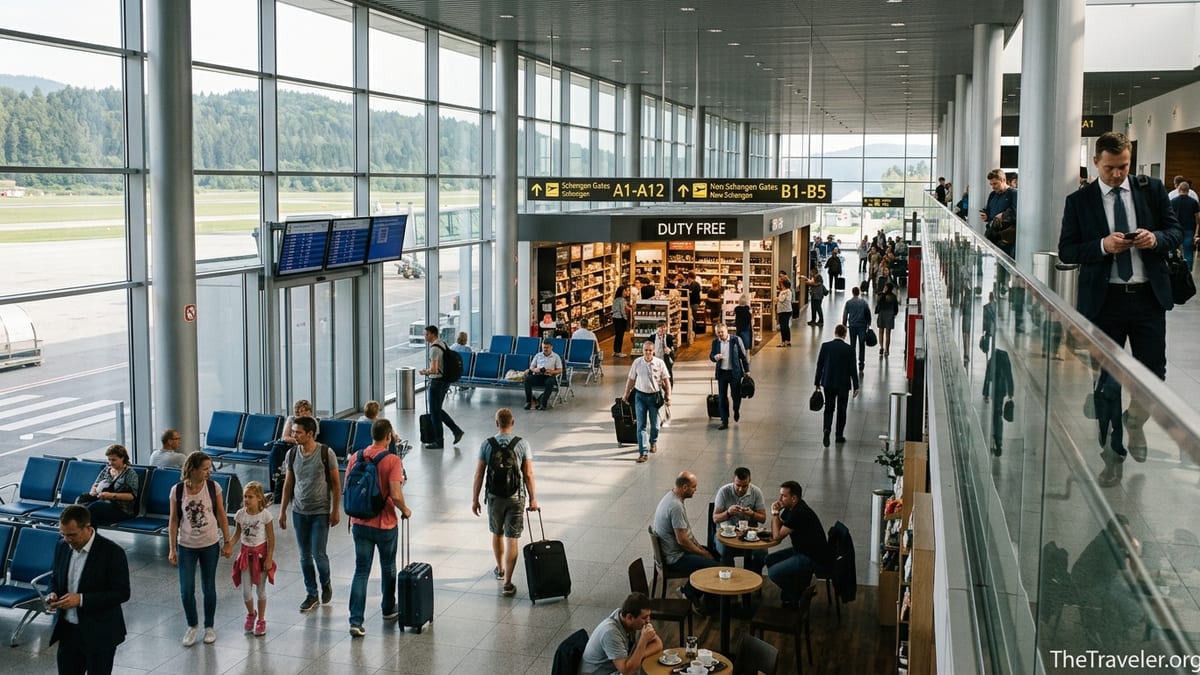
Understanding the Terminal Layout at LJU
Ljubljana Jože Pučnik Airport operates essentially as a one terminal airport, which simplifies navigation considerably. All airlines and flights use the same connected building, sometimes referred to as Terminals A and B, but in practice you will experience it as a single continuous space. Check in, security, and baggage claim are all located within this building, so you never have to worry about transferring between far flung terminals or taking shuttle trains.
The departures area is on the upper level of the passenger terminal. As you enter from the forecourt, you will find the check in hall with island style desks used by all carriers, from larger network airlines like Lufthansa and Turkish Airlines to low cost operators such as easyJet and Wizz Air. Information screens above the desks show the flight number and airline; for example, if you are flying LH1235 to Frankfurt, the board will list the exact check in counters and opening times.
Arrivals are handled on the ground floor of the same building. After you disembark and pass through passport control if required, you will walk directly into the baggage claim hall, then through customs and into the public arrivals area. If you are meeting someone, they will usually wait just outside the sliding doors in this arrivals hall, near the information desk and car rental counters.
Once you clear security on departure, the airside section splits into Schengen and non Schengen zones. Gates for flights within the Schengen area, such as to Paris, Vienna, or Amsterdam, are grouped together, while flights to non Schengen destinations like London or Istanbul board from a separate set of gates. Signage is clear, but always double check the gate number on the departure screens, as last minute changes do occasionally happen.
Check In, Security, and Passport Control: What to Expect
One advantage of a compact airport is that formalities are usually quick. For most European flights, arriving at the airport around 2 hours before departure is normally enough, although at peak holiday times or for early morning banked departures it is still wise to allow a buffer. Airlines such as Lufthansa, Air France, and Turkish Airlines generally open check in counters around 2 hours before flight time, while low cost carriers may open slightly earlier to process more passengers.
Many travelers now use online or mobile check in, especially on carriers like easyJet and Wizz Air, which strongly encourage passengers to arrive with boarding passes already on their phones. If you are traveling with only hand luggage and have a digital boarding pass, you can often bypass the check in desks completely and proceed straight to security. If you need to drop a checked bag, look for the bag drop section, which may share counters with standard check in for your airline.
Security screening at Ljubljana is typically efficient, but there can still be short queues when several flights depart close together. The procedure follows standard European Union rules. Liquids must be in containers of 100 milliliters or less, placed in a single transparent zip bag, and you must remove laptops and larger electronics from your bag for separate screening. For example, if you are connecting via Frankfurt or Zurich, expect security staff to be strict about removing power banks and laptops to avoid secondary checks.
After security, non Schengen passengers will pass through passport control, where police officers check travel documents. Travelers heading to the United Kingdom, Turkey, or the Gulf will go through this step, while those flying within Schengen simply head straight to the gate. U.S. and other non EU nationals should make sure passports are valid for at least six months beyond travel dates, and keep boarding passes ready, as officers often scan them when stamping passports.
Airside Navigation, Boarding Gates, and Lounges
Airside, Ljubljana’s terminal feels bright and open, with a central commercial zone just after security and gates branching off toward the aircraft stands. Duty free, cafes, and seating are all clustered here, so you rarely need to walk more than a few minutes from any gate to find services. The walking distances are short by international standards; even from the farthest non Schengen gate, it usually takes under 10 minutes to reach the central area.
The airport uses a gate numbering system that distinguishes Schengen and non Schengen areas. For example, a morning flight to Brussels might depart from a Schengen gate in the low teens, while a British Airways or Wizz Air service to London could use a non Schengen gate situated past passport control. Departure screens in English and Slovene are located at several points, and a typical announcement pattern is to begin boarding around 30 to 40 minutes before departure time, starting with priority groups and families with small children.
Ljubljana offers at least one primary lounge facility airside, commonly used by business class passengers and elite frequent flyers traveling on airlines such as Lufthansa, Air France, and Turkish Airlines. Access is also often available for Priority Pass or similar lounge program members, although conditions can change, so it is worth checking on the day of travel. Inside, you can expect a quiet seating area, simple buffet style snacks, coffee machines, and soft drinks, plus Wi Fi and charging points. When the evening wave of flights to major hubs like Frankfurt, Munich, and Istanbul departs, seating may fill up, so arriving early can secure a better spot.
If your flight is delayed and you are not using a lounge, there are plenty of public seats and a few high tables near the cafes where you can comfortably wait. Power sockets are not as ubiquitous as in newer mega hubs, so travelers with multiple devices often bring a small travel power strip or power bank to stay charged until boarding.
Food, Shopping, and Everyday Services
Despite its modest size, Ljubljana Airport has a sensible range of food and beverage options that cover most needs before or after a flight. In the public departures hall, one of the best known spots is Lolita Sweet & Salty, a cafe and restaurant that serves sandwiches, pastries, and coffee throughout the day. It is a popular meeting point for families seeing someone off, and in warmer months its outdoor terrace offers a view of the forecourt. Prices are broadly in line with central Ljubljana cafes; for example, a cappuccino might be around 3 to 4 euros and a light lunch like a salad or toasted sandwich roughly 8 to 12 euros.
Once you are airside, the integrated duty free and food area directly after security is where most travelers head. Here you will find a “you are here Ljubljana” concept store that combines duty free products, travel essentials, and local souvenirs. Typical purchases include Slovenian wines from regions such as Brda and Vipava, small bottles of schnapps, local chocolate brands, and compact jars of salt or honey that comply with liquid and customs rules. A standard 0.75 liter bottle of mid range Slovenian wine might cost around 10 to 15 euros in this duty free area, comparable to city wine shops.
Shopping is otherwise limited but practical. A news and convenience outlet sells bottled water, sandwiches, and snacks, while a small fashion or accessories counter may stock sunglasses, bags, or travel pillows. Travelers needing last minute items such as universal adapters, charging cables, or headphones usually find them in these multi purpose shops. Compared with large airports, you will not find huge international designer boutiques, but for a short layover or point to point departure, the choice is adequate.
Essential services include several ATMs in both arrivals and departures, typically run by local banks such as NLB and Nova KBM. There are also car rental counters for major brands like Hertz, Avis, Enterprise, and Europcar in the arrivals area, with vehicles parked a short walk from the terminal. Free Wi Fi is generally available throughout the building, which makes it easy to order ride services, check bus timetables, or download boarding passes even if you do not have a roaming plan.
Ground Transport: Buses, Shuttles, Taxis, and Car Hire
Ljubljana Jože Pučnik Airport is located roughly 25 to 30 kilometers north of the city center, and transport options are varied, with different price levels. The most budget friendly choice is the scheduled bus service operated by regional companies connecting the airport with Ljubljana’s main bus station near the central train station. A typical one way bus ticket from the airport to central Ljubljana costs in the region of 3 to 5 euros, and the journey takes about 45 to 60 minutes depending on intermediate stops and traffic.
Several shuttle companies also run door to door or semi flexible services between the airport, Ljubljana, and popular destinations such as Bled and Kranj. Operators like Nomago and GoOpti often allow advance booking online, with shared shuttle prices to central Ljubljana commonly starting somewhere around 12 to 20 euros per person. For example, a couple traveling with two suitcases might book a shared minivan that picks them up outside the arrivals area and drops them directly at a hotel near Prešeren Square, without needing to handle transfers or city buses.
Taxis from the official rank in front of the terminal are the most convenient but also the most expensive option, and visitors frequently report widely varying fares. Real world examples discussed by recent travelers include charges of around 60 to 70 euros for a one way ride between the airport and central Ljubljana, significantly more than app based estimates or prebooked transfers. Because of this, many locals recommend either arranging a reputable city taxi company in advance, booking a fixed price transfer, or using shuttles instead of simply taking the first car at the rank.
For travelers planning to explore Slovenia’s mountains and countryside, renting a car at the airport can be an efficient choice. Daily rental rates fluctuate, but in low and shoulder seasons, a compact manual car might cost roughly 30 to 50 euros per day before fuel and tolls, especially if booked ahead. From the terminal, the drive to the city follows the A2/E61 motorway, usually taking about 25 to 30 minutes in normal traffic. Travelers heading to Bled, Bohinj, or the Soča Valley often pick up the car on arrival and return it when flying out, avoiding the need to coordinate rural bus timetables.
Connecting Flights and Irregular Operations
Ljubljana is primarily an origin and destination airport rather than a major transfer hub, so most travelers use it as the start or end point of their journey. That said, some itineraries involve connecting through large European hubs such as Frankfurt, Munich, Zurich, Paris Charles de Gaulle, or Istanbul. In practice, this means your connection happens entirely at those hubs, and your time in Ljubljana is just the departure or arrival segment.
If you do have separate tickets that require a self transfer via Ljubljana, for example a regional arrival followed by a low cost departure, it is essential to build in sufficient buffer time. Because all arrivals and departures share a single building, you will need to collect checked bags, exit into arrivals, and then recheck in for your next flight. The process is streamlined but still subject to airline check in deadlines; a safe margin for such self managed transfers is often at least 3 to 4 hours.
During disruptions such as fog, snow, or strong winds in winter, Ljubljana can experience delays or diversions, as its runway is at modest altitude and surrounded by hills. In such situations, regional flights to nearby hubs may be prioritized, and airlines may bus passengers to or from alternate airports in neighboring countries if needed. While this is not common, it is worth having some basic understanding of your airline’s rebooking policies and keeping them accessible in your email or app.
In the case of missed connections on a single through ticket, passengers are typically rebooked by the operating airline at no extra charge, often via the next available departure to a major hub. For example, if a late inbound from Frankfurt causes you to miss a connecting service to Istanbul, Lufthansa or Turkish Airlines will usually handle rebooking and accommodation according to their policies and local regulations. Staff at the transfer desks of the hub airport will be your primary point of contact; in Ljubljana itself, the airline check in or handling agent counters assist with reissues and new boarding passes.
Accessibility, Families, and Special Assistance
Ljubljana Airport is relatively friendly for passengers with reduced mobility or other special needs, largely because of its compact layout and straightforward paths. Wheelchair assistance is available free of charge but must usually be requested through your airline or travel agent at least 48 hours before departure. On the day, designated meeting points in the terminal are used for passengers who require escorts from the check in hall, through security, and to the gate, or from the aircraft door to baggage claim.
The building includes accessible toilets, elevators between arrivals and departures levels, and step free routes from curbside to check in. If you are arriving by shuttle or private taxi, most drivers are familiar with dropping passengers close to the main entrance. Travelers using mobility scooters or large medical equipment should contact their airline in advance to confirm battery types, packing requirements, and any necessary documentation.
Families typically find the airport manageable, with short walking distances and fewer crowds than at major hubs. Baby changing facilities are available in several restrooms, and security teams are accustomed to screening strollers, which are usually returned at the aircraft door or on the baggage belt depending on airline procedures. Parents traveling with toddlers often appreciate that the seating near the gates is close to large windows overlooking the apron, where children can watch aircraft from airlines like Lufthansa, Air Serbia, or Transavia being loaded and pushed back.
When traveling with pets, regulations mirror general European standards. Small animals may be allowed in the cabin in an approved carrier with advance airline approval, while larger pets travel in the hold in appropriate crates. It is vital to check the rules of both your airline and destination country before travel; for example, flights to the United Kingdom have strict requirements for microchipping, vaccinations, and paperwork that must be satisfied well before check in at Ljubljana.
The Takeaway
Ljubljana Jože Pučnik Airport combines the efficiency of a single terminal layout with enough services to comfortably start or end a trip in Slovenia. Once you know that all flights use the same building, that Schengen and non Schengen areas are clearly signposted, and that security and passport procedures mirror other European gateways, the experience becomes straightforward. For departures, arriving 2 hours early, checking in online when possible, and heading through security soon after check in opens will usually keep your stress levels low.
On the ground side, the main strategic decisions involve transport and budgeting your time. Scheduled buses and shuttle vans provide the best value between the airport, Ljubljana, and destinations like Bled, while taxis from the rank tend to be the priciest option. Inside the terminal, simple but pleasant cafes, integrated duty free and souvenir shops, accessible facilities, and a modest lounge give you just enough comfort without the sprawl of a mega hub.
With a little preparation, you can navigate LJU with confidence, whether you are beginning a hiking trip in the Julian Alps, heading to a conference in the city, or connecting via a European hub. Keep your documents and boarding pass handy, plan your ground transport in advance, and use the airport’s compact scale to your advantage. In doing so, Ljubljana’s gateway becomes not a hurdle but a smooth, almost relaxed first step into Slovenia.
FAQ
Q1. How early should I arrive at Ljubljana Jože Pučnik Airport before my flight?
For most European flights, arriving about 2 hours before departure is usually sufficient. In peak holiday periods or for early morning departures, consider adding an extra 30 minutes.
Q2. Does Ljubljana Airport have more than one terminal?
In practice you will use a single connected terminal building for all airlines and flights, with Schengen and non Schengen areas separated airside rather than separate remote terminals.
Q3. Are there good public transport options between the airport and Ljubljana city center?
Yes. Regular buses and several shuttle companies connect the airport with the main bus station and popular areas in the city, offering a cheaper alternative to taxis.
Q4. How much does a taxi from Ljubljana Airport to the city usually cost?
Taxi fares from the airport to central Ljubljana can vary, but many travelers report paying somewhere around 40 to 70 euros, so shuttles or prebooked transfers are often better value.
Q5. Is there duty free shopping at Ljubljana Airport?
Yes. After security you will find an integrated duty free and souvenir area offering items like Slovenian wine, chocolates, cosmetics, perfumes, and travel essentials.
Q6. Does the airport have lounges, and who can access them?
Ljubljana has at least one main lounge airside used by business class passengers and frequent flyers, and access is sometimes available through lounge membership programs such as Priority Pass.
Q7. Is Ljubljana Airport easy to use for passengers with reduced mobility?
It is relatively accessible, with elevators, step free routes, and wheelchair assistance available when requested through your airline at least 48 hours before travel.
Q8. Are there car rental services directly at the airport?
Yes. Major car rental companies such as Hertz, Avis, Enterprise, and Europcar have desks in the arrivals hall, and cars are parked within a short walk of the terminal.
Q9. Can I rely on Wi Fi and ATMs at Ljubljana Airport?
Free Wi Fi is generally available throughout the terminal, and there are several ATMs in both arrivals and departures operated by local banks, useful for withdrawing euros on arrival.
Q10. What is the best way to avoid overpaying for transport from the airport?
To avoid unexpectedly high taxi fares, many travelers prebook a shuttle or fixed price transfer, use scheduled buses, or arrange a reputable city taxi company in advance rather than taking the first cab at the rank.