


Oslo Airport Gardermoen is one of Scandinavia’s most efficient hubs, but the experience you have on departure day often comes down to how well you have planned parking, transfers and airport services. With a mix of on-airport garages, cheaper shuttle lots, private valet-style operators and one of Europe’s best airport rail links, the options are good but can be confusing if you are visiting for the first time. This guide walks through the main choices and shows, with real examples, how to book smartly and avoid unnecessary stress or expense.
Get the latest updates straight to your inbox!
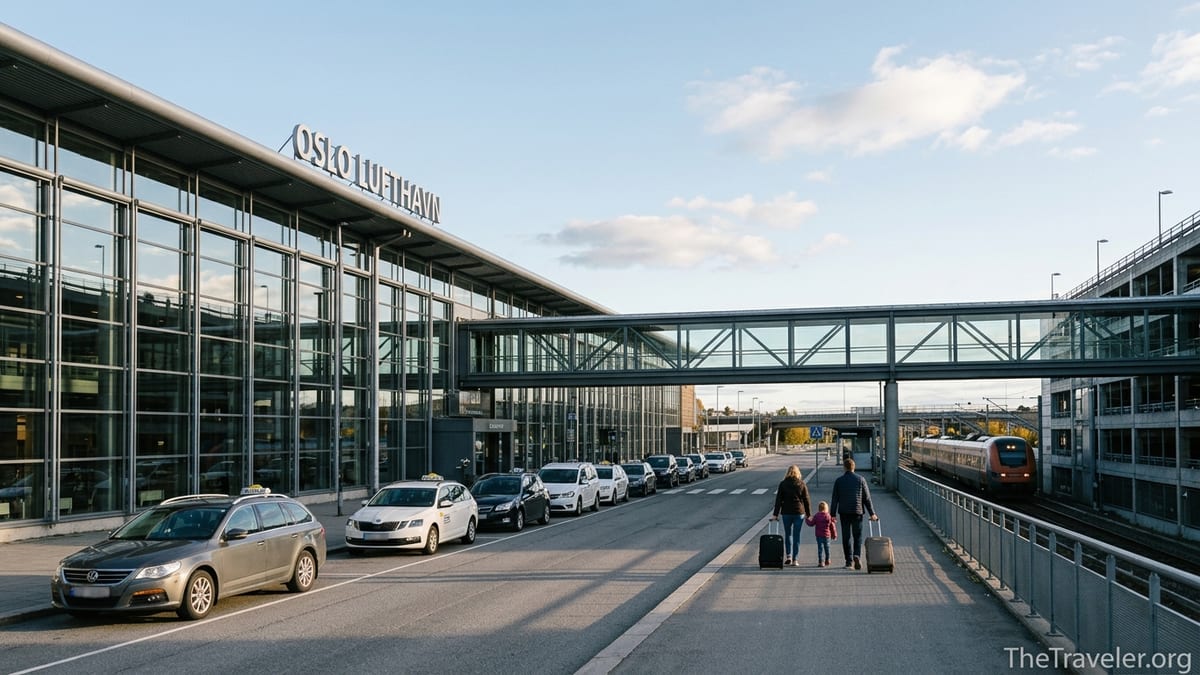
Understanding Oslo Airport’s Parking Landscape
Oslo Airport Gardermoen sits about 47 kilometers north of central Oslo and serves tens of millions of passengers each year. The airport operator Avinor manages a large network of official parking areas, generally labeled P0 to P11 along with a Park & Go product and several long-term outdoor lots. These vary in distance from the terminal, price and whether you can simply drive in or should pre-book online. In addition, several private companies operate off-airport facilities with shuttle buses or valet-style handover at the terminal. Knowing roughly how long you will be away, what time your flight leaves and how much luggage you have helps you choose between them.
The closest options to the terminal are multi-storey garages P10 and P11, located roughly 50 to 150 meters from the check in hall. Slightly further out, but still within walking distance or a very short shuttle ride, you will find short-term parking for pick ups and drop offs, outdoor areas like P2 and P3, and budget long-stay zones such as P4, P5 and P6 that are connected to the terminal by shuttle bus. On top of that, a Park & Go product offers a middle ground where you park yourself but pay for a faster transfer. If you arrive in an electric car, there are dedicated EV spaces with charging in the main garages, usually bookable in advance and clearly signposted.
Prices use dynamic pricing and vary with demand, but a typical pattern is that P10 and P11 cost roughly twice as much per day as the outer shuttle lots. For example, recent published tariffs suggested around 440 Norwegian kroner per day for P10 or P11 compared with about 220 kroner per day in areas like P4 to P6 when booked on a standard flexible basis. Weekly package prices are often lower than paying day by day, especially in the Park & Go product or the long-stay surface car parks, so if you know you will be gone for a full week, it usually pays to select that option while booking.
For travelers who do not need to park at the airport at all, Oslo’s strong public transport network offers frequent rail and bus connections to Gardermoen. In practice, many Oslo residents choose the train or coach and reserve airport parking only for very early departures, late-night arrivals, winter weekends with ski gear or trips involving small children where door-to-door car travel is more practical.
How to Book Official Parking at Oslo Gardermoen
The most straightforward way to secure a parking space at Oslo Airport is to pre-book on Avinor’s official parking platform. Reservations typically open well in advance and you can often get a noticeably lower rate by booking at least a few days before travel, especially outside of peak holiday periods. You start by entering your dates and approximate times, then the system presents a range of options such as P10, P11, Park & Go, or outer lots like P4 to P6 along with estimated prices for the full stay.
As a concrete example, a traveler looking for five days of parking in midweek might see an indicative pre-book price in the multi-storey P10 of around 1,800 to 2,200 kroner, compared with roughly 1,000 to 1,300 kroner for a long-stay zone connected by shuttle bus. The exact numbers will vary with demand, but the relative difference is usually consistent: the closer you are to the terminal, the more you pay per day. Pre-booking also makes entry smoother. Most official lots at Gardermoen use license plate recognition, so when you arrive, the barrier reads your number plate and the gate opens without needing to take a ticket. On exit, the system matches your booking details to the actual parking duration.
For short trips of one or two days, many travelers deliberately pay a premium for P10 or P11 because the time saved walking under cover is worth the extra cost. A family on a Friday to Sunday city break in winter, for instance, might pre-book 48 hours in P10 so they can step straight from the terminal into the parking garage without worrying about snow or ice. For longer trips, the arithmetic changes. Someone going on a 10 day summer holiday could save several hundred kroner by choosing P4 to P6 and allowing an extra 10 to 15 minutes to reach the check in halls by shuttle bus.
Drop-in parking without a reservation is available at most official car parks, but you will usually pay the upper end of the price range and risk lots being full during popular travel periods such as the July summer holidays, Easter week or major events. If you are traveling at those times, it is prudent to reserve well ahead, especially for the most convenient garages and for any special options such as EV charging spots or designated spaces for travelers with reduced mobility. The booking confirmation will clearly state where to drive and whether a shuttle is needed.
Off-Site and Valet Parking: When It Makes Sense
In addition to Avinor’s own facilities, several private suppliers around Gardermoen offer parking combined with transfers to the terminal. These range from conventional park-and-ride lots with a shuttle bus every 20 minutes to premium valet-style services where you hand over your car directly at the departures level and it is parked for you off-site. For travelers who value door-to-door convenience but want to pay less than P10 or P11, these private companies can be attractive.
One example is a dedicated off-airport parking company that operates a fenced outdoor lot a few minutes’ drive from the terminal and runs a shuttle bus roughly every 20 minutes. Customers pre-book online, drive to the lot, leave the car and board the next shuttle to the terminal, usually reaching check in within about 10 minutes. For a week-long stay, prices at these lots are often in the range of 800 to 1,100 kroner, undercutting both the on-airport garages and some of the official long-stay products while still offering a predictable transfer.
At the more premium end, valet-style services such as those offered by companies like Flight Park allow you to drive directly to the terminal, where a staff member meets you in the departures area, takes your keys and parks your car in a secured lot nearby. On return, you call or register your landing, and the car is brought back to the terminal, ready to drive away. This arrangement is particularly appealing for frequent business travelers or families with lots of luggage. A typical example might be a four day business trip where valet parking costs around 1,200 to 1,500 kroner total, which is comparable to or slightly higher than self-parking in an outer official lot but with significantly greater convenience.
When considering a private operator, it pays to check details such as shuttle frequency, operating hours, whether the lot is staffed around the clock and what happens if your flight is delayed. Many companies state that they monitor arrival times and adjust pick ups accordingly, but in practice you should always keep the contact number handy and read recent customer reviews. It is also wise to allow a little buffer time, especially in winter when snow and ice can slow down transfer buses and car handling.
Airport Transfers by Train, Bus and Taxi
For many travelers, the most efficient way to reach Oslo Airport is not to park there at all, but to use the city’s strong public transport connections. The flagship option is the Flytoget Airport Express Train, a dedicated high-speed service that runs from Oslo Airport station, directly underneath the terminal, to Oslo Central Station in around 19 minutes. On a typical weekday, Flytoget trains depart roughly every 10 minutes from early morning until late at night, dropping to three departures per hour on weekends or late evening. A standard adult single ticket in 2026 costs about 240 kroner when bought at the station or in the Flytoget app.
Running on the same railway line, the state-owned operator Vy offers regular regional and commuter services that also connect the airport with Oslo Central and other towns. These trains are slightly slower, usually taking between 23 and 30 minutes from the airport to Oslo Central, but are considerably cheaper. Recent price examples show adult single fares of roughly 120 to 140 kroner when purchased in the Vy app or from ticket machines. Some Vy departures are direct between the airport, Lillestrøm and Oslo, while others make extra stops and take longer, so it is worth checking the departure boards or app for an express L12 service if you are in a hurry.
The choice between Flytoget and Vy often comes down to budget, timing and personal preference. A solo traveler arriving at 10 in the morning with a hotel near Oslo Central might choose Vy to save around half the cost of Flytoget, especially if they are not in a rush. On the other hand, a family of four catching a morning long-haul departure might prefer Flytoget’s higher frequency and luggage-friendly layout, especially if they are connecting from other Flytoget stops in the wider Oslo region. Both services are signposted in the arrivals hall, and the station is only a short escalator ride below the terminal.
In addition to rail, express coach services link the airport with many districts of Oslo as well as destinations like Lillehammer and Ski. Airport buses can be a good option if you are staying in an area not well served by trains, or if you are traveling very early or late when rail frequency is reduced. Journey times vary, but a typical Oslo Airport bus to the city center might take 45 to 60 minutes depending on traffic, with fares often similar to or slightly lower than Vy’s train prices. Taxis and ride-hail services are also widely available outside arrivals. A licensed taxi from Gardermoen to central Oslo can easily cost upwards of 1100 to 1400 kroner depending on time of day and traffic, so this is usually the most expensive transfer option unless you are sharing between several people or traveling at times when public transport is not running.
Booking Extra Airport Services: Fast Track, Lounges and Assistance
Beyond parking and transport, Oslo Airport offers several add-on services that can streamline your journey. One of the most popular is fast track security, which allows eligible passengers to use a dedicated lane that is often significantly shorter than the standard queues. Fast track access is typically included for business class travelers and certain airline status holders, but in some cases it can also be purchased as a standalone extra through airlines or third-party providers when you book your flight. For example, a leisure traveler on a busy Friday afternoon departure may be able to add fast track access for a modest surcharge per person, reducing the time spent waiting in security lines.
Lounges are another way to take the stress out of departure day. In addition to airline-operated lounges for carriers like SAS, independent lounges at Gardermoen sell access to passengers regardless of airline or class of travel, often via same-day purchase or lounge membership programs. A typical walk-in lounge fee might be in the region of 350 to 450 kroner for up to three hours, including light snacks, drinks, Wi-Fi and comfortable seating. This can be worthwhile if you arrive early due to train or shuttle schedules and want a quiet space to work or relax before boarding.
For passengers needing extra help, the airport and airlines provide special assistance services that must be booked in advance, usually when purchasing the flight or through the airline’s manage booking page. Examples include wheelchair assistance from the check in area to the gate, help with boarding and disembarking, and support for visually impaired travelers. If you know you will need these services, it is recommended to request them at least 48 hours before departure so that staff and equipment can be arranged. On the day of travel, you should plan to arrive at the airport a little earlier than usual to allow time for coordination.
Some travelers also combine airport parking with additional car-related services. A few private parking operators around Gardermoen offer extras such as exterior washing, interior cleaning or basic maintenance while you are away. For instance, a valet provider might advertise a package where a full exterior wash and interior vacuum are added to a week of parking for an additional fee. While these services can be convenient, it is wise to confirm exactly what is included and check recent customer feedback, as quality and scope can vary.
Smart Booking Strategies and Seasonal Tips
Because pricing for both parking and transfers around Gardermoen is dynamic, timing your booking can have a noticeable impact on cost. As a general rule, pre-booking official parking at least a week in advance gives you a wider choice of products and a better chance of securing promotional rates, especially for long stays. If you plan to use Flytoget or Vy, downloading their respective apps before you travel allows you to compare departure times and fares quickly and, in many cases, buy tickets at slightly lower app-only prices than at station ticket machines.
Seasonal conditions also matter. Winter in eastern Norway can bring snow, ice and sub-zero temperatures, so consider whether a covered garage space is worth paying extra for. A family leaving the car for ten days in January, for example, may appreciate returning to a vehicle that has been sheltered in P10 or a premium off-airport lot, rather than spending time clearing snow and ice in an open field. In summer, on the other hand, many travelers opt for the cheaper outdoor long-stay lots and off-site providers, prioritizing cost savings over weather protection.
Travel time buffers are critical. If you are using a shuttle-based parking lot, build at least 30 additional minutes into your schedule beyond what you would allow from a terminal garage. This gives room for waiting times, loading luggage, and any minor delays on the airport roads. Similarly, if you are taking a train from Oslo, it is wise to aim for a departure that arrives at least 90 minutes before a European flight or two hours before a long-haul flight, leaving contingency for check in and security. Trains and buses run frequently and are reliable, but disruptions can occur, so having one backup departure in mind is good practice.
Finally, consider the total cost of your door-to-door journey rather than looking at individual components in isolation. For a solo traveler staying in central Oslo, the combination of a hotel plus two Flytoget tickets may be cheaper than renting a car and paying for several days of airport parking. For a group of four staying in a rural cabin, however, driving to the airport and paying for a week in a long-stay lot might cost less overall than four return rail tickets, especially when factoring in late-night arrival or early departure times. Taking a moment to price out both scenarios before booking can reveal savings that are not obvious at first glance.
The Takeaway
Oslo Airport Gardermoen offers a wide spectrum of parking, transfer and airport service options, from premium terminal garages and valet-style parking to budget long-stay lots and efficient rail connections. The key to a smooth experience is aligning your choice with your priorities: price, time, convenience and comfort. Business travelers on tight schedules may find that paying extra for P10, Flytoget and fast track security is money well spent, while families heading off on a long holiday can often save significantly by using outer long-stay parking or Vy trains and allowing a little extra time.
Whatever your situation, planning ahead pays dividends. Pre-booking official parking or reputable off-site lots, checking train and bus timetables, and considering extras like lounges or assistance services all help remove uncertainty from departure day. With a bit of preparation, Gardermoen’s infrastructure works in your favor, turning what could be a stressful transfer into an efficient and predictable part of your trip.
FAQ
Q1. What is the cheapest way to park at Oslo Airport Gardermoen?
The cheapest options are usually the outer long-stay car parks such as P4 to P6 or off-airport shuttle lots run by private companies. If you pre-book several days or a week in advance, you can often get a weekly rate that is much lower per day than parking in the terminal garages. For very short trips of only a few hours, consider whether you need to park at all, as public transport from Oslo can be cost-effective.
Q2. How far in advance should I book parking at Gardermoen?
If you are traveling during busy periods such as school holidays, Easter or major events in Oslo, it is wise to book parking as soon as your flights are confirmed. For regular weeks, booking one to two weeks ahead is usually enough to secure a good selection of options and more favorable prices. Same-day drive-up is possible, but you risk higher prices and limited availability in the most convenient garages.
Q3. Is the Flytoget Airport Express Train worth the extra cost compared with Vy?
Flytoget is faster and more frequent, with departures roughly every 10 minutes and a journey time of about 19 minutes to Oslo Central, but tickets cost almost double the Vy regional train. If you value time, have a tight connection, or prefer the dedicated luggage space and frequent departures, Flytoget can be worthwhile. Budget-conscious travelers with a bit more flexibility usually find Vy perfectly adequate and significantly cheaper.
Q4. How long should I allow for shuttle parking at Oslo Airport?
If you park in a lot that relies on a shuttle bus, allow at least 30 extra minutes from the time you arrive at the parking area until you reach the terminal. This accounts for waiting for the shuttle, loading luggage and the short drive to the airport. In winter or during peak hours, adding an additional 10 to 15 minutes is sensible to cover possible delays due to weather or traffic.
Q5. Are there electric vehicle charging options in the airport car parks?
Yes, there are dedicated electric vehicle spaces with chargers in the main multi-storey garages such as P10 and P11 and in some other official areas. These spaces are clearly marked, and many can be reserved in advance when you book parking. Availability can be limited during peak periods, so if you need to return to a charged car, it is best to select an EV-specific product in the booking system rather than relying on drop-in access.
Q6. Can I book fast track security at Oslo Airport Gardermoen?
Fast track security is primarily included for business class passengers and frequent flyers with certain airline status levels, but in some cases it can also be purchased as an add-on through airlines or third-party booking platforms. Availability and prices vary, so you should check when buying your flight or managing your booking. When available, fast track can be particularly valuable during morning and late afternoon peaks.
Q7. What is the best option for very early or very late flights?
For flights departing very early in the morning or arriving around midnight, driving and parking at the airport or using Flytoget can be the most reliable options. Vy trains and some bus services may operate less frequently at these times, so always check the latest timetables. If you choose an off-site parking provider, verify that their shuttle or valet service runs during your actual arrival and departure times.
Q8. Is taxi a good way to get between Oslo and Gardermoen?
Taxis are convenient, especially if you have a lot of luggage or are traveling in a group, but they are the most expensive option. A typical metered ride from central Oslo to Gardermoen can cost well over 1000 kroner depending on traffic and time of day. For solo travelers or couples, trains or airport buses usually offer a much better value. Taxis become more economical when costs are shared by three or four passengers.
Q9. Do I need to print my parking confirmation?
In most cases you do not need to print anything. Official parking at Oslo Airport generally uses license plate recognition, so your pre-booked reservation is linked to your vehicle registration. When you drive up to the gate, the barrier reads your plate and opens automatically, and the same happens on exit. It is still a good idea to keep a digital copy of your confirmation on your phone in case you need the booking reference.
Q10. What should I do if my return flight is delayed and I overstay my parking?
If your stay ends up longer than planned due to flight delays, the system will usually calculate an additional charge for the extra hours or days when you exit the car park. With official Avinor parking and most reputable off-site providers, this is handled automatically, and you pay the difference by card. If you expect a significant delay, it can be helpful to contact the parking provider in advance to check their policy and avoid any concerns about your car being moved or your booking being cancelled.