


Staying in Jersey City can feel like you have a private balcony on Manhattan. Across the Hudson, this compact New Jersey city pairs some of the best skyline views in the region with a serious food scene and fast connections into New York. With the right hotel, neighborhood, and transit plan, you can eat and explore like a local in Jersey City while dipping into Manhattan whenever you want.
Get the latest updates straight to your inbox!
Choosing the Right Jersey City Neighborhood for Your Base
The first decision that shapes your trip is where in Jersey City to stay. For most visitors focused on skyline views, food, and fast access to New York City, three areas make the most sense: the waterfront around Exchange Place and Paulus Hook, the Newport area just north of that, and the Grove Street corridor a bit farther inland. Each one offers a different balance of views, price, and nightlife.
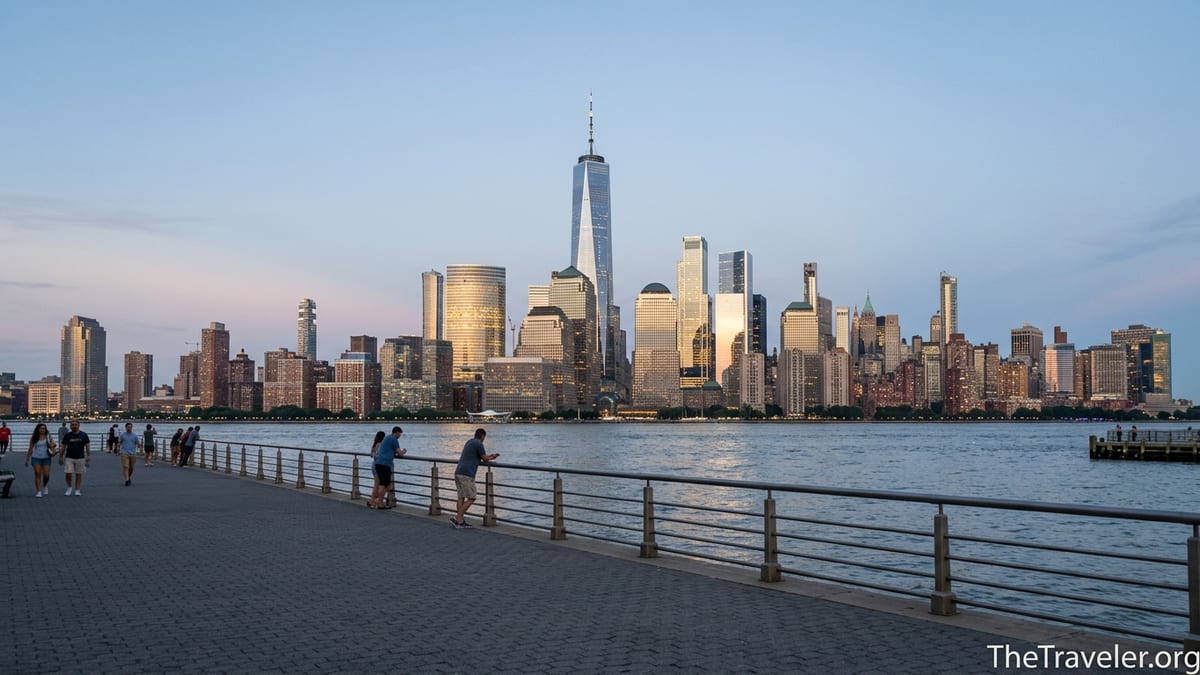
If your priority is waking up to postcard views of Lower Manhattan, target the blocks directly along the Hudson near Exchange Place and Paulus Hook. Here you are steps from the waterfront promenade, looking straight across at the World Trade Center, Battery Park City, and the downtown skyline. Many hotel rooms and apartment-style stays in this strip face east, so you get sunrise light over Manhattan plus sparkling night views when you return from the city.
Newport, slightly north along the river, delivers a similar skyline perspective but often with a more residential, master-planned feel. Think high-rise towers, a large mall, and a broad walkway along the river. Travelers who like the convenience of being next to a supermarket, chain cafes, and light rail access often gravitate here. You still have quick access to Manhattan and an easy walk down to the denser dining areas near Grove Street.
If nightlife and neighborhood energy matter more than being right on the water, look at the Grove Street area and the blocks west of it. You will give up direct river views but gain streets lined with restaurants, bars, and cafes. From a practical standpoint, Grove Street is also a prime PATH station, so you can be in Lower Manhattan in roughly 10 to 15 minutes and in Midtown in around 20 to 25 minutes, depending on time of day and transfers.
Best Hotels and Stays for Skyline Views
For many travelers, the dream Jersey City stay means lying in bed and seeing the Manhattan skyline through floor-to-ceiling glass. Hotels around Exchange Place and Newport make that possible. Exact views depend on room category and floor, so it is worth contacting properties directly and requesting a high floor with a river or Manhattan view when you book.
Along the Exchange Place waterfront, several large business-oriented hotels back right onto the Hudson River walkway. Many of their east-facing rooms look straight across to One World Trade Center and the Financial District. Room rates here can fluctuate widely with weekday business demand and major city events. On a summer weekend, it is common to see standard rooms in the 250 to 350 dollar per night range, while midweek during peak corporate travel can push rates higher.
In the Newport area, high-rise hotels and serviced apartments occupy towers near the Hudson-Bergen Light Rail and the indoor shopping complex. While some rooms face inland toward Jersey City, others offer sweeping vistas of Midtown Manhattan, including the Empire State Building and Hudson Yards across the river. If views are a priority, it often pays to choose a slightly more expensive “river view” or “Manhattan view” room category rather than the absolute cheapest option.
Travelers on a tighter budget who still want occasional skyline views can consider apartment-style rentals slightly inland, then plan to spend evenings on public waterfront terraces and rooftop bars. It costs nothing to walk the Hudson River Waterfront Walkway at sunset, and many local residents use the park-like riverfront as their shared skyline balcony.
Getting Into Manhattan: PATH, Ferry, and Light Rail
For fast access to New York City, Jersey City’s biggest advantage is the PATH rail system. PATH runs underground between several Jersey City stations and Manhattan terminals at World Trade Center and 33rd Street. In practice, that means you can board at Exchange Place, Grove Street, Newport, or Journal Square and emerge in Lower Manhattan or Midtown with travel times that often rival staying in the outer boroughs of New York.
Single-ride PATH fares are typically in the same general range as a New York City subway ride, and travelers frequently use contactless bank cards or transit fare media to tap in. Regular commuters often buy 10-trip or 40-trip products to lower the per-ride cost. As of early 2026, a common pattern is that a round-trip day of PATH into Manhattan costs a bit over 5 dollars in total per person when using multi-trip options, although exact pricing changes periodically and should be checked before you travel.
Ferries add another layer of flexibility and scenery. NY Waterway operates routes from Jersey City waterfront terminals like Paulus Hook and Harborside to Manhattan terminals such as Brookfield Place in Battery Park City and Midtown West. On weekdays, morning ferries from Paulus Hook to Lower Manhattan often run every 15 to 20 minutes during peak rush hours, with travel times of around 8 to 10 minutes across the river. Prices tend to be higher than PATH, commonly in the 9 to 12 dollar one-way range for adults, but you are paying for both speed and views.
There is also the Liberty Landing Ferry, which runs between Liberty Landing Marina in Jersey City and the Brookfield Place terminal in Lower Manhattan, often stopping at Warren Street in Jersey City along the way. This is a particularly pleasant route if you are staying near Liberty State Park or planning to visit the Statue of Liberty and Ellis Island. Regardless of which ferry you choose, always confirm current timetables, as weekend and holiday service can be less frequent than weekday commuter schedules.
Understanding Transit Logistics and Daily Costs
Before you book your stay, it helps to sketch out how transit will shape your days and budget. A typical visitor who spends three full days in New York while sleeping in Jersey City might ride PATH into Manhattan each morning and back at night, often with an extra round-trip for an afternoon rest. That can add up to two or three PATH entries per day per person, so a couple could easily make 12 to 18 PATH rides over a long weekend.
Using single-ride pricing, that pattern might translate into something like 40 to 60 dollars in PATH fares over three days for two people. Purchasing multi-ride products can shave a few dollars off that total. For many visitors, the math works out favorably when you compare it with higher hotel prices in Manhattan, especially if you are comfortable with a 15 to 25 minute commute into the city’s main sights.
Ferries are more of an optional upgrade than a daily necessity. You might, for example, choose PATH in the morning to reach Midtown quickly, then take an evening NY Waterway ferry back from a Manhattan terminal such as Midtown West or Brookfield Place to Paulus Hook purely for the experience. In that case, you could plan for one or two ferry rides during your trip at roughly 9 to 12 dollars each, treating them as both transportation and a mini harbor cruise.
Within Jersey City itself, the Hudson-Bergen Light Rail connects areas like Liberty State Park, Bergen-Lafayette, and Hoboken. Pay-per-ride light rail fares are usually a bit lower than PATH. If you stay inland near Journal Square or The Heights, you might rely more on light rail or local buses to reach the waterfront and PATH, while Exchange Place, Grove Street, and Newport areas let you walk almost everywhere you need to go.
Where to Eat: Jersey City’s Food Neighborhoods and Standout Spots
Jersey City’s dining reputation has grown dramatically in the past decade, and as of 2026 it is widely covered by regional food media as a destination in its own right. Downtown around Grove Street and Newark Avenue, you will find a dense cluster of independent restaurants that fill up most evenings with local residents and New Yorkers crossing the river for dinner.
On the waterfront, upscale Italian-influenced restaurants with big glass walls and outdoor terraces serve dishes like house-made pasta, crudo, and seafood risotto while guests watch the sun set behind the Manhattan skyline reflected on the water. A typical dinner for two with appetizers, mains, and a shared dessert at these spots can land around 130 to 180 dollars before tip, which is similar to many mid-range Manhattan restaurants that lack the same direct skyline view.
Inland, the options become even more diverse. Downtown streets near Grove Street PATH are home to some of the region’s better known pizza, ramen, and contemporary American spots, along with bakeries, coffee bars, and casual sandwich shops. A pizza restaurant that has drawn national attention may price a classic margherita around the low 20 dollar mark, with smaller plates and salads about 12 to 18 dollars each. Nearby, intimate Mediterranean and modern American bistros often offer three-course prix fixe menus in the 55 to 75 dollar range per person on weeknights.
North of downtown, The Heights neighborhood has seen an influx of newer restaurants and cafes, many with more local, residential energy and slightly lower prices than the waterfront. Travelers who are comfortable with a 10 to 15 minute light rail or rideshare back to the hotel can build an evening around a casual taqueria or a relaxed wine bar in these areas, then head back to their riverfront base for skyline nightcaps.
Designing a Three-Day Jersey City & NYC Itinerary
To make the most of a Jersey City stay, it helps to design your days so that you are not constantly crisscrossing the river. One common pattern is to dedicate one full day to Lower Manhattan, one day to Midtown and Central Park, and one day that blends local Jersey City exploration with a major harbor or Statue of Liberty visit.
On day one, you might start with coffee near your hotel in Exchange Place, then take PATH to World Trade Center. Spend the morning at the 9/11 Memorial and Museum, walk through the Oculus, and wander Tribeca or SoHo on foot. In the late afternoon, ride the ferry back to Paulus Hook or Harborside, then enjoy dinner at a waterfront restaurant that lets you watch office lights come on across Lower Manhattan as night falls.
Day two could focus on Midtown. From Grove Street or Newport, ride PATH toward 33rd Street, where you emerge near Herald Square. From there you can walk to the Empire State Building, Bryant Park, and Times Square, or transfer to the New York City subway for a quick ride to the Museum of Modern Art or Central Park. Evening options include catching a Broadway show or heading back to Jersey City in time for rooftop cocktails that look north toward the glowing Midtown towers.
Day three is ideal for exploring Jersey City itself. Take the light rail or a short rideshare to Liberty State Park in the morning for sweeping views of the Statue of Liberty, Ellis Island, and Lower Manhattan without the crowds of Battery Park. Many visitors combine this with a ferry trip out to Liberty Island and Ellis Island. In the afternoon, head back toward Grove Street for a food-focused crawl through bakeries, cafes, and casual eateries, then end the night with a final riverside walk and late dinner near Exchange Place.
Budgeting for a Jersey City Stay vs Manhattan
Comparing costs between staying in Jersey City and staying in Manhattan is not always straightforward, but a few patterns emerge. Hotel nightly rates in Jersey City’s waterfront districts are often lower than comparable properties directly across the river, particularly in Midtown Manhattan. It is not unusual to see a modern business hotel room by Exchange Place priced 50 to 100 dollars less per night than a similar room near Times Square, especially outside major event dates.
Transit costs narrow that gap somewhat. A couple staying three nights might easily spend 40 to 60 dollars on PATH fares and another 40 to 50 dollars if they choose to add a couple of scenic ferry rides. Even with those extras, the total trip cost frequently remains below what the same travelers would pay in Manhattan once you factor in hotel taxes and higher restaurant prices in some tourist-heavy neighborhoods.
Food costs in Jersey City span a wide range. At the high end, tasting menus or special-occasion dinners at waterfront restaurants can rival Manhattan pricing, particularly once wine and cocktails are included. On the other hand, a casual meal at a popular local spot might run 15 to 25 dollars per person for a generous plate of noodles, a burger, or tacos. Grocery stores and local markets near Grove Street and Newport also make it easy to pick up breakfast items or snacks if you prefer to eat one meal a day in your room to save money.
The key is to decide where you want to splurge. Many travelers choose to spend on a river-view hotel room and one or two destination dinners, then rely on budget-friendly cafes, food trucks, and local pizza for the rest of their meals. With smart planning, a Jersey City base lets you enjoy world-class skyline views and top-tier dining without feeling locked into Manhattan’s highest price brackets.
The Takeaway
Planning a Jersey City stay for skyline views, strong food options, and fast New York City access is all about location and logistics. Choosing a base near Exchange Place, Paulus Hook, Newport, or Grove Street positions you within minutes of both the Hudson River and the PATH system, so you can balance quiet nights by the water with full days in Manhattan.
Use PATH as your everyday workhorse for getting into the city, then treat ferries as scenic bonuses when time and budget allow. Build at least one day into your itinerary for Jersey City itself, from Liberty State Park’s sweeping harbor views to the restaurant-lined blocks near Grove Street and the waterfront. With realistic expectations about transit times, daily costs, and hotel pricing, Jersey City can deliver the best of both worlds: New York City at your doorstep and a calmer, more spacious base looking back at the skyline.
FAQ
Q1. Is staying in Jersey City really convenient for visiting Manhattan?
Yes, as long as you stay near a PATH station such as Exchange Place, Grove Street, or Newport, you can usually reach Lower Manhattan in about 10 to 15 minutes and Midtown in roughly 20 to 25 minutes, which is comparable to staying in many outer-borough New York neighborhoods.
Q2. How much should I budget per day for PATH and ferry rides?
Many visitors find that budgeting around 8 to 15 dollars per person per day for transit works well, depending on how many times they cross the river and whether they add a higher-priced ferry ride to the mix.
Q3. Which Jersey City neighborhood is best for first-time visitors?
For most first-time visitors, the Exchange Place or Grove Street areas are ideal. Exchange Place delivers direct skyline views and waterfront access, while Grove Street offers a dense concentration of restaurants and nightlife plus easy PATH access to both Lower Manhattan and Midtown.
Q4. Are Jersey City hotels much cheaper than Manhattan hotels?
Often they are somewhat cheaper, especially for modern high-rise properties near the waterfront. While savings vary by date, it is common to find nightly rates that are 50 to 100 dollars lower than similar hotels in central Manhattan, particularly outside major event periods.
Q5. Is it safe to walk along the Jersey City waterfront at night?
The main waterfront promenade around Exchange Place, Paulus Hook, and Newport is typically active and well-used by local residents in the evening, especially in good weather. As in any city, remain aware of your surroundings, stick to well-lit areas, and follow local guidance.
Q6. Do I need a car if I stay in Jersey City?
Most short-term visitors do not need a car. PATH, ferries, light rail, and rideshare services are usually enough to cover daily needs. Parking a car in waterfront garages can add significant daily costs, so many travelers choose to arrive by train, plane, or bus and rely on transit.
Q7. What is the best time of year to stay in Jersey City for skyline views?
Late spring and early fall often provide the clearest, most comfortable conditions, with mild temperatures and good visibility. Summer can bring hazier days but also warm evenings perfect for outdoor dining and waterfront walks, while winter offers crisp air and dramatic night views if you bundle up.
Q8. Can I use the same payment method on PATH and the New York City subway?
In practice, many travelers use the same contactless bank card or digital wallet to tap into both PATH and the New York City subway, even though the systems are operated separately and charge separate fares. Always verify current payment options before you travel, as policies can change.
Q9. Are there good food options right by the Jersey City waterfront?
Yes. The waterfront around Exchange Place, Paulus Hook, and Newport includes a mix of upscale restaurants, casual eateries, and cafes, many with outdoor seating and direct skyline views. You are also usually within a 10 to 15 minute walk of denser dining streets near Grove Street.
Q10. How many nights should I plan if I want both NYC sightseeing and time in Jersey City?
A three to four night stay works well for most travelers. That usually allows two full days focused on Manhattan sights plus at least one day to explore Jersey City’s parks, waterfront, and dining scene at a relaxed pace.