


Planning a first trip to Australia can feel like trying to see all of Europe at once. The country is roughly the size of the continental United States, major sights are thousands of kilometers apart, and domestic flights and tours are not cheap. With some structure and realistic expectations, though, you can design an itinerary that hits Australia’s classic highlights without spending every day in transit or blowing your budget.
Get the latest updates straight to your inbox!
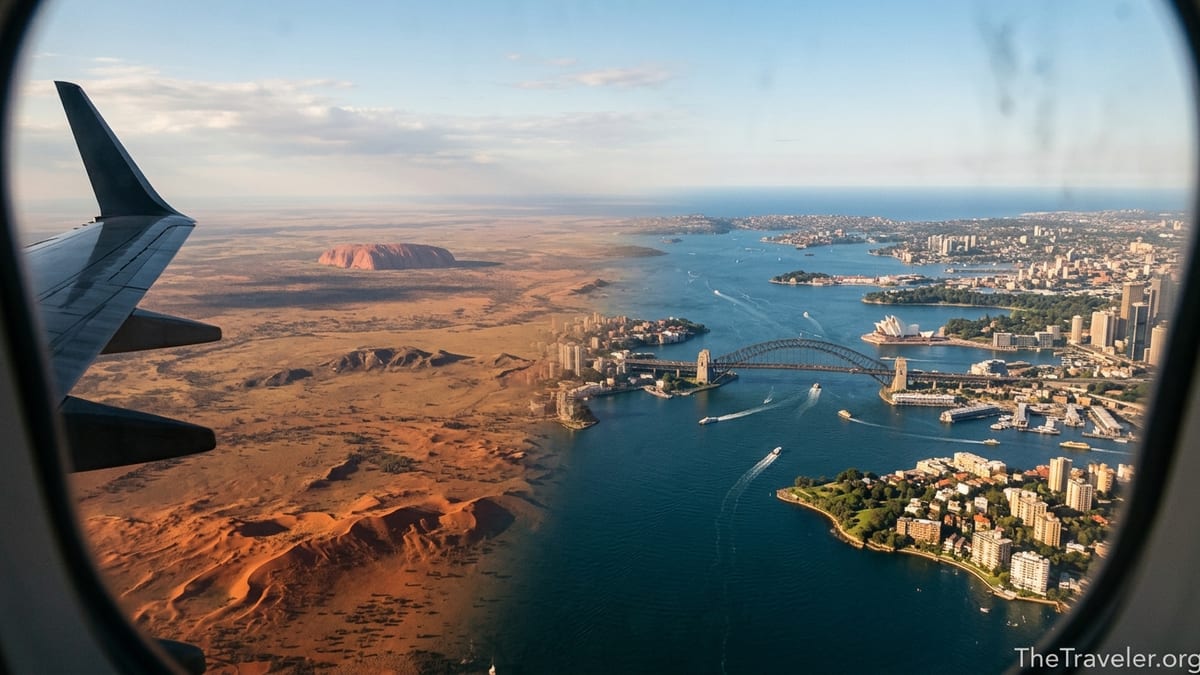
Choose the Right Length of Stay and Overall Route
The first decision that shapes everything else is how long you have. For most travelers flying from North America or Europe, 10 to 14 days on the ground is a practical minimum once you factor in jet lag and the long flights. In about two weeks you can comfortably combine three major regions, for example Sydney, the Red Centre around Uluru, and tropical north Queensland for the Great Barrier Reef. With only a week, it is wiser to focus on two bases such as Sydney and Cairns, rather than racing across the continent.
Think of Australia’s highlights in broad regions. The southeast holds Sydney and Melbourne plus wine regions like the Hunter Valley and Yarra Valley. The tropical northeast is the gateway to the Great Barrier Reef and the Daintree Rainforest, with Cairns and Port Douglas as common bases. The Red Centre around Uluru and Kata Tjuta delivers the outback landscapes many visitors imagine when they picture Australia. Focusing on one region every three to four days usually means a sensible pace with one domestic flight between each.
A sample 12 day route that covers key highlights might look like this: four nights in Sydney, three nights at Uluru, and four nights in Cairns. That gives you time for the Sydney Opera House and coastal walks, sunrise and sunset at Uluru, and at least one full Great Barrier Reef trip plus a rainforest day from Cairns. Travelers with three weeks or more can consider adding Melbourne and the Great Ocean Road, or spending longer on the Queensland coast visiting places like Magnetic Island or K’gari (Fraser Island).
Be realistic about travel days. A “quick hop” from Sydney to Uluru or Cairns usually becomes half a day lost to check in, security and transfers, even on morning flights. Treat each long move as a partial rest day in your itinerary and avoid planning major activities for the same afternoon.
Understand Visas, Seasons and Entry Basics
Before you book anything, check your entry requirements. Most visitors from Europe and many Asian countries use the free or low cost eVisitor visa, while many travelers from the United States and Canada apply for an Electronic Travel Authority via an app or online portal. Both are typically straightforward to obtain in advance, but approvals are not always instant, so it is best to apply a few weeks before departure rather than on the way to the airport. Because rules can change, confirm details with the Australian government’s official immigration pages rather than relying on old blog posts.
Timing matters as much as paperwork. Australia’s seasons are the reverse of the northern hemisphere. December to February bring peak summer heat and school holidays in the south, which means crowded beaches in Sydney and higher prices for coastal hotels. Shoulder seasons like October to November and March to April often offer more pleasant temperatures and better value in Sydney and Melbourne, while still being warm enough for outdoor dining and coastal walks.
The north and the Red Centre follow different rhythms. Around Cairns and Port Douglas, the dry season from roughly May to October is the most comfortable time, with lower humidity and usually calmer seas for reef trips. The summer wet season can bring heavy rain, stingers in the water and more frequent tour cancellations. Uluru is best in the cooler months and shoulder seasons. In mid summer, daytime temperatures can climb well above 40 degrees Celsius and some trails close in the heat; by contrast, visiting in April or September means you can walk base trails in the morning and still enjoy an outdoor sunset viewing without extreme conditions.
Once you have approximate dates, check what local holidays or festivals are happening. For example, Sydney’s New Year’s Eve fireworks and Melbourne’s Australian Open tennis in January are spectacular, but they also push up hotel rates and require advance bookings. If you hope to visit during one of these headline events, lock in accommodation early and build it into your budget.
Budgeting: What the Highlights Really Cost
Australia is not a budget destination, particularly once you start adding big ticket experiences like reef cruises and outback tours. As a rough baseline in 2026, many first time visitors planning a highlight focused itinerary should expect to spend at least the equivalent of several hundred US dollars per day for two people on midrange hotels, meals, local transport and a few paid attractions, with long haul flights on top. Actual costs vary widely between cities and regions, so it helps to look at a few concrete examples while you plan.
Domestic flights are a major line item when trying to see the country’s main sights. On popular routes like Sydney to Cairns, return fares with budget carriers such as Jetstar or Virgin Australia often sit in the range of a few hundred Australian dollars when booked in advance, with checked baggage and seat selection costing extra. Prices can spike significantly around Australian school holidays or when booking last minute, so locking in these internal flights early can free up money for experiences at your destinations.
Big experiences also add up quickly. For instance, a full day trip from Cairns to the outer Great Barrier Reef with a reputable operator that includes snorkeling gear, lunch and time at multiple reef sites commonly runs around 300 to 360 Australian dollars per adult in 2026, reflecting recent fuel surcharges and operating costs. Cheaper reef options exist, such as simpler island shuttle trips or shorter half day tours closer to shore, but travelers aiming for classic “postcard reef” snorkelling usually find their sweet spot in the midrange outer reef day tours rather than the cheapest or most expensive options.
At Uluru, you pay both for access and for remoteness. A standard Uluru Kata Tjuta National Park pass currently costs under 40 Australian dollars per adult for three consecutive days, with children under 18 entering free. In practice, many passes booked online are valid for up to five days at no extra charge, which suits stays of three or four nights. Accommodation and meals at Yulara, the resort hub near the park, are significantly more expensive than in major coastal cities because everything is transported into the desert, so many visitors offset costs by choosing a mix of one or two treated nights in a nicer hotel and one of the simpler lodges or the campground for the rest of their stay.
Designing an Itinerary That Hits the Big Three: Sydney, Reef and Red Centre
For many first time visitors, “not missing the major highlights” means making sure Sydney, the Great Barrier Reef and Uluru all fit into the same trip. The most efficient way to do this in about two weeks is to start in Sydney, fly to the Red Centre, then continue to Cairns before flying home. This roughly follows an east to west to north arc and avoids backtracking. Routing can vary depending on flight deals from your home city, but building around those three hubs is usually the most straightforward way to link the highlights.
In Sydney, three to four full days allows you to experience the essentials without rushing. One day might focus on the harbour, taking a guided tour inside the Sydney Opera House and riding a public ferry to Manly or Watsons Bay for harbour views. Another day can be devoted to coastal walks between Bondi and Coogee, with swimming stops and café lunches along the way. If you are keen on wildlife, a day at Taronga Zoo across the harbour gives close up views of kangaroos, koalas and native birdlife with the city skyline as a backdrop.
From Sydney, many travelers fly to Uluru’s small airport at Yulara. Spending three nights in the Red Centre gives you time for both Uluru and the domes of Kata Tjuta. A typical pattern is sunrise at the Uluru sunrise viewing area with a guided base walk later in the morning, a relaxed afternoon at the Cultural Centre, then a sunset viewing with the rock changing colour in the evening. The next day might focus on Kata Tjuta, walking the Valley of the Winds trail in the early hours before the heat builds. A third day can be reserved for a field of light art installation, a camel ride, or simply repeating your favourite lookout in different light.
Cairns then rounds out the classic highlights. With four nights you can spend one full day on the reef, another exploring the Daintree Rainforest and Cape Tribulation or the Kuranda Scenic Railway and Skyrail, and still have breathing room for a free day in town. If you prefer a quieter reef base, Port Douglas one hour north of Cairns offers a more resort based feel while still providing access to outer reef trips and rainforest tours, though rental cars or transfers will add to your costs.
Deciding What to Add or Skip Beyond the Core Highlights
Once you have Sydney, the reef and the Red Centre in place, the temptation is to keep adding. Melbourne, the Great Ocean Road, Tasmania, the Whitsunday Islands and Western Australia’s coastline all justifiably draw praise, but trying to squeeze too many of them into a short trip can leave you exhausted and spending more time in airports than at actual sights. The key is to match extras to your interests and the time you truly have left over after the big three.
Travelers who love cities, food and coffee often add Melbourne for three or four nights at the start or end of a trip. That allows time to explore its laneway cafés, galleries, and a nearby wine region without rushing. A full day Great Ocean Road tour from Melbourne gives you a taste of the limestone cliffs and the Twelve Apostles rock formations without needing to drive yourself, though at the cost of a very long day. Alternatively, those more interested in wildlife might skip Melbourne and instead add a stop in Adelaide paired with nearby Kangaroo Island or the Barossa Valley wine region, accepting the extra flight time in exchange for encounters with native animals in more natural settings.
On the Queensland coast, it is easy to underestimate distances. The stretch from Cairns down to Brisbane runs for roughly 1,700 kilometres, similar to driving from New York to Miami. While some travelers rent a campervan and take two or three weeks to work their way along this coast, stopping at Mission Beach, Magnetic Island, the Town of 1770 and K’gari, that is better suited to a longer second or third trip than to a two week first visit. If you have just a few extra days, a short domestic hop from Sydney or Brisbane to the Whitsundays for sailing and beaches is more realistic than a multi week road trip.
Be prepared to leave some regions for the future. Western Australia’s coral reefs and the Northern Territory’s Kakadu wetlands are spectacular, but reaching them typically requires additional long flights or one way car hire fees. Many repeat visitors report that their most satisfying trips came when they resisted trying to see everything at once, instead designing each visit around a specific theme such as “cities and wine,” “reef and rainforest,” or “outback and Aboriginal culture.”
Practical Tips for Booking Flights, Tours and Stays
Once your route is roughly set, work backwards from the legs that are hardest to book and most expensive. Long haul international flights usually come first. After that, secure domestic flights that link your main hubs, particularly if you are travelling during Australian school holidays or major events when demand is high. Prices on popular domestic routes can jump steeply as planes fill, so monitoring fares a few months out and booking when you find a reasonable schedule and price is often better than waiting for a sale that may not appear for your dates.
For key experiences like the Great Barrier Reef and Uluru sunrise tours, it pays to research and book early as well. In Cairns, outer reef day cruises range from large catamarans carrying hundreds of passengers to smaller boats focused on diving or quieter snorkelling. Midrange full day trips that include snorkelling gear, lunch and a few hours at two outer reef sites often hover in the 300 Australian dollar range per adult in 2026, according to current price lists from major operators. If you are prone to seasickness, look for operators that use larger, more stable vessels and try to choose days with calmer weather even if that means a little flexibility in your schedule.
At Uluru, accommodation is concentrated in the Yulara resort complex. During busy periods, midrange hotel rooms can sell out weeks in advance, leaving only high end suites or basic dorm beds. Booking lodging as soon as your dates are firm avoids awkward compromises later. Once you arrive, you can decide how much to rely on tours versus exploring independently. Many visitors choose at least one organised sunrise or sunset experience so a local guide can explain the rock’s cultural significance, then spend other mornings following clearly marked base trails on their own using the park’s official maps.
In Sydney and Melbourne, where options are more plentiful, you can mix pre booked highlights with open time. For instance, you might reserve a harbour bridge climb or an Opera House performance well ahead of time to avoid sold out dates, but leave some evenings free to wander between neighbourhoods and pick restaurants on the day. Using public transport smartcards such as Opal in Sydney keeps city travel simple and avoids the need to navigate parking or city traffic.
Staying Safe, Respectful and Comfortable on the Road
Australia is generally a safe and straightforward destination for independent travelers, but its distances, climate and local cultures deserve respect. In the outback, heat and remoteness are serious considerations. Day walks around Uluru or in Kings Canyon should start early, with plenty of water, sun protection and an understanding of park guidelines about trail closures. Rental car agreements sometimes restrict unsealed road driving in remote areas, so read the fine print before assuming you can explore every red dirt track you see on a map.
Respect for Aboriginal culture is central when visiting sacred sites. Around Uluru and Kata Tjuta, look for park ranger talks or tours led or endorsed by local Anangu guides to better understand the significance of specific features and why climbing Uluru is no longer permitted. Photography is restricted in some areas for cultural reasons, and signage makes this clear; following these rules is part of being a responsible guest. Purchasing art or crafts from reputable galleries that work directly with Aboriginal artists helps ensure your spending supports local communities rather than middlemen.
On the coast, the main comfort issues are sun, stingers and surf. Australian UV levels are high even on cloudy days, and beach culture assumes ready access to strong sunscreen, hats and sunglasses. In tropical Queensland, jellyfish nets on beaches and stinger suits on reef boats during certain months are normal, not cause for alarm. Listening to lifeguards, following flag systems on patrolled beaches such as Bondi or Burleigh Heads, and wearing protective gear when advised will keep most visitors safe and able to enjoy the water.
Wildlife encounters are often a highlight for visitors, from spotting wild kangaroos at dusk near country towns to seeing colourful fish on the reef. Simple precautions, like not feeding wildlife, giving snakes and large lizards space on trails, and driving cautiously at dawn and dusk in rural areas, greatly reduce risks. In cities, standard big city awareness around belongings and late night transport is usually sufficient, with the added convenience of widely available rideshare services if you prefer not to walk long distances after dark.
The Takeaway
Planning an Australia trip that captures the country’s major highlights is less about ticking off a huge list of attractions and more about choosing a few iconic regions and giving each enough time. For many first time visitors, that means anchoring an itinerary around Sydney, the Great Barrier Reef and the Red Centre, then deciding whether there is room to add an extra city, wine region or coastal stop without turning the journey into a blur of airports.
By starting with your available time, checking visa and seasonal factors, building a realistic budget around domestic flights and flagship tours, and booking key elements well in advance, you can arrive in Australia ready to enjoy its harbours, reefs and deserts rather than worrying about logistics. Just as importantly, leaving some regions and experiences for a future trip takes the pressure off this one. Australia rewards repeat visits, and the more intentional your first itinerary, the more likely you are to return.
FAQ
Q1. How many days do I really need for a first trip to Australia? For a highlight focused first visit, around 12 to 16 days on the ground works well. That allows three to four nights each in Sydney, the Red Centre and Cairns without rushing, plus travel days between regions. With only a week, it is better to focus on two bases such as Sydney and Cairns rather than trying to add Uluru as well.
Q2. What is the best time of year to visit if I want both the reef and Uluru? The shoulder seasons around April to May and September to early November usually offer the best compromise. Conditions in the Red Centre are cooler than mid summer, making walks around Uluru more comfortable, and the tropical north around Cairns is typically outside the wettest months, with lower humidity and better reef visibility than in the heart of the wet season.
Q3. How much should I expect to pay for a Great Barrier Reef day trip from Cairns? In 2026, full day outer reef tours that include snorkelling gear, lunch and several hours at reef sites commonly cost around 300 to 360 Australian dollars per adult. Cheaper options exist for shorter or closer to shore trips, while premium small group or liveaboard diving packages can cost several times more. Prices also vary with seasonal promotions and fuel surcharges.
Q4. Is it worth flying all the way to Uluru for just two nights? Two nights at Uluru is the bare minimum and will let you see a sunrise and a sunset, as well as visit the Cultural Centre or do a short walk. However, three nights is far more comfortable, giving you time for both Uluru and Kata Tjuta and a buffer for heat, tiredness or unexpected weather. If your schedule is very tight, you might consider saving Uluru for a future trip and focusing on the coast and cities this time.
Q5. Should I base myself in Cairns or Port Douglas for the reef? Cairns is usually more convenient and often cheaper, with a larger choice of reef operators, hotels across many price ranges and easy access to the airport. Port Douglas, about an hour north, offers a smaller resort town feel and a long beach, and is slightly closer to some outer reef departure points. If your budget and time are tight, Cairns is usually the practical choice, while Port Douglas suits those wanting a slower paced, resort style stay.
Q6. Do I need to rent a car to see the main highlights? For a classic route linking Sydney, Uluru and Cairns, you can rely entirely on flights, airport transfers, day tours and public transport. Sydney and Melbourne have good urban transport, and organised tours cover the reef, rainforest and key outback sites. A rental car becomes more useful if you plan to drive the coastal routes, explore regional wine areas or visit more remote national parks beyond the standard tour circuits.
Q7. How far in advance should I book tours and accommodation? For travel in Australia’s busy periods such as local school holidays, Christmas and Easter, it is wise to book key elements like Uluru accommodation and Great Barrier Reef tours several months ahead. Outside these peaks, securing domestic flights and any must do tours six to eight weeks before your trip is often sufficient. Flexible travellers visiting in shoulder seasons can sometimes leave some city stays open, but should still reserve at least one reef day and their Red Centre lodging early.
Q8. Is Australia safe for solo travelers and first time long haul visitors? Australia is widely considered safe for solo travelers, including women and those visiting from overseas for the first time. Violent crime against tourists is rare, healthcare is good, and infrastructure is reliable. Most risks relate to natural factors such as sun exposure, heat, surf conditions and long driving distances. Paying attention to local advice, using standard city safety habits and respecting park guidelines are usually enough to keep problems to a minimum.
Q9. How can I keep costs under control without missing the highlights? Focus spending on a few standout experiences and save in areas that matter less to you. For example, you might choose a midrange Great Barrier Reef tour and a sunrise experience at Uluru, then stay in simpler accommodation and eat some takeaway or casual meals to balance the budget. Booking domestic flights early, travelling in shoulder seasons and using public transport in cities rather than taxis all help keep costs reasonable without sacrificing the main sights.
Q10. Is it realistic to combine Australia with New Zealand on the same trip? It is possible to visit both countries in a single journey, but combining them in less than three weeks usually means seeing only a thin slice of each. Flights between Australia and New Zealand add extra time and cost, and both countries have enough highlights to fill an entire trip on their own. If your main goal is to experience Australia’s classic sights, focusing on Australia this time and saving New Zealand for a dedicated future trip often leads to a more relaxed and rewarding experience.