


The short hop across the Gulf of Naples from Ischia to the city of Naples is one of the most popular ferry routes in southern Italy. It is also one of the most confusing for first-time visitors, with different ports, vessel types, travel times, and prices that change with the season. Understanding how long the Ischia to Naples ferry actually takes and what to expect on board will help you choose the crossing that fits your budget, comfort level, and schedule.
Get the latest updates straight to your inbox!
How Long the Ischia to Naples Ferry Really Takes
The sailing time between Ischia and Naples depends on two main factors: whether you choose a fast hydrofoil or a slower conventional ferry, and which company you sail with. As a rule of thumb, hydrofoils take about 50 to 65 minutes, while car ferries usually take around 1 hour 20 minutes to 1 hour 30 minutes.
Recent schedules compiled by major aggregators show that Alilauro’s high speed hydrofoils typically complete the Ischia to Naples run in about 50 minutes, while Caremar’s hydrofoils are usually timetabled at around 1 hour 5 minutes. Conventional ferries operated by Medmar or Caremar are often scheduled at about 1 hour 25 to 1 hour 30 minutes, covering roughly 25 kilometers across the gulf.
In practical terms, if you board a mid-morning Alilauro hydrofoil from Ischia Porto to Molo Beverello in Naples, you can expect to step off in the city in under an hour, barring delays. If you take a Medmar or Caremar car ferry from Ischia to Calata Porta di Massa, assume around 90 minutes at sea plus loading and unloading time for vehicles. This can add another 15 to 30 minutes to the total experience, especially at busy times.
Keep in mind that sea conditions, port congestion, and seasonal schedule changes can all affect real travel time. In summer, popular afternoon crossings might leave slightly late because of the high volume of passengers and vehicles, while winter storms can slow sailings or force cancellations altogether.
Hydrofoil vs Ferry: Time, Comfort and Cost
The Ischia to Naples route is served by two broad categories of vessels: fast hydrofoils (sometimes catamarans) and slower, larger conventional ferries. Hydrofoils are typically run by companies such as Alilauro, SNAV, and Caremar, while the larger ferries that can carry cars are mainly operated by Medmar and Caremar.
Hydrofoils are the quickest option and are popular with travelers who are not bringing a vehicle and want to maximize their time in Naples or catch onward trains or flights. A typical Alilauro hydrofoil crossing might be timetabled at 50 minutes, landing at Molo Beverello, the central hydrofoil pier close to Naples’ historic center. On board, expect airline-style seating in enclosed lounges, large windows, and limited outdoor space.
Conventional ferries are slower but generally cheaper, especially if you are not in a rush. A Medmar or Caremar ferry from Ischia to Calata Porta di Massa, the main car ferry terminal, tends to take around 1 hour 30 minutes. In exchange for the extra time, you get more outdoor deck areas, more space to move around, and the option to bring vehicles. Travelers sharing their experience often note that the “slow and cheap” ferries can cost roughly half of a hydrofoil ticket if promotions are available, though prices vary by date and demand.
For example, in peak summer a hydrofoil ticket bought a few days in advance through a booking platform might run in the range of 25 to 35 euros per adult, while a basic foot passenger ticket on a conventional ferry could be closer to the mid-teens or low twenties. Vehicle transport, reserved seating, and luggage surcharges can increase that total significantly, so it is worth comparing real-time quotes when you book.
Which Ports and Companies Serve the Route
Understanding the ports is essential because your choice of vessel determines not only travel time but also where you arrive in Naples. Hydrofoils from Ischia generally use Molo Beverello, the fast-ferry pier at the edge of central Naples. Conventional ferries, especially those carrying vehicles, usually arrive at Calata Porta di Massa, a separate terminal within the same overall port area but a longer walk or short taxi ride from the historic center.
On the Ischia side, most sailings to Naples depart from Ischia Porto, the main town and harbor on the island’s north coast. Some services may also operate from Casamicciola, another northern port, but the classic Ischia to Napoli route usually lists Ischia Porto as the origin. Always double-check the departure port on your ticket, especially if you are staying in other towns such as Forio, Sant’Angelo, or Lacco Ameno.
The principal companies on the Ischia to Naples route today include Alilauro, Medmar, Caremar, and, in some seasons, SNAV. Alilauro is especially known for high speed hydrofoil services connecting Ischia with Molo Beverello. Caremar runs both hydrofoils and conventional ferries between Ischia and the mainland, serving both Molo Beverello and Calata Porta di Massa on different sailings. Medmar focuses on vehicle ferries between Ischia and Naples or Pozzuoli.
Third-party timetable sites and local portals dedicated to the Gulf of Naples often aggregate schedules from all these companies and show, for example, a 06:10 Ischia to Napoli Porta di Massa ferry, or multiple mid-day hydrofoils to Molo Beverello. They are useful for comparing approximate travel times and choosing a departure that aligns with your onward plans, but you should still confirm final times directly with the operator close to your date of travel.
What to Expect On Board: Seating, Luggage and Facilities
On an Ischia to Naples hydrofoil, the experience feels closer to a short domestic flight than a traditional cruise. Boarding is usually via a gangway directly into an enclosed passenger lounge with rows of seats. Most hydrofoils assign seats or give you a seat number on your ticket, though practices vary by company. There is typically limited or no access to outdoor areas while the vessel is underway.
Facilities on hydrofoils are simple but adequate for a one-hour crossing. Expect basic toilets, overhead luggage racks, and sometimes a small snack bar or vending machine offering coffee, water, and packaged snacks. Large suitcases are often stored in dedicated luggage areas near the entrance, while small backpacks and daypacks can be placed by your feet or in racks above. Some operators charge for larger suitcases or extra pieces of luggage, a detail that often surprises travelers who assumed baggage was included in the fare.
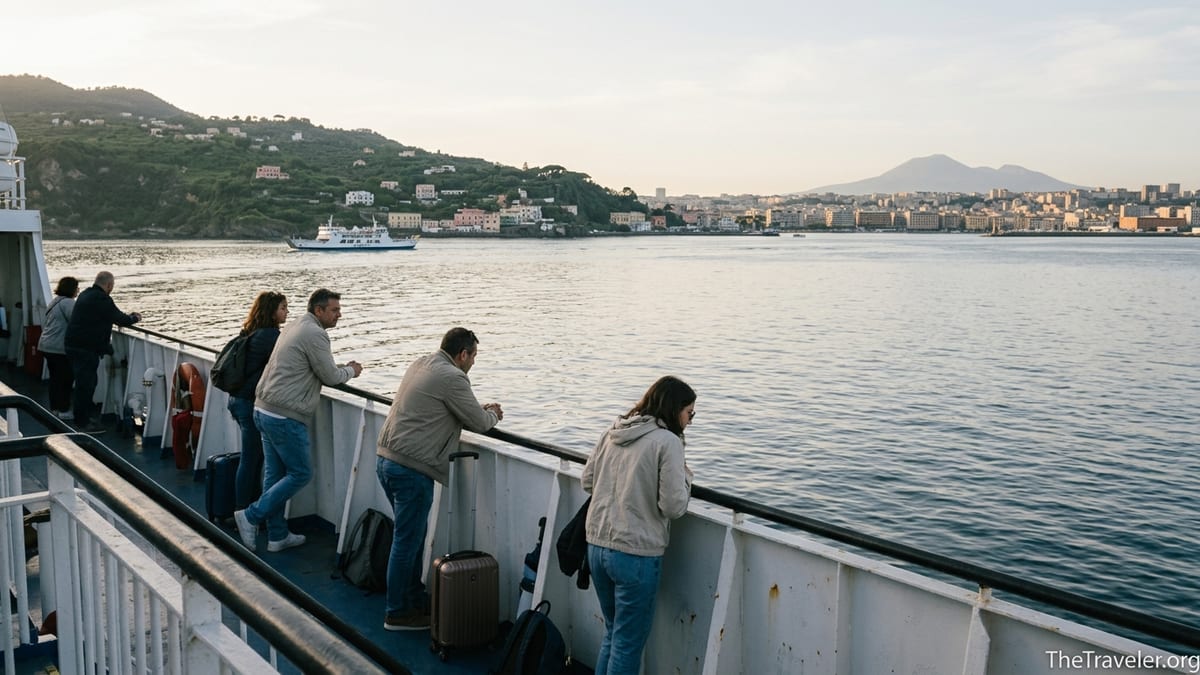
On conventional ferries, there is more space to move around, sit outside, and enjoy views of Ischia’s green slopes behind you and Vesuvius rising over Naples ahead. You will generally find indoor lounges with cafeteria-style seating, bars serving espresso, sandwiches, and cold drinks, and wide open decks with benches and railings. Vehicle decks are accessed via ramps during loading and unloading; foot passengers are normally directed to a separate side entrance.
Because the crossing is relatively short, amenities like Wi‑Fi, elaborate restaurants, or children’s play areas are not a focus. Plan to bring your own water bottle, sunscreen, and possibly a light jacket, as air conditioning inside can be cool even on hot days, while sea breezes on deck may feel fresh out of season. If you are prone to seasickness, choose a seat midship on the lower level of a conventional ferry where motion is gentler, and consider avoiding the smallest hydrofoils on choppy days.
Timing Your Crossing: Seasonality, Delays and Connections
The core schedule between Ischia and Naples operates year-round, but the number of daily departures and the mix of hydrofoils and ferries change across the seasons. In high summer, from roughly June to early September, there are many more sailings each day, including late evening options that allow a full day on the island before returning to the city. A summer day might see multiple Alilauro hydrofoils every few hours plus several Medmar and Caremar ferries spaced through the morning, afternoon, and evening.
In the shoulder months of April, May, late September, and October, frequencies drop slightly, though you can still expect a reasonable spread of departures from early morning to early evening. In winter, sailings are fewer, especially hydrofoils, and bad weather can disrupt services entirely. Strong winds or rough seas occasionally force hydrofoil cancellations first, leaving only the larger, more stable ferries in operation. When conditions are severe, even the big ferries can be suspended until the sea calms.
Delays are a part of life on this route, particularly in peak summer when ships can run late due to heavy embarkation at busy ports like Naples and Ischia. Reports from recent travelers mention 20 to 30 minute delays on some conventional ferries, which can be stressful if you have a tight connection to a train at Napoli Centrale or an evening flight from Naples Capodichino Airport.
To safeguard connections, plan a generous buffer. If you are catching a long-distance train to Rome or Florence, for instance, avoid booking a departure less than 90 minutes after your scheduled ferry arrival, and longer if you are bound to the airport. From Molo Beverello, the Alibus airport shuttle and city buses leave from nearby stops, while from Calata Porta di Massa you may rely on taxis or a short walk to reach public transport. Always check current public transport schedules, as routes and timings evolve from year to year.
Tickets, Prices and Practical Booking Tips
Ticket prices for the Ischia to Naples ferry vary based on operator, vessel type, season, and how far in advance you book. As of recent seasons, a one-way adult foot-passenger ticket on a conventional ferry often starts somewhere in the mid-teens in euros in low season and can climb into the twenties in high season. Hydrofoil tickets tend to cost more, frequently in the mid-twenties or low-thirties for popular summer sailings, especially when buying close to the departure date.
Vehicle fares are charged separately and can sometimes exceed the passenger fare, particularly for larger cars, vans, or campervans. Prices also increase around peak travel periods such as August holidays. Some companies charge small supplements for extra or oversized luggage, pets, or reserved seating on certain vessels. These add-ons can make a noticeable difference to your final cost if you are traveling as a family or group with multiple suitcases.
Booking options range from buying in person at ticket offices in Ischia Porto and Naples ports to using official ferry company websites or third-party booking platforms that aggregate different operators. In July and August, or on weekends in late spring and early autumn, buying in advance is strongly recommended. Same-day tickets are usually still available in the morning, but the most convenient mid-day crossings can sell out, particularly hydrofoils.
When you book online, pay close attention to the specific port and type of vessel shown in the itinerary. A listing that reads “Ischia – Napoli Beverello – hydrofoil” means a faster crossing and arrival at the hydrofoil pier, while “Ischia – Napoli Porta di Massa – ferry” indicates a conventional car ferry. This matters if you have hotel reservations near a specific part of Naples, or if you plan to connect to the metro system at Municipio station, which is very close to Molo Beverello.
Getting To and From the Ports on Each Side
On Ischia, the main departure point for Naples-bound sailings is Ischia Porto, a compact harbor ringed by cafes, shops, and ticket offices. Many hotels in Ischia town are within walking distance. If you are staying in other parts of the island, local buses connect towns such as Forio, Lacco Ameno, and Sant’Angelo with Ischia Porto. Buses can be crowded in summer, so if you have heavy luggage or an early departure, consider a pre-booked taxi from your accommodation.
For travelers staying in Casamicciola or Forio, check whether any of your target sailings depart from those ports instead of Ischia Porto. Although the classic Ischia to Napoli route uses the main port, some companies seasonally route certain ferries and hydrofoils via Casamicciola, which may be more convenient if your hotel is nearby.
In Naples, Molo Beverello and Calata Porta di Massa sit next to each other along the waterfront but serve different types of vessels. Molo Beverello mainly handles hydrofoils. It lies within walking distance of Piazza Municipio, the Municipio metro station, and the edge of the historic center. Calata Porta di Massa is the primary terminal for large car ferries and occupies a deeper section of the port; it can feel more industrial and is slightly farther on foot from central landmarks.
To reach the train station at Napoli Centrale or Garibaldi from Molo Beverello, many travelers use the Alibus shuttle or local buses that stop by the port, while taxis and ride services line up near the arrivals area. From Calata Porta di Massa, it is usually simplest to take a taxi if you have luggage or limited time. Always verify taxi tariffs posted at official stands and confirm that the meter is running before you depart.
The Takeaway
Traveling from Ischia to Naples by sea is a short but memorable crossing that frames some of the best views in the Gulf of Naples. How long the journey takes, however, depends heavily on your choices. A high speed hydrofoil with Alilauro or Caremar typically whisks you from Ischia Porto to Molo Beverello in about 50 to 65 minutes, ideal if you are traveling light and aiming for a same-day train or flight.
If you prefer more space, outdoor decks, and potentially lower fares, a conventional ferry with Medmar or Caremar to Calata Porta di Massa usually runs closer to 1 hour 20 minutes or 1 hour 30 minutes. Factor in boarding, disembarkation, and possible delays, and the total door-to-door experience can easily stretch beyond two hours, especially in peak summer.
Whichever option you choose, take time to confirm the exact port, schedule, and baggage rules a few days before you sail. Arrive at the port at least 30 minutes ahead, more if you carry heavy luggage or are unfamiliar with Naples’ busy harbor. With a bit of planning, the Ischia to Naples ferry can be a smooth and scenic finale to your island stay rather than a stressful race against the clock.
FAQ
Q1. How long does the Ischia to Naples ferry take on average?
The crossing usually takes about 50 to 65 minutes on a hydrofoil and around 1 hour 20 minutes to 1 hour 30 minutes on a conventional ferry, not including boarding and disembarkation time.
Q2. Which companies operate ferries from Ischia to Naples?
The main operators are Alilauro, Medmar, Caremar and, on some seasonal services, SNAV. Alilauro and Caremar often run hydrofoils, while Medmar and Caremar provide conventional ferries.
Q3. What is the difference between hydrofoils and conventional ferries on this route?
Hydrofoils are faster, enclosed vessels with airline-style seating and limited outdoor space, while conventional ferries are slower but larger, often with open decks, more room to move around, and space for cars.
Q4. From which ports do ferries depart in Ischia and arrive in Naples?
Most services leave from Ischia Porto on the island. In Naples, hydrofoils use Molo Beverello, while conventional car ferries normally dock at Calata Porta di Massa, both within the main port area.
Q5. How much does a ticket from Ischia to Naples usually cost?
Prices vary, but a one-way adult ticket on a conventional ferry often starts in the mid-teens in euros in low season and rises in high season, while hydrofoil fares are typically higher, often in the mid-twenties or more in peak months.
Q6. Do I need to book my Ischia to Naples ferry in advance?
Advance booking is highly recommended in summer, on weekends, and for peak times of day. Outside of the busiest periods, same-day tickets are often available, but specific hydrofoil departures can sell out.
Q7. Can I take a car on the Ischia to Naples ferry?
Yes, you can take a car on conventional ferries operated mainly by Medmar and Caremar. Hydrofoils do not transport vehicles, and car fares are charged separately from passenger tickets.
Q8. What happens if the sea is rough or there is bad weather?
Rough seas can cause delays or cancellations. Hydrofoils are often the first to be suspended in bad weather, while larger ferries may still operate unless conditions are severe. Always check with your ferry company on the day of travel.
Q9. How early should I arrive at the port before departure?
Arrive at least 30 minutes before departure if you are a foot passenger, and earlier if you are boarding with a vehicle or traveling at peak times when queues at check-in and boarding can be long.
Q10. How easy is it to connect from the ferry to trains or the airport in Naples?
From Molo Beverello, you are close to the Municipio metro station and buses to Napoli Centrale and the airport. From Calata Porta di Massa, taxis are often the most convenient option, especially with luggage. Allow generous time for any onward connections.