


Cathay Pacific’s co-branded credit cards are one of the most powerful ways to turn everyday spending into Asia Miles and real travel rewards. Used strategically, a single card can fund a long-haul business class flight to Hong Kong, a hotel weekend in Tokyo, or an upgrade on a busy route without dramatically changing your budget. This guide walks you through, step by step, how to use a Cathay Pacific credit card to earn, protect, and redeem Asia Miles in a way that makes sense for frequent travelers and occasional vacationers alike.
Get the latest updates straight to your inbox!
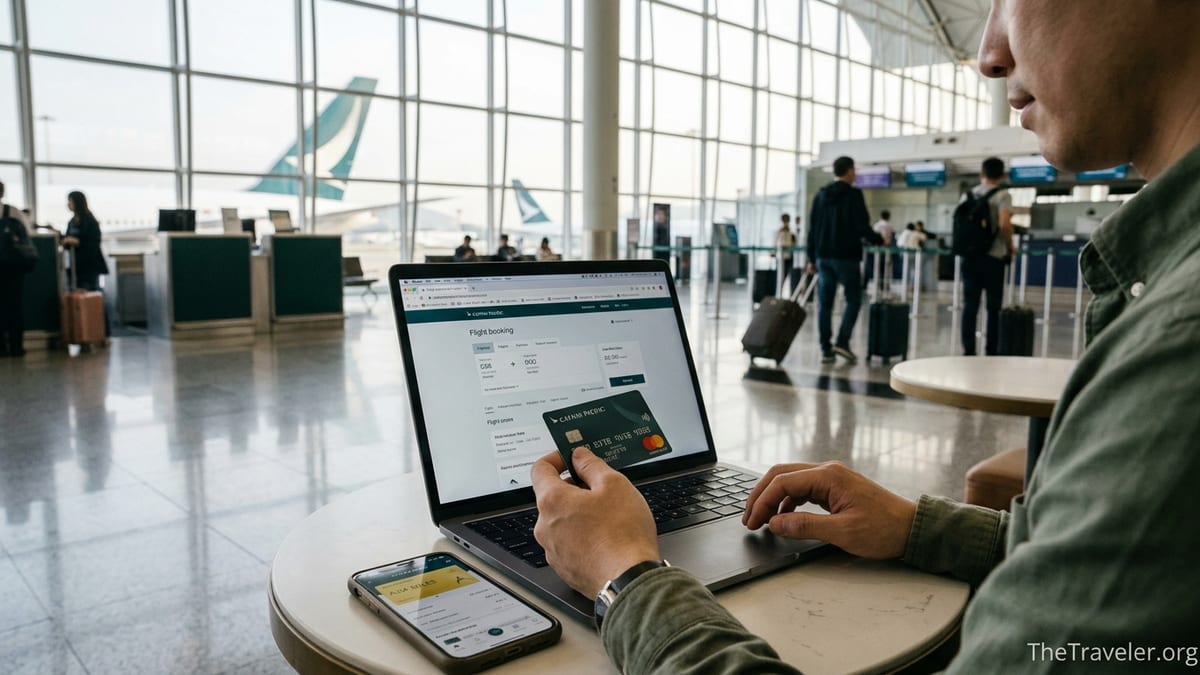
Step 1: Understand the Cathay program and your credit card
Before you start swiping, you need two things in place: an active Cathay membership (which holds your Asia Miles) and a Cathay co-branded credit card that earns directly into that account. The Cathay program, which merged the old Marco Polo Club and Asia Miles under a single "Cathay" umbrella, uses Asia Miles as its core currency. As long as you earn or redeem at least once every 18 months, your miles generally stay active, so a credit card that posts miles regularly is an easy way to keep your balance alive.
In the United States, the primary co-branded product is the Cathay World Elite Mastercard, issued by Synchrony. In other regions, you will see versions issued by Standard Chartered in Hong Kong, Neo Financial and RBC in Canada, and others. While details vary by market, the concept is the same: you earn Asia Miles on daily spending, often at accelerated rates for Cathay purchases and travel, then redeem those miles through your Cathay account.
Take a moment to review your own card’s earning structure on the issuer’s benefits guide. For example, the U.S. Cathay World Elite Mastercard typically earns more miles per dollar on Cathay Pacific and Hong Kong Express tickets and in-flight purchases, a solid rate on dining and eligible delivery services, and a base rate on other everyday spending. A Canadian Cathay card may earn extra miles per Canadian dollar spent on Cathay tickets purchased on Cathay’s site, with a different rate on general purchases. Knowing your multipliers is essential before you plan where to put your spend.
Also note whether your card earns Cathay Status Points in addition to Asia Miles. Some co-branded cards grant a small number of Status Points for meeting annual or monthly spend thresholds, which can help push you toward Cathay Silver or Gold status and benefits such as priority check-in or lounge passes.
Step 2: Link your card correctly to your Cathay account
Once your card is approved, the next critical step is ensuring it is properly linked to your Cathay membership number. If the bank application did not capture your existing number, you may have been auto-enrolled and given a new Cathay ID. Log in to your Cathay profile and check the "membership" section to confirm which number is active and that it matches the one the bank shows for your co-branded card.
If there is any mismatch, contact customer service on both sides. For instance, if your card statement shows a different membership number from the one you use to log into the Cathay website, call the bank to update the record so future Asia Miles credits post to your primary account. This avoids frustrating scenarios where miles are split between two profiles.
In markets where Cathay offers Card Linked Earn, such as Hong Kong, Macao and select Asia-Pacific regions, you can further connect your Cathay account with multiple Visa and Mastercard cards, including your co-branded card. Once linked via the Cathay app or website, qualifying spend at participating partners earns Asia Miles automatically even if you forget to show your membership QR code at checkout. If you use a Standard Chartered Cathay Mastercard or similar co-branded product, a single restaurant bill at a partner can earn miles twice: once from the credit card’s category bonus and once from the Card Linked Earn partner offer.
As a practical example, imagine dining at a Cathay partner restaurant in Hong Kong. You pay a 1,000 HKD bill with your Standard Chartered Cathay Mastercard that is saved in your Card Linked Earn profile. You earn Asia Miles per HKD from the card itself at its dining rate and a separate stream of miles from the restaurant through Card Linked Earn, all credited to the same Cathay account automatically.
Step 3: Maximize earning on flights and Cathay purchases
Using a Cathay credit card effectively starts with flights. Most co-branded cards award their highest earning rate on Cathay Pacific tickets purchased directly from the airline and, in some markets, on Hong Kong Express purchases and in-flight spending. That means you should almost always use your Cathay card, not a generic cash-back card, when paying for these tickets if your goal is building Asia Miles.
Consider a concrete scenario. A U.S.-based traveler books a round-trip Cathay flight from Los Angeles to Hong Kong for 1,200 USD, paying on the Cathay website with the Cathay World Elite Mastercard. The ticket itself earns Asia Miles based on Cathay’s distance and fare-class formula, which might be several thousand miles depending on the cabin and booking class. On top of that, the credit card might earn 3 Asia Miles per dollar on Cathay travel, adding roughly 3,600 Asia Miles from the payment alone. The same purchase on a general 1-mile-per-dollar card would earn around 1,200 transferable points instead.
In Canada, a Cathay co-branded card might earn 2 or more Asia Miles per Canadian dollar on Cathay-issued tickets in local currency. If you purchase a 1,500 CAD ticket from Vancouver to Hong Kong on Cathay’s site, you could earn several thousand Asia Miles from the flight plus 3,000 or more additional miles from the credit card transaction depending on the card’s multiplier. Over a couple of long-haul trips, the incremental miles from using the right card can be enough for a one-way upgrade or a regional short-haul award.
Whenever possible, buy Cathay flights directly through Cathay rather than an online travel agency if the co-branded card’s terms specify that the elevated rate applies only to tickets purchased from Cathay’s own channels. This is particularly important in Canada, where some terms specify that the higher multiplier applies only to charges billed by Cathay in Canadian dollars and not to redemption-related fees or third-party bookings.
Step 4: Turn everyday spending into steady Asia Miles
The real value of a Cathay credit card is transforming non-travel spending into future flights. Most Cathay co-branded cards offer bonus miles on dining, eligible food delivery services, and sometimes other lifestyle categories. For a traveler who eats out regularly, those restaurant bills can quietly accumulate into significant mileage balances over a year.
Imagine you live in San Francisco and spend 800 USD per month dining out or ordering delivery from major apps. If your Cathay World Elite Mastercard earns 2 Asia Miles per dollar on dining, that is around 19,000 Asia Miles per year from restaurant spending alone, before any travel. Add another 1,000 USD per month in general purchases at 1 mile per dollar, and you are approaching 31,000 Asia Miles annually from ordinary living expenses. That is already close to the mileage needed for a one-way economy ticket on certain Cathay routes during off-peak periods.
In Hong Kong, a Standard Chartered Cathay Mastercard holder could structure household bills to run through the card wherever possible. Paying utility bills, groceries, school fees, and local transportation on the card at the base earn rate might yield tens of thousands of Asia Miles a year. Layer in Card Linked Earn partners, where the same supermarket or cafe gives you Asia Miles twice on the same transaction, and your progress toward a regional redemption accelerates further.
Even if you are based in North America or Europe and do not live in a Cathay hub city, regular use of the card for daily expenses, plus occasional Cathay flights, can result in balances large enough to meaningfully offset the cost of long-haul journeys to Asia every couple of years.
Step 5: Combine your Cathay card with transferable points
While a Cathay credit card is excellent for ongoing, category-based earning, some travelers in the United States and selected markets can get even more value by pairing it with a bank card that earns transferable points. Major bank programs, including American Express Membership Rewards, Citi ThankYou Rewards, Capital One miles and others, allow transfers to Asia Miles at a 1 to 1 ratio in many cases, often with periodic transfer bonuses.
For example, you might hold a general travel rewards card that earns 4 or 5 points per dollar at U.S. supermarkets and U.S. restaurants, which you use domestically, and your Cathay World Elite Mastercard for Cathay purchases and select travel or dining outside the United States. When you are ready to book a Cathay or oneworld partner award, you can transfer a lump sum of points from your bank program into Asia Miles to top up whatever you have earned directly from the Cathay card.
A practical illustration: You have 40,000 Asia Miles from a couple of years of Cathay card spend and flights. You find a business class award from New York to Hong Kong for around 85,000 Asia Miles plus taxes and surcharges during an off-peak period. Rather than waiting another year to earn the difference, you transfer 45,000 points from a bank program into Asia Miles, which post almost instantly in many cases. The combination of direct credit card earnings and transferred bank points unlocks a premium-cabin trip that might otherwise cost several thousand dollars in cash.
From a strategy standpoint, many frequent travelers use the Cathay co-branded card as a targeted tool: Cathay tickets, in-flight purchases, and maybe certain high-bonus lifestyle categories. They then use high-earning general travel cards for everything else and move those flexible points into Asia Miles when a specific redemption appears. This hybrid approach can outperform using only the co-branded card or only a bank card.
Step 6: Protect your Asia Miles and use card perks wisely
Asia Miles are valuable, so protecting them is as important as earning them. Cathay generally keeps your miles active as long as there is at least one qualifying earn or redemption activity within a specified window, often 18 months. A Cathay co-branded card makes this simple: a single small transaction that posts miles to your account refreshes the clock.
For instance, if you have not flown Cathay for a while and see that your Asia Miles are approaching their inactivity deadline, you could buy a modestly priced item at a Cathay partner retailer online, dine at a participating restaurant with your linked card, or make a small Cathay travel purchase on your card. Once the miles credit to your Cathay account, the validity period for your entire balance is extended according to the current program rules.
Co-branded cards may also come with benefits that directly support your mileage strategy. Some Standard Chartered Cathay cards offer a discount on the miles required when redeeming certain Cathay travel awards. Others provide complimentary or discounted lounge passes that can be redeemed with Asia Miles or used directly as a cardholder. U.S. or Canadian Cathay cards might include perks such as a welcome bonus of Asia Miles for meeting a spending threshold in the first few months or limited annual mileage renewal offers where using the card can help preserve miles that would otherwise expire.
Review these benefits in your card’s guide and build them into your travel planning. For example, if your co-branded card grants one complimentary lounge visit each year and you are scheduling a long connection in Hong Kong, plan to use that visit when flying economy to make the journey more comfortable while saving your Asia Miles for flights or upgrades rather than spending them on lounge entry.
Step 7: Redeem smarter for flights, upgrades, and more
Earning Asia Miles with a Cathay card is only half the story. The other half is choosing redemptions that deliver worthwhile value. In general, Cathay flight awards and upgrades, especially in premium cabins and on longer routes, offer the strongest return per mile compared with many non-flight options such as merchandise.
Consider an example: You have built up 90,000 Asia Miles from three years of Cathay card spending, occasional Cathay flights, and one small bank points transfer. You are planning a trip from Europe to Hong Kong and see that a one-way business class ticket is selling for around 3,000 euros in cash, but an Asia Miles award on the same route requires roughly 85,000 miles plus taxes. Redeeming your miles here effectively turns that long-haul flight into a low-cash outlay, often well above the value you might get from redeeming the same miles for short-haul economy flights or consumer electronics.
Upgrades can also be compelling. Suppose you have already purchased a discounted premium economy ticket for a transpacific flight using your Cathay card, earning both flight miles and bonus miles from the card. Closer to departure, you find an upgrade offer that uses Asia Miles to move you into business class. If the additional taxes and surcharges are modest and the required miles are reasonable compared with the cash difference, converting your Asia Miles into a lie-flat seat for the overnight sector can be one of the best uses of your balance.
Do not overlook partner awards. Asia Miles can be used on oneworld airlines such as American Airlines, Japan Airlines, Qantas and others. A traveler based in Dallas, for instance, could use Asia Miles earned from the Cathay World Elite Mastercard to book a Japan Airlines flight to Tokyo or a Qantas flight onward to Australia, even if they seldom fly Cathay itself. Always compare mileage costs and fees across different dates and cabins, since Cathay’s award charts and pricing can vary by distance, routing and demand.
The Takeaway
Using a Cathay Pacific credit card effectively is about more than just putting every expense on the card. It starts with a clear understanding of how your specific co-branded product earns Asia Miles on Cathay flights, dining and general purchases, backed by proper linking to your Cathay membership so that every mile credits correctly. From there, you can layer on practical strategies: favor the card for Cathay-issued tickets, steer everyday spending into bonus categories, leverage Card Linked Earn where available, and complement your earning with transferable bank points when you need a mileage top-up.
Handled this way, even a casual traveler can see tangible benefits. A family that flies Cathay every couple of years from North America or Europe to Asia might use the Cathay card to earn a free one-way ticket for a child or an upgrade for an overnight flight. A Hong Kong-based frequent diner could use steady restaurant spend plus card-linked partners to fund short regional getaways. The key is consistency: earn miles regularly, protect them from expiring with occasional qualifying activity, and redeem thoughtfully for high-value flights and upgrades instead of low-value merchandise.
Ultimately, the Cathay credit card is a tool. Used step by step, with clear goals and realistic expectations, it can turn your coffee runs, grocery bills and plane tickets into lie-flat seats, memorable trips and a smoother travel experience across Cathay and its partners.
FAQ
Q1. Do I need a Cathay membership before applying for a Cathay credit card?
Yes. You should have a free Cathay membership so your Asia Miles can post correctly. If you are auto-enrolled during the card application, confirm that the membership number on your card account matches the one you use to log into the Cathay website or app.
Q2. How many Asia Miles can I earn from everyday spending on a Cathay card?
The exact number depends on your card and where you live, but many Cathay co-branded cards earn an elevated rate on Cathay purchases and dining, and a base rate on all other spending. For example, a U.S. cardholder who spends heavily on dining and uses the card for general purchases might accumulate tens of thousands of Asia Miles per year without flying.
Q3. Does it matter where I buy my Cathay tickets when using the credit card?
Often yes. Many Cathay co-branded cards pay their highest mileage rate when you purchase tickets directly from Cathay’s own channels, such as the airline’s website or app, and pay in the local currency specified in the card’s terms. Buying through third-party travel agencies may still earn miles, but usually at a lower rate.
Q4. Can I use Asia Miles earned from my credit card on other airlines?
Yes. Asia Miles can be redeemed on a range of partner airlines, including other oneworld carriers such as American Airlines, Japan Airlines, Qantas and several regional partners. The miles earned from your Cathay credit card are treated the same as miles earned from flying and can be spent on eligible partner awards subject to availability.
Q5. Will using a Cathay credit card keep my Asia Miles from expiring?
In most cases, yes, as long as the miles from your card activity post to your Cathay account before your existing miles reach their inactivity deadline. Cathay generally requires at least one qualifying earn or redeem activity within a specified period, so small, regular credit card transactions are an easy way to keep your entire balance active.
Q6. Is a Cathay co-branded card better than a general travel rewards card?
It depends on your travel pattern. If you fly Cathay often and value direct Asia Miles earning on Cathay purchases and dining, a co-branded card can be very effective. However, many travelers find the best strategy is to combine a Cathay card for Cathay purchases with a general travel rewards card that earns high transferable points in other categories, then transfer those points into Asia Miles when needed.
Q7. Can I earn Asia Miles twice on the same purchase?
Yes in some markets. For example, in Hong Kong and certain Asia-Pacific regions, you can link your Cathay membership to eligible Visa and Mastercard cards via Card Linked Earn. When you pay at participating partners with a co-branded Cathay card, you can earn miles once from the card’s earning structure and again from the partner via Card Linked Earn on the same transaction.
Q8. Are Cathay credit card welcome bonuses worth pursuing?
Usually yes if you can comfortably meet the spending requirement. New Cathay credit cards frequently offer a lump sum of Asia Miles after you spend a certain amount in the first few months. That one-time bonus can significantly accelerate your first redemption, such as a one-way premium cabin flight or a regional round-trip, especially when combined with miles from ongoing spend.
Q9. What are some good ways to redeem Asia Miles from credit card spending?
Generally, long-haul flights and premium-cabin awards on Cathay or partners tend to deliver the highest value per mile. Upgrades from economy or premium economy to business class on overnight flights are often excellent uses too. While you can redeem for hotels, merchandise or lounge access, these options usually provide lower value compared with flight-based redemptions.
Q10. What should I do if my credit card Asia Miles do not post to my account?
First, wait for at least one or two full statement cycles, since some banks post miles monthly rather than instantly. If the miles still do not appear, compare the Cathay membership number stored with your credit card issuer to the one in your Cathay profile and contact both the bank and Cathay customer service with your statements. Most posting issues can be resolved once the correct membership number is confirmed and missing transactions are verified.