


The Cathay Pacific credit card promises a faster path to Asia Miles, priority treatment at the airport, and a smoother way to book aspirational long-haul flights. I spent months using the current U.S. Cathay World Elite Mastercard in real travel scenarios from New York to Hong Kong to see whether it actually delivers. Here is what I found when I put the card to work on flights, dining, and everyday spending so you do not have to learn the hard way.
Get the latest updates straight to your inbox!
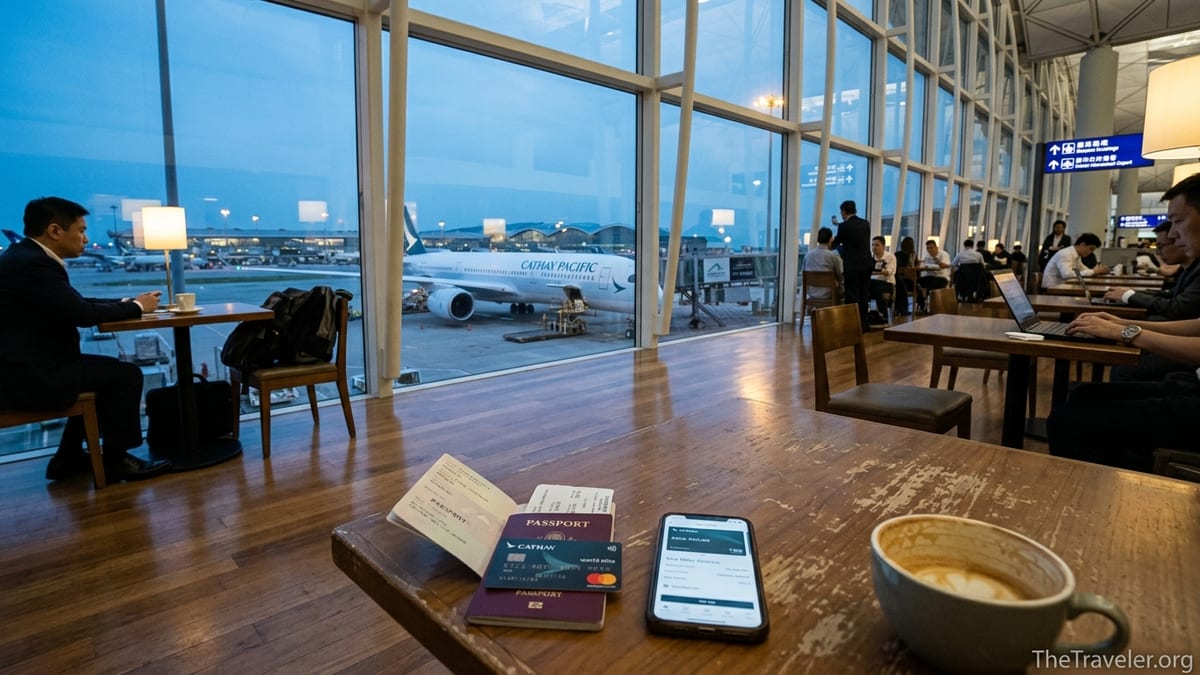
What Exactly Is the Cathay Pacific Credit Card Today?
Before anything else, it is important to clarify which card we are talking about. In the United States, Cathay’s co-branded product is now the Cathay World Elite Mastercard issued by Synchrony Bank. It quietly replaced the older Cathay Pacific Airways Visa Signature in 2024 and opened to new applications in 2025. The new card still targets U.S.-based travelers who want a direct pipeline of Asia Miles and Status Points from their everyday spending, but it sits in a very crowded field of travel cards.
The headline earning structure is straightforward. You earn around 3 Asia Miles per dollar on Cathay Pacific and HK Express flight and in-flight purchases, 2 Asia Miles per dollar on dining and most delivery services, and 1 Asia Mile per dollar on everything else. That puts it roughly in line with other mid-tier airline cards from big U.S. carriers, at least on paper. In practice, what matters is how you actually travel, where you spend, and how valuable Asia Miles are to you compared with more flexible currencies.
The card carries an annual fee around the typical mid-range airline card level, in the neighborhood of 95 dollars, and includes the usual suite of World Elite Mastercard protections. There are no foreign transaction fees, so I was able to swipe it in Hong Kong, Tokyo, and Singapore without an extra percentage charge. For a Cathay loyalist who lives in the United States and flies to Asia once or twice a year, this looks like a reasonable skeleton. The question is whether the real-world experience matches the promise.
The other key point is that this is the only U.S.-issued credit card that earns Cathay Asia Miles and Cathay Status Points directly. That exclusivity sounds compelling, but it can be a double-edged sword when general travel cards from American Express, Capital One, Citi, and Bilt all allow 1:1 transfers into Asia Miles anyway. During my testing, that comparison became impossible to ignore.
Putting the Card to Work on Actual Trips
I started by using the Cathay card the way an aspirational Cathay flyer probably would. On a New York to Hong Kong economy ticket priced at roughly 1,100 dollars round trip, paid on cathaypacific.com in U.S. dollars, the card earned a little over 3,000 Asia Miles from the credit card itself, plus flight miles and Status Points from the loyalty program. If the same purchase had been on a 2x-everywhere Capital One card that transfers to Cathay, I would have picked up about 2,200 transferable miles that could be sent to Asia Miles or somewhere else. The Cathay card did win the raw-earn race on that specific ticket, but not by a landslide.
Where the multiplier looked better was on dining during trips. In Hong Kong, I ran the card at everything from cha chaan teng cafés in Mong Kok to higher-end restaurants in Central. A typical 60 dollar dinner for two generated about 120 Asia Miles from the card. Over a week, with meals, coffee, and the occasional cocktail, I racked up close to 1,000 miles just on food. That is tangible, but not transformational. If you are used to dining cards that earn triple or quadruple transferable points, the Cathay card’s 2x rate feels only slightly above average, not exceptional.
The card’s lack of foreign transaction fees did matter, though. In Tokyo, I compared using the Cathay card to a no-fee general travel card. The pricing in yen converted cleanly, with no hidden surcharge, and the Asia Miles posted reliably after each statement. For a traveler who spends a lot of time in Asia, being able to swipe freely in Hong Kong dollars, yen, or Singapore dollars without penalty is essential. The card cleared that basic bar, but again, so do most decent travel cards today.
One surprise was how rarely the Cathay-specific perks changed my behavior. Priority check-in worked as advertised when I flew Cathay out of JFK, allowing me to use a shorter economy lane, and priority boarding got me on the plane early enough to secure overhead bin space. Those are pleasant upgrades, especially on a packed flight to Hong Kong, but they did not feel like make-or-break features that would justify carrying this card over a more flexible alternative.
Asia Miles in the Real World: Earning and Burning
The entire value of this card rises or falls with Asia Miles. During my test, I treated every Cathay card purchase as a building block toward a concrete redemption. For most long-haul travelers, that is usually a one-way or round-trip premium cabin ticket between North America and Asia. Sample award prices on Cathay’s charts often show economy from the U.S. West Coast to Hong Kong in the ballpark of 40,000 to 50,000 Asia Miles one way, and business class closer to 85,000 to 110,000 one way, depending on date and route. Exact prices fluctuate, but those ranges illustrate the scale of what you are working toward.
To see how the math feels, imagine you spend 20,000 dollars per year on the card. If 5,000 of that goes to Cathay flights at 3x, 7,500 goes to dining and international purchases at 2x, and the remaining 7,500 is at 1x, you might earn something like 45,000 to 50,000 Asia Miles in a year from the card alone. That is enough for a one-way economy ticket between the U.S. and Hong Kong in many cases, or a meaningful discount on a business class booking. It is not an unreasonable outcome, but it is not dramatically better than what a good transferable-points card can provide.
Redemptions are where the friction appeared. Availability on Cathay’s own metal, especially in business class, was hit or miss. For a shoulder-season trip from San Francisco to Hong Kong, I could find economy awards on multiple dates with taxes in the range you would expect from a long-haul ticket originating in the U.S., but business class seats were scarce unless I booked many months in advance or was flexible with weekday departures. When I tried alternative Oneworld partners, such as routing through London on British Airways or using Asia Miles on a domestic American Airlines flight, the value per mile often dropped due to surcharges or less favorable pricing.
On the positive side, Cathay’s distance-based structure still offers some useful sweet spots, particularly on shorter regional flights in Asia. During one test routing, a sub-3-hour hop from Hong Kong to Bangkok priced around the cost of a budget cash ticket or less when I used Asia Miles, which made my card-earned miles feel more powerful. If you visit Asia frequently and are willing to redeem on intra-Asia routes rather than always saving for transpacific business class, the card’s rewards feel more attainable and less abstract.
How the Cathay Card Compares to Flexible Travel Rewards
The biggest takeaway from my testing is that the Cathay credit card does not exist in a vacuum. U.S. travelers can earn Asia Miles by transferring points from several major programs, including cards that award 2 or more points per dollar on almost everything. When I compared a year of simulated spending on the Cathay card with a similar year on a 2x everywhere card that transfers to Cathay, the gap was surprisingly small, and sometimes the general rewards card came out ahead.
For example, taking that same 20,000 dollars in annual spend and placing all of it on a 2x transferable points card would produce roughly 40,000 points that can be sent to Cathay at 1:1 or diverted to Alaska, British Airways, or hotel partners when Asia Miles availability is poor. With the Cathay card, I got a bit more than that only because some spending fell into the 3x flight and 2x dining categories. The trade-off is flexibility. Once miles hit your Cathay account, they are locked there. With a general card, you can decide where to send them at the moment you are booking, which is a powerful safety valve if Cathay’s award space dries up.
Another difference is welcome bonuses. Co-branded airline cards like Cathay’s tend to offer modest one-time bonuses in the tens of thousands of miles range when you meet a spending requirement. In my testing period, the bonus on offer was noticeably weaker than many competing airline or flexible rewards cards available to U.S. travelers. Since welcome bonuses are often the single biggest burst of value a card will ever provide, that shortfall matters.
The final comparison point is ongoing perks. The Cathay card’s priority check-in and boarding are pleasant but basic. You do not get lounge access simply for holding the card, nor do you receive automatic elite status. By contrast, several general travel cards now bundle airport lounge access, travel credits, and trip protections that materially change your travel experience, especially on long-haul international journeys. When I measured the Cathay card against that landscape, it behaved more like a niche supplemental card than a core piece of a U.S.-based traveler’s wallet.
Costs, Fees, and the Fine Print That Actually Matters
From a cost perspective, the Cathay World Elite Mastercard sits in the mid-tier zone. The annual fee is around the same level you see on mainstream airline cards for American, Delta, or United. If you redeem at least one decent award per year or take advantage of the card’s modest partner discounts, you can offset that fee, but this is not a no-brainer keeper the way a no-annual-fee card might be.
Standard interest rates are in line with other travel credit cards, meaning that you should never carry a balance solely for the sake of earning miles. During my test, I paid every statement in full. If you revolve balances on a card like this, any theoretical value from Asia Miles disappears quickly under interest charges. The card does at least avoid foreign transaction fees, which is essential if you plan to use it heavily in Hong Kong or elsewhere in Asia.
One detail that caught my attention in the fine print was how Status Points accrue from spending. The card allows you to earn a small number of Status Points based on your annual purchases, but the rate is slow enough that you cannot realistically rely on card spend alone to climb the Cathay elite ladder. You still need actual flying to achieve Silver, Gold, or Diamond. During my testing, the Status Points from card spend felt more like a little nudge than a real strategy.
The terms and conditions also outline how miles can be used for non-flight redemptions: hotels, car rentals, and experiences. With the card you receive a discount on those redemptions when you book through Cathay’s dedicated travel portal. I sampled a few hotel bookings in Hong Kong and Bangkok and saw that the per-mile value on these options was often weaker than on high-value flight redemptions. It can still make sense in a pinch, for example if you are a few thousand miles short of a flight but really need a hotel night, but it is not the optimal long-term use of the miles you earn from the card.
Who This Card Really Makes Sense For
After several months of living with the Cathay credit card, the profile of the ideal cardholder became fairly clear. The card is best suited for a U.S.-based traveler who flies Cathay or HK Express multiple times per year, spends heavily on dining both at home and abroad, and is committed to building and burning Asia Miles regularly rather than hoarding them for years. In that case, the 3x and 2x earning bands, the Cathay-specific discounts, and the priority airport treatment add up to a focused but coherent value proposition.
One real-world example is a consultant who lives in Los Angeles, flies to Hong Kong three or four times per year for client work, and tacks on regional trips to Seoul and Singapore. They might spend more than 5,000 dollars annually on Cathay tickets, another 10,000 on dining and international spend in Asia, and then use the card for select everyday purchases at home. Over a couple of years, the Asia Miles earned from this pattern could realistically fund upgrades or off-peak business class awards within Asia, and the priority boarding could save time at busy hubs.
By contrast, a casual traveler who flies to Asia once every few years, or someone whose long-haul trips are not tied to Cathay routes, will likely be better off with a flexible rewards card. In my testing, when I shifted the exact same spend from the Cathay card to a general points card, I could still book Cathay awards through transferable points while preserving the option to pivot to other airlines when Cathay award space was thin. That flexibility is hard to beat unless you are deeply loyal to one airline.
Another group that might find less value here is travelers who mostly redeem miles on partners within North America or Europe. Asia Miles can book those flights, but devaluations and partner surcharges have eroded some of the better deals. If your dream trips involve Hawaii, the Caribbean, or intra-Europe hops rather than Asia, the Cathay ecosystem may feel like a forced fit.
The Takeaway
Testing the Cathay Pacific credit card in real travel scenarios confirmed what its critics and fans have both been saying. This card is not a disaster, but it is also not a breakout star. It functions as a narrow tool for committed Cathay flyers who live in the United States, travel to Asia frequently, and are happy to think in terms of Asia Miles first and everything else second.
For that small but real audience, the card’s combination of 3x on Cathay flights, 2x on dining and international purchases, no foreign transaction fees, and modest airport privileges can justify its annual fee. Used strategically, it can be the backbone of a focused Asia Miles strategy, especially if you value short regional awards inside Asia and can plan far ahead for long-haul premium cabins.
For most travelers, however, a good flexible rewards card that transfers to Asia Miles will be the smarter first choice. In my months of use, I kept returning to the same conclusion: it is easier and often faster to earn a meaningful stash of points with a general travel card, then decide later whether Cathay deserves your miles. The Cathay card can still play a role as a secondary card for hardcore fans of the airline, but it is no longer the only or even the best path into the Asia Miles universe.
FAQ
Q1. Is the Cathay Pacific credit card worth getting for U.S.-based travelers?
The card can be worth it if you fly Cathay or HK Express several times a year and redeem Asia Miles often, but most U.S. travelers will find better overall value in a flexible travel rewards card that can transfer to Cathay as needed.
Q2. How many Asia Miles can I realistically earn per year with the Cathay card?
With around 20,000 dollars in annual spend, including several Cathay tickets and heavy dining and international use, it is realistic to collect roughly enough miles for one economy trip between North America and Hong Kong or a few regional flights within Asia.
Q3. Do Asia Miles earned from the card expire?
Asia Miles now use an activity-based system, where earning or redeeming at least once within a set period keeps your miles active. As long as you use the card and occasionally redeem, expiry is less of a concern than it used to be, though you should always check the current rules before planning a long-term strategy.
Q4. Does the Cathay credit card include airport lounge access?
Holding the card alone does not grant automatic lounge entry. You can use Asia Miles earned from the card to redeem business class lounge access on select occasions, but that redemption uses up miles that might otherwise go toward flights.
Q5. Are the card’s travel protections competitive?
The Cathay World Elite Mastercard provides a standard suite of trip protections in line with other mid-tier airline cards, but it generally does not match the more generous coverage found on premium general travel cards that charge higher annual fees.
Q6. How does the card perform for everyday non-travel spending?
On everyday purchases that do not fall into flight or dining categories, the card earns just 1 Asia Mile per dollar, which is less compelling than the flat 2x or higher rates available on many general travel cards that also transfer to Cathay.
Q7. Is the welcome bonus on the Cathay card competitive?
The welcome bonus is typically smaller than the bonuses on many leading airline and flexible rewards cards in the U.S. market, which means it may take longer to build a meaningful balance of Asia Miles purely from the sign-up offer.
Q8. Can I use the Cathay card without paying foreign transaction fees?
Yes. One clear strength of the card is that it does not charge foreign transaction fees, making it suitable for use in Hong Kong, across Asia, and in other international destinations where Cathay flyers tend to travel.
Q9. Does spending on the card help me earn Cathay elite status?
Spending on the card can generate some Cathay Status Points, but the earning rate is modest. You will still need significant flying on Cathay or its partners to reach Silver, Gold, or Diamond status levels.
Q10. Who should skip the Cathay Pacific credit card?
Travelers who rarely fly Cathay, who prefer non-Asia destinations, or who value flexibility to move points among multiple airlines and hotels are generally better served by a versatile travel rewards card that can transfer to many programs instead of being locked into Asia Miles.