

E ZPass can feel like one of those travel essentials you are almost forced to use. Cashless tolling is now standard on many major routes in the Northeast and Mid Atlantic, and “toll by mail” prices keep creeping up. Used smartly, an E ZPass account can cut your toll costs in half on some roads and make long drives much smoother. Used carelessly, it can quietly drain your travel budget with higher tier pricing, missed violations, and unnecessary fees. This guide walks you through how to use E ZPass without paying more than you need to, with concrete examples from real toll roads travelers actually drive.
Get the latest updates straight to your inbox!
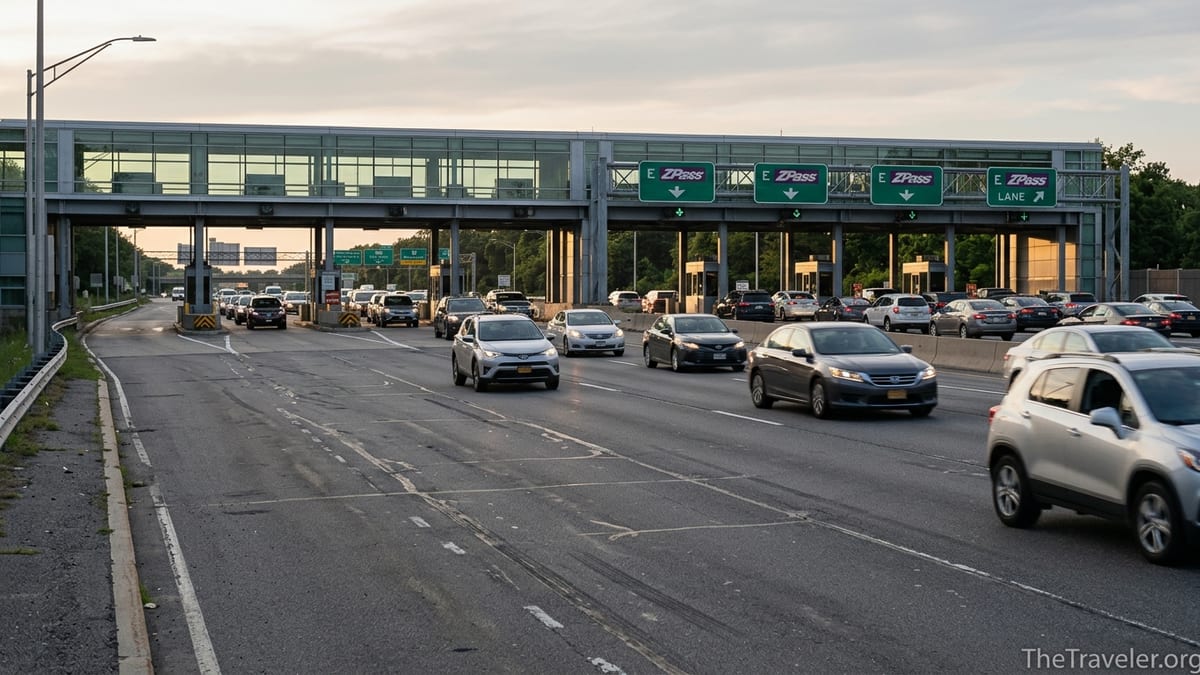
Know Where E ZPass Works and Why It Can Save So Much
E ZPass is a shared electronic toll system used by dozens of agencies in roughly 20 U.S. states, mostly in the Northeast, Mid Atlantic and parts of the Midwest. You will encounter it on heavily traveled routes such as the New Jersey Turnpike, the New York State Thruway, the Massachusetts Turnpike, and the Pennsylvania Turnpike, as well as on busy bridges and tunnels including New York City’s MTA crossings and the Port Authority bridges and tunnels that link New York and New Jersey. Once your account is set up, the small windshield transponder lets you roll through designated lanes while the system deducts tolls from a prepaid balance.
On many roads, the price difference between using a valid E ZPass and being billed by mail is substantial. For example, on the Pennsylvania Turnpike, driving the full length of the mainline with toll by plate can cost roughly double what an E ZPass user pays for the same trip. For a long passenger car journey across the state, that can mean the E ZPass total around the mid fifty dollar range versus a toll by plate bill slightly over one hundred dollars for the identical distance. Over a full road trip season, that difference can easily add up to hundreds of dollars in extra costs if you rely only on mailed bills.
The same “pay more without a tag” pattern appears on individual gantries and shorter toll roads. One of the shorter Pennsylvania turnpike extensions charges about four dollars and fifty cents for a full trip with E ZPass but around nine dollars with toll by plate. Travelers on the Chesapeake Bay Bridge Tunnel in Virginia, a favored route to and from the Outer Banks and Virginia Beach, see off peak car tolls around the mid teens with an E ZPass tag, while summer weekend peak rates for all travelers rise into the low twenties. Knowing that E ZPass is accepted and that it often cuts the base rate or shields you from the highest mailed bill price is the first step to using it strategically.
Because E ZPass is not nationwide, long distance drivers need to check which states on a planned route are in the network. As a rule of thumb, most toll facilities from Virginia north through New England, plus stretches of Ohio, Indiana, Illinois and a handful of other Midwestern states, work with E ZPass, while many southern and western states run different systems. You do not need to memorize the map, but before a major trip that crosses several toll regions, it is worth confirming which legs will recognize your tag and which will still bill by plate or use a separate pass.
Choose Your Home E ZPass Agency Carefully
The single most important decision for keeping your toll costs down is which state agency you choose to manage your E ZPass account. All tags in the system look and behave similarly at toll booths, but individual agencies set their own rules about discounts, fees and special pricing. Eight agencies in the Northeast, including those in Maine, Massachusetts, New Hampshire, Rhode Island, New York and New Jersey, reserve most of their best discounts for their own home tags. That means a New York commuter who regularly uses MTA bridges and tunnels often pays less per trip if they hold a New York issued E ZPass rather than a tag from another state, even though both tags work at the same gantry.
As a concrete example, New York’s E ZPass program offers resident discounts on several crossings. Certain Queens and Brooklyn residents receive lower E ZPass tolls on the Cross Bay and Marine Parkway bridges for everyday commuting, while Staten Island residents have a special discounted E ZPass rate on the Verrazzano Narrows Bridge that is not available to drivers with out of state tags. Bronx residents can be rebated the E ZPass toll on the Henry Hudson Bridge after each trip when they use a properly mounted New York tag. These hyper local discounts only apply if your account is managed by the New York customer service center and your residency matches the program rules.
Massachusetts is another useful case study. An E ZPass MA account offers free transponders and no monthly account fee. The state requires you to preload a modest amount per transponder, often around twenty dollars for an individual passenger car account, which is then drawn down as you drive. Travelers who live in Boston and routinely use the Massachusetts Turnpike, the Tobin Bridge, or the Callahan, Sumner and Ted Williams tunnels can access specific discount programs and commuter plans through the Massachusetts account that would not be available if they simply brought in, say, a New Jersey tag.
For most U.S. based travelers, the least expensive strategy is to choose an agency in the state where you drive toll roads most often and where you qualify for any available local plans, and then use that same tag across the broader network. Exceptions exist. Some drivers deliberately open a New York based account because New York eliminated routine monthly account fees years ago, while a few other agencies still charge small recurring fees for non residents or for low usage accounts. If you live on a state line and split your time between two toll systems, it is worth spending a few minutes comparing the fee schedules and discount plans for both before you apply.
Avoid Common Fee Traps and Higher Tier Pricing
Beyond the base toll rates, a series of easy to miss charges can make E ZPass more expensive than necessary if you are not attentive. One of the simplest pitfalls is letting your account fall into a “license plate only” or video tolling status even though you have a transponder. On several bridges and tunnels operated by the Port Authority of New York and New Jersey, there is a three tier toll structure. Drivers with a properly mounted New York or New Jersey E ZPass pay the lowest rate, drivers whose accounts are billed based on a photographed license plate tied to an E ZPass customer profile pay a higher “mid tier” rate, and drivers with no E ZPass account at all pay the full toll by mail price.
In practice, this means that if your tag is sitting in a glove compartment, lying flat on the dashboard, or mounted in the wrong location so that the system cannot read it, the toll may default to that mid tier rate instead of the cheaper full E ZPass rate, even though you think you used your pass. For a frequent New York City commuter, that difference can add up quickly when crossing structures such as the George Washington Bridge, Lincoln Tunnel, or Holland Tunnel each workday. Always follow the mounting instructions from your issuing agency, verify that newer vehicles with metallic windshields use the designated mounting zone, and check your online account periodically to confirm that transactions show as tag reads rather than license plate reads.
Another category of fee trap is administrative or account maintenance charges. Some agencies still apply small monthly fees for certain types of accounts, often targeted at drivers who do not live in the state or who maintain very low activity. Maryland, for instance, has historically charged a modest monthly fee on some accounts but waived it for residents who use their Maryland E ZPass for a minimum number of tolls per month. Policies can change, so before you open an account, quickly review whether there is a recurring fee and what conditions waive it, then decide whether your expected usage pattern qualifies.
Finally, be cautious about lost or unreturned tags. If you close an account or change vehicles, most agencies require that you physically return your transponder by mail or at a service center. Failing to do so can trigger a non returned tag fee, which can easily exceed the value of the plastic device itself. Drivers who had tags stolen from a vehicle or who simply forgot to mail them back have reported being charged significant replacement or loss fees. When you rent cars, never leave your personal E ZPass in the vehicle. Take a moment to remove the tag from the windshield or from the removable clip when you drop off the car so you do not end up paying for someone else’s tolls plus any resulting fees.
Use E ZPass Smartly on Road Trips and Rentals
For many travelers, the biggest E ZPass cost surprises arrive during rental car trips. Rental car companies often offer their own toll program with a built in device or license plate billing, layered with convenience fees that may apply every day of the rental whether you use a toll road or not. It is common to see daily service fees in the four to six dollar range, on top of whatever the toll authority itself charges. Over a weeklong trip on the New Jersey Turnpike, that can easily mean paying more in rental toll service fees than in tolls themselves.
If you already have a personal E ZPass, you can usually bring it on a rental trip and place it in the windshield of the rental car. The critical rule is to ensure that you do not activate both the rental company’s toll device and your own tag at the same time. Many rental companies install a small toll transponder behind a sliding plastic door on the windshield. If you intend to use your own E ZPass, that door must stay firmly closed, and you should double check the rental agreement to confirm that doing so opts you out of their toll plan. Always verify that your own E ZPass plate list does not include the rental’s license number, to avoid cross billing confusion later.
For example, suppose you fly into Newark, rent a car for four days, and plan to drive the New Jersey Turnpike down to Philadelphia and back. With your own active E ZPass tag from New York, you can pay the standard E ZPass rate at each toll plaza with no extra service fee. If you instead rely on the rental company’s toll program, you might pay the same underlying toll rate that an E ZPass user pays but with a four or five dollar daily program fee on top, quickly adding twenty dollars or more to what would otherwise be a modest set of tolls. On longer vacations that include multiple tolled bridges and tunnels into New York City, the cumulative rental fees can be even higher.
Out of state visitors who do not own an E ZPass but know they will drive through heavy toll territory may find it worthwhile to open an account in advance and have the tag mailed to them before the trip. Several agencies, such as New York and Massachusetts, provide free or low cost transponders with a required prepaid balance that can easily be spent over a single long holiday drive. A traveler from Ohio planning a summer road trip that includes the Massachusetts Turnpike, New York Thruway and several New York City bridges can order a tag a few weeks beforehand and avoid paying the highest toll by mail prices on each leg.
Stay On Top of Your Account, Plates and Notices
Even careful drivers sometimes end up paying far more than expected because they ignored their E ZPass account for months or missed mailed toll notices. In states that rely heavily on photo based tolling when no tag is present, such as Maryland, unpaid tolls can accumulate and trigger substantial civil penalties that dwarf the original toll amount. There have been cases where around seventy five dollars in missed tolls snowballed into nearly one thousand dollars owed after fees and penalties were added, and drivers only discovered the issue when they tried to renew their vehicle registration and found it blocked due to a toll flag.
The simplest habit to avoid this kind of shock is to log in to your E ZPass account after any major trip and scan the recent activity. Look for transactions that appear as toll by plate or video tolls instead of tag reads, and confirm that the toll facilities and amounts match your recollection of the drive. If you see locations you do not recognize, that could indicate that your plate is associated with another account or that someone cloned your license plate. Report discrepancies quickly, while toll authorities still have fresh camera imagery and logs to investigate.
Keeping your vehicle plate information accurate is just as important as maintaining your payment details. Whenever you buy, sell or transfer a car, update your E ZPass account within a day or two. If you sell a car and forget to remove its plate from your account, any tolls accidentally incurred by the new owner could be billed to your account for a period of time, which you would then need to dispute. Conversely, if you add a new car but do not register the plate, some systems will bill those trips by plate at higher rates, even if the tag was present but not properly linked in the database.
Finally, treat any toll related mail seriously, even if it looks like a generic bill. Cashless tolling systems, especially in large metro areas, typically send an initial invoice with the base amount, then apply escalating late fees if it is not paid by the stated due date. If you believe you already paid a toll, or that it should have been covered by E ZPass, do not just ignore the notice. Contact the issuing agency, reference your E ZPass account and the date of the trip, and ask whether the toll can be transferred to your account at the lower E ZPass rate or whether there has been a misread of your plate.
Plan Your Routes and Timing With Toll Costs in Mind
While you cannot negotiate toll prices, you can choose routes and timing that make E ZPass work harder for you. Some facilities offer off peak tolls that are lower than rush hour prices, especially for larger vehicles. For instance, the Chesapeake Bay Bridge Tunnel in Virginia charges one rate for off peak travel and a higher one for peak weekends during the summer beach season between mid May and mid September. If you are flexible, shifting your crossing to an off peak time can save several dollars on a single round trip, particularly when towing or driving an RV.
In dense metro areas such as New York City, multiple tolled routes often exist between the same two points. E ZPass lets you factor in not only the base toll price but also potential time savings. For example, a driver coming from New Jersey into Manhattan could choose the Lincoln Tunnel, Holland Tunnel or George Washington Bridge, all of which accept E ZPass. Toll rates differ slightly by vehicle class, time of day and direction, but the bigger savings frequently come from avoiding idling in long cash lines and cruising steadily through an E ZPass only or open road tolling lane. Over a full road trip that includes several such crossings, that saved fuel and time can be worth as much as the explicit toll discount.
Modern navigation apps can help you estimate toll costs along a route, but they are not perfect. Some apps display generic toll amounts or cash rates and do not always adjust for your specific E ZPass program discounts. When planning a long trip on the Pennsylvania or New York Thruway systems, consider visiting the official toll calculator pages for those authorities, entering your entry and exit points, and comparing E ZPass versus toll by mail scenarios. Even a few minutes spent running example trips can reveal where E ZPass delivers the largest price gap, and where an alternate non tolled route might be a better choice for a slower leisure drive.
Route planning also matters when crossing multiple E ZPass states in succession. Because each state runs its own back office system, resolving a disputed charge from a long multistate trip sometimes requires visiting the specific state’s site where the toll was incurred and entering your tag number. Keeping a simple travel log of which tolled roads and bridges you used on which dates can save time if you later need to match a confusing line item on your E ZPass statement to a particular turnpike segment or bridge crossing.
The Takeaway
Used thoughtfully, E ZPass is still one of the best tools for keeping toll costs in check and making road trips smoother across much of the eastern United States. The key to avoiding overpaying is to treat your E ZPass account as an important travel financial tool rather than a background utility. Choosing a home agency that aligns with where you drive most, mounting your tag correctly to ensure you qualify for the true E ZPass rate instead of a higher mid tier price, and reviewing your transactions after big trips will do more to control your toll spending than any coupon ever could.
For everyday commuters, paying attention to resident discount programs and low traffic off peak windows can yield meaningful savings every month. For occasional travelers and vacationers, planning ahead before flying into a toll heavy region, bringing your own tag for rentals, and staying on top of mailed notices can prevent unpleasant surprises when you get home. With a bit of upfront research and simple ongoing habits, you can enjoy the convenience of driving through cashless toll gantries while paying no more than necessary for the privilege.
FAQ
Q1. Does it matter which state I get my E ZPass from?
Yes. While any E ZPass tag will usually work across the network, many agencies restrict their best discounts and resident plans to their own accounts. Choosing the state where you drive most often, or one that offers free tags and no monthly fees, typically saves the most money over time.
Q2. Why did I get charged a higher toll even though I have E ZPass?
Several agencies use a three tier pricing system. If your tag was not properly read, the system may have billed you using your license plate at a higher “mid tier” rate, or even at the full toll by mail rate if it could not link the plate to your account. Check that your tag is correctly mounted and that your plate is up to date in your account.
Q3. Is E ZPass always cheaper than toll by mail?
Almost always, but not absolutely everywhere. On major corridors like the Pennsylvania Turnpike and many New York bridges and tunnels, E ZPass can cost roughly half of the toll by mail price. There may be a few facilities where the difference is smaller, so it is still wise to compare if you only use a single toll road once a year.
Q4. Can I use my personal E ZPass in a rental car?
Yes, in most cases. Place your tag on the rental’s windshield and keep the rental company’s built in transponder switched off so you are not double billed. Be sure the rental’s license plate is not permanently listed on your account after you return the car.
Q5. What happens if my E ZPass account runs low or the payment card expires?
If your balance falls below the minimum and your card cannot be charged, some tolled trips may switch to toll by plate at higher rates, or generate violation notices if the system cannot collect. Keeping your payment details current and glancing at your balance before long trips helps you avoid surprise bills and fees.
Q6. Do I need a separate E ZPass for every car I own?
Not necessarily. Many agencies allow you to list multiple license plates on one account and move a single transponder between vehicles of the same general class, such as passenger cars. If two cars are often driven at the same time, having a separate tag for each avoids misreads and potential violations.
Q7. How can I check if E ZPass will work on my road trip route?
Before you travel, review the toll road and bridge lists on the website of your home E ZPass agency and any turnpike authorities along your route. Most post clear maps or tables showing where E ZPass is accepted. For mixed routes that include non E ZPass states, assume your tag will not cover those segments and budget accordingly.
Q8. What should I do if I get an unexpected toll bill in the mail?
Do not ignore it. Compare the date, time and location with your E ZPass statement. If you believe the bill covers a trip that should have been charged to your account at the lower rate, contact the toll authority promptly and ask whether the toll can be transferred or corrected. Acting within the stated deadline helps you avoid late fees.
Q9. Are there ways to reduce toll costs besides using E ZPass?
Yes. Planning travel during off peak hours on facilities with variable pricing, using alternative non tolled routes when you are not in a hurry, and combining errands to reduce the number of separate trips across the same bridge or tunnel can all help. E ZPass lowers the rate you pay per crossing, but your route choices still matter.
Q10. Is E ZPass worth it if I only take one or two toll trips a year?
It depends on the roads you use. On corridors where toll by mail is roughly double the E ZPass price, even a single long trip can justify opening an account, especially if your chosen agency offers free transponders and no monthly fee. If you truly drive tolled routes only once every few years, carefully paying a one time mailed bill might be simpler.