


Buying travel insurance is only half the job. To actually benefit from your Travelance policy when something goes wrong, you need to set it up properly before you leave home. From choosing the right plan and entering your details correctly to saving your wallet card and understanding how to call for help, each step you take before departure can make a real difference if you face a medical emergency or trip disruption on the road.
Get the latest updates straight to your inbox!
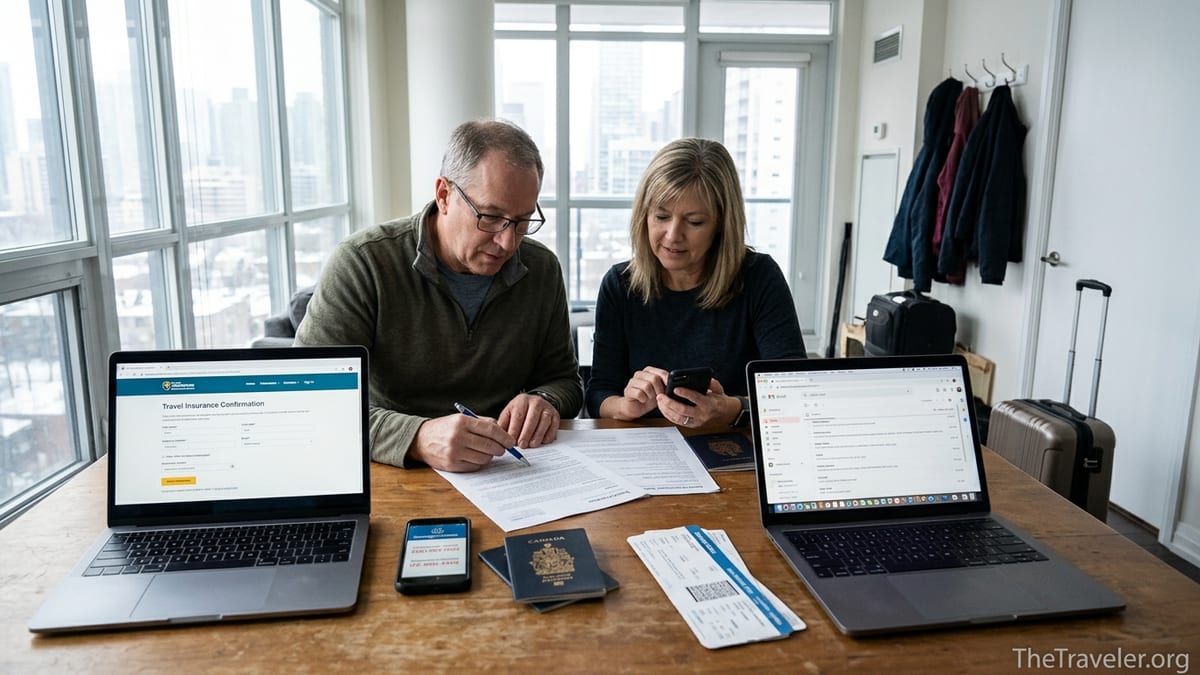
Understand What Travelance Covers and Who It Is For
Travelance is a Canadian distributor that focuses on travel and accident insurance for two main groups: Canadian residents heading outside their home province or territory, and non residents visiting Canada, including tourists, new immigrants and international students. Plans are underwritten by Old Republic Insurance Company of Canada and include 24/7 emergency assistance. In practice, this means that if you are a Canadian from Ontario taking a 10 day family trip to Florida, or your parents are visiting you from India for six months, there is likely a Travelance product designed for your situation.
For Canadian residents, common options include an Emergency Medical plan, an All Inclusive plan that adds trip cancellation, interruption, baggage and travel accident benefits, and stand alone Trip Cancellation and Interruption coverage. For visitors to Canada, Travelance markets Essential and Premier emergency medical plans that focus on hospital and doctor bills if you fall ill or get injured after arrival in Canada. There are also Youth Premier plans aimed at travellers under age 30, useful for working holiday makers or students planning side trips to the United States.
The headline numbers give a sense of scale. Travelance emergency medical coverage for outbound Canadians commonly advertises up to 10 million dollars in eligible emergency medical benefits, including hospital stays, physician services, ambulance, emergency evacuation and some follow up care. For visitors to Canada, the policy limit you choose might be, for example, 100,000 or 300,000 dollars in emergency medical coverage for the entire insured period. The actual benefits and limits depend on the exact plan and policy wording in force when you buy, so before you do anything else, download and skim the official policy booklet provided with your quote.
Just as important as what is covered is what is not. Travelance plans have exclusions for unstable pre existing conditions, certain high risk activities, travel to destinations under active government travel advisories and more. For instance, a Canadian aged 72 planning a 14 day cruise in the Caribbean might be covered for a sudden heart attack if their cardiac condition has been stable for the required number of days before departure, but not for a flare up of a lung condition treated with home oxygen during the stability period. Understanding these nuances ahead of time helps you choose the right plan and avoid unpleasant surprises later.
Choose the Right Travelance Plan Step by Step
Using Travelance effectively starts with matching the plan to your trip. First, define your traveller type. Are you a Canadian resident leaving your home province, or a visitor coming to Canada from abroad. A Canadian couple from Alberta taking two or three short trips a year to the United States and Mexico might look at an annual multi trip All Inclusive plan with a 15 or 30 day per trip limit. A 65 year old parent visiting Canada from the Philippines for four months would instead look at a Visitors to Canada emergency medical plan with coverage for the full 120 days.
Next, decide whether you need single trip or annual coverage. If you only take one major trip a year, a single trip plan is usually simplest. Forbes Advisor Canada has highlighted how Travelance offers both single trip and annual multi trip options, with sample prices showing, for example, that a 50 year old travelling from Canada to the United Kingdom for 10 days with a 3,500 dollar trip cost might pay in the low to mid hundreds for an All Inclusive single trip plan, compared with a higher but still competitive premium for an annual plan that covers multiple trips. In contrast, a frequent business traveller who flies to the United States every month may find the annual multi trip option more economical and convenient.
Then, align the coverage duration and limits with your actual itinerary. For Canadian residents, single trip emergency medical plans can cover up to 365 days for younger travellers, with shorter maximums for those in their 60s, 70s and 80s. A 59 year old snowbird driving to Arizona for five months could insure the full period on a single trip emergency medical plan. For visitors to Canada, you choose a start date, an end date and a coverage limit such as 100,000 or 300,000 dollars, making sure the dates align with your expected arrival and departure from Canada, plus a cushion of a few days in case of minor changes.
Finally, consider whether you need cancellation and interruption coverage. If you have prepaid non refundable costs, such as a 5,000 dollar European tour or a 10,000 dollar cruise, the All Inclusive or Trip Cancellation and Interruption plan can protect these payments if you have to cancel or cut your trip short for a covered reason such as serious illness, a family member’s death or a house fire. Travellers who only have a low cost airfare and cancellable accommodation might choose to buy just emergency medical insurance instead, accepting the risk on smaller trip costs.
Get a Quote and Apply: What You Need Before You Buy
Once you know which plan you want, the next step is to obtain a quote through a licensed broker, an online comparison site that offers Travelance or directly via an agent accessing the Travelance portal. The information you need is fairly standard across Canadian travel insurers. For Canadian residents, be ready to provide your province of residence, date of birth, trip dates, destination regions, total trip cost if you want cancellation coverage, and whether or not your trip includes any cruises. For visitors to Canada, expect to provide your country of origin, planned arrival and departure dates from Canada, age, and whether you already have any partial coverage through another policy.
Accuracy matters. Imagine a 68 year old Canadian booking a 21 day tour that includes Italy, France and Spain, departing Toronto on September 10. When getting a quote, they should list the entire 21 day period as their trip dates, and identify Europe as the destination region. If they accidentally enter only 14 days, thinking the extra week spent with friends in Barcelona is not really part of the “trip,” their coverage might end too early. The same applies to visitors. A 30 year old software engineer coming from Brazil to work remotely in Vancouver for six months should select the full six month period, not just the first three months, even if they are unsure whether they will stay that long, because their medical costs will only be insured within the policy dates.
During the online application or broker assisted process, read every health and eligibility question slowly. Travelance policies often do not require a full medical questionnaire for younger travellers, but they do ask general eligibility questions such as whether you are travelling against medical advice, awaiting a medical test or procedure, or have been advised not to travel. Answering “no” when the truthful answer is “yes” could later lead to a denial of claims. For older travellers, some plans require a more detailed stability assessment or, for certain age and trip length combinations, a separate eligibility questionnaire before coverage is confirmed.
Before entering payment details, check two things on the summary page: that your names are spelled exactly as on your passports, and that the dates and coverage amounts match your intentions. It may seem minor, but if an emergency arises in a hospital billing department, having your insurance confirmation correctly match your identification can save time and confusion. After purchase, Travelance or your intermediary will send you a confirmation of coverage, the full policy wording and usually a wallet card with emergency contact numbers. Save these documents as PDFs on your phone and email them to a trusted family member in case your device is lost or stolen.
Set Up Your Travelance Policy Properly Before Departure
With your policy purchased, there are a few practical steps to complete before your trip starts. First, review the effective date and time in your confirmation. For most single trip policies, coverage for trip cancellation begins at the time you buy the plan, while emergency medical coverage begins when you actually leave your home province or country on your trip. If you bought coverage on June 1 for a September 10 departure, and you suffer a covered illness on August 25 that forces you to cancel, the cancellation portion could protect your non refundable deposits. However, emergency medical coverage may not respond to a fall at home on August 10 that has nothing to do with your trip.
Next, program the emergency assistance phone numbers into your mobile phone and write them down on a physical card kept with your passport. Travelance policies for Canadians and visitors to Canada typically direct you to call a 24/7 emergency assistance center before seeking or as soon as reasonably possible after seeking medical care. For example, if you fracture your ankle hiking near Banff as a visitor, the instructions will tell you to contact the assistance team so they can help direct you to an appropriate hospital, provide a payment guarantee when possible and explain the documents you will need for a claim. Failing to call could reduce benefits, except in cases where it was impossible to do so.
It is also important to brief your travel companions. If you are a 75 year old Canadian cruising the Mediterranean with a partner, make sure they know where your Travelance wallet card and policy email are stored. In an emergency where you are unconscious or heavily sedated, they may be the ones speaking with the assistance center. Similarly, if you purchase a Visitors to Canada plan for your parents in their 70s travelling from Hong Kong to stay with you in Toronto, consider printing the emergency contact instructions in their language if English is a barrier, and keep a copy by the phone at home.
Finally, check for overlaps and gaps with other coverage. Some Canadian credit cards and group benefit plans offer travel medical or trip interruption benefits, but they may have lower limits, higher deductibles or shorter trip length allowances than your Travelance plan. For instance, your credit card may cover trips up to 15 days for travellers under 65, while your Travelance annual emergency medical plan for ages under 69 may cover 17 or 31 days per trip. Understanding which policy is primary, what the maximum trip length is, and how deductibles apply will help you avoid double paying for certain benefits or, worse, assuming you are covered when you are not.
Manage Changes, Cancellations and Extensions Before You Go
Travel plans rarely stay frozen. Travelance allows certain changes before departure, but the rules are specific. If you postpone your trip dates before you have left and before any claim has been made, you may be able to adjust the dates of your single trip policy, often subject to underwriting approval and any rate change. For example, if a Canadian couple insured a 3,000 dollar May tour of Italy under an All Inclusive plan, then moved the tour to September with the same cost and itinerary, they would typically contact their broker or Travelance distributor to endorse the policy to new dates rather than cancelling and re buying. Any additional premium due would be calculated based on their ages and the new travel period.
In some situations you might cancel the policy altogether before departure. Travelance frequently allows cancellation and a refund if you cancel before the effective date or within a short free look period, provided no claim has been paid or is pending. A common case is when a visitor to Canada’s visa application is refused. If a 27 year old applicant from Mexico buys a 365 day Visitors to Canada policy starting August 1 but then receives a visa refusal in July, they or their broker can submit proof of refusal and request a full or partial premium refund. The exact conditions, fees and deadlines for this vary by product and distributor, so it is important to verify them when you buy.
Extensions are another area to consider before the original coverage end date. Visitors to Canada often decide to extend their stay. If your parents from India originally planned to visit for three months and then decide to stay for six, they should contact their Travelance representative before the current policy expires to request an extension. In many cases, extensions are allowed if there have been no claims and there is no new medical condition, but they may be subject to underwriting review and updated stability periods. If a claim has occurred, or if there has been a significant change in health, the extension request may be declined or restricted.
For annual multi trip plans, the key is to track the maximum days allowed per trip. If your annual Travelance emergency medical plan for ages under 69 permits 17 or 31 days per trip, and you decide to spend 45 days touring Southeast Asia, you might need to buy a top up policy for the extra days beyond your annual plan limit. A 40 year old Toronto resident spending 28 days in Thailand and Vietnam could either reduce the trip to 31 days to stay within their annual plan, or buy a short single trip top up to cover the additional days over their base policy limit.
Prepare to Use Travelance in a Real Emergency
Although the focus of this guide is on steps before departure, it is useful to rehearse what you will do if an emergency happens on your trip. The main action is to contact the emergency assistance center as soon as practicable. If you are a visitor to Canada covered under a Travelance Essential or Premier plan and you develop severe chest pain in Vancouver, you would call the assistance number listed on your wallet card, provide your policy number, location and symptoms, and follow the instructions given. They might direct you to the nearest appropriate hospital and contact the facility to provide a payment guarantee, reducing the chance that you need to pay a large bill upfront.
Keep all documentation. Suppose a 52 year old Canadian with an All Inclusive plan slips on wet stairs at a Lisbon hotel, breaks a wrist and spends a night in hospital. They should ask for itemized bills, medical reports and discharge summaries, and send copies to the assistance center while still abroad if possible. Once home, they will complete the Travelance claim form for emergency medical expenses, attaching original receipts and any supporting documents. Having read the claim requirements before departure makes this process smoother.
For trip cancellation and interruption claims, the trigger is often a sudden, unforeseen event. Imagine booking a 7,000 dollar Antarctic cruise, insuring it under a Travelance All Inclusive plan, and then being diagnosed with an illness that makes you medically unfit to travel a week before departure. You would contact both the tour operator to cancel and the Travelance claims department to start a claim. They would likely request medical certificates from your physician confirming the date of first symptoms, diagnosis and why you cannot travel, plus proof of the non refundable amounts from the cruise company.
Because each policy has detailed definitions of covered reasons and exclusions, spending an hour with your policy wording before you travel will pay off in clarity during a stressful event. Pay special attention to pre existing condition clauses, emergency medical exclusions related to alcohol, drugs or reckless behavior, and any provisions related to war, civil unrest or travel advisories. If you are unsure about a scenario, discuss it with your broker before you leave rather than making assumptions in the moment.
The Takeaway
Using Travelance travel insurance effectively is not just a matter of paying a premium. It involves a sequence of deliberate steps before departure: understanding which type of traveller you are, choosing the correct plan and duration, completing a careful and truthful application, setting up your documents and emergency contacts, and planning for possible changes to your itinerary. Real world examples, from snowbirds spending months in the southern United States to parents visiting children in Canada, show how plan selection, dates and health disclosures can affect what is covered when something goes wrong.
If you approach your Travelance purchase as part of your trip planning, rather than an afterthought, you will be better positioned to navigate an emergency with support from a 24/7 assistance team and a clear understanding of your benefits. Always refer to the official policy wording for the final word on coverage, and when in doubt, ask your licensed advisor to walk through your situation before you click “buy.” The right preparation before your trip can turn a complex insurance product into a practical safety net that works as intended when you need it most.
FAQ
Q1. When should I buy my Travelance travel insurance in relation to my trip?
For trip cancellation benefits to apply to unforeseen events before departure, you generally need to buy coverage soon after you make your first non refundable payment, such as a deposit on a tour or cruise. Emergency medical coverage usually starts when you actually leave your home province or country, but the cancellation portion can protect you from the date of purchase, so waiting until just before departure can leave you exposed if you need to cancel earlier.
Q2. What information do I need on hand before getting a Travelance quote?
You will typically need each traveller’s full name and date of birth, province or country of residence, travel dates, destination region, total non refundable trip cost if you want cancellation coverage, and any details requested about pre existing medical conditions or planned activities such as cruises. Having your flight and accommodation bookings in front of you helps ensure that the dates and trip costs you declare match your real itinerary.
Q3. How do I choose between an Emergency Medical plan and an All Inclusive Travelance plan?
If your biggest concern is the cost of medical treatment abroad and your prepaid trip costs are relatively low or fully refundable, an Emergency Medical plan may be sufficient. If you have invested heavily in non refundable tours, cruises or flights, an All Inclusive plan can add trip cancellation, interruption, baggage and travel accident benefits on top of medical coverage, providing a broader safety net at a higher premium.
Q4. What happens if my trip dates change after I have already bought a Travelance policy?
If you change your dates before departure and before any claim is made, you should contact your broker or Travelance representative as soon as possible. In many cases, they can endorse the policy to new dates or re issue it, although additional premium or fees may apply if the trip becomes longer or if you move into a higher risk season or age band. Making changes before the policy takes effect is almost always easier than after.
Q5. Can I get a refund if my visa to Canada is refused after I bought a Visitors to Canada plan?
Travelance and its distributors often allow cancellation and premium refunds for Visitors to Canada policies when a visa is formally refused, as long as no claim has been made and you provide proof of the refusal. The exact refund rules, fees and deadlines depend on the specific product and intermediary, so you should confirm these conditions at the time of purchase and keep a copy of your visa decision letter.
Q6. What should I do before leaving home to make sure I can use my Travelance coverage easily?
Before departure, save your policy confirmation, wallet card and full wording as PDFs on your phone and in cloud storage, program the 24/7 emergency assistance numbers into your phone, and tell your travel companions where to find this information. If you are arranging insurance for parents or other relatives, print the policy summary in their language if necessary and keep a paper copy with their passports so hospital staff can quickly identify the insurer in an emergency.
Q7. How are pre existing conditions handled under Travelance policies?
Travelance policies use stability periods and specific exclusions to manage pre existing conditions. In general, a condition must be stable, without new symptoms, changes in medication or hospitalizations, for a set number of days before departure, which can range from a few months to a year depending on age and plan. Certain severe heart and lung conditions may be excluded regardless of stability. The exact rules are detailed in the policy wording and should be reviewed with a licensed advisor if you have ongoing health issues.
Q8. Can I extend my Travelance coverage if I decide to stay longer than planned?
Extensions are sometimes possible but must usually be requested before your existing coverage expires, and often only if there have been no claims and no significant change in health. For example, visitors to Canada who wish to extend their stay should contact their broker in advance of the policy end date to ask about an extension. Approval, pricing and any new stability requirements depend on the plan and your medical history during the covered period.
Q9. How does Travelance work with other insurance I may have, such as credit card or employer coverage?
Travelance may act as primary or secondary coverage depending on the policy terms and any other insurance you hold. Many Canadian travellers use Travelance to supplement credit card or group plans that have lower limits or shorter maximum trip lengths. To avoid gaps or overlaps, review your existing benefits for trip length limits, medical maximums, deductibles and excluded destinations, then discuss with your advisor how a Travelance plan would coordinate with them if a claim occurs.
Q10. What is the first step I should take if I have a medical emergency while insured with Travelance?
As soon as your immediate safety is secured, your first step should be to contact the 24/7 emergency assistance center using the phone number on your Travelance wallet card. Provide your policy number, location and a brief description of the problem. The assistance team can direct you to appropriate medical facilities, help arrange payment guarantees where possible, and explain what documentation you will need for a claim. Calling promptly is crucial, as failure to notify the assistance provider can reduce the benefits payable under some policies.