


More news on this day
Air travel across western Indonesia remained severely disrupted on Monday after the latest eruption of Mount Anak Krakatau sent ash plumes across key air corridors, forcing repeated closures at Jakarta’s main airports and affecting hundreds of domestic and international flights.
Get the latest news straight to your inbox!
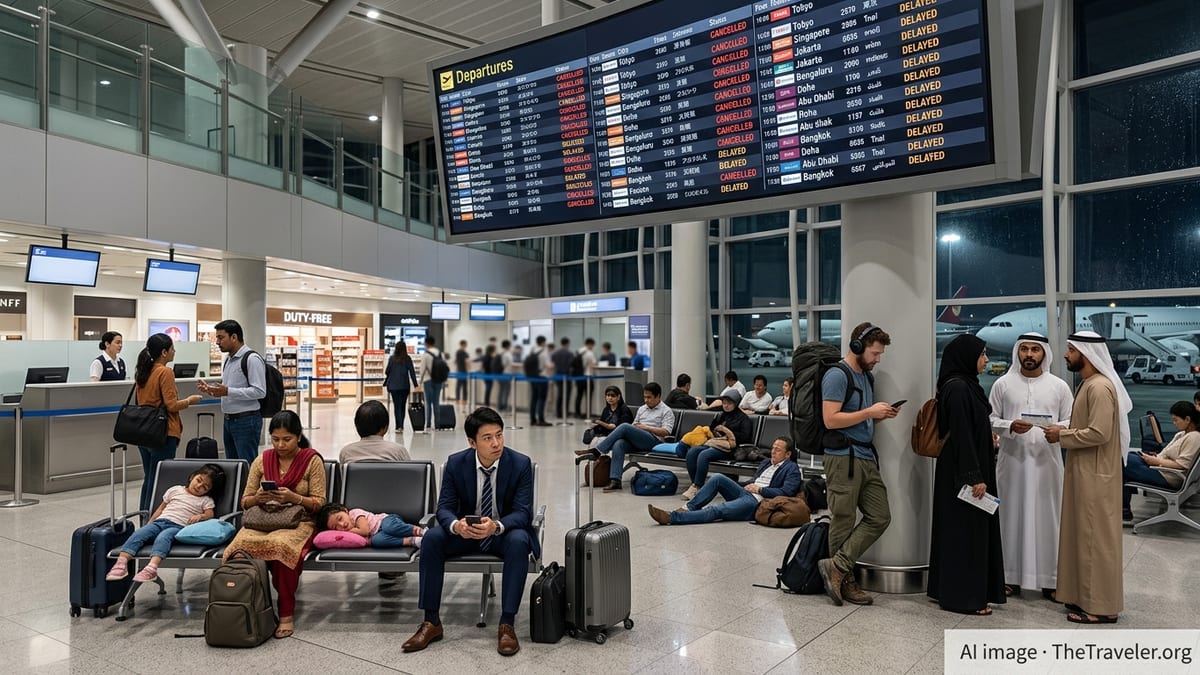
Airports Around Jakarta Struggle to Reopen
Publicly available information shows that Soekarno-Hatta International Airport on the outskirts of Jakarta has faced on-and-off suspensions of flight operations since Sunday, September 6, after ash from Anak Krakatau was detected in the airspace above the hub. Notices to airmen and airport statements describe temporary closures as ash clouds drifted over runways and approach paths.
Indonesia’s Ministry of Transportation reported that eight airports in western Indonesia, including Soekarno-Hatta and Jakarta’s Halim Perdanakusuma, were ordered to suspend operations as ash spread across parts of Java and Sumatra. The ministry extended airport closures through the morning of Monday, September 7, citing ongoing monitoring of ash conditions and prioritizing safe visibility and engine performance for aircraft using the busy Jakarta airspace.
Reports from Indonesia’s state-owned airport operator indicate that hundreds of scheduled movements at Soekarno-Hatta alone were affected during the initial 24 hours of restrictions. With additional closures and rolling cancellations into Monday, the total number of disrupted takeoffs and landings in the Jakarta area is now estimated in the high hundreds, placing significant pressure on airline schedules across the region.
Hundreds of Flights Canceled and Delayed
Data compiled by Indonesian aviation authorities and airport operators shows that more than 700 flights at Soekarno-Hatta were disrupted after the first wave of closures on Sunday. Separate tallies issued by regional news agencies and transport authorities indicate that at least 200 to 300 flights were either canceled outright or forced to divert on the first full day, with additional cancellations added as ash forecasts were updated.
By Monday, low-cost carriers and full-service airlines operating in and out of Jakarta had released multiple travel advisories, describing large-scale cancellations and retimed services. Public statements from carriers such as Lion Group and AirAsia confirm that flights to and from both Soekarno-Hatta and Halim Perdanakusuma were suspended for much of the day, with some operators extending waivers and flexible rebooking options for passengers originally scheduled to travel through September 9.
Airlines have advised travelers bound for Jakarta and other affected airports to monitor flight status closely, as schedules are being adjusted in real time to align with updated volcanic ash assessments. Aviation tracking platforms and airport information screens show long stretches of canceled flights on key domestic routes linking the capital with cities in Sumatra, Java, and beyond, as well as disrupted services to regional hubs across Southeast Asia and Australia.
Stranded Passengers Face Long Waits and Limited Options
With the closure of Jakarta’s main gateway, tens of thousands of passengers have been left in limbo. Coverage from regional and international media describes crowded terminals, long check-in hall queues, and passengers sleeping in seating areas as they wait for new departure times. Many travelers connecting through Jakarta to onward domestic destinations have reported missed links and overnight delays as airlines work to reassemble their networks.
Travel advisories note that passengers are being reprotected on later services where possible, but limited spare capacity is making same-day alternatives difficult. For some travelers, rebooking involves rerouting via unaffected Indonesian cities or neighboring countries, creating longer journeys and complex itineraries. Others are opting to postpone trips entirely and accept travel credits or refunds offered in airline policy updates.
Accommodation around the airport and in central Jakarta is also under pressure, as disrupted passengers seek last-minute hotel rooms while they wait for operations to normalize. Social media posts and traveler reports referenced in news coverage highlight rising demand near Soekarno-Hatta, with some passengers choosing to remain airside or in public waiting areas rather than move back and forth between the city and the airport during the uncertainty.
Volcanic Ash Risks Keep Aviation on Alert
Anak Krakatau, located in the Sunda Strait between Java and Sumatra, has produced ash plumes that satellite imagery and meteorological agencies place at several kilometers above sea level. Indonesia’s Meteorology, Climatology and Geophysics Agency has documented ash clouds extending over parts of Banten province, Jakarta, Lampung, and sections of West Java, temporarily overlapping major air routes used by flights approaching and departing the capital.
Volcanic ash poses specific hazards to aviation, including abrasion of cockpit windows and aircraft surfaces, contamination of cabin air systems, and the possibility of ash melting inside jet engines, which can affect performance. For this reason, flight operations in Indonesian airspace are being coordinated with regional volcanic ash advisory centers, and routes are being temporarily altered or canceled when ash concentrations exceed acceptable thresholds.
Reports from Indonesia’s Geological Agency indicate that a period of continuous activity from Anak Krakatau, including a prolonged eruption episode and elevated ash production, has eased somewhat since late Sunday. However, aviation authorities continue to track residual ash in the atmosphere and are using up-to-date dispersion models to determine when key corridors into Jakarta can safely reopen without risking further large-scale flight disruptions.
Western Indonesia Braces for Ongoing Travel Disruptions
Even as the most intense eruptive phase appears to be subsiding, publicly available forecasts suggest that intermittent ash emissions and shifting winds could continue to influence flight operations in western Indonesia in the coming days. Transport authorities have signaled that airport reopening times will be adjusted dynamically as conditions evolve, and that further short-notice closures remain possible if ash once again drifts over key approach and departure paths.
Travel industry observers expect a multi-day recovery period as airlines reposition aircraft, crews, and passengers affected by the closures around Jakarta. Carriers are focusing first on clearing backlogs on core domestic routes and restoring international links to major hubs, with some operators planning additional sections and larger aircraft to absorb demand once airspace restrictions are relaxed.
For travelers with upcoming itineraries involving Jakarta, regional aviation experts recommend monitoring airline websites, airport announcements, and local news for the latest information before setting out for the airport. Given the ongoing uncertainty around Anak Krakatau’s activity and ash dispersion, flexible planning, potential schedule changes, and extended travel times are likely to remain a feature of journeys through Indonesia’s busiest air hub in the short term.
ANTARA News: Mount Anak Krakatau eruption impacts flights at Soekarno-Hatta
Indonesia Ministry of Transportation: Update on airport closures
Channel News Asia: Jakarta airport suspends flights due to Anak Krakatau
AP News: Anak Krakatau eruption disrupts flights and activities