


More news on this day
Holiday vacationers across Florida are racing to salvage travel plans after an Amazon-branded cargo jet overran a runway at Miami International Airport, killing five people and triggering widespread flight disruptions at the height of the Labor Day rush.
Get the latest news straight to your inbox!
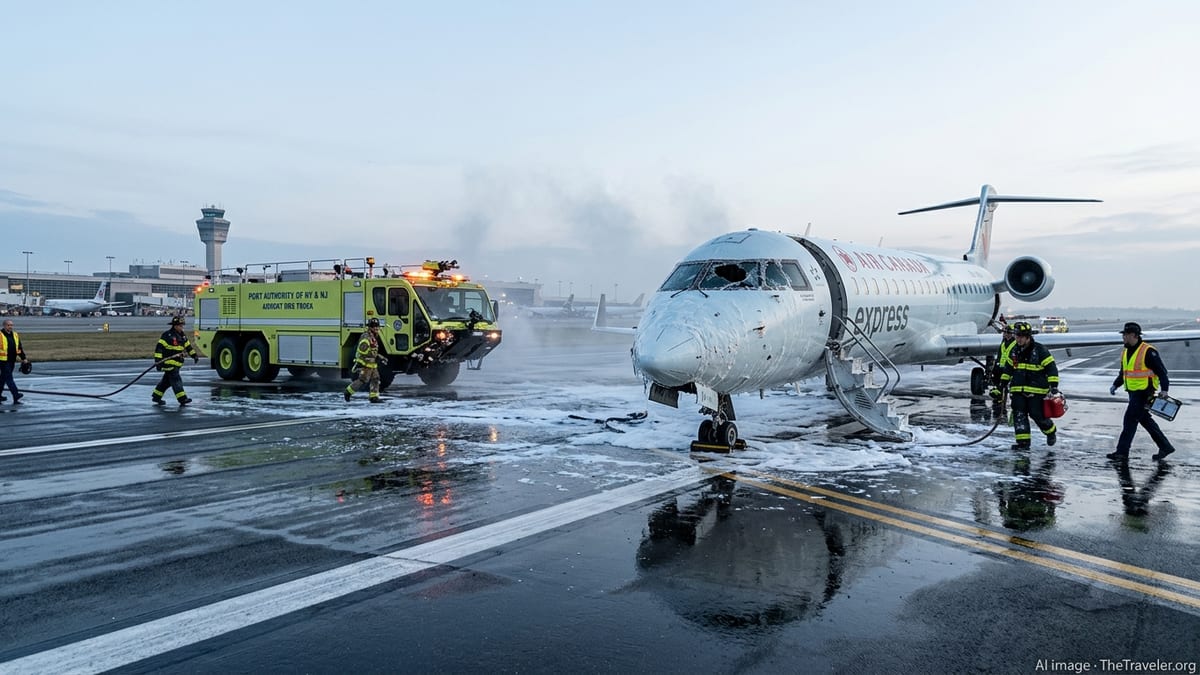
Runway Crash Triggers Ground Stop at Miami International
Publicly available information indicates that the Prime Air Boeing 767, operated by North Carolina-based cargo carrier 21 Air, overran a runway at Miami International Airport on Sunday afternoon, September 6, 2026. The aircraft reportedly crossed a perimeter area and struck multiple vehicles outside the airfield before coming to rest and catching fire. Initial reports describe five fatalities and five people injured in the incident, which unfolded during one of the busiest leisure travel weekends of the year.
According to published coverage, the Federal Aviation Administration issued a full ground stop at Miami International shortly after the crash, halting all departures and arrivals while emergency crews responded and investigators began documenting the scene. All four runways and associated taxiways were initially closed, effectively freezing air traffic into and out of the airport for several hours in the middle of the afternoon.
Real-time airport status data and local news reports show that one of the airport’s four runways reopened in the late afternoon, followed by a second runway a short time later. Even with partial operations restored, photos of departure boards circulating in news coverage showed a sea of yellow and red status bars, reflecting cancellations and extended delays rippling through the schedule.
Federal investigators are expected to focus on the landing sequence and potential runway overrun factors, according to national news reports, but early inquiries are running in parallel with efforts to keep at least some passenger flights moving through the region.
Passengers Face Long Lines, Cancellations and Diversions
Local television footage and national network reports from inside Miami International on Sunday evening showed dense crowds at ticket counters and security checkpoints as stranded passengers sought scarce rebooking options. Travelers reported multiple rolling delays that turned into outright cancellations as airlines adjusted to the loss of runway capacity and to aircraft and crews stuck out of position.
Miami-based outlets reported that by early Monday morning, September 7, at least 15 domestic flights at Miami International were delayed and nearly 40 were canceled, even after two runways had reopened. Airport staff were seen distributing bottled water to passengers waiting in snaking lines for rebooking and customer service, while display boards remained filled with delayed, diverted and canceled flights.
The impact has stretched beyond South Florida. According to regional coverage from Central Florida, Orlando International Airport began receiving multiple diversions from Miami on Sunday afternoon as planes en route to South Florida were redirected. Passengers arriving in Orlando in some cases were left to arrange last-mile connections by car or await limited onward flights once operations stabilize.
Social media posts and online forums also describe international and Caribbean flights bound for Miami being diverted to other hubs or returned to origin airports, adding another layer of complexity for travelers with tight connection windows or cruise departures scheduled from PortMiami.
Holiday Vacation Plans Upended Across South Florida
The disruption arrives at a critical moment for leisure travelers. Tourism data from local visitor bureaus and airport reports indicate that the Labor Day period is one of the busiest stretches of the late summer season for Miami, with daily passenger volumes often exceeding 150,000 people. Many visitors use Miami International as a jumping-off point for cruises, Florida Keys getaways and resort stays along the region’s beaches.
According to cruise industry coverage, the airport’s temporary shutdown and subsequent reduced capacity have complicated same-day air arrivals for guests boarding ships in PortMiami. Some cruise passengers reportedly missed embarkation times on Sunday, while others scrambled to secure last-minute hotel rooms and alternative flights to nearby airports in Fort Lauderdale or Orlando in hopes of rejoining itineraries at later ports.
Families returning home at the end of summer vacations have also felt the impact. Reports from local broadcasters describe residents rerouting through Tampa, Orlando or even more distant hubs after Miami departures were canceled, sometimes at significant added cost for one-way car rentals or overnight stays. Many travelers voiced relief at avoiding the crash itself while simultaneously grappling with the logistical fallout on what was supposed to be the final travel day of the holiday weekend.
With airlines balancing aircraft availability, crew duty limits and runway capacity, industry tracking sites suggest that irregular operations could persist for at least another day as carriers work through backlogs and reposition planes.
What Travelers Should Know If Flying Through Miami
Public advisories and airline notices emphasize that anyone scheduled to fly into or out of Miami International in the coming days should closely monitor flight status and avoid heading to the airport without a confirmed reservation. Carriers have been issuing travel waivers for affected routes, allowing some passengers to change dates or reroute through alternate Florida airports without standard change fees, though specific policies vary by airline.
Travel industry publications recommend that affected passengers check both airline apps and official airport channels frequently, since day-of adjustments are common during large-scale disruptions. For those already in South Florida, transportation experts note that Fort Lauderdale-Hollywood International Airport, about 25 miles north of Miami, and Palm Beach International Airport farther up the coast may offer additional options, though these airports are also seeing higher demand due to diversions and rebookings.
Travel planners suggest that vacationers with imminent cruises or package tours consider building in extra buffer time or, where possible, arriving a day early while operations normalize. For travelers whose trips can be postponed, consumer advocates indicate that taking advantage of flexible change policies might reduce the risk of last-minute cancellations or missed connections as investigation and recovery efforts continue at Miami International.
For now, the combination of a high-profile runway crash, a key airport operating at reduced capacity and peak holiday demand has created a challenging environment for anyone hoping to start or end a vacation in South Florida.
Ongoing Investigation and Operational Recovery
National transportation safety investigators have opened a formal inquiry into the Amazon cargo jet’s runway excursion, a process that typically examines aircraft performance, weather conditions, runway configuration and cockpit procedures in the moments before landing. Early reporting notes that the Boeing 767 was operating a cargo route from San Juan, Puerto Rico, to Miami when it overran the runway and came to rest beyond the airfield perimeter.
Published accounts of previous runway overruns suggest that investigators will likely analyze flight data recorders, maintenance records and any available video footage capturing the landing. While those technical details will take months to fully assess, airport operators have already begun assessing damage to infrastructure, including the affected runway, nearby roadways and safety areas, in order to restore full operational capacity.
Airport status updates show that two of Miami International’s four runways are handling current operations, which helps support a significant share of scheduled flights but leaves less redundancy during peak periods or in the event of adverse weather. Aviation analysts note in media commentary that large hub airports can take several days to completely work through the ripple effects of a total ground stop, particularly when it occurs during a major holiday weekend.
For visitors and residents alike, the expectation is that Miami will gradually return to normal traffic levels, but the events of September 6 serve as a stark reminder of how quickly a single runway accident can upend travel plans across an entire region.
CBS Miami: Amazon cargo plane crashes after overshooting Miami airport runway
Local 10 Miami: Delays, cancellations continue at MIA following crash
CBS Miami: Travelers face canceled flights after deadly crash
WFTV Orlando: Orlando receives flight diversions after Miami crash