


More news on this day
Travelers moving through Miami International Airport on Monday faced mounting delays and cancellations after an Amazon-branded cargo jet overran a runway, struck vehicles and burst into flames, killing at least five people and injuring several others.
Get the latest news straight to your inbox!
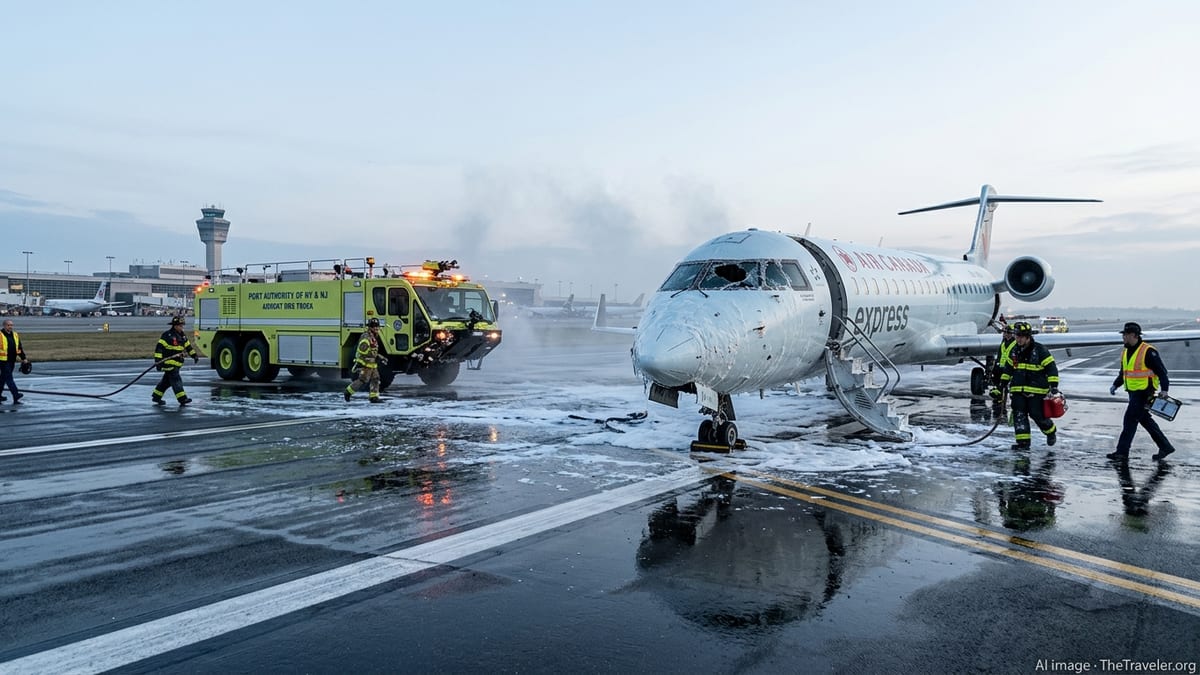
Runway overrun leads to ground stop and diversions
Publicly available information shows that the Prime Air Boeing 767, operated by cargo carrier 21 Air, crashed at Miami International Airport on Sunday, September 6, after landing and overshooting a runway on the airport’s northwest side. The aircraft left the pavement, crossed a perimeter area and hit multiple vehicles before coming to rest in flames near a roadway and airport facilities.
According to published coverage, the crash led to a full ground stop at Miami International Airport for several hours on Sunday afternoon while emergency crews responded and investigators secured the scene. All runways and most taxiways were temporarily closed, and inbound flights were either held at departure airports, diverted to other cities or forced into holding patterns over South Florida.
Reports indicate that by Sunday evening some operations had resumed, but the backlog of aircraft and displaced passengers created a ripple effect that continued into the Monday morning peak. Airlines worked to reposition aircraft and crew, while air traffic controllers managed a compressed arrival and departure schedule on remaining available infrastructure.
Coverage from multiple outlets notes that the crash killed at least five people and left about five others injured, including occupants of the vehicles struck beyond the runway. The National Transportation Safety Board and Federal Aviation Administration have both opened investigations into the circumstances of the landing and the sequence of events that followed.
Dozens of flights canceled and delayed into Monday
Data compiled from flight-tracking services and local media reports shows that dozens of flights at Miami International Airport were canceled or significantly delayed on Monday, September 7, as airlines continued to work through the disruptions triggered by the crash. By late morning, published tallies cited dozens of cancellations and many more delays impacting both domestic and international services.
Coverage by local television and online news outlets describes long lines at airline counters and security checkpoints, with some travelers reporting overnight stays in the terminal or nearby hotels after missed connections. Others remained stranded at origin airports when flights bound for Miami were canceled due to the reduced arrival capacity and earlier ground stop.
Publicly available information from Miami-Dade transportation advisories and airline status pages indicates that average delays for some Sunday flights stretched to several hours, and the knock-on effect carried into Monday as crews exceeded duty limits and aircraft remained out of position. Carriers using Miami as a hub, particularly for Latin America and Caribbean routes, appeared to be among the most affected.
Airport status boards on Monday morning still showed clusters of late departures and arrivals, especially for flights scheduled during the early hours when airlines attempted to restart full operations. Some carriers proactively waived change fees and encouraged passengers with flexible plans to rebook for later in the week to ease congestion.
Travelers urged to check status and expect ongoing disruption
Given the continuing operational challenges, publicly available guidance from airlines and the airport operator urges passengers to verify their flight status before leaving for Miami International Airport. Several carriers highlighted that even flights listed as “on time” could be vulnerable to further adjustment depending on the pace of the investigation, debris removal and runway inspections.
Transportation alerts circulated via social media and airline apps advised travelers to arrive early, allow extra connection time and be prepared for gate changes as traffic flows are rebalanced. Some airlines temporarily shifted flights to different concourses or adjusted aircraft types to accommodate displaced passengers from canceled services.
Travel industry analysts note that Miami International Airport is one of the United States’ busiest international gateways and a major cargo hub, so even a short-term interruption can have an outsized impact on regional travel. The combination of weekend leisure travelers, cruise passengers and business traffic made the timing of the crash particularly disruptive heading into the workweek.
Published coverage also suggests that travelers with tight cruise departures or tour start times from South Florida could see itinerary changes as operators respond to late arrivals. Some cruise passengers have reported switching to ports in Fort Lauderdale or adjusting sailing dates when flights into Miami became unavailable or heavily delayed.
Investigators focus on landing, safety record and infrastructure
National aviation investigators have begun examining flight data and cockpit voice recorders, according to public statements and media reports, with early attention focused on the timing and position of the aircraft’s touchdown. Coverage indicates that the landing may have occurred late on the runway, potentially limiting the distance available for braking and reverse thrust before reaching the end of the pavement.
Background information on Miami International Airport shows that the facility has handled previous cargo incidents, though major runway overruns of this scale remain rare. Aviation safety databases list a handful of serious cargo crashes linked to Miami operations over the past several decades, but commercial passenger flights at the airport have maintained a comparatively strong safety record.
Analysts quoted in earlier reporting on similar incidents note that a combination of landing speed, weather, runway condition and aircraft weight can influence stopping distance. While weather at the time of Sunday’s crash appeared to be typical for late-summer Miami, with scattered showers in the region, investigators are expected to review any potential role played by visibility, surface moisture and wind.
Regulators and airport engineers are also expected to review the performance of runway safety areas and perimeter protections, given that the cargo jet left the airport boundary and struck vehicles beyond the airfield. According to publicly available planning documents, large hub airports including Miami have been expanding engineered materials arresting systems and other safeguards in recent years to mitigate runway excursion risks.
What travelers should know in the coming days
Airlines operating at Miami International Airport are gradually restoring more normal schedules, but published forecasts suggest that irregular operations may linger for at least several days as the investigation continues and equipment remains in place around the crash site. Some carriers have already trimmed near-term schedules or rerouted cargo flights to relieve pressure on limited runway and taxiway capacity.
Travel planners advise that passengers with bookings into or out of Miami this week monitor airline notifications closely, especially for tight same-day connections. When feasible, rebooking through nearby airports such as Fort Lauderdale-Hollywood International or Palm Beach International may provide additional options, though those facilities could also feel indirect strain from diversions and passenger re-accommodation.
For travelers already in Miami, checking in online, arriving early and traveling with carry-on luggage only where possible may reduce the risk of missed departures if gate or departure times change at short notice. Hotels near the airport are reporting increased demand from stranded passengers and airline crew, so securing accommodation ahead of time can help avoid last-minute shortages.
Published coverage emphasizes that while the crash has caused severe disruption and tragic loss of life, commercial aviation in the United States remains statistically very safe. As investigators work to determine the cause and recommend safety improvements, passengers using Miami International Airport in the days ahead are likely to see visible signs of that process, from recovery equipment near the runway to an elevated presence of emergency and support staff around the terminals.
Local 10 News: Delays, cancellations continue at MIA following Amazon cargo plane crash
Miami Herald via Yahoo News: Deadly Amazon plane crash snarls travel at Miami airport
Associated Press: At least 5 dead after Amazon cargo plane barreled off runway at Miami airport