


More news on this day
Passengers flying to and from the UAE are being advised to prepare for scattered delays and select cancellations across Etihad, Emirates, flydubai and Air Arabia routes, as a combination of regional tensions, international airspace advisories and weather issues continues to affect flight schedules at Dubai, Abu Dhabi and Sharjah airports.
Get the latest news straight to your inbox!
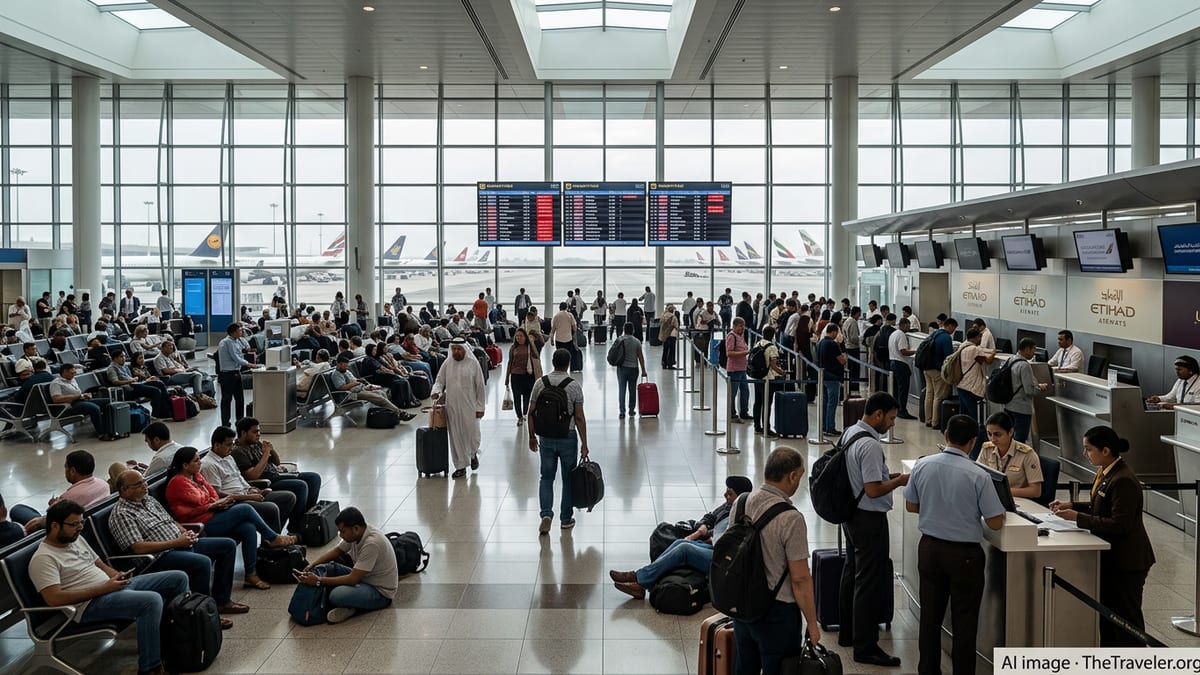
Rolling disruption at Dubai and Abu Dhabi hubs
Published coverage from UAE outlets and aviation trackers indicates that operations at Dubai International and Abu Dhabi’s Zayed International Airport remain broadly intact, but with a rolling pattern of late arrivals, retimed departures and isolated cancellations. On September 3, multiple services into both hubs were listed with extended delays, particularly on Etihad routes linking Abu Dhabi with key cities in Europe, South Asia and Africa.
Reports show that Etihad flights on sectors such as Abu Dhabi to London, Manchester, Moscow, Islamabad, Delhi and Nairobi have been operating with longer-than-usual delays, in some cases exceeding several hours. Arrivals into Dubai on Emirates and flydubai services from major European gateways, including London, Manchester, Amsterdam, Lisbon and Rome, were also recorded with revised arrival times and extended holding patterns.
In several instances, individual flights were cancelled outright. Aviation monitoring summaries highlight examples such as New York to Dubai flight EK206, which was listed as cancelled on September 3, as well as selected flydubai services from Entebbe and regional destinations. While these cancellations account for a small fraction of total movements at Dubai and Abu Dhabi, they illustrate how quickly schedules can shift in the current environment.
Sharjah is seeing a similar, if more limited, pattern, with Air Arabia adjusting timings on select regional routes and cancelling a handful of services where downstream airspace or airport restrictions make normal operations impractical.
Security tensions and airspace advisories weigh on schedules
The latest disruption follows months of heightened geopolitical tension in the wider Gulf region, particularly involving the United States and Iran. Conflict-related events earlier in 2026 prompted significant but temporary suspensions of operations at major Gulf hubs, and while full closures have not been repeated in recent days, the risk backdrop has not fully receded.
According to published coverage, the European Union Aviation Safety Agency has extended a conflict-zone information bulletin for Gulf airspace through the end of September, advising operators to carefully assess risk when planning routes in and around the region. UAE-based airlines have continued flying the majority of their networks but are adapting routings and flight times to reflect evolving security assessments, air traffic flow measures and the knock-on effects of diversions.
Government travel advisories from key markets, including the United Kingdom, also flag the possibility of sudden airspace closures, flight cancellations and wider disruption linked to any escalation in regional tensions. Travelers are being urged to remain flexible and to monitor airline and airport channels closely for changes, even when their specific route appears to be operating normally.
The combination of precautionary rerouting, longer flight times and occasionally restricted airspace has caused some services to arrive late into Dubai and Abu Dhabi, creating further delays as aircraft and crews rotate onto subsequent legs. This rolling effect is one reason passengers may encounter disruption even when their particular route is far from the areas of direct tension.
Weather and external events add to operational strain
Beyond security considerations, airlines are also managing the impact of adverse weather and external operational issues along key corridors served from the UAE. Recent reports highlight volcanic activity in Indonesia, which has periodically affected flights between the Gulf and Jakarta, and led to delays and cancellations on services operated by multiple carriers, including those transiting Dubai and Abu Dhabi.
Airport and airline updates reference Jakarta’s Soekarno Hatta International Airport as one of the locations where ash clouds and temporary airspace restrictions have forced last-minute schedule changes. For UAE travelers booked on routes to Indonesia or using Jakarta as a connection point, this has translated into day-of-travel disruptions such as extended delays, equipment swaps and, in some cases, the need to reroute via alternative hubs.
Operational advisories also point to broader capacity pressures as airlines manage busy late-summer traffic. With passenger volumes rising into September, carriers have less slack in their networks to absorb irregular operations. A delay to a single widebody aircraft on a long-haul sector can cascade across multiple rotations, influencing departure times from Dubai, Abu Dhabi or Sharjah many hours later.
These overlapping factors help explain why current disruption appears scattered rather than concentrated on a single route or destination. Travelers may find that a neighboring flight departs on time while their own service is held for a late inbound aircraft, updated flight planning or a change in weather conditions along the route.
Impact on Etihad, Emirates, flydubai and Air Arabia passengers
For Etihad customers, the most visible effect has been clusters of delayed flights from Abu Dhabi to major regional and intercontinental destinations, with aircraft often departing later than scheduled and arriving into onward hubs behind timetable. Some passengers on connecting itineraries through Zayed International Airport have reported tighter transfer windows and rebookings onto later services when minimum connection times could not be met.
Emirates passengers at Dubai International have seen a similar pattern of late-arriving aircraft from European and Asian gateways, followed by adjusted departure times on onward sectors. Published flight-status data shows certain long-haul services arriving several hours behind schedule, triggering rolling knock-on effects across the day’s wave of connections. Nonetheless, most Emirates flights continue to operate, and the overall network remains largely intact.
Flydubai services, which support an extensive regional network from Dubai, have experienced selective delays and a small number of cancellations on routes to Central Asia, East Africa and neighboring Middle Eastern cities. Individual flights from Almaty, Bishkek, Moscow, Jeddah, Astana, Minsk, Addis Ababa and other points have been listed as delayed, while at least one Entebbe service was recorded as cancelled in recent days.
Air Arabia, operating from Sharjah and Abu Dhabi, has also adjusted schedules on a number of short- and medium-haul routes. Flights linking the UAE with Kuwait, Bahrain and certain South Asian and North African destinations have seen retimings or one-off cancellations, while most other services have continued as scheduled. For many travelers, the most immediate impact has been extended time on the ground or in transit rather than wholesale loss of travel options.
What travelers should do before heading to the airport
Given the fluid situation, airlines and airports are urging passengers to check the status of their flights repeatedly in the 24 hours before departure, and again before leaving for the airport. Publicly available guidance from UAE carriers emphasizes the importance of updating contact details in existing bookings so that email and SMS notifications about any changes can be delivered in real time.
Travelers are also advised to use official airline apps and websites to review operational updates, verify terminal and gate allocations, and complete online check-in where available. For complex itineraries involving connections through Dubai, Abu Dhabi or Sharjah, experts recommend allowing additional buffer time between flights or considering more conservative minimum connection times than would be typical in calmer periods.
Passengers who are already at the airport when disruption occurs may be offered rebooking options onto later flights or alternative routings, subject to seat availability and ticket conditions. International travel advisories suggest that travelers retain all documentation, including booking confirmations and any written communication from airlines, in case they need to pursue refunds or changes under fare rules at a later stage.
With regional tensions and weather-related risks unlikely to resolve immediately, aviation analysts expect a continued pattern of intermittent disruption rather than a quick return to fully predictable operations. For now, UAE-bound and outbound travelers on Etihad, Emirates, flydubai and Air Arabia are being encouraged to stay informed, remain flexible and plan for the possibility that their journey may take longer than scheduled.
The National – UAE travel advisory: Flights delayed and cancelled at Dubai and Abu Dhabi airports
Gulf News – UAE flight update today: Emirates, Etihad, Air Arabia status
UK Foreign, Commonwealth & Development Office – United Arab Emirates travel advice