


More news on this day
Flight operations at Miami International Airport remained strained on Monday as delays and cancellations rippled through passenger schedules a day after an Amazon-branded cargo jet overran a runway, crashed beyond the airport perimeter and left five people dead.
Get the latest news straight to your inbox!
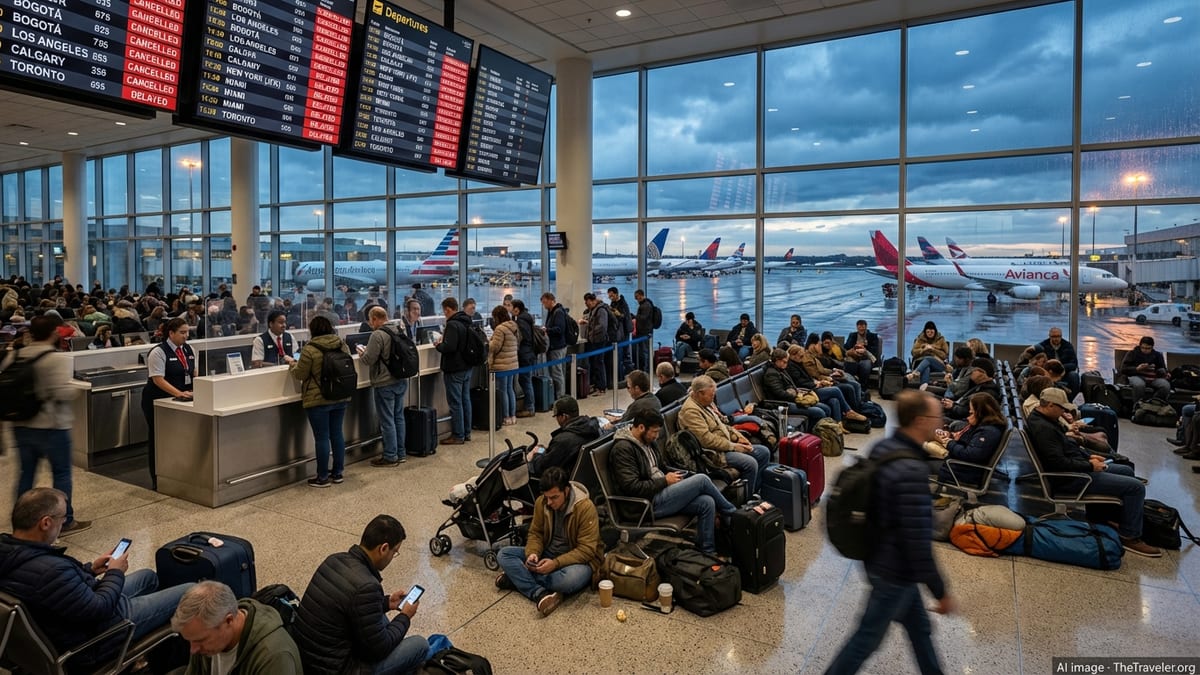
Runway overrun triggers airport-wide ground stop
Publicly available information shows that the Boeing 767 freighter, operating as a Prime Air cargo service on behalf of Amazon and flown by contractor 21 Air, was attempting to land at Miami International Airport on Sunday afternoon, September 6, when it overshot Runway 30 and burst into flames beyond the paved surface.
Coverage from U.S. and international outlets indicates that the aircraft struck multiple vehicles after breaching the airport perimeter near Northwest 42nd Avenue, igniting a large fire that sent thick black smoke over the northwest corner of the airfield. Initial tallies from published reports put the death toll at five, with at least five additional people injured on the ground and on board the aircraft.
According to aviation-focused coverage, the incident occurred shortly after 2 p.m. local time and prompted the Federal Aviation Administration to institute an immediate ground stop for departures into and out of Miami International. The measure temporarily froze much of the airport’s busy afternoon schedule, leaving aircraft holding on taxiways and incoming flights diverting to other Florida airports such as Orlando.
Specialist freight reporting notes that the jet, a converted 767-300ER freighter, came to rest in a field beyond the runway after crossing a perimeter road and nearby traffic lanes. Images from the scene show the fuselage heavily burned, with the tail and some forward structures still intact as fire crews worked to cool the wreckage.
Ongoing delays and cancellations for passengers
While cargo operations began edging back toward normal less than 24 hours after the crash, passenger disruptions continued into Monday morning. Local broadcast reports from Miami describe a patchwork of delays and cancellations across domestic carriers as airport staff kept at least one runway closed to support the investigation and recovery work.
Data shared in those reports indicated that, by early Monday, dozens of flights had been affected, with more than 30 cancellations and additional late departures and arrivals. Travelers heading into or out of Miami were urged to monitor airline apps and websites closely, with some carriers offering rebooking waivers for passengers whose itineraries touched the airport in the immediate aftermath of the crash.
Airport status updates show that two of Miami International’s four runways are currently open, allowing a partial return of traffic but limiting flexibility during peak banks of departures. Airlines that rely heavily on connecting flows through Miami, particularly on Caribbean and Latin American routes, are facing knock-on delays as aircraft and crews cycle back into position.
Aviation operations coverage suggests that although core cargo movements at Miami have largely resumed, passenger airlines are expected to experience residual schedule issues through at least the next news cycle as they work through repositioning flights and accommodating displaced travelers.
Investigators focus on landing, weather and runway conditions
Federal investigators and aviation safety specialists are now concentrating on the critical seconds of the landing sequence to determine why the freighter failed to stop on the runway. National and local news reports highlight several early lines of inquiry, including touchdown point, approach speed, use of braking systems and prevailing wind and weather conditions at the time of arrival.
According to published coverage, early video and tracking data suggest the aircraft may have touched down further along the runway than ideal, which would have reduced the available stopping distance. Aviation analysts quoted in those reports point out that any such long landing, combined with a wet runway or shifting crosswinds, can significantly erode safety margins, particularly for a fully loaded cargo aircraft.
Weather summaries shared in online aviation communities describe stormy, rapidly changing conditions around Miami on Sunday afternoon, with gusty winds reported near the time of the crash. While investigators have not yet released any findings, those accounts indicate that a quartering tailwind could have been present, a factor that can lengthen landing rolls and complicate braking.
Public documents on the probe note that standard procedure will involve recovering the cockpit voice recorder and flight data recorder, interviewing the flight crew and ground personnel, and examining runway friction levels and aircraft systems. Safety agencies caution that it may take months before a preliminary report offers a clearer picture of what went wrong in Miami.
Spotlight on Amazon’s cargo network and contractor model
The Miami accident has also renewed scrutiny of Amazon’s fast-growing air cargo network and its heavy reliance on contracted carriers. Reports from logistics and aviation outlets explain that the crashed 767 was operated by North Carolina-based 21 Air as part of Amazon’s Prime Air system, rather than by an in-house airline similar to those run by some other major package operators.
Industry analyses note that Amazon has built its air capacity through a patchwork of leasing and outsourcing arrangements involving multiple carriers and older converted passenger jets, many of which, like the Miami aircraft, first entered service in the 1990s. While this approach has enabled rapid expansion of overnight and two-day delivery coverage, it has also prompted questions about oversight complexity across different operators and fleets.
Commentary in trade publications points out that the Miami crash comes several years after another fatal accident involving an Amazon-branded 767 freighter operated by a contractor, which went down near Houston in 2019. Safety advocates cited in those reports argue that the latest event may intensify debate over whether large e-commerce platforms should consolidate air operations under more unified safety and training frameworks.
Publicly available statements from Amazon emphasize cooperation with investigators and support for those affected, while industry analysts say the company’s broader logistics network remains fully operational. Even so, Miami’s role as a key cargo gateway for Latin America means any prolonged constraints on freighter movements could complicate regional supply chains if further disruptions occur.
What travelers using Miami should expect next
For travelers, the most immediate impact of the crash remains schedule uncertainty. Airline alerts and local media coverage advise anyone flying through Miami over the next day or two to build extra time into their journeys, verify gate and departure information frequently, and be prepared for last-minute changes as the airport juggles runway capacity.
Analysts who track airport performance note that Miami International entered the busy late-summer and early-fall period with already tight runway and gate utilization, particularly during afternoon and evening peaks. The temporary closure of a major runway following the crash has reduced the margin for handling weather disruptions or minor operational snags, increasing the likelihood of rolling delays.
Travel reporting suggests that some carriers are proactively trimming frequencies or upgauging aircraft on select routes to consolidate demand, aiming to move the same number of passengers with fewer operations while runway access remains constrained. Others are encouraging customers with flexible plans to consider alternate South Florida airports, including Fort Lauderdale and, for some long-haul diversions, Orlando.
Although freight-focused sources indicate that cargo flows are stabilizing quickly, Miami’s experience after the Amazon cargo crash underscores how a single serious incident can reverberate across a complex hub. For now, anyone with tickets into or out of the airport in the coming days is being urged, through widely circulated travel advisories, to stay informed, remain flexible and treat departure times as subject to change while investigators and airport crews continue their work at the scene.
Local 10: Delays, cancellations continue at MIA following Amazon cargo plane crash
CBS Miami: Amazon cargo plane overruns runway at Miami International Airport
NBC 6 South Florida: 5 dead after Amazon cargo plane crashes near MIA
Aviation Week: Prime Air 767F overruns Miami runway, prompting ground stop
The Loadstar: Miami operations back to normal after tragic Amazon freighter crash