


Tracy Arm lies roughly 45 miles south of Juneau by water, deep inside the Tracy Arm–Fords Terror Wilderness. There is no road into this narrow, glacier-carved fjord, so visitors reach it on long marine tours that run through Stephens Passage and into Tracy Arm, usually spending a full day on the water. For travelers based in Juneau or starting and ending cruises there, deciding whether to devote one of those days to Tracy Arm comes down to understanding how the tours work, what they cost, and how they compare with other full-day glacier experiences.
Get the latest updates straight to your inbox!
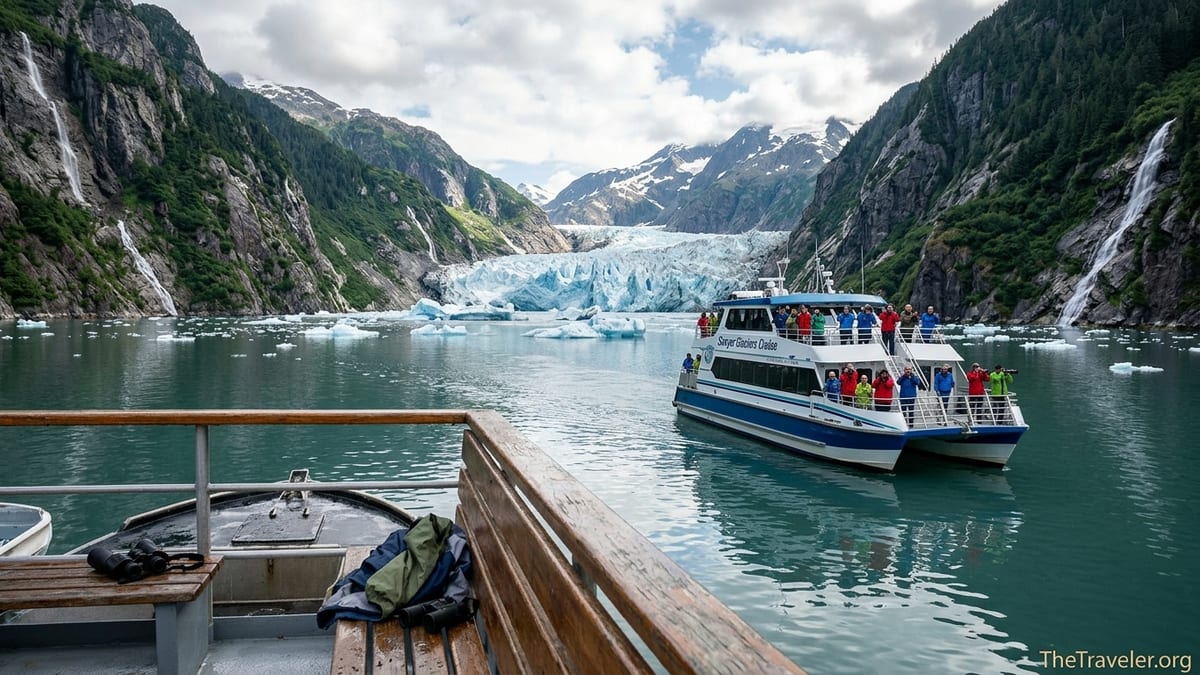
Understanding the Juneau to Tracy Arm Route
Visiting Tracy Arm from Juneau is a committed full-day undertaking. Boats depart from Juneau’s downtown harbor or nearby docks and travel south through Stephens Passage before turning into the narrow fjord. The distance from Juneau to the head of Tracy Arm near the Sawyer Glaciers is only about 45 miles in a straight line, but the route weaves through channels and slows significantly inside the fjord, so travel time is long compared with the raw mileage.
There is no road access to Tracy Arm, and no public ferry route that functions as casual day-trip transport. Realistically, the only practical way for independent travelers staying in Juneau to reach Tracy Arm is on a dedicated glacier cruise or small-boat charter. That structure makes these trips very different from a quick whale-watch or an easy taxi ride to Mendenhall Glacier.
Most day-trip itineraries from Juneau follow a similar pattern. Boats leave the harbor in the morning, cross Stephens Passage while guides scan for whales and marine wildlife, then enter Tracy Arm and continue as far as ice conditions allow toward South Sawyer and sometimes North Sawyer Glacier. After spending time near the ice face and the surrounding bergs, the vessel retraces its route back to Juneau, often arriving late afternoon or early evening.
Because conditions at the fjord change throughout the season, captains adjust how far they can safely proceed. In some years and on some days, boats can approach within a visually dramatic distance of the glacier terminus in open water. On other departures, thick ice or safety guidelines limit how close vessels can come, and some tours may substitute nearby Endicott Arm instead. Travelers should approach any Tracy Arm plan with flexibility in mind.
Main Types of Tracy Arm Tours from Juneau
In recent seasons, Tracy Arm access from Juneau for independent or small-group travelers has centered on full-day marine excursions. These are typically high-speed catamarans or sturdy small boats that spend most of the day on the water. Many are operated directly by Juneau-based companies or marketed through third-party travel firms that package and resell local tours. One example is a Tracy Arm fjords glacier cruise sold by an Alaska-focused tour company for the 2026 season, describing a full-day boat trip from Juneau into the heart of the wilderness and back with a focus on the twin Sawyer Glaciers, wildlife, and waterfalls.
Smaller tour companies and charter operators also advertise custom or semi-private trips into Tracy Arm or adjacent Endicott Arm, sometimes under broader “fjord and glacier” branding. These trips generally use smaller vessels with fewer passengers, which can be appealing for photographers or travelers who value a quieter experience and the potential to maneuver among ice when conditions allow. However, they may operate on more limited schedules, require a minimum number of travelers, or adjust destinations more readily based on weather and ice.
Air-based products that include Tracy Arm tend to be sold as part of wider glacier flightseeing itineraries. Seaplane and fixed-wing operators in Juneau typically focus on flying over the Juneau Icefield, Glacier Bay, or multiple fjords and tidewater glaciers on a loop, with Tracy Arm as one possible highlight. These are usually shorter than a full-day boat trip, more expensive per hour, and provide sweeping aerial views rather than time spent lingering at water level among the icebergs.
Because offerings evolve quickly, especially after recent landslide and tsunami concerns in the Tracy Arm area, anyone writing or planning for the 2026 and 2027 seasons should double-check which operators are actively running Tracy Arm day trips rather than only Endicott Arm, and whether any temporary route restrictions affect itineraries in a given year.
What a Typical Tracy Arm Day Cruise Includes
Most full-day Tracy Arm boat tours from Juneau run roughly eight to nine hours dock to dock, although advertised durations can vary by operator and season. A 2026 example marketed through a statewide Alaska tour specialist lists a cruise operating from late May into early September, framed as a full-day fjord exploration that often departs in the morning and returns by late afternoon. Travelers should always verify current hours for their specific date, since daylight, harbor logistics, and connecting cruise ship schedules can drive annual adjustments.
Onboard inclusions commonly feature a picnic-style lunch, complimentary hot beverages such as coffee, tea, and cocoa, and sometimes bottled water or light snacks. Some boats offer basic food for sale in addition to any included meal. Published descriptions often highlight the presence of a professional naturalist or experienced local guide, who provides commentary on glacial geology, wildlife, and human history along the route. These interpretive talks are a major value-add compared with simply riding a boat through scenery.
Vessels are typically enclosed, heated catamarans or cabin cruisers with large viewing windows and one or more outdoor decks. There are usually indoor seats for all passengers, restrooms on board, and at least one accessible main deck area for those who prefer to stay inside out of wind and rain. Outdoor decks are where many guests spend time photographing waterfalls, steep granite walls, harbor seals hauled out on ice, and, when visibility permits, the blue face of South Sawyer Glacier itself.
How close a boat gets to the actual ice face is highly dependent on safety protocols and seasonal conditions. Marketing copy often states that smaller vessels are capable of approaching as close as is responsibly allowed when ice conditions permit. In reality, captains must remain at conservative distances from active calving faces and cannot guarantee any specific number of yards or meters. Travelers should treat language about “getting up-close” as an aspiration, not a guarantee, and appreciate that even views from farther back within an iceberg-strewn fjord can be spectacular.
Schedules, Seasons and Why Verification Matters
For 2026, at least one major Alaska tour consolidator is publishing Tracy Arm day-cruise departures from Juneau running from approximately late May to early September, which broadly aligns with Southeast Alaska’s main visitor season. However, exact opening and closing dates, as well as daily departure times, vary by operator and may shift from year to year due to tides, dock availability, and changing safety guidance in the fjord.
Anyone preparing an article, guidebook entry, or detailed itinerary should confirm up-to-date operating months, weekly patterns, and departure times directly with at least two current Juneau-based marine operators. As of November 2026, that research would typically include checking the official sites and booking portals for established regional companies and for any smaller charter or small-boat firms offering Tracy Arm or Tracy Arm–Endicott Arm combinations out of Juneau. Because some cruise lines have altered their own Tracy Arm visits following an August 2025 landslide near South Sawyer Glacier, independent day-boat operations may also update their offerings and guidelines accordingly.
It is crucial that any example schedule or price range included in writing be clearly labeled with the month and year when it was verified. For instance, if an author notes that in October 2026 a Tracy Arm day cruise was advertised at a certain rate for summer 2027, that timestamp helps readers understand that both price and availability could change by the time they travel. This is particularly important in Alaska, where fuel costs, environmental regulations, and tourism demand can shift quickly.
Travelers should also factor in pre-departure check-in time. Many operators request guests arrive at the dock 30 to 45 minutes before sailing for boarding and safety briefings, so a listed eight-hour cruise day may actually consume nine hours or more of a Juneau itinerary door to door. When planning other activities around the trip, it is safest to treat the Tracy Arm excursion as a full dedicated day.
Booking, Cancellations and Route Flexibility
During peak summer months, especially late June through mid-August, Tracy Arm departures often sell out days or weeks in advance. Travelers staying in Juneau for several nights who prioritize this experience should book as early as practical, ideally at the same time they finalize flights or cruise segments. Last-minute space sometimes appears in shoulder periods like early June or early September, but relying on walk-up availability is risky, particularly for small-group or charter-style boats with limited capacity.
Every operator sets its own cancellation policies, and these can vary by group size and sales channel. A recent example associated with a Juneau-based concierge service shows a 14-day advance cancellation requirement for groups of ten or fewer to receive a refund, with different policies for larger bookings. Other companies may allow cancellations closer to departure or charge change fees. Writers and travelers alike should emphasize reading the specific terms and conditions on the operator’s current materials rather than assuming uniform rules across the industry.
Weather and ice conditions are major determinants of what a Tracy Arm tour actually visits on a given day. If heavy ice or updated safety advisories prevent access, many companies reserve the right to reroute to nearby Endicott Arm, which offers similarly dramatic fjord scenery and the tidewater Dawes Glacier. Some tours are explicitly marketed as “Tracy Arm or Endicott Arm” to make that flexibility clear. Refund or partial-refund practices in the event of such route changes differ, so it is essential to check how each operator classifies substitutions or reduced glacier access before booking.
For travelers, this means managing expectations. Booking a Tracy Arm tour is really booking a Southeast Alaska fjord and tidewater glacier experience, with Tracy Arm as the intended but not absolutely guaranteed destination. Understanding and accepting that contingency helps avoid disappointment if a captain makes conservative choices that prioritize safety over sticking to a brochure description.
Choosing the Right Vessel and Experience
One of the biggest decisions is vessel size. Large catamarans and bigger day boats tend to offer increased stability in open water and more indoor seating options, which many travelers appreciate on long, potentially choppy runs through Stephens Passage. They commonly feature multiple restrooms, a dedicated galley or service counter, and several viewing decks at different levels, allowing guests to spread out while still having sheltered options in rain and wind.
Smaller boats and six-passenger charters, by contrast, often feel more intimate and can sometimes maneuver more nimbly among ice floes when conditions allow and regulations permit. They may position closer to waterfalls or wildlife along the shore, and it is easier on a small vessel to rotate positions for unobstructed photography at railings or bow. The trade-off can be more motion in swell, less interior space for warming up, and fewer amenities. Travelers prone to seasickness or who strongly value being able to retreat indoors may prefer a larger catamaran-style vessel.
Onboard amenities and accessibility also matter. Heated cabins with panoramic windows are standard on most purpose-built Tracy Arm boats, and restrooms are typically available on the main passenger deck. Many vessels have outdoor observation decks reached by stairs, which can be challenging for those with mobility limitations. Boarding in Juneau is usually by ramp down to the dock and then a small transition onto the vessel, but the steepness of ramps can vary with tides.
Travelers with limited mobility or those using wheelchairs should contact operators in advance to discuss ramp gradients, door widths, seating, and where they will realistically be able to move on board. Many companies can accommodate guests who remain on the main deck but may caution that access to top decks or exposed bow areas involves stairs and potentially slick surfaces. Clarifying these details early ensures the chosen tour matches each traveler’s comfort and safety needs.
Costs, Budgeting and How Tracy Arm Fits Your Juneau Stay
Pricing for Tracy Arm day tours fluctuates by operator, vessel size, and season. As of checks conducted in late 2026, advertised adult rates for full-day Tracy Arm or Tracy Arm–Endicott fjord cruises marketed out of Juneau for the 2026 or 2027 summers commonly fall into a mid to high three-figure range in U.S. dollars. Some listings mention reduced child prices and, less commonly, senior discounts, while charter-style trips often quote a flat boat rate divided among up to six or twelve passengers.
Because these prices can change significantly year to year with fuel costs and demand, any figure cited in writing should clearly note the verification month and year and should not be presented as a universal standard. Instead, authors can point out that Tracy Arm is typically among the more expensive day excursions from Juneau, comparable to premium whale-watch plus glacier combinations or fly-in tours to Glacier Bay, and encourage readers to compare several current offerings before committing.
In terms of scheduling, a Tracy Arm trip essentially occupies an entire day. Early morning departures and late afternoon returns are common, and the cumulative effect of hours of motion, outdoor viewing in cool damp air, and sensory overload from scenery can leave many travelers pleasantly exhausted. While it is usually realistic to plan a relaxed dinner, a short stroll through downtown Juneau, or casual shopping after returning to the harbor, attempting another structured paid excursion the same day is generally not advisable for full-day cruises.
For a multi-day Juneau stay, a balanced approach might be to devote one day to Tracy Arm, another to closer experiences such as Mendenhall Glacier and local hiking or city touring, and a third to whale watching or flightseeing. Travelers arriving or departing by large cruise ship in Juneau on the same day as a Tracy Arm tour must check timing with extra care and may prefer excursions sold through their cruise line to ensure connection guarantees, whereas those staying in local hotels have more flexibility.
What to Wear, Pack and How to Travel Responsibly
Weather in Tracy Arm is often cooler and damper than in downtown Juneau on the same day. Operators themselves advise dressing for rain and cold, even in midsummer, and many specifically recommend warm layered clothing, waterproof outer shells, sturdy closed-toe shoes, and warm hats and gloves. The combination of wind chill on moving boats and time spent on exposed decks near glacier ice can make conditions feel much colder than the thermometer suggests.
In addition to clothing, useful items include binoculars for spotting mountain goats, seabirds, and distant waterfalls; a camera with a telephoto lens plus some form of rain protection; and any personal seasickness remedies a traveler prefers, such as medication, acupressure bands, or ginger products. A small daypack containing spare layers, a reusable water bottle, and dry bags for electronics helps keep essentials organized. While many tours supply lunch and hot drinks, packing an extra snack can be comforting on such a long outing.
Safety and environmental considerations are straightforward but important. Passengers should heed crew instructions about when decks are too icy or slick to use and should never climb on railings or ice. Around wildlife and actively calving glaciers, it is essential to follow guidelines about staying within designated viewing areas and keeping noise levels moderate, both for safety and to minimize disturbance to animals such as harbor seals that rest on ice floes with young pups.
Responsible operators in Juneau participate in local tourism best-practice programs that emphasize minimizing wake impacts, controlling emissions where feasible, and managing waste appropriately. Travelers can do their part by using on-board trash and recycling receptacles, avoiding any littering overboard, and choosing companies that demonstrate clear environmental and safety commitments in their public materials. Respect for crew briefings and local regulations helps protect a sensitive fjord ecosystem that is still adjusting to recent geologic events.
Is a Tracy Arm Day Trip Right for You?
Compared with other full-day glacier options from Juneau, Tracy Arm offers an immersive fjord experience that combines close-up ice, towering cliffs, and abundant waterfalls with the possibility of wildlife viewing along the way. Travelers who dream of threading through floating icebergs and seeing a tidewater glacier calve from relatively close range often find this day to be a trip highlight. Those who enjoy long scenic boat rides, interpretive commentary, and a sense of remoteness tend to appreciate Tracy Arm most.
However, Tracy Arm is not the only way to experience big ice from Juneau. Alternatives include fly-in or ferry-and-boat combinations to Glacier Bay, which involve seeing multiple large glaciers and spending time inside a national park, as well as focused whale-watch and glacier combination tours that may visit Endicott Arm or spend more time in the rich marine waters near Juneau. These options can appeal to travelers who are more interested in wildlife or national park credentials than in a single long fjord transit.
When choosing among them, consider your tolerance for long days on the water, your budget, and your overall time in Juneau. If you have several days in the area, and especially if you are unlikely to visit Southeast Alaska again soon, allocating one full day to Tracy Arm can be very rewarding, provided you accept that ice and safety conditions may reshape the itinerary. If time or budget is tight, a shorter whale-watch, Mendenhall Glacier visit, or a flightseeing circuit over the Juneau Icefield might better match your priorities.
Ultimately, a Tracy Arm excursion is best suited to travelers who value dramatic scenery and are comfortable dedicating an entire day of their Juneau stay to a single, in-depth fjord and glacier experience. With realistic expectations, careful operator selection, and the right layers in your daypack, a boat journey from Juneau into Tracy Arm can be an unforgettable way to encounter the living ice of Southeast Alaska.