


Rising above the rooftops of Beyoğlu, the Galata Tower is one of Istanbul’s most recognizable silhouettes. Around it, the Galata quarter has become a dense maze of photo-ready streets, café terraces, boutiques and small hotels that reward anyone who lingers beyond the quick elevator ride to the top. This guide focuses on both the landmark and the neighborhood: how to reach it, where to find the best views, which streets are worth your camera battery, and how to decide if the tower ticket is really worth your time and lira.
Get the latest updates straight to your inbox!
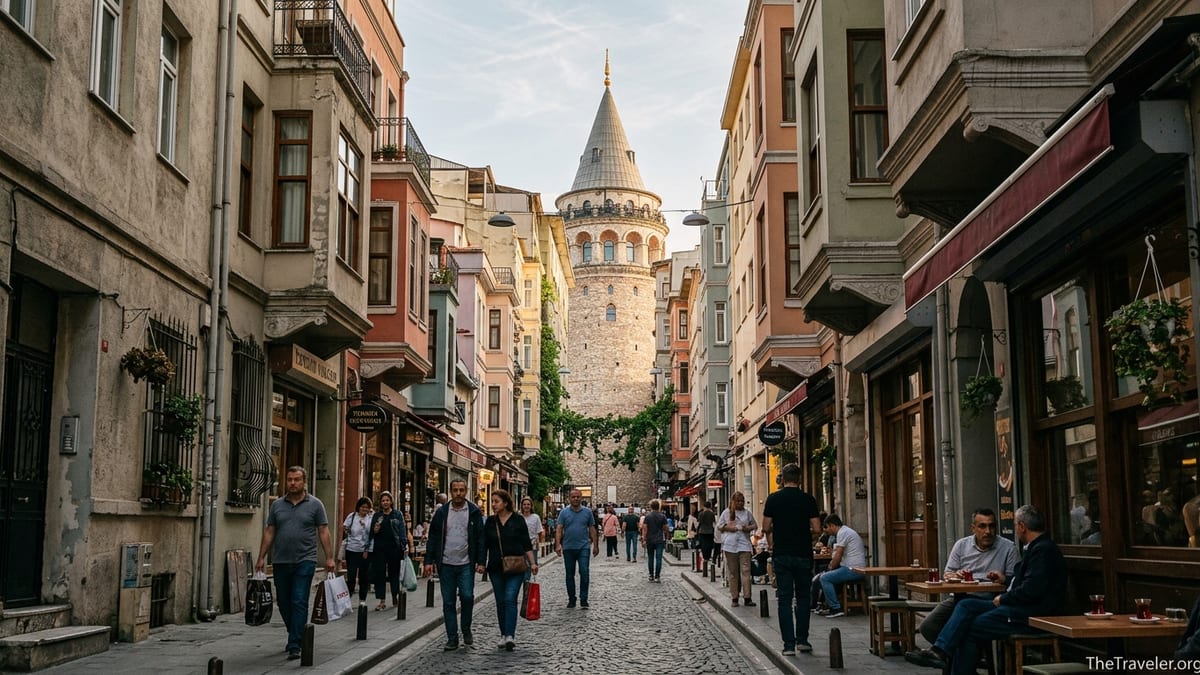
Galata in Context: Where You Are and How to Get There
Galata sits on the northern side of the Golden Horn within the Beyoğlu district, between the waterfront district of Karaköy and the busier Taksim and İstiklal Caddesi area uphill. Historically a Genoese and later Levantine quarter, today it is a lively mix of narrow cobbled streets, 19th century apartment buildings, indie boutiques, and small guesthouses. The Galata Tower itself crowns the hill, giving a 360-degree sense of how close you are to the historic peninsula, the Bosphorus and the rest of modern Istanbul.
Reaching Galata is straightforward. From Sultanahmet or the old city, most visitors take the T1 tram across the Galata Bridge to Karaköy, using an Istanbulkart transport card and riding for a modest fare per journey. From the Karaköy tram stop it is a steep but short 10–15 minute walk up through side streets to the base of the tower, or you can ride the historic Karaköy–Tünel funicular and then walk downhill a few minutes. From Taksim, it is an easy downhill stroll along İstiklal Caddesi to Tünel and Galip Dede Street.
Many travelers choose to stay in or around Galata for a balanced base: close enough to tram and ferry connections in Karaköy, and walkable to İstiklal’s nightlife without being in the noisiest part of Taksim. Boutique hotels and serviced apartments cluster on streets like Büyük Hendek Caddesi, Şahkulu Sokak and around the Galata Mevlevi Lodge, often in converted stone buildings with high ceilings and some with partial Bosphorus or Golden Horn views.
Because the area is compact and hilly, expect to walk on uneven cobblestones and frequent slopes. Comfortable shoes matter more here than in flat neighborhoods like Sultanahmet. In peak summer afternoons the streets can feel hot and crowded; planning tower visits for early morning or late evening will make both the climb and the neighborhood experience more pleasant.
Inside Galata Tower: Tickets, Queues and Whether It Is Worth It
Galata Tower functions as both a historic monument and a popular viewpoint, which means significant queues in high season. By mid-2026, foreign visitor tickets were being sold in the high hundreds of Turkish lira range, and several recent visitors on travel forums describe the price as “expensive but memorable” or “borderline too high for a short visit.” It is wise to check up-to-date prices shortly before your trip and factor the cost into your daily budget, especially if you are also planning to pay for other major viewpoints in the city.
Most visitors reach the observation deck via an elevator followed by a short internal staircase. At the top, a narrow circular balcony wraps around the tower, offering panoramic views over the Golden Horn, the historic peninsula with Hagia Sophia and the Blue Mosque, and the dense neighborhoods stretching north. The balcony can feel crowded and tight, particularly at sunset when everyone stops to take photos, so those with mobility or vertigo concerns may prefer quieter morning slots or consider alternative viewpoints instead.
Whether the ticket is “worth it” depends on what you value. If it is your first time in Istanbul and you want an iconic, all-around view to understand the city’s layout in one glance, Galata Tower delivers exactly that. Travelers who have visited multiple other rooftop cafés or hilltop parks sometimes feel that free views elsewhere are nearly as good, especially if they are traveling on a tight budget or with a family. Think of Galata as a premium, time-efficient way to get a postcard-perfect panorama, but not as the only way to see Istanbul from above.
To make the cost feel more worthwhile, time your visit so you are not wasting an hour or more in line. In recent seasons, visitors report the shortest waits right after opening on weekdays and late in the evening outside of high summer. Booking timed-entry tickets through official channels or reputable local agencies can also reduce queuing, but you should still expect security checks and a short wait at the elevator in peak travel months.
Photogenic Streets and Viewpoints Around the Tower
Even if you never go inside, the streets wrapped around Galata Tower are one of Istanbul’s most photographed urban scenes. One of the classic perspectives is from Büyük Hendek Caddesi, the gently sloping street where the tower rises directly at the end, framed by old facades and café awnings. In busy afternoon hours you will likely find a loose queue of people taking turns to pose in the middle of the street for the “tower behind you” portrait, so early morning or just after sunrise is ideal if you prefer a calmer atmosphere and softer light.
Other rewarding angles come from the lattice of side streets between the tower and Karaköy. Several stair-stepped lanes descend toward the Golden Horn, where you can shoot the tower peeking between balconies, hanging laundry and street trees. Visitors often mention the “staircase streets” and older stone stairways as favorite Instagram spots, with cats lounging on walls and shopkeepers leaning in their doorways. These are living residential streets, so taking a moment to step aside, let locals pass, and keep noise down early or late in the day is appreciated.
For wider views of the tower in its skyline context, step away from the base. The Galata Bridge, particularly its western side facing back toward Beyoğlu, gives you a long view of the tower on the hill, especially atmospheric around sunset when call to prayer drifts across the water. Rooftop cafés such as Galata Konak Café and Barnathan’s terrace are frequently recommended for their elevated views of the city and the tower; they are popular, so weekday late mornings and early afternoons tend to be calmer than golden hour.
Further afield, parks and cafés on the opposite side of the Golden Horn, such as certain terraces in Fatih or near Süleymaniye Mosque, give a more distant panorama with Galata Tower as one of several historical elements. Combining a walk across Galata Bridge with a stop at a waterfront tea garden looking back to the tower can be an atmospheric, low-cost alternative for travelers who decide to skip the ticketed observation deck.
Cafés, Food Stops and Rooftop Terraces in Galata
Galata’s streets are thick with cafés, patisseries and small restaurants catering both to locals and visitors. Around the tower square itself you will find a ring of cafés with outdoor seating where people linger over Turkish tea, Turkish coffee, or more international drinks like flat whites and iced lattes. Prices here are generally higher than in less central neighborhoods, but still affordable by many European standards. A typical cappuccino or iced coffee at a specialty café might cost a little more than in residential districts like Kadıköy, reflecting the location.
Several spots in and around Galata are known locally for their views as much as their menus. Galata Konak Café, a short walk downhill from the tower, is often praised for its rooftop terrace overlooking the Golden Horn and historic peninsula. Visitors pair slices of cake or ice cream with tea or Turkish coffee while taking skyline photos, using it as a comfortable break between walking Galata’s streets and exploring Karaköy below. Barnathan, in a restored building near the British Post Office, offers another rooftop setting with a mixture of indoor and outdoor seating, used by both Istanbul residents and travelers looking for an elevated sunset drink.
On side streets between Galata and Karaköy you will find a growing number of third-wave coffee bars and small bakeries, many with exposed brick interiors and a mix of Turkish and international pastries. Travelers often mention places around Perşembe Pazarı Street, where tiny cafés, kebab houses, and burger spots like Baltazar spill onto the pavement. This lower part of the hill feels less curated than the immediate tower square and is a good place to eat a more local-feeling lunch before climbing back up.
If you prefer quieter atmospheres, consider the streets leading toward Asmalımescit and Çukurcuma. Here, in addition to art galleries and antique shops, there are tucked-away courtyards and small wine bars where the pace slows. A late afternoon walk that starts with coffee near Galata Tower, wanders along Galip Dede Street, and finishes with a light dinner in Asmalımescit gives a good progression from touristy center to more local evening life without straying far from your base.
Galata Mevlevi Lodge and Cultural Stops Nearby
Just uphill from the tower at the top of Galip Dede Street, the Galata Mevlevi Lodge Museum offers a very different atmosphere to the bustling square below. Once a major Mevlevi dervish lodge, it is now a museum dedicated to Sufi culture, music and calligraphy. Inside, the wooden semahane hall where whirling ceremonies once took place has been carefully restored, and upstairs galleries display musical instruments, manuscripts and art related to Mevlevi traditions.
As of 2026, official information lists the Galata Mevlevi Lodge Museum as open daily except Mondays, with longer visiting hours in the summer season and earlier closing in winter months. Last entry is typically about an hour before closing, and there is a modest entrance fee compared with top-tier museums in the city. Because it attracts fewer group tours than the tower, it is often calm enough to wander at your own pace and pause in the courtyard among cypress trees and old tombstones.
For many visitors, combining the tower and the lodge in one morning provides a satisfying contrast: first an outward-looking view over the city from Galata’s balcony, then an inward, reflective look at a spiritual tradition that shaped Ottoman intellectual life. Even if you are not deeply familiar with Sufism, the panels and short explanations in English give a useful introduction, and the architecture itself, with its wooden galleries and subdued light, is worth the visit.
Beyond the Mevlevi lodge, small private galleries and cultural centers are scattered around the uphill streets of Beyoğlu. A short walk along İstiklal Caddesi brings you to historic passages such as Çiçek Pasajı and Pera Museum, while strolling down toward Karaköy reveals contemporary street art, design studios and, further along the waterfront, the Istanbul Modern’s new building in Galataport. Using Galata as a base, you can easily thread together both historical and contemporary art experiences in a single day.
Walking Routes That Make Galata Feel Coherent
Because Galata is relatively small, planning your day around logical walking routes helps avoid backtracking up the same steep slopes. One classic route starts in the old city: ride the T1 tram to Karaköy, cross under the busy main road, and begin zigzagging uphill through residential streets until you reach the tower square. This climb gives you glimpses of daily life, from hardware shops and bakeries at the bottom to antiques and boutiques higher up, and makes the arrival at the tower feel earned rather than dropped from a tour bus.
From the tower, you can continue uphill along Galip Dede Street toward Tünel, stopping at the Galata Mevlevi Lodge on your right. Galip Dede itself is lined with music shops selling ouds and saz, souvenir stands, and small cafés. At Tünel, you have options: ride the historic funicular back down to Karaköy, continue along İstiklal Caddesi toward Taksim for people-watching and shopping, or peel off into side streets like Asmalımescit for dinner.
A second rewarding loop begins and ends with water. Start in the late afternoon in Karaköy, exploring the newly developed quay, street art and cafés, then walk uphill to Galata Tower for a look at the neighborhood in late light. After exploring the streets around the tower and perhaps climbing to the top, head back down to the Golden Horn as the sky turns pink, then cross Galata Bridge on foot and watch fishermen reeling in their lines. This loop ties together the tower, Galata streets, and the classic silhouettes of the historic peninsula without relying on any transport beyond your own feet and a tram ride home.
For those staying in Beyoğlu, a gentler option is an evening stroll that links viewpoints. Begin at the tower square near sunset, descend by side streets to a recommended rooftop café terrace such as Galata Konak for a drink, then continue down to Karaköy for a casual meze dinner near the waterfront. If you still have energy, walk along the shoreline in the direction of Tophane and Galataport to see the Bosphorus cruise ships and modern art museum by night before catching the tram back toward your accommodation.
Hotels and Where to Stay Around Galata
The Galata area offers a dense cluster of mid-range boutique hotels, design-led hostels and serviced apartments. Many are housed in refurbished 19th century buildings with high ceilings, decorative facades and occasional original features such as wrought-iron balconies or marble staircases. Rooms can be compact due to the age of the buildings, but the trade-off is character and a strong sense of place, being able to step out directly into winding streets rather than a highway.
Properties close to the tower square and on the main approach streets, such as Büyük Hendek Caddesi and Şahkulu Sokak, put you at the center of the action. This is convenient if you want to step out for pre-breakfast photos or late-night tea under the illuminated tower, but you should expect more street noise, especially on weekends when both visitors and locals fill outdoor tables until late. Soundproofed windows and interior-facing rooms can help, so it is worth checking recent guest reviews that mention noise levels explicitly.
If you prefer quieter nights, consider staying slightly downhill toward Karaköy or uphill toward Çukurcuma and Cihangir. From a hotel on the edge of Karaköy, for example, you can still walk to Galata Tower in under 15 minutes while being closer to ferry piers, the T1 tram line and a growing cluster of coffee shops and bakeries. Travelers who prioritize sea views sometimes choose hotels along the Karaköy waterfront or in Galataport, then walk or ride the funicular up to Galata for explorations.
When comparing prices, remember that Istanbul’s hotel rates have been sensitive to both local inflation and seasonal demand. Booking a cancellable rate a few months ahead and checking again closer to your dates can sometimes reveal better deals. In summer and during major holidays or festivals, Galata’s most atmospheric small hotels can sell out quickly, so early reservations are advisable if staying steps from the tower is important to your plan.
The Takeaway
Galata Tower and its surrounding streets are far more than a single viewpoint tick-box. The tower itself offers a compressed, 360-degree introduction to Istanbul’s geography and skyline, while the neighborhood around it rewards unhurried exploration with café terraces, side-street vistas, independent shops and small cultural institutions like the Galata Mevlevi Lodge. The experience feels most satisfying when you treat the tower as one stop in a larger day shaped by walks down to Karaköy, across the Galata Bridge, and up into the rest of Beyoğlu.
Whether the tower ticket is worth the cost depends on your budget and how many aerial views you plan to seek out elsewhere. If funds are tight, it is entirely possible to enjoy Galata by lingering on its streets, stepping into rooftop cafés for more affordable panoramas, and using hilltop mosques and parks across the water for free viewpoints. If you can spare the fee and time your visit to avoid the longest queues, the combination of the balcony view and the atmosphere of the old stone interior remains one of Istanbul’s most iconic moments.
Ultimately, Galata is at its best when you slow down: sipping tea under the tower at off-hours, watching locals navigate the slopes with grocery bags in hand, listening to street musicians on Galip Dede, and pausing in the quiet wooden halls of the Mevlevi lodge. Build your day around these layered, street-level experiences, and the neighborhood will stay with you long after your photos have scrolled off the top of your feed.
FAQ
Q1. How much time should I plan for visiting Galata Tower and the neighborhood?
Most visitors find that one to two hours is enough for the tower itself, including queuing, the small interior exhibits and time on the balcony. To enjoy the Galata streets, nearby cafés and perhaps the Galata Mevlevi Lodge or a rooftop terrace in Karaköy, plan half a day. If you add walks across Galata Bridge or up along İstiklal Caddesi, you can easily turn it into a full, satisfying day.
Q2. When is the best time of day to go up Galata Tower?
Early morning shortly after opening and late evening tend to be the most comfortable, with softer light and shorter queues. Sunset offers beautiful views but is also the most crowded, and the balcony can feel packed. If you are a photographer, early morning usually gives you calmer streets below and warmer, low-angle light on the city without competing with as many selfie sticks.
Q3. Are there alternatives to Galata Tower for great city views?
Yes. Rooftop cafés around Galata such as Galata Konak Café, terraces near the British Post Office, and hilltop viewpoints around mosques like Süleymaniye or certain parks on the opposite shore of the Golden Horn all offer impressive free or low-cost views. Some travelers choose one paid viewpoint like Galata Tower and then rely on these alternatives for additional panoramas to keep overall costs reasonable.
Q4. How do I get to Galata if I am staying in Sultanahmet?
From Sultanahmet, the simplest route is usually the T1 tram toward Kabataş. Ride across the Galata Bridge to Karaköy, tap out with your Istanbulkart, and then either walk uphill 10–15 minutes to the tower or transfer to the Karaköy–Tünel funicular and walk a few minutes downhill from Tünel Square. The whole journey typically takes around 20–30 minutes depending on tram frequency and your walking pace.
Q5. Is Galata Tower suitable for children and people with mobility issues?
Families with children regularly visit, and the elevator removes most of the physical strain of the climb, but the final staircase and narrow outdoor balcony can feel tight and may be challenging for those with serious mobility or balance concerns. The cobbled, sloping streets around the tower are also not ideal for flimsy strollers or wheelchairs. If accessibility is a major issue, consider enjoying the tower from street-level viewpoints and rooftop cafés instead.
Q6. Are there dress codes for Galata Tower or the Galata Mevlevi Lodge?
Galata Tower operates primarily as a museum and viewpoint, so there is no strict dress code beyond standard expectations of respectful attire in a public place. The Galata Mevlevi Lodge is a museum rather than an active mosque, so rules are gentler there as well, but modest clothing that covers shoulders and knees is advisable. If you plan to visit mosques elsewhere on the same day, bringing a light scarf or shawl is practical.
Q7. Is it better to stay in Galata or just visit for a few hours?
Staying in Galata or nearby Karaköy works well for travelers who want walkable access to both the old city via tram and the nightlife and dining of Beyoğlu. You gain early-morning access to the quiet streets around the tower and avoid commuting in for evening dinners. However, for very short visits focused on historic monuments, some travelers prefer to stay in Sultanahmet and visit Galata once by tram or taxi as part of a broader city overview.
Q8. Are there good budget food options near Galata Tower?
Yes. While the cafés directly on the tower square can be pricier, more affordable options appear as soon as you walk a few minutes down toward Karaköy or into side streets. Simple lokantas serving home-style Turkish dishes, small kebab shops, bakeries selling simit and börek, and burger or pide places around Perşembe Pazarı and nearby lanes let you eat filling meals without a high view surcharge. Checking daily specials displayed at lokantas is a good way to keep costs down.
Q9. Is Galata safe to walk around at night?
Galata and Karaköy are generally busy and feel safe for most visitors in the evening, with many cafés, restaurants and small bars open late. As in any big city, it is sensible to keep valuables out of sight, avoid very dark side streets if you are alone, and use licensed taxis or established ride-hailing services if heading back to more distant neighborhoods after midnight. Sticking to main routes between the tower, İstiklal Caddesi and Karaköy waterfront keeps you in well-trafficked areas.
Q10. Should I buy Galata Tower tickets in advance or on the spot?
In low season or on weekday mornings, many travelers are comfortable buying tickets on the spot, accepting a short queue. During peak summer months, weekends and holidays, pre-arranged timed-entry tickets through official or reputable local channels can reduce waiting and help you coordinate the tower with other activities. Whatever you choose, checking recent opening hours and any maintenance closures shortly before your visit is important, as schedules can change.