


More news on this day
The launch of a new €49-per-month summer train subscription in the Netherlands has sparked a rush of interest from travelers, briefly overwhelming rail operator systems and intensifying debate over how far the country should go in subsidizing cheap, climate-friendly transport.
Get the latest news straight to your inbox!
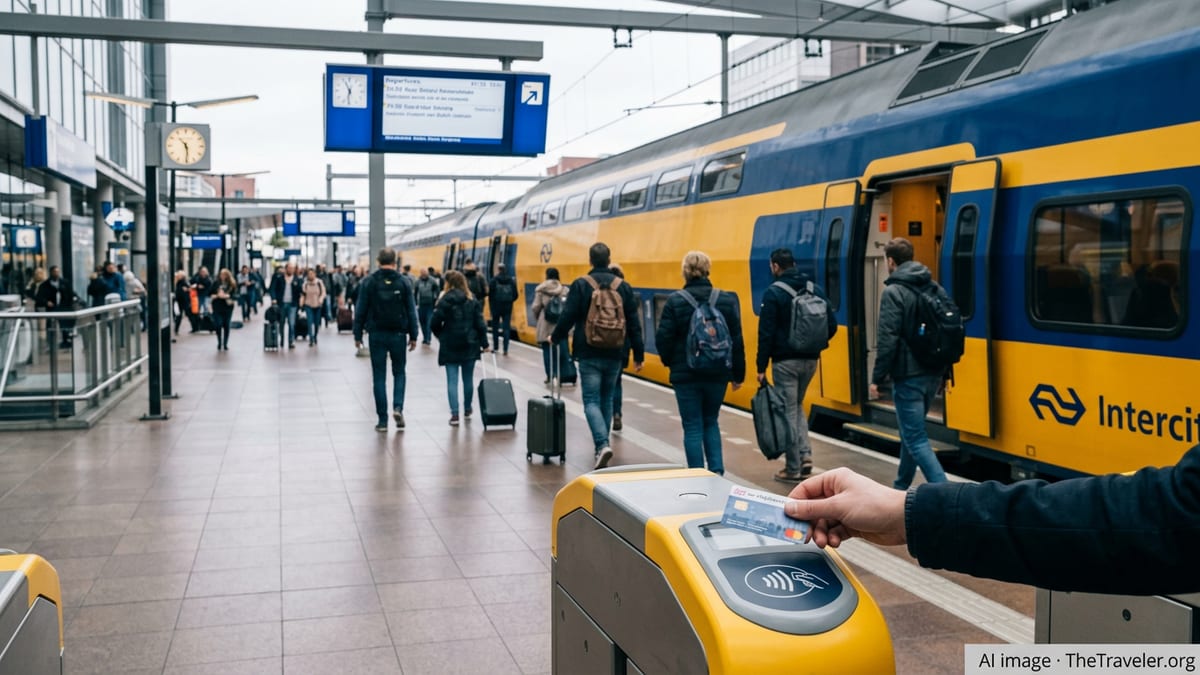
New summer pass offers unlimited off-peak travel
The so-called Nederland Dal Vrij summer ticket allows passengers to travel unlimited in second class on most domestic trains during off-peak hours and weekends for 49 euros per month. Publicly available information shows that the offer runs for a limited period over the 2026 summer months and can be purchased for up to two consecutive months, significantly undercutting standard subscription prices.
The product is being marketed as a temporary promotion that reduces the usual cost of comparable off-peak subscriptions, which can be more than double the new summer rate. Several outlets note that the pass applies across participating rail operators within the Netherlands, though it excludes high-speed international services such as Eurostar and Thalys, in line with existing national ticket products.
According to Dutch transport trackers, the ticket grew out of political discussions around a so-called climate ticket, a heavily discounted nationwide pass intended to encourage people to leave their cars at home during the peak holiday season. The 49 euro price point mirrors similar flat-fare schemes in neighboring countries while remaining tailored to the Netherlands’ denser but geographically smaller rail network.
Website strain and fast uptake signal strong interest
Early demand for the new pass has been intense. Dutch media report that the national rail operator’s website and app experienced technical problems and temporary outages shortly after sales began, which coverage attributes to an unexpected surge in visitors attempting to buy the subscription at the same time. Social media posts and user forums also describe queues, error messages and repeated attempts to complete purchases on the first day.
Travel-focused outlets highlight that the combination of school holidays, high fuel prices and increasing costs for short-haul flights has made the 49 euro offer particularly attractive for domestic tourism. Commentators point to families planning day trips to coastal towns and national parks, students looking to visit friends around the country, and commuters who can shift their working hours into off-peak periods as key groups driving demand.
Some rail and consumer platforms describe the early response as a clear signal that price remains a decisive factor in getting people onto trains, even in a country where public transport usage is already relatively high. Observers note that bookings of other discounted rail products and regional offers often spike when similar promotions are announced, but the speed and scale of interest in this nationwide pass appear especially pronounced.
Capacity concerns and risk of crowding on popular routes
The popularity of the 49 euro ticket is already prompting questions about whether the network can comfortably absorb an influx of leisure travelers during the peak summer period. Commentaries in Dutch newspapers and transport blogs point to past experiences with discounted tickets, when popular intercity routes to the coast and major cities became crowded and seats were hard to find on sunny weekends.
Rail analysts quoted in public reports warn that without additional trains or targeted capacity management, some services may face heavy crowding at certain times of day. They note that the pass is valid only in off-peak hours, which reduces direct pressure on rush-hour commuter services but may concentrate demand into late mornings, early evenings and weekends. Some passenger advocates argue that crowding could undermine the perceived quality of the offer if travelers struggle to find seats.
Operational updates published by the rail operator suggest that existing summer timetables already include some extra services on busy leisure corridors. However, observers underline that staffing constraints, rolling stock availability and ongoing infrastructure works may limit rapid capacity increases. As a result, travel advice circulating in Dutch media and online communities encourages passengers to avoid the busiest times, plan connections carefully and consider alternative routes where possible.
Political backdrop: from climate ticket idea to limited pilot
The introduction of the 49 euro pass follows months of debate in The Hague over whether the Netherlands should emulate the long-running flat-fare schemes seen in Germany and other European countries. Earlier proposals from climate-focused parties promoted a broad climate ticket that would provide low-cost access to rail and local public transport across the country during the summer, framed as a tool to cut emissions and ease road congestion.
Government briefings and specialist transport coverage indicate that the current product is a compromise version of those plans, focused on train travel and limited to a defined promotional window. Budgetary considerations played a significant role, with several commentaries noting that a permanent nationwide pass at such a low price would require substantial public subsidies and could reshape existing revenue models for operators and regional authorities.
Comparisons with Germany’s Deutschlandticket, which is priced at the same nominal level but valid year-round on most local and regional transport, feature prominently in European media analysis. Commentators point out that the Dutch offer is cheaper in relative terms because it is restricted to two summer months, but covers a denser rail network in a smaller country, potentially encouraging more frequent day trips rather than long-distance commuting patterns.
Future of discounted nationwide passes still under review
Whether the 49 euro summer ticket will become a recurring feature of the Dutch travel landscape remains unclear. Policy notes cited in domestic coverage suggest that the government and participating operators intend to treat this season’s promotion as a pilot, using sales data, passenger counts and customer feedback to evaluate its impact on ridership, revenue and network performance.
Transport commentators argue that strong demand strengthens the case for some form of recurring discounted pass, particularly if it demonstrably shifts travelers away from cars during the summer and supports regional tourism. At the same time, industry analysts warn that sustained low fares without matching public funding could strain operator finances and limit investment in reliability and capacity improvements.
For now, public information indicates that the 49 euro pass will remain a time-limited summer product, available only within the current promotional window. As travelers crowd platforms and trains in the coming weeks, the Netherlands will be closely watched by other European countries weighing similar flat-fare experiments, keen to see whether a short, sharp burst of cheap rail travel can deliver long-term gains for greener mobility.