


Hugh Taylor Birch State Park in Fort Lauderdale is one of South Florida’s easiest places to try kayaking or stand up paddleboarding without venturing into open ocean. Sheltered Long Lake, a rare freshwater coastal dune lake running through the center of the park, offers calm water, easy rentals and a tropical backdrop of palms and shady maritime hammock forest. This guide walks you through how rentals work, what to expect on the water, when to go, and how beginner paddlers and families can make the most of a few hours on the lake.
Get the latest updates straight to your inbox!
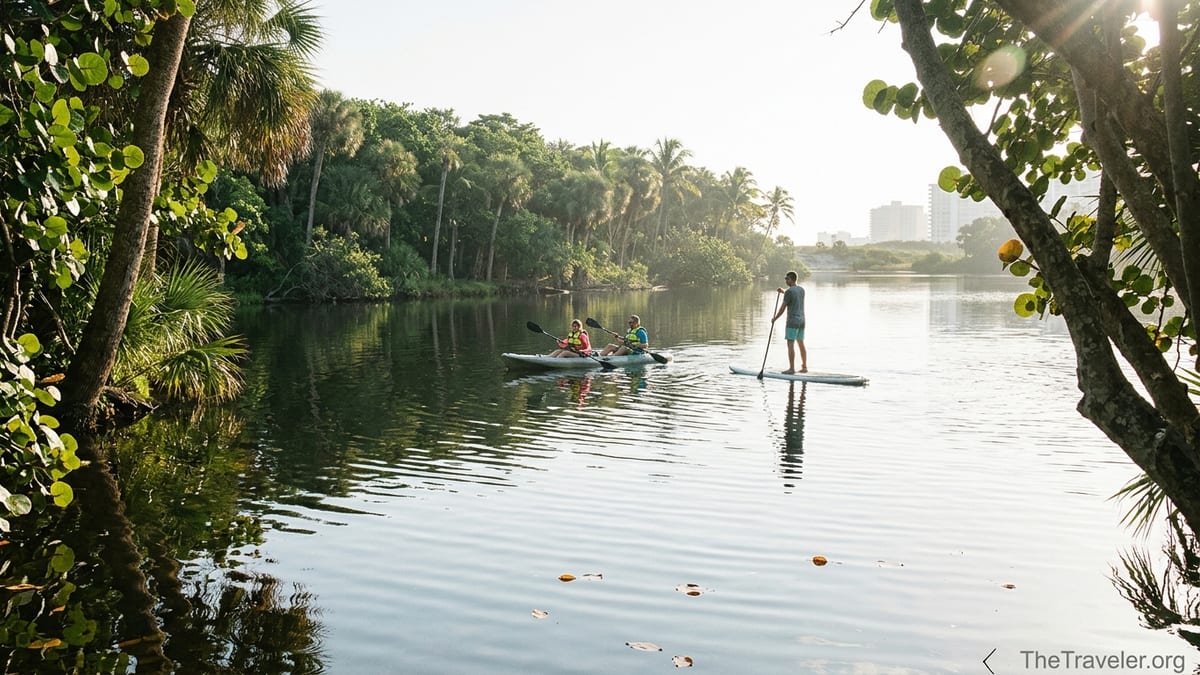
Why Paddle at Hugh Taylor Birch State Park
Hugh Taylor Birch State Park is often called Fort Lauderdale’s “Central Park” because it is a green island of nature between the Atlantic Ocean and the Intracoastal Waterway, just off Sunrise Boulevard. Inside that compact space is Long Lake, part of a historic coastal dune lake system that once stretched for roughly nine miles along this barrier island. Today, the lake forms a protected ribbon of flat water away from boat traffic and surf, which makes it an ideal setting for low‑stress paddling and short family outings.
Unlike putting a kayak directly into the Intracoastal, where large yachts and water taxis throw heavy wakes, Long Lake functions more like a moat winding through the forested interior of the park. You paddle past overhanging sea grapes, live oaks and palms instead of condominiums and seawalls. On a typical morning the water is gently rippled at most, and you can often see turtles, mullet and wading birds along the edge. That combination of urban convenience and surprisingly quiet water is what draws both locals and first‑time visitors here.
Another advantage is the on‑site concession, Park & Ocean, which handles kayak, canoe and paddleboard rentals for the park. Instead of hauling your own gear down Sunrise Boulevard, you can park once, pay the standard state park entry fee per vehicle, and then walk to the waterfront rental area for hourly equipment. When you are done, you can walk across to the same operator’s open‑air restaurant and bar for fish tacos or a cold drink, all without leaving the park.
For travelers staying in beachfront hotels along A1A near Sunrise Boulevard, Hugh Taylor Birch can be a car‑free paddling destination. Many visitors simply walk or rideshare to the park entrance, cross through the pedestrian tunnel under A1A for the beach, and then spend a couple of hours on the lake before swimming in the ocean, turning it into a relaxed half‑day without a long drive.
Understanding the Coastal Dune Lake & Paddling Environment
Long Lake is a narrow freshwater body running roughly north to south through the heart of the park. It is described as a coastal dune lake because it lies in low ground behind the older sand ridges that form this barrier island. Historically, similar lakes extended much farther up and down the coast, but development and canal construction have left Long Lake as one of the last intact segments in this area.
For paddlers, what matters is that Long Lake is mostly enclosed, long and straight, with gently curving bends rather than wide open bays. Winds along the Southeast Florida coast usually blow onshore or along the beach. Because of the surrounding tree cover and the narrow footprint of the lake, those winds are filtered before they reach the water. On most days, especially in the morning, conditions feel closer to a calm pond than to a coastal waterway.
The lake is separated from the Intracoastal and the ocean, so you will not encounter large boats, tides or strong currents on the main paddling route. When you launch from the rental dock you are effectively on a one‑way water trail. You can explore north and south, but you will turn around at natural narrow points and simply trace your route back. This is why the outing is well suited to anyone who wants a predictable experience and does not want to worry about getting swept into shipping channels or out an inlet.
That said, South Florida’s sun and humidity are still real factors. Even on calm days, midday heat in winter can be intense and in summer it can feel oppressive on the water. While the surrounding forest provides shade along parts of the shoreline, much of the lake is exposed. Paddlers should bring a refillable water bottle to use at the park’s bottle‑filling station near the ranger station, wear UV‑rated clothing and a hat, and use sunscreen that will hold up to reflected sunlight off the water.
Kayak, Canoe and SUP Rentals: How It Works
All on‑site paddling rentals at Hugh Taylor Birch State Park are handled by Park & Ocean, the official concessionaire operating near the eastern side of the park close to the beach access. The rental hut is next to their outdoor restaurant and bar, with a short path to the launch on Long Lake. Rentals are offered on a first‑come, first‑served basis and are typically available by the hour, with options like single kayaks, tandem kayaks, canoes and stand up paddleboards.
Exact prices change, but in recent seasons visitors have commonly reported hourly rates in the ballpark of a few dozen dollars for a single kayak or SUP and slightly more for a tandem or canoe. Expect to pay a modest deposit or leave a credit card, sign a waiver and show a photo ID. If you arrive on a Saturday around 10 a.m. in peak winter season, for example, you might reserve a tandem kayak for two adults and a child and plan on a one‑ or two‑hour rental, giving you plenty of time to paddle a relaxed out‑and‑back route.
Reservations for hourly rentals are generally not required and the operator emphasizes walk‑up service, although guided tours such as sunset or full moon paddles often do require advance booking. For a straightforward lap on Long Lake, many visitors simply check the weather, arrive at opening hours, and walk up to the counter. On busy holiday weekends or during spring break, it is wise to come earlier in the day to avoid waiting for equipment to be returned.
Children are typically welcome in canoes and tandem kayaks when accompanied by adults, with life jackets provided. If you are traveling with younger kids, ask for a sit‑on‑top tandem kayak, which is more forgiving if someone leans over the side to look at fish or drops a paddle. For older children or teens, a stable all‑around SUP can be a fun option, but the rental staff may have age or weight guidelines for solo use. It is always worth mentioning your group’s experience level so staff can suggest the most stable craft for your outing.
Planning Your Route and Timing on Long Lake
The simplest route for first‑time visitors is an out‑and‑back paddle from the Park & Ocean dock along the length of Long Lake. From the launch, you can turn south first, following the narrower, more shaded section of the waterway, then return past the dock and continue north along the wider reach before turning around again. For many people, a gentle loop like this takes 60 to 90 minutes at a conversational pace.
Because there is no strong current, you can treat the lake like a greenway. If you rent a SUP, for example, you might paddle ten or fifteen minutes, then sit or kneel to rest and watch for herons hunting in the shallows. Couples in a tandem kayak can pause under overhanging branches to take photos of the reflections without worrying about drift. The park’s loop road and walking paths run roughly parallel to sections of the lake, so you occasionally glimpse joggers or cyclists, but the water itself feels removed from the car traffic on Sunrise Boulevard and A1A.
Timing is critical for comfort. The park is open from 8 a.m. to sunset daily, and that opening window from roughly 8 a.m. to 10 a.m. is typically the most pleasant for paddling. Morning air temperatures are lower, winds are often light, and thunderstorms are less likely than in mid to late afternoon during summer. As an example, a family visiting Fort Lauderdale in March might arrive at the gate shortly after 8 a.m., rent kayaks by 8:30 a.m., and finish a relaxed paddle by 10 a.m., then head through the pedestrian tunnel to the beach before crowds build.
Evening can also be appealing, particularly in shoulder seasons when sunset falls earlier. Park & Ocean sometimes runs guided sunset tours from the same launch area on select days. These outings are typically timed to leave about an hour or so before sundown, letting participants paddle in soft golden light and watch the sky change color over the tree line. Independent paddlers should keep an eye on closing time and plan to be off the water with enough daylight to return gear and walk back to their car or hotel.
Is It Really Beginner Friendly?
For most visitors, Hugh Taylor Birch State Park is one of the most beginner‑friendly flatwater paddling spots in the Fort Lauderdale area. The enclosed nature of Long Lake, the absence of large powerboats and the relatively short distance covered during a typical rental session all contribute to a forgiving environment. Many people try kayaking or SUP here for the first time and manage a full hour on the water without incident.
Beginners should still approach the outing with realistic expectations. While the lake is calm, wind and chop can pick up by late morning, and standing on a paddleboard remains a balance challenge for some. If you are new to paddling, consider starting in a sit‑on‑top kayak rather than going straight to a SUP. Sit‑on‑tops are open, stable platforms; if you do fall in, you simply climb back on, and the boat itself does not fill with water in the same way as a traditional sit‑inside kayak.
Rental staff from Park & Ocean regularly see first‑timers and can demonstrate the basics of paddling technique and life jacket fit right at the beach or dock. It is common for them to point out the best direction to head first depending on wind, or to suggest that nervous beginners stick to the more sheltered side of the lake. A typical scenario might be two adults from the Midwest who have never kayaked before renting a tandem boat, listening to a five‑minute safety talk, and then paddling a short distance, stopping frequently to get comfortable with the rhythm.
If you have any concerns about swimming ability, mobility or young children, it is worth asking about guided options. While the lake is not deep in many places and you will be wearing a life jacket, having a guide nearby can provide additional reassurance. On the other hand, confident but novice paddlers often appreciate the freedom of exploring at their own pace on such a straightforward waterway.
Stand Up Paddleboards vs Kayaks vs Canoes
Choosing between a stand up paddleboard, kayak or canoe at Hugh Taylor Birch depends on your comfort level, group makeup and what kind of experience you want. SUPs offer a high vantage point and a great core workout. On a still morning, paddling a stable all‑around board along Long Lake lets you look down into the clear shallows to spot fish and submerged branches. Many visitors, especially those used to yoga or balance sports, enjoy the sense of standing eye‑to‑eye with egrets perched on the shoreline.
Kayaks, particularly sit‑on‑top models, are the go‑to choice for most beginners and mixed‑experience groups. They are easier to learn, and you can stay relatively dry if you prefer. A single adult might choose a solo kayak to explore the full length of the lake, while parents often opt for a tandem so a younger child can sit up front or in the middle. The low seating position also makes kayaks less affected by gusty winds than taller paddleboarders.
Canoes provide more room for coolers, dry bags and extra gear, which is attractive to families planning to picnic at one of the park’s pavilions after paddling. For instance, two adults and two school‑aged children could rent a canoe, pack lunches in a soft cooler, paddle for an hour, then pull the boat out and head to a nearby grill area without needing to return to the car first. The trade‑off is that canoes have a higher profile and can be trickier to steer in crosswind than low‑slung kayaks.
Regardless of craft, everyone on board should wear a properly fitted life jacket. The rental concession will provide US Coast Guard‑approved personal flotation devices in a range of sizes, from child through adult. Trying them on at the dock and adjusting straps before you leave is an important step, especially for kids who may be tempted to loosen or remove them once on the water.
Families, Safety and Practical Tips
Hugh Taylor Birch State Park is engineered for family visits, with two playgrounds, shaded picnic areas and restrooms near key activity zones. That makes it easier to combine a paddle with other low‑key activities. A common pattern for families is to arrive mid‑morning, let kids burn off energy at a playground, then rent a canoe or tandem kayak for a short lap on the lake, followed by lunch at Park & Ocean or a picnic under the trees.
For safety, there are a few non‑negotiables. Every paddler, regardless of age, should have a life jacket on while on the water. Adult swimmers may be tempted to leave theirs unbuckled in the heat, but sudden slips or collisions can happen even on calm lakes. Keep non‑essential items like phones and car keys in a dry bag clipped to the boat, or leave them in a secure locker or vehicle. Sun exposure is significant, so long‑sleeved rash guards, brimmed hats and sunglasses with retainers are practical choices.
Families with toddlers or preschoolers might consider limiting their paddle to 30 or 45 minutes. Young children often enjoy the novelty of being on the water but may become restless or overheated if kept out too long. Bringing a small toy, snack or chilled water bottle for them to hold can help. It is also wise to paddle along the shore first, where you are closer to shade and can return quickly to the dock if needed.
Another practical point is park access. Hugh Taylor Birch charges a per‑vehicle entry fee, with a different rate for single‑occupant vehicles and slightly higher for two to eight passengers. If you plan to visit several Florida state parks during your trip, you might compare the daily fee with the cost of an annual state park pass, especially for longer stays. For visitors staying within walking distance along A1A, entering on foot avoids parking considerations but you will still pass through the main entrance station.
The Takeaway
Paddling at Hugh Taylor Birch State Park offers a rare combination in Greater Fort Lauderdale: calm, beginner‑friendly freshwater in a setting that remains surrounded by tropical forest yet sits a short walk from one of Florida’s busiest beaches. Long Lake’s sheltered waters make it an accessible choice for first‑time kayakers, casual SUP riders and families with children, while the on‑site Park & Ocean concession simplifies logistics with hourly rentals and an adjacent restaurant.
If you time your outing for a cooler morning or a gentle sunset, dress for sun and bring plenty of water, you can enjoy an hour or two of quiet exploration that feels far from high‑rise hotels and traffic. Whether you glide past turtles in a tandem kayak, test your balance on a stand up paddleboard, or pack a canoe with picnic gear for a longer family visit, Hugh Taylor Birch State Park’s coastal dune lake is a straightforward and rewarding place to get on the water.
FAQ
Q1. Do I need prior kayaking or SUP experience to paddle at Hugh Taylor Birch State Park?
Most visitors do not need prior experience. Long Lake is calm and enclosed, and the rental staff can demonstrate basic strokes and safety before you launch. Many first‑timers successfully start with a short, one‑hour session in a sit‑on‑top kayak.
Q2. Are kayak and paddleboard rentals available every day?
Rentals are generally offered daily by the on‑site concession during normal park hours, but exact schedules can vary with season, weather and staffing. It is wise to check same‑day conditions or call ahead, especially during holidays or after storms.
Q3. How much time should I plan for a typical paddle on Long Lake?
A relaxed out‑and‑back paddle along the main stretch of Long Lake usually takes 60 to 90 minutes. Beginners and families with young children often start with a one‑hour rental and extend if everyone is comfortable.
Q4. Is the water at Hugh Taylor Birch State Park affected by tides or strong currents?
The primary paddling area on Long Lake is freshwater and largely separated from tidal flows, so there is little to no noticeable current. Wind can create light chop on open sections, but you will not encounter inlet‑style tidal currents on the main route.
Q5. Can young children join in a kayak or canoe?
Yes, young children can usually ride in canoes or tandem kayaks with adults, using properly fitted child‑sized life jackets. Many families choose a stable sit‑on‑top tandem kayak so kids can sit between adults and stay low to the water.
Q6. What should I wear and bring for a paddling session?
Wear lightweight, quick‑dry clothing, water shoes or sandals that can get wet, a hat and polarized sunglasses. Bring sunscreen, insect repellent, a refillable water bottle and, if desired, a small dry bag for phones or cameras.
Q7. Are guided tours available, or is it only self‑guided paddling?
Both options exist. The concession often runs guided outings such as sunset or eco tours on select days, while walk‑up hourly rentals allow for self‑guided paddling on Long Lake at your own pace.
Q8. Is Hugh Taylor Birch State Park a good place to learn stand up paddleboarding?
Yes, the flatwater conditions on Long Lake make it a good training ground for SUP beginners. Those new to the sport may want to start in calm morning conditions and spend time kneeling or sitting on the board before standing.
Q9. What happens if the weather changes while I am on the water?
If winds increase or dark clouds build, it is best to turn back toward the dock immediately. Afternoon thunderstorms are common in South Florida, especially in summer, and rental staff may recall boats early if conditions become unsafe.
Q10. Can I combine paddling with a beach visit in the same day?
Yes, that is one of the park’s main attractions. Many visitors paddle on Long Lake, return their gear, then walk to the pedestrian tunnel under A1A for direct access to Fort Lauderdale Beach, making it easy to enjoy both freshwater paddling and ocean swimming in a single visit.