


Wedged between the Atlantic Ocean and the Intracoastal Waterway in Fort Lauderdale, Hugh Taylor Birch State Park feels like a pocket of wild Florida in the middle of the city. Locals treat it as their own Central Park, and visitors quickly see why: within its 180 acres you can walk shaded trails, bike or skate a scenic loop, paddle a mangrove-lined lagoon, watch manatees cruise by, cross over to the beach, or simply stretch out under live oaks and sea grapes for an afternoon of doing nothing at all.
Get the latest updates straight to your inbox!
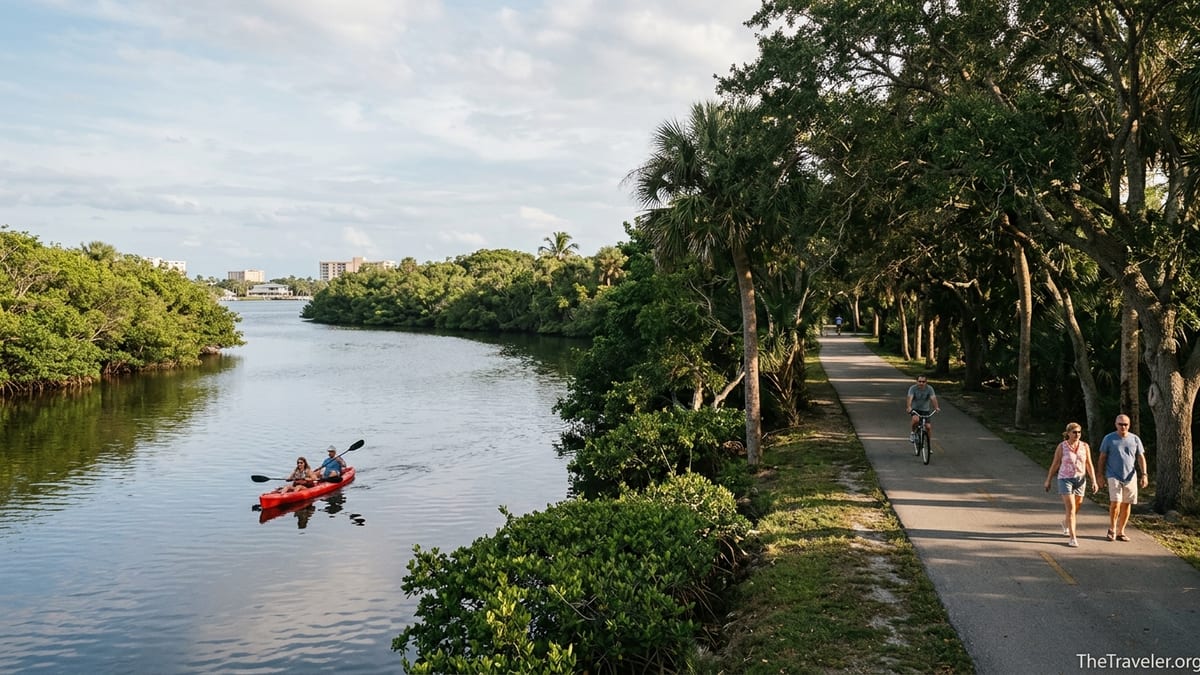
Getting Oriented: Hours, Fees and Layout
Hugh Taylor Birch State Park sits off East Sunrise Boulevard, bordered by State Road A1A on the ocean side and the Intracoastal Waterway on the west. From the main entrance gate, a one-way paved road loops roughly 1.9 miles around the park, with turnoffs for parking lots, picnic areas, the freshwater lagoon known as Long Lake, trailheads and the pedestrian beach tunnel. Although development surrounds the park on all sides, the dense hammock forest quickly muffles the city once you drive or walk inside.
The park is generally open from 8 a.m. until sunset every day of the year. Admission for vehicles is typically around 6 dollars per car with two to eight occupants, about 4 dollars for a single-occupant vehicle or motorcycle, and roughly 2 dollars per person for pedestrians, bicyclists and skaters entering through the gate. Florida State Parks annual passes are accepted, and locals who visit often find that a pass can pay for itself within a few weekends.
Most first-time visitors start at the ranger station near the entrance to pick up a paper map and ask about current conditions. Staff can tell you if any sections of Long Lake are closed to paddling, whether there have been recent manatee or dolphin sightings on the Intracoastal, and what ranger-led walks or programs are scheduled that day. From there, you can either follow the one-way road clockwise around the park or park immediately and head out on foot or bike.
Services are centered around the park’s concession area on the eastern side near A1A. Here you will find a casual waterfront restaurant, restrooms, and a rental outfitter providing bikes, kayaks, stand-up paddleboards, canoes and beach equipment. Plan your day around this hub if you know you want to combine a paddle or bike ride with a relaxed lunch overlooking the water.
Walking, Jogging and Skating the Loop
The simplest way to experience Hugh Taylor Birch State Park is to walk or jog the paved loop road. At roughly 1.9 miles, it is manageable for most fitness levels and offers a mix of shaded forest sections and open views of Long Lake and the Intracoastal. Local runners often park near the entrance and do two or three laps for a 4 to 6 mile outing without leaving the park’s boundaries.
The loop is also popular with in-line skaters and recreational cyclists. Because the road is one-way for vehicles, you always know which direction traffic is coming from, and the speed limit is low enough that most drivers expect to share the road with people on wheels. Recent improvements have added striping and dedicated space along stretches of the road, making it more comfortable to skate or bike while staying out of car lanes where possible.
If you prefer dirt underfoot, look for the signed nature trails branching off from the loop. Short spurs lead into tropical hardwood hammock where you can walk on packed soil and boardwalks under cabbage palms, live oaks and strangler figs. One of the most pleasant walks starts from a small parking area near the Intracoastal and winds through shaded forest to an overlook facing mangroves and boat traffic on the waterway.
Skaters and walkers should bring water, especially in the warmer months, and consider starting early in the morning or later in the afternoon when temperatures and sun intensity are lower. Even though much of the loop is shaded, the humidity in South Florida can be intense, and there are stretches in the open where you will feel the full strength of the sun.
Biking the Park and Beyond
Cyclists use Hugh Taylor Birch State Park both as a destination and as a safe warm-up or cool-down loop before riding on city streets. The paved drive’s 1.9 mile length is ideal for easy spins, family rides with kids, and visitors trying rental bikes for the first time in years. You can rent cruisers and simple geared bikes from the concession area starting around mid-morning, with hourly and half-day rates that are competitive with other Fort Lauderdale beachfront rental shops.
Although most of the park’s interior trails are not formally designated as mountain bike routes, some multiuse paths allow bicycles. Before heading off pavement, check in with the ranger station to confirm which trails are currently open to bikes. This helps limit erosion and protects sensitive habitat. A typical outing might combine one or two relaxed laps on the paved loop with a short exploration of a signed trail spur, then a stop at a shaded picnic table to cool down.
More experienced cyclists sometimes use the park as a starting point for longer rides along A1A, heading north toward Lauderdale-by-the-Sea or south toward the Las Olas Marina area. If you plan to leave the park by bike, remember that traffic on A1A can be heavy, especially on sunny weekends and during winter tourist season. Many riders schedule their road segments for early morning, then retreat back into Hugh Taylor Birch State Park before midday when beach-going traffic and heat intensify.
Helmet use is strongly recommended for all riders, and Florida law requires helmets for cyclists 16 and under. Because the park’s roads can be damp after showers and sometimes sandy near the edges, wider tires or cruiser-style bikes can feel more secure than narrow racing tires for casual visitors.
Kayaking and Paddleboarding on Long Lake and the Intracoastal
One of the most distinctive features of Hugh Taylor Birch State Park is Long Lake, a narrow freshwater lagoon that runs north to south through the center of the property. Bordered by mangroves and low forest, it feels surprisingly wild given how close you are to high-rise condos and busy streets. The park’s authorized rental concession near the eastern side of the lake provides single and tandem kayaks, canoes, pedal boats and stand-up paddleboards, with typical rental windows starting in the late morning and running into the late afternoon.
A popular outing for first-timers is a one to two hour kayak or paddleboard rental on Long Lake. You can launch directly from the dock by the concession and paddle slowly along the shoreline, watching for turtles, small fish, and wading birds such as herons and egrets. Early in the day, the lake surface is often glassy, reflecting the surrounding trees and making it easy for less experienced paddlers to stay balanced on a board.
Some outfitters based in or near the park also offer guided tours on the Intracoastal Waterway, including occasional evening or full-moon paddles that highlight the contrast between the park’s dark mangroves and the city lights across the channel. These trips usually use sit-on-top kayaks or stable paddleboards and are geared toward beginners, with life jackets, basic instruction and dry bags provided as part of the package price.
Conditions on both Long Lake and the Intracoastal can change with weather, tides and boat traffic, so it is wise to ask the rental staff or rangers about wind, currents, and any advisories before setting out. In cooler months, manatees sometimes move through nearby waterways, and you may spot one surfacing in the Intracoastal if you keep a quiet distance and avoid crowding or touching these protected animals.
Fishing, Picnics and Relaxing Under the Trees
For visitors who want a slower pace, Hugh Taylor Birch State Park is an easy place to spread out a picnic blanket and linger. Several picnic areas with grills and shaded tables are located along the loop road, often close to restrooms and water. Families frequently bring small coolers, folding chairs and simple picnic fare from nearby grocery stores on Sunrise Boulevard, then spend the afternoon alternating between the shade and short walks to the lake or waterway overlooks.
Anglers can fish in designated areas along the Intracoastal Waterway and, in some sections, from the shore of Long Lake, following posted regulations. Typical catches may include saltwater species on the Intracoastal side and freshwater fish in the lake, depending on salinity and habitat conditions. Because rules and seasons for Florida fishing change, bring the appropriate state fishing license if required and confirm current regulations with the ranger station before casting a line.
Even without an activity planned, simply walking a few minutes off the main road can lead you to quiet corners under live oaks where you hear more birds than traffic. Locals often bring a hammock and a book, find two sturdy trees near the interior trails, and nap through the hottest part of the day. Others choose to sit on benches facing the Intracoastal and watch yachts, water taxis and small sailboats pass by, a reminder that the park is an island of green in the middle of an active coastal city.
If you are visiting with children, look for open grassy spaces near the playground and picnic areas. These lawns offer room for frisbees or soccer balls without disturbing wildlife in the more sensitive hammock interior. Always pack out trash or use the park’s bins, as raccoons and other animals are quick to investigate leftovers and can become habituated to human food if waste is left out.
Beach Access and Coastal Experiences
One of the biggest advantages of Hugh Taylor Birch State Park is its direct access to Fort Lauderdale Beach without the need to move your car. From the eastern parking areas, a pedestrian tunnel passes under State Road A1A to the oceanfront, allowing you to walk from dense hammock forest to open sand in just a few minutes. This makes it easy to split your day between shaded park activities and swimming or sunbathing on the Atlantic.
The beach here typically feels a little quieter than sections closer to the main hotel strips, although this can change during peak holidays or special events. Beachgoers enter both from the tunnel and from public access points along A1A, so you will still find a healthy mix of locals and visitors. Some days the water is calm and clear, suitable for casual swimming and nearshore snorkeling, while other days bring wind and waves better suited to body surfing.
The same concession group that handles bikes and kayaks often provides beach rentals at or near the park’s ocean access, including chairs, umbrellas and sometimes stand-up paddleboards for use in the surf zone when conditions allow. This can be particularly convenient for travelers staying in smaller hotels or vacation rentals who do not want to pack bulky beach gear.
When walking between the park and the beach, watch for posted closing times at the beach gate, which typically closes a short time before the main park entrance at sunset. Plan your return so you are back within the park before the gate shuts, especially if you have left a vehicle parked inside. As with any South Florida beach outing, bring reef-safe sunscreen, plenty of water, and footwear suitable for hot sand and potentially sharp shells or coral fragments near the waterline.
Wildlife Spotting and Birding Highlights
Despite its modest size and urban setting, Hugh Taylor Birch State Park is rich in wildlife for those who move slowly and pay attention. The park’s mix of tropical hardwood hammock, coastal dune, lagoon and mangrove habitats attracts an array of birds, reptiles and small mammals throughout the year. It is listed as a site on the Great Florida Birding Trail, and local birders often start early morning walks here before the sun climbs high.
Along Long Lake, look for wading birds such as great blue herons, snowy egrets and ibises stalking the shallows, as well as green and tricolored herons tucked into low branches. Ospreys frequently hunt over the lake and Intracoastal, plunging feet-first into the water to emerge with mullet or other fish. In winter, migratory songbirds pass through the hammock, adding warblers and vireos to the list of possible sightings for those scanning the mid-story branches.
On the ground, visitors commonly spot land crabs near the water’s edge, lizards and anoles sunning on tree trunks, and non-venomous snakes crossing trails. Raccoons are present and will investigate trash or unattended food, so you should never feed them and should secure coolers between meals. Larger mammals are more elusive in such a compact park, but the dense vegetation provides cover for opossums and other nocturnal species that you are more likely to glimpse at dawn or dusk.
If you are new to birding or wildlife watching, consider bringing a simple pair of binoculars and a smartphone field guide app that covers South Florida species. Spending an hour on a bench facing Long Lake or the Intracoastal, quietly scanning for movement, can be as rewarding as a long hike. Always observe wildlife from a respectful distance and use zoom lenses rather than approaching animals closely for photographs.
Ranger Programs, Tours and Educational Experiences
Ranger-led programs are one of the best ways to learn about the ecology and history of Hugh Taylor Birch State Park. On many Fridays and Saturdays, rangers or volunteers lead guided walks through the hammock, typically late in the morning, pointing out native plants, explaining how coastal ecosystems cope with storms and development, and sharing stories about Hugh Taylor Birch himself, the Chicago attorney who donated the land to the state in the early 1940s.
Some programs focus on specific themes such as coastal dune restoration, mangrove ecology, or bird identification, while others are broad nature walks suitable for families. There are also occasional live animal presentations where staff or partner organizations introduce visitors to native reptiles or birds of prey in a controlled setting, emphasizing conservation and safe behavior around wildlife.
In addition to ranger walks, private outfitters associated with the park offer guided Segway tours, bike tours and paddling excursions that interpret the landscape while covering more ground than a typical on-foot program. A late-afternoon Segway tour might circle the park road and stop at viewpoints along the Intracoastal, while a guided kayak tour could focus on spotting birds and learning about mangroves along Long Lake.
Program schedules and offerings change with the season and staffing, so it is smart to check the park’s official information sources or call the ranger station a few days before your visit if a particular tour is important to you. Many programs are included with park admission, while privately operated tours carry additional fees similar to other commercial activities in Fort Lauderdale.
The Takeaway
Hugh Taylor Birch State Park rewards both spontaneous visits and carefully planned days. You can arrive with little more than walking shoes and a bottle of water and still enjoy shaded loops, wildlife sightings and a quiet bench by the Intracoastal. With a bit more preparation or the help of on-site rentals, your visit can expand to include kayaking on Long Lake, stand-up paddleboarding, a family bike ride, or a half-day alternating between the forest and the Atlantic surf.
Because the park sits so close to hotels and condos along Fort Lauderdale Beach, it works well as a flexible anchor for a weekend or longer stay. Morning runs, midday paddles out of the sun, lazy picnics under trees, and sunset walks along the water are all feasible without long drives or complex logistics. However you design your day, the combination of natural habitat and urban convenience is what makes Hugh Taylor Birch State Park one of South Florida’s most appealing and accessible green spaces.
FAQ
Q1. What are the hours and entrance fees at Hugh Taylor Birch State Park?
The park typically opens at 8 a.m. and closes at sunset daily. Admission is usually around 6 dollars per vehicle with two to eight people, about 4 dollars for single-occupant vehicles or motorcycles, and around 2 dollars per person for pedestrians, cyclists and skaters entering on foot. Florida State Parks annual passes are accepted, and exact prices may change, so check for current rates before you visit.
Q2. Can I rent kayaks, paddleboards or bikes inside the park?
Yes. An authorized concession in the park rents single and tandem kayaks, canoes, stand-up paddleboards, pedal boats and bicycles. Rentals generally operate from mid-morning to late afternoon, with hourly and longer options. It is wise to bring a credit or debit card and a photo ID, and consider reserving ahead during busy weekends or holidays.
Q3. Is Hugh Taylor Birch State Park good for families with children?
The park is well suited to families. Short, shaded trails, open grassy areas, picnic tables, a playground and easy access to both Long Lake and the beach give children room to explore without long hikes. Rental pedal boats and tandem kayaks are popular with parents and kids, and many ranger programs are designed to be child friendly.
Q4. How do I get from the park to the beach?
From the eastern side of the park, a signed pedestrian tunnel passes under State Road A1A and leads directly to Fort Lauderdale Beach. You can park once inside the state park, enjoy the trails and lake, then walk through the tunnel to swim or relax on the sand. Be sure to note posted closing times for the beach gate so you can return to the park before it closes.
Q5. What wildlife might I see during my visit?
Visitors commonly see wading birds such as herons and egrets, ospreys hunting over the water, turtles in Long Lake, and crabs and lizards along the shorelines and trails. Raccoons are also present, especially near picnic areas. In cooler months, there is occasional potential to see manatees in nearby waterways. Always observe animals from a distance and never feed wildlife.
Q6. Are there ranger-led tours or educational programs?
Yes. On many Fridays and Saturdays, rangers or volunteers lead guided walks through the hammock, focusing on plants, wildlife and park history. There are also periodic live animal presentations and special topic programs, as well as guided Segway, bike and kayak tours offered by partners. Some activities are included with admission, while commercial tours have separate fees.
Q7. Is fishing allowed in Hugh Taylor Birch State Park?
Fishing is permitted in designated areas along the Intracoastal Waterway and in some parts of Long Lake, subject to current regulations. Anglers should carry any required Florida fishing licenses and follow posted rules on species, seasons and catch limits. The ranger station can provide up-to-date guidance on where fishing is allowed during your visit.
Q8. Can I bring my dog to the park?
Leashed dogs are generally allowed in many areas of Hugh Taylor Birch State Park, provided owners clean up after them and respect posted restrictions in sensitive habitats or buildings. Pets are not typically allowed in the water at designated swimming or protected wildlife areas. Because policies can change or vary by location, confirm pet rules at the entrance station when you arrive.
Q9. Do I need to book anything in advance?
For a simple visit involving walking, running or picnicking, you usually do not need reservations and can just pay the entrance fee at the gate. However, for pavilion rentals, group events, youth camps, or guided tours such as full-moon paddles or Segway trips, advance booking is recommended, especially during peak winter and spring seasons.
Q10. What should I pack for a day at Hugh Taylor Birch State Park?
Plan to bring comfortable walking shoes, lightweight clothing, sun protection such as a hat and reef-safe sunscreen, and plenty of drinking water. A small picnic setup, swimwear and a towel are helpful if you plan to use the beach or paddle on Long Lake. Binoculars and a camera with a zoom lens can enhance wildlife viewing, and insect repellent is useful during warmer, wetter months.