


More news on this day
Dallas–Fort Worth International Airport experienced another day of severe disruption as 398 flights were delayed and three were cancelled, hindering operations for American Airlines, Envoy Air, SkyWest and several partner carriers and sending knock-on effects across routes linking the United States with Canada, Mexico, the United Kingdom, Japan and other international destinations.
Get the latest news straight to your inbox!
Storm Systems, Congestion And Network Strain Collide At DFW
Recent weeks have placed Dallas–Fort Worth at the center of repeated disruption across the U.S. air network, with weather, congestion and operational strain combining to push delay numbers into the hundreds. Publicly available disruption tallies for June show multiple days in which DFW recorded some of the nation’s highest delay counts, with earlier events reaching into the thousands of affected flights across the United States.
On one recent severe-weather day, industry tracking data cited in consumer rights coverage reported more than 3,400 U.S. flights disrupted, with Dallas–Fort Worth singled out as the hardest hit hub. Similar reporting for another June weekend described more than 400 cancellations and over 1,000 delays centered on DFW, illustrating how quickly local storms and traffic volume can cascade into widespread operational problems.
The latest episode, in which 398 flights were delayed and three cancelled at DFW, fits this broader pattern. The figures, drawn from aggregated flight-status databases and passenger-rights monitors, reflect not only mainline American Airlines services but also a dense web of regional and international partners whose schedules are sensitive to even minor timetable shifts.
For travelers, the distinction between a ground stop driven by thunderstorms and a rolling series of knock-on delays is often academic. The outcome is the same: a backlog of aircraft waiting for departure slots, arriving flights struggling for gates and passengers facing missed connections and overnight rebookings.
American, Envoy Air And SkyWest Bear The Brunt
American Airlines, which maintains its largest hub at Dallas–Fort Worth, sits at the center of the disruption. Operational snapshots from June show American repeatedly leading national delay tallies on days when DFW is under weather or traffic pressure, with some reports attributing more than 600 delayed American flights systemwide on a single storm-affected day.
Regional affiliates and contract carriers, including Envoy Air and SkyWest Airlines, have been equally exposed. These operators run large portions of American’s domestic and short-haul international network under codeshare arrangements, particularly on thinner routes where smaller aircraft are deployed. When one mainline bank of connections at DFW runs late, dozens of regional legs can follow suit, magnifying the number of flights showing delay codes even when the initial cause lies with a single weather cell or traffic restriction.
Consumer-focused analyses highlight that on highly disrupted days, carriers such as Envoy Air and SkyWest frequently appear among the most delayed operators in the United States, reflecting their role feeding traffic into major hubs like DFW, Chicago and Houston. The most recent DFW event, with almost 400 delayed flights, again saw these regional names prominently represented in delay data, emphasizing how dependent domestic connectivity has become on their performance.
While only three flights were formally listed as cancelled in the latest DFW disruption, the operational impact was significantly broader. Late arrivals can force aircraft substitutions, crew reassignments and rolling delays into subsequent days, which are not always captured in same-day cancellation statistics.
Ripple Effects Across North America, Europe And Asia
Dallas–Fort Worth’s role as a transcontinental gateway meant that the day’s disruption was not confined to Texas. Published coverage of similar June events has shown that delays radiating from DFW have affected services spanning North America, including major Canadian and Mexican destinations, as well as long-haul flights to Europe and Asia.
American and its partners operate extensive schedules from DFW to cities across Canada and Mexico, linking the hub to Toronto, Vancouver, Montreal, Mexico City and key leisure destinations. When departure banks out of Texas run behind schedule, passengers on connecting itineraries frequently miss onward services, leading to rollovers into later flights or rerouting through alternative hubs. Even when long-haul departures can be held to protect key connections, arrivals at overseas airports may be substantially delayed, affecting local curfews and ground-handling capacity.
Transatlantic and transpacific routes have also felt the strain. Reports from recent DFW disruption days note that services touching the United Kingdom, Japan and other long-haul markets have encountered late departures or modified schedules as airlines attempt to realign aircraft and crews. With widebody aircraft typically operating tightly timed rotations across continents, an extended delay on one leg can reverberate through the rest of the day’s flying and into subsequent days.
These international consequences underscore how a localized operational shock in North Texas can affect travelers far from U.S. airspace. Passengers heading from London to Mexico via Dallas, or from Tokyo to smaller U.S. cities through the same hub, may experience missed tours, lost hotel nights or business disruptions even if their originating flights initially departed on time.
Passengers Face Long Lines And Complicated Rebookings
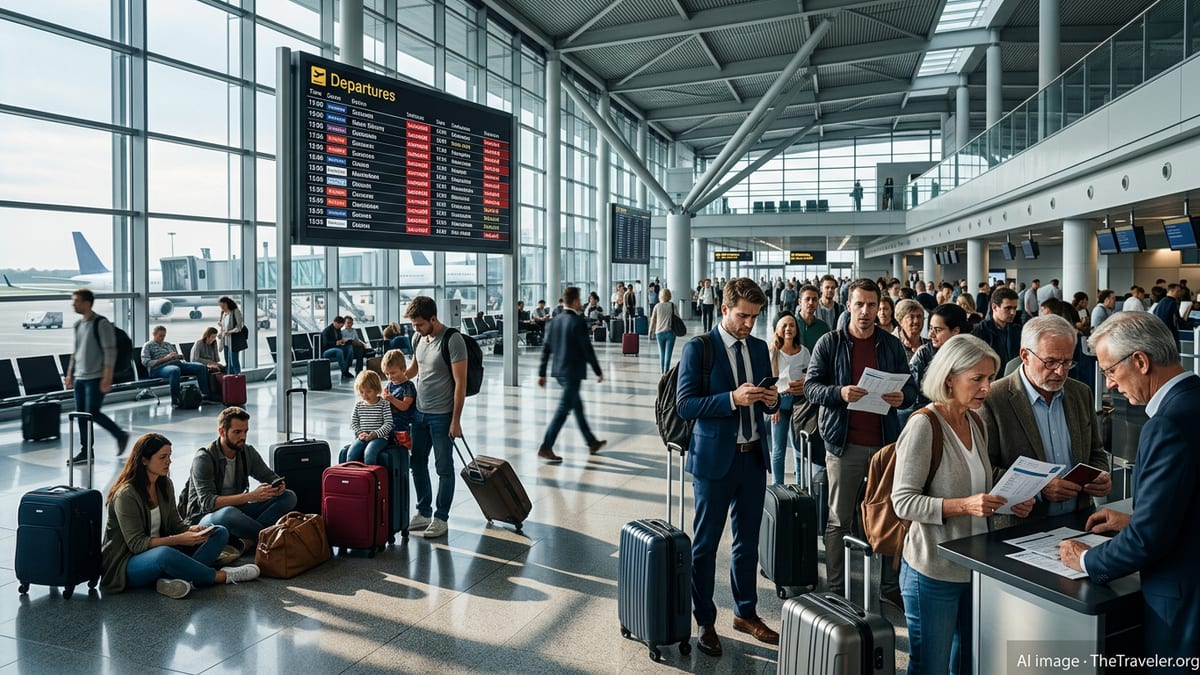
For travelers caught up in the latest disruption at Dallas–Fort Worth, the experience echoed scenes reported earlier in June when thunderstorms and ground stops left terminals crowded with waiting passengers. Accounts compiled in travel and consumer coverage have described long lines at customer-service desks, limited availability of same-day rebooking options and difficulty securing overnight accommodation close to the airport when disruption extends into late evening.
Passenger-rights organizations note that the difference between a delay and a cancellation can be important when determining eligibility for compensation or reimbursement, particularly on international itineraries subject to foreign regulations. However, the practical impact for many travelers is similar: missed connections, altered arrival times and the need to rearrange ground transportation and lodging at short notice.
Guides published in response to recent U.S. disruption waves at DFW and other hubs emphasize the value of monitoring flight status continuously, using airline apps to request rebooking as soon as disruption appears likely and keeping essential items in carry-on baggage in case of extended holds on the tarmac or overnight airport stays.
For families and business travelers connecting through Dallas–Fort Worth, the latest tally of 398 delays and three cancellations serves as a reminder that even a relatively small number of cancelled flights can translate into thousands of disrupted journeys when a major hub is involved. With the summer travel season underway and storm activity over the central United States continuing, observers expect airlines and passengers alike to face further operational challenges in the weeks ahead.