


More news on this day
Greenland and Iceland are set to anchor Seabourn’s 2028 Arctic expedition season, as the luxury line unveils a slate of high-latitude voyages that blend remote frontier exploration with yacht-style comforts at sea.
Get the latest news straight to your inbox!
Greenland and Iceland Move to Center Stage in 2028
Publicly available information on Seabourn’s newly detailed 2028 to 2029 expedition collection shows a clear pivot toward Greenland and Iceland as the primary draw in the Arctic. The two destinations form the backbone of a series of voyages that thread through the North Atlantic and High Arctic during the northern summer season.
Between April and September 2028, the expedition ships Seabourn Venture and Seabourn Pursuit are scheduled to operate a broadened range of Arctic itineraries. Reports indicate that these routes will link Svalbard, Greenland, Iceland, the Canadian Arctic and the Northwest Passage, but many of the named sailings emphasize Greenland’s fjord-cut coastline and Iceland’s volcanic and glacial landscapes as signature highlights.
The focus on this “fire and ice” pairing builds on earlier seasons in 2026 and 2027, when Seabourn expanded its expedition footprint around Iceland, Greenland, Labrador and Scotland. The 2028 deployments appear to consolidate those gains, positioning Greenland and Iceland as repeat touchpoints for guests seeking both rugged wilderness and a relatively accessible gateway to the polar regions.
Travel trade materials suggest that Greenland ports such as Nanortalik and the East Greenland fjord systems are set to feature prominently, while Reykjavík remains a key embarkation point for longer Arctic circuits. The result is a network of overlapping routes that allow returning guests to explore different facets of the region without retracing the same itinerary.
Ultra-Luxury Expedition Ships Target Remote Frontiers
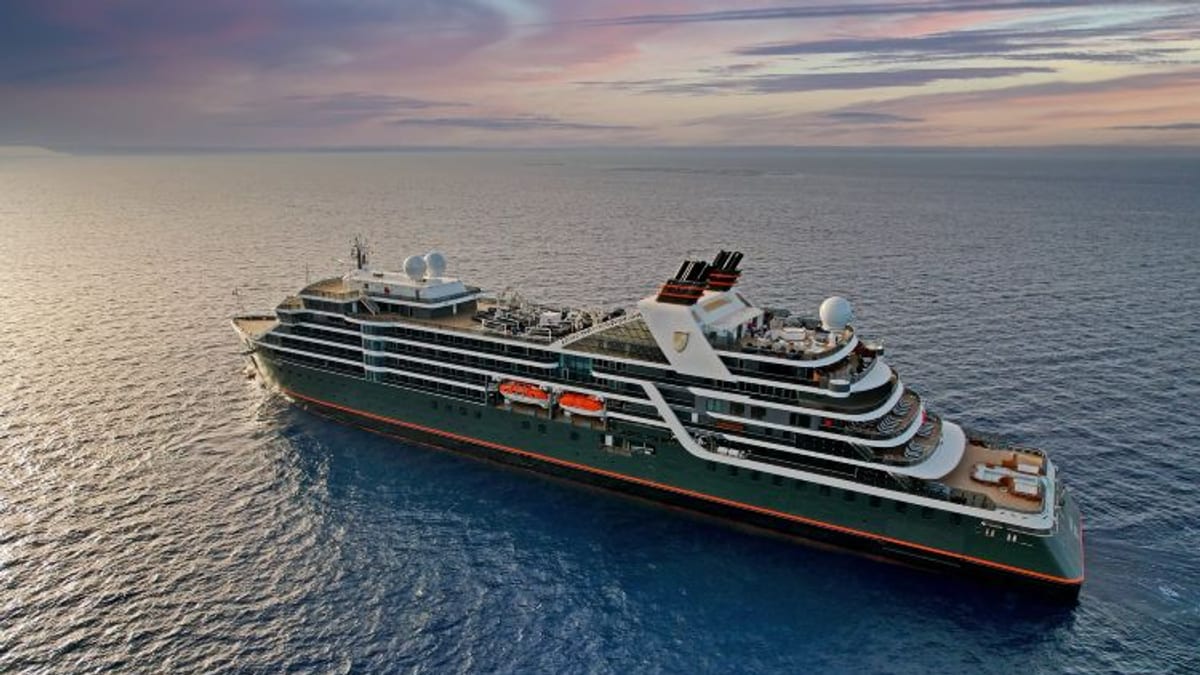
Seabourn’s Arctic program in 2028 is anchored by its purpose-built expedition ships, Seabourn Venture and Seabourn Pursuit. Launched in 2022 and 2023 respectively, the pair were designed to combine polar-ready technical capabilities with the line’s traditional all-suite, all-oceanfront accommodations and high staff-to-guest ratios.
According to the line’s published descriptions, both ships feature PC6 ice-strengthened hulls, advanced navigation and dynamic positioning systems intended to operate safely in ice-strewn waters. Onboard, guests have access to multiple lounges, fine-dining venues, and an expedition-ready marina stocked with Zodiacs, kayaks and other gear for off-ship exploration.
Expedition programming is led by a dedicated team of naturalists, scientists and historians, whose presence is highlighted in Seabourn’s Arctic marketing and blog coverage. The ships’ design includes lecture spaces and expedition lounges intended to support daily briefings, recaps and enrichment sessions that frame what guests see ashore.
By pairing these technical and experiential features with inclusive pricing that covers premium drinks, dining and gratuities, Seabourn is positioning its Arctic voyages as an ultra-luxury alternative to more traditional expedition lines. The 2028 season, wrapped into the broader “Ruby Collection” of 40th-anniversary sailings, is being framed as a showcase for that model.
Signature Itineraries Link Ice, Islands and Northwest Passage
Published deployment details for 2028 point to a mix of classic and more ambitious Arctic itineraries, many of which hinge on Greenland and Iceland as starting or ending points. Travel trade brochures reference an array of voyages that skirt East Greenland’s deep fjords, call at Icelandic ports and continue onward to the Canadian High Arctic.
The season includes enhanced Northwest Passage exploration, with itineraries tracing the Greenland coast before crossing toward Arctic Canada. In some cases, Greenlandic communities serve as the last or first points of contact before extended days in remote channels, where landings and Zodiac tours are highly dependent on weather and ice conditions.
Shorter sailings concentrate on Iceland and Greenland in tandem, offering guests options in the 12 to 18 day range that combine coastal cruising, glacier viewing and cultural visits. Longer segments extend the arc south or west, linking the Arctic with Labrador, the North Atlantic islands or, in the case of grand voyages, the Southern Ocean.
For the 2028 anniversary year, Seabourn has wrapped many of these Arctic segments into its wider Ruby Collection calendar, which features 54 voyages across the fleet. Documentation for that collection highlights Greenland and Iceland as key pillars of the expedition offering, alongside Antarctic, South Georgia and South American itineraries later in the year.
Grand Expedition: Pole to Pole Anchors the Season
At the center of Seabourn’s 2028 program is the Grand Expedition: Pole to Pole, described in the line’s blog coverage and press materials as its most ambitious voyage to date. Sailing on Seabourn Venture, the nearly 100-day journey is scheduled to depart Reykjavík in mid-August 2028 and finish in Buenos Aires in November.
The voyage’s Arctic chapter is heavily shaped by Greenland and Iceland. Public itineraries show an initial focus on Iceland’s capital as a staging point, followed by a charter connection into Greenland where guests embark for extensive exploration of fjords, glaciers and Arctic wildlife habitats. From there, the ship continues through the High Arctic and eventually sets a southbound course that will lead, weeks later, to Antarctic waters.
Seabourn promotes the Pole to Pole concept as a way to connect the planet’s northernmost and southernmost regions in a single continuous narrative, with Greenland and Iceland providing the opening scenes. The itinerary underscores how central the North Atlantic and Arctic gateways have become to the line’s expedition identity.
This second edition of the Grand Expedition, following an inaugural version announced earlier in the decade, is also being treated as a hallmark of Seabourn’s 40th anniversary celebrations. The company’s broader messaging suggests that the voyage is intended to demonstrate how far its product has evolved from warm-water yachting to true polar exploration.
Market Signals for High-End Arctic Exploration
Industry observers view Seabourn’s 2028 Arctic plans as part of a wider acceleration in high-end expedition cruising. Increasing numbers of luxury and ultra-luxury brands are introducing polar-capable ships, and itineraries featuring Greenland and Iceland are becoming more prominent in brochures aimed at affluent travelers.
Publicly available coverage indicates that demand for remote but relatively stable destinations has strengthened since the pandemic era, with the Arctic often seen as a compelling alternative to more crowded warm-water routes. The presence of substantial air links through hubs such as Reykjavík further supports the region’s viability for long-haul guests from North America and Europe.
For Seabourn, the decision to place Greenland and Iceland at the forefront of its 2028 Arctic season appears to be both a brand statement and a commercial calculation. By concentrating ships, expedition teams and marketing around these destinations, the line can offer layered itineraries that encourage repeat visitation and cross-selling into longer grand voyages.
As booking windows open for the 2028 Ruby Collection and associated expedition sailings, the performance of Greenland and Iceland departures is likely to be closely watched by analysts tracking the evolution of luxury cruising at the world’s coldest frontiers.