


More news on this day
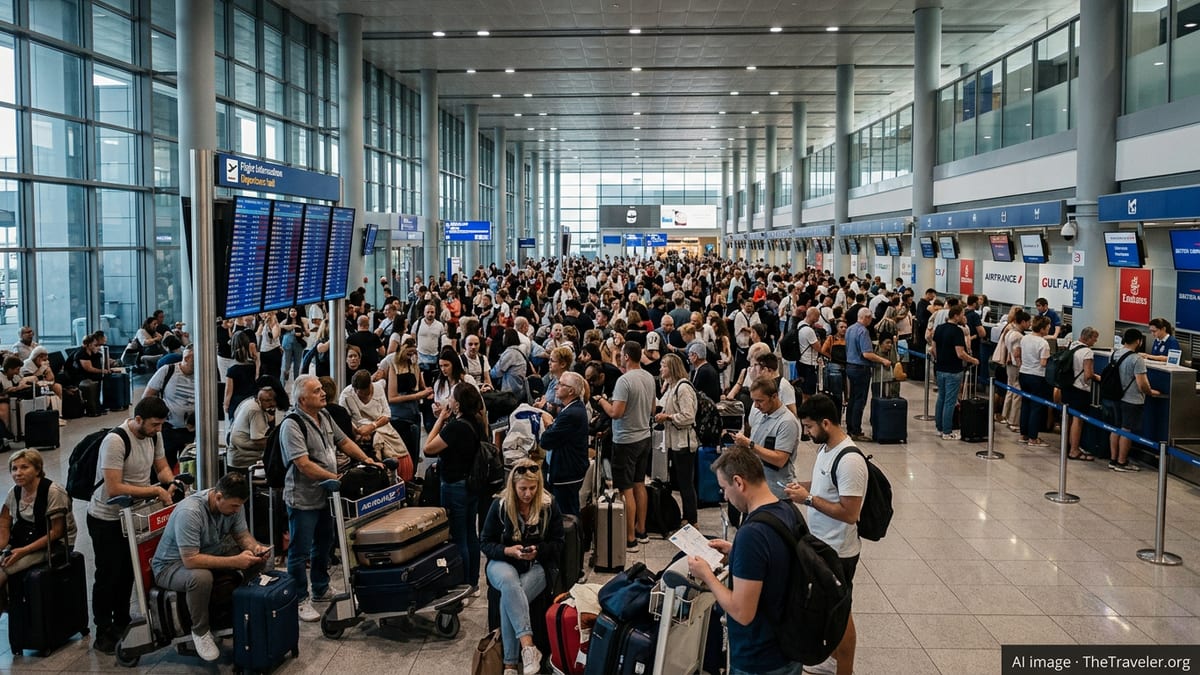
Greek airports are facing mounting flight delays as the summer 2026 travel season gets underway, with rising passenger volumes, tight air traffic control capacity and longer border checks straining the country’s busiest hubs.
Get the latest news straight to your inbox!
Traffic Surges Past Pre-Pandemic Levels
Greece has entered another record-setting tourism season, with passenger numbers through its airports climbing above pre-pandemic levels and placing sustained pressure on infrastructure. Publicly available statistics show that Athens International Airport handled more than 31 million passengers in 2024, an increase of over 13 percent compared with the previous year, and volumes have continued to rise into 2025 and 2026.
Regional gateways serving popular islands, including Santorini, Mykonos, Rhodes and Corfu, are also experiencing heavy peaks as airlines add frequencies and new point-to-point routes. Industry reports describe July and August as especially congested periods, when arrival banks can overwhelm relatively small terminals and limited gate space, leading to aircraft holding, bus transfers to remote stands and slower turnaround times.
Across Europe, aviation data compiled for the 2024 summer period indicated that total Air Traffic Flow Management delays rose sharply compared with both 2019 and 2023. Greece was among the states on the southeastern axis of the continent that saw some of the strongest traffic growth, putting additional strain on the national air traffic control system and amplifying bottlenecks at airports that already operate close to capacity during peak hours.
Analysts note that while overall European airport delays per flight remained relatively modest in 2024, the combination of more flights and higher load factors means that a greater number of passengers are now affected when disruption occurs. In Greece, where tourism represents a substantial share of economic activity, the impact of even short delays can cascade across dense schedules linking mainland hubs with island destinations.
Air Traffic Control Capacity Under Pressure
Network performance assessments for 2024 and early 2025 highlight Greek airspace as one of the more constrained parts of the European system. Monitoring by European aviation bodies points to capacity limitations at key area control centers, with a significant share of en route delay minutes in the region attributed to Greece, even after mitigation measures were applied at network level.
The challenges are linked to a mix of factors, including complex traffic patterns over the eastern Mediterranean, restricted airspace in neighboring regions and the need to route additional flights through available corridors. Reports indicate that during busy summer days, sectors managed by Greek controllers can reach their declared capacity, prompting flow management regulations that hold departures at origin airports and translate into longer gate or taxi times for passengers.
Staffing has emerged as a recurring concern. Industry coverage and public statements from professional associations describe shortages of air traffic controllers and limitations on overtime that reduce the system’s flexibility during surges. Technical issues have also periodically affected operations, with isolated communication problems in Greek airspace earlier this year leading to temporary suspensions of arrivals and departures and knock-on delays across the network.
These constraints mean that even when weather over Greece is favorable, the room to absorb disruption from storms elsewhere in Europe or from late-arriving aircraft can be limited. As a result, travelers may experience delays that appear disproportionate to local conditions, reflecting the way Greek airports are tightly integrated into a wider, sometimes fragile, European aviation ecosystem.
Border Checks and New EU Systems Add Time
Beyond airside capacity, passenger processing has become a growing source of delay at major Greek gateways. The phased rollout of the European Union’s Entry/Exit System, which introduces biometric checks for many non-EU nationals, is beginning to extend the time required for passport control at busy external Schengen borders such as Athens and other international airports in Greece.
Recent coverage of the new system suggests that travelers from markets including the United Kingdom and other non-EU countries may face longer queues as border officers capture fingerprints and facial images during the initial registration. While the process is intended to speed up future crossings, the first implementation waves are placing additional pressure on passport control zones that already see sharp spikes in arrivals from long-haul flights and charter operations.
Greece has previously explored limited flexibilities around the strictest application of biometric checks during peak holiday periods to maintain passenger flows, before moving closer to full alignment with EU rules. Variations in how different member states handle the rollout mean that travelers may encounter differing experiences when connecting through other hubs, adding to the perception that Greek airports are struggling more acutely with new border procedures.
Airport operators are responding by adjusting staffing rosters, reorganizing queuing layouts and introducing more self-service e-gates where possible. However, these changes take time to deliver measurable improvements, and during the current summer surge many passengers continue to report lengthy waits at immigration before they can proceed to baggage reclaim or onward connections.
Weather, Wildfires and Wider Network Shocks
Summer flying in Greece is also being affected by increasingly volatile weather and seasonal wildfires. Meteorological records for 2024 pointed to exceptionally hot conditions in June and July, and the recurrence of heatwaves in subsequent years has intensified pressure on airport operations, as ground crews work in challenging conditions and aircraft face occasional weight restrictions during the hottest parts of the day.
Wildfire seasons in Greece have periodically forced temporary airspace restrictions or diversions, particularly at island and regional airports close to affected areas. While such events may be limited in duration, they can generate significant disruption when they coincide with peak weekend traffic, leading to rolling delays as airlines adjust schedules and reposition aircraft.
Greek airports are also exposed to external shocks that originate elsewhere in the aviation system. In July 2024, a large-scale IT outage linked to a third-party software update caused widespread disruption to airlines and airports around the world, and available reports note that Athens and Heraklion were among the locations where passengers experienced extended delays as systems were restored.
Because many visitors reach Greece via connections at major European hubs, schedule disruptions or weather-related congestion at airports in central and western Europe can quickly ripple into Greek operations. Aircraft and crews arriving late from other countries often operate onward sectors to island destinations, so any inbound delay can propagate through multiple flights in a single day.
What Travelers Can Expect This Summer
Travel forums, booking data and aviation performance reports all suggest that passengers using Greek airports in summer 2026 should be prepared for a greater likelihood of schedule changes and moderate delays compared with the years immediately before the pandemic. On-time performance statistics for Athens have shown a lower proportion of departures leaving within 15 minutes of schedule during peak months, even as average delay minutes per flight for the year remain relatively contained.
Island airports, many of which have compact terminals and limited stands, continue to experience crowding during weekend changeover days when tour operator charters and low-cost carriers converge. Travelers report that buses to and from aircraft can add unpredictability to connection times, particularly where inbound flights arrive late and boarding for outbound sectors is already underway.
Industry guidance increasingly encourages passengers flying through Greek hubs to build additional time into itineraries, especially when making self-connecting journeys between separate tickets or carriers. Allowing several hours between a domestic island flight and a long-haul departure from Athens is now widely recommended, reflecting both the pressure on summer schedules and the potential for longer queues at security and passport control.
For airports and aviation authorities, the current summer surge underscores the need for sustained investment in infrastructure, technology and staffing to match Greece’s ambitions as a top-tier global tourism destination. While a range of measures is being introduced for upcoming seasons, publicly available assessments indicate that meaningful relief from recurrent summer delays is unlikely to arrive before further capacity upgrades in both airspace management and terminal facilities are fully in place.