


More news on this day
More than 200 people who bought into a long term “cruise for life” voyage on the residential ship Villa Vie Odyssey have been left unexpectedly stranded in Cambodia, after the operator halted its global sailing and told passengers to disembark with their belongings.
Get the latest news straight to your inbox!
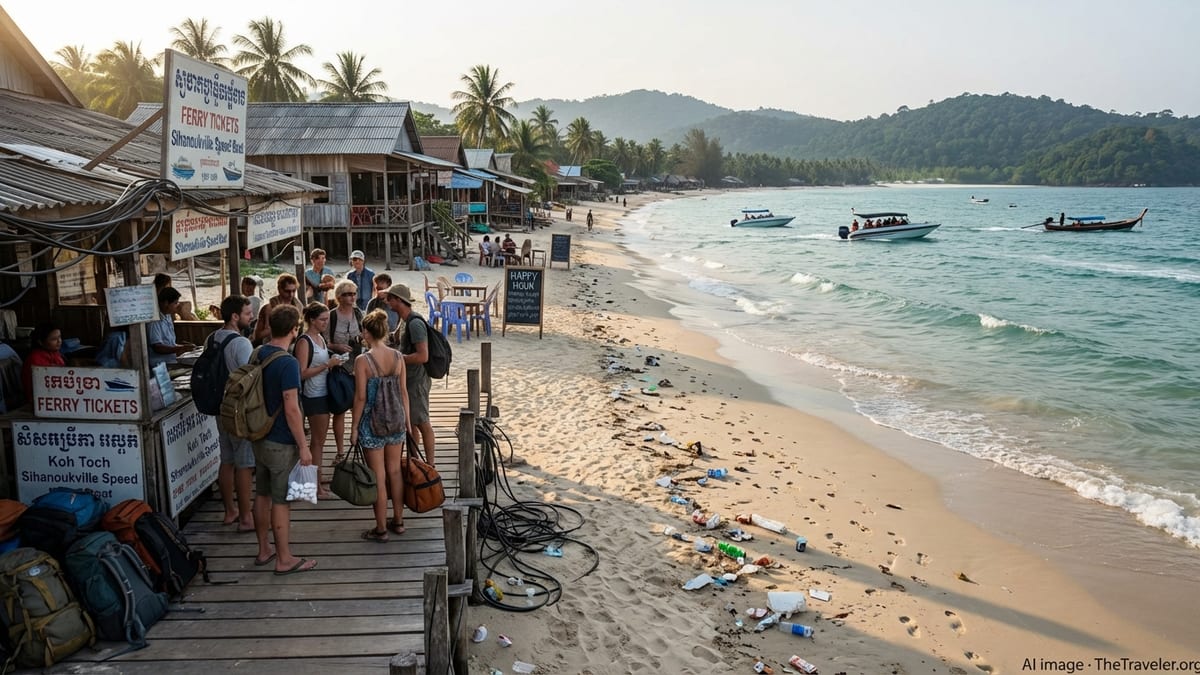
Dream of life at sea ends in Cambodian port
Publicly available information shows that the Bahamas flagged Villa Vie Odyssey arrived in the southern Cambodian port of Sihanoukville on October 23, 2026, after sailing from Thailand. The vessel, marketed as a residential “cruise for life” option where guests could buy or rent cabins for years at a time, had been scheduled to continue on to ports in Vietnam before the voyage was abruptly suspended.
Regional coverage from Cambodia and international outlets indicates that around 200 to 203 passengers and roughly 150 crew members were on board when the company behind the project, US based Villa Vie Residences, suspended operations in Cambodia. Passengers were informed during the ship’s scheduled call that they would need to leave the vessel, bringing luggage and personal possessions with them.
Cambodian provincial officials in Preah Sihanouk have described the disembarkation as occurring within a limited time window of roughly seven hours, turning what had been sold as a carefree, multi year lifestyle into a scramble to find hotel rooms, flights and storage options in an unfamiliar port city.
Images and accounts referenced in international reporting show the white hulled Odyssey tied up at Sihanoukville’s commercial pier, a deep water facility that handles both cargo and occasional cruise calls. Instead of heading back to sea after routine refuelling and provisioning, the nearly 200 metre long ship is now in lay up status while financial and operational questions swirl.
Fuel costs and finances cited as voyage suspended
Villa Vie Residences announced on October 27 and 28 that it had suspended operations in Cambodia while it worked to address what it described in public statements as extraordinary increases in fuel costs. News reports summarising those statements link the company’s difficulties to a sharp rise in global fuel prices following the recent escalation of conflict involving Iran, which has pushed up the cost of marine fuel on key shipping routes.
Coverage carried by outlets including Channel NewsAsia, RTE and ABC News in Australia notes that the company framed the halt as temporary and said it was seeking solutions. At the same time, passengers were informed that the current voyage could not continue in its advertised form, ending the promise of an open ended global circuit that began when the ship departed Northern Ireland in late 2024.
Reports that draw on statements from Villa Vie’s leadership indicate that the operator has been covering hotel accommodation in Sihanoukville and arranging onward transport within Cambodia for affected passengers in the short term. However, international coverage also highlights uncertainty over who will ultimately bear the cost of onward flights and relocation, particularly for residents who had sold homes or ended leases on land in order to finance life at sea.
Maritime tracking data cited by specialist shipping and cruise industry outlets shows that in the weeks leading up to the halt, Odyssey’s average speed and time underway had already declined, a pattern consistent with efforts to reduce fuel consumption. Some passengers have described in public blog posts and social media updates what they called a “cascade of problems,” including new surcharges and requests for additional payments, before the final instruction to disembark in Cambodia.
Passengers who sold everything face complex choices
The Villa Vie Odyssey concept was marketed internationally as a way to “own your cabin” and live at sea indefinitely or for extended periods, with itineraries promising to visit all seven continents over several years. Media profiles from earlier in the voyage highlighted retirees, remote workers and long term travellers who had sold or rented out their homes and moved personal belongings into the ship’s compact apartments.
According to published coverage this week, a significant portion of the roughly 200 residents now stranded in Sihanoukville fall into that category, having tied up savings and retirement funds in purchase or long lease contracts. With the voyage suspended and the vessel remaining in port, many are now weighing whether to seek new accommodation in Southeast Asia, return to home countries, or wait in the region in hopes that a restructured operation might eventually resume.
Travel industry analysis appearing in insurance and trade publications notes that the Villa Vie Odyssey episode raises pointed questions about how residential cruise products are regulated and what protections apply when an operator suspends operations in a foreign port. Unlike traditional cruise holidays with clear start and end dates, open ended residential products can sit in a grey area between hospitality, real estate and transportation, with differing implications for consumer protection schemes.
In practical terms, passengers now in Cambodia are navigating visa rules, flight availability and logistics for moving luggage that had effectively become household goods. Commentators in regional media have observed that while Cambodia generally offers relatively straightforward tourist visas on arrival for many nationalities, the sudden need to make longer term plans from a coastal city that is not a major intercontinental air hub adds complexity and cost.
Cambodia’s Sihanoukville thrust into the spotlight
The port of Sihanoukville, where the Odyssey is docked, sits on the Gulf of Thailand and functions as Cambodia’s main deep water maritime gateway. In the years before this incident it attracted investment tied to cargo trade and regional tourism, including occasional calls by mainstream cruise lines that pair the city with excursions to nearby beaches or the capital Phnom Penh.
Local and regional reporting indicates that Cambodian port officials granted the Odyssey a five day docking window beginning October 23, a period that would normally be used for passenger excursions and resupply. Instead, the city has become an unplanned way station for hundreds of people suddenly searching for accommodation and flights, as well as local services such as pharmacies and storage facilities.
Observers following the situation have noted that Sihanoukville’s airport offers mainly regional connections within Southeast Asia, meaning many passengers are likely to route onward travel through hubs such as Phnom Penh, Bangkok, Singapore or Kuala Lumpur. Travel planners quoted in industry analysis point out that this can add both time and cost, especially for those needing last minute, long haul itineraries back to North America or Europe.
The episode has also revived memories of earlier moments when cruise ships found refuge in Cambodian ports after being turned away elsewhere. Commentators have drawn parallels to the 2020 case of the Westerdam, which docked in Sihanoukville during the early stages of the COVID 19 pandemic after several countries refused entry, highlighting once again how global cruise ventures can quickly become entangled with regional infrastructure and border policies.
Pressure grows for clearer protections in residential cruising
As images of stranded Villa Vie Odyssey residents circulate in international media and on social networks, consumer advocates and travel law specialists are drawing attention to the wider implications for the growing niche of residential and “endless” cruises. Earlier attempts to launch similar multi year products, such as the Life at Sea Cruises project that was cancelled before departure, had already prompted questions about financial safeguards and refund mechanisms for customers.
Reports in mainstream and trade outlets suggest that regulators and industry groups may now face renewed calls to clarify how far existing cruise regulations and package travel rules extend to residential at sea concepts. Key issues include whether customer funds are held in trust, what happens if an operator becomes insolvent while the ship is overseas, and how repatriation is organised when residents are effectively full time occupants rather than short term guests.
For would be residents considering future long term cruise offerings, analysts say the Cambodian incident is likely to become a reference point, much as earlier high profile disruptions did for traditional cruises. Publicly available commentaries are already advising travellers to scrutinise operator balance sheets, seek independent legal advice on contracts, and verify what, if any, protection is provided by national guarantee schemes or specialist travel insurance products before committing life savings to life at sea.