


More news on this day
The United Kingdom has tightened its travel advice for large parts of the Middle East, warning of a “deeply unpredictable” security environment, a heightened risk of escalation linked to the Iran conflict, and potential disruption to flights and airspace affecting travellers across the region.
Get the latest news straight to your inbox!
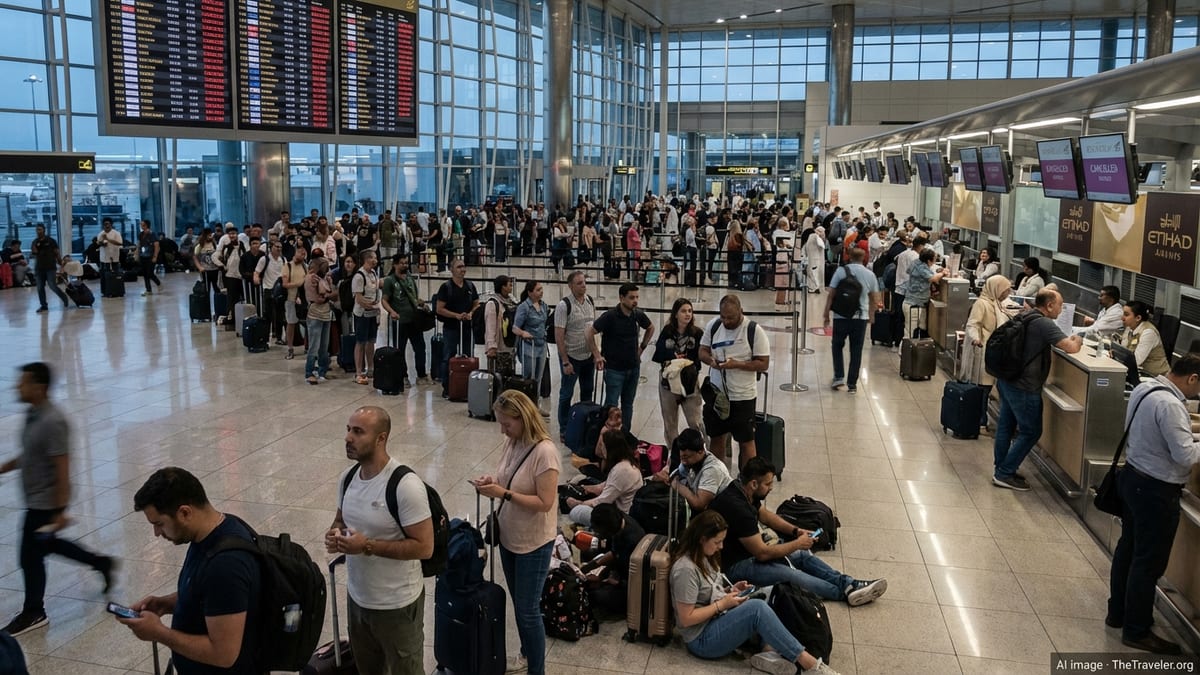
Expanded warning covers 16 destinations across the region
Updated guidance from the UK Foreign, Commonwealth and Development Office now applies to 16 countries in and around the Middle East, including Turkey, Egypt, the United Arab Emirates, Jordan, Oman, Qatar, Bahrain, Saudi Arabia, Iraq, Yemen, Kuwait, Pakistan, Israel, Palestine, Syria and Iran. Recent industry coverage indicates that the revisions, issued on 27 and 28 October 2026, stress that the risk of sudden escalation across the region is considered high.
The travel advisories emphasise that the changes are precautionary and apply both to travellers heading to these destinations and to those using major hubs such as Dubai, Abu Dhabi, Doha, Riyadh, Jeddah or Istanbul as transit points. While commercial flights continue to operate on most routes, the UK government notes that airspace restrictions and schedule changes may occur at short notice if the security situation deteriorates.
Publicly available information shows that some countries remain the subject of strong warnings. For example, separate notices for Iran, Iraq, Syria and Yemen continue to advise against all travel or all but essential travel to large parts of those territories, reflecting ongoing conflict and elevated security risks. In Saudi Arabia, the latest advisory highlights both the wider regional context and specific concerns over attacks on airports and other infrastructure.
In contrast, destinations such as the UAE, Qatar and Oman are not subject to blanket “do not travel” notices, but are covered by the broader Middle East caution. Reports indicate that travellers are being urged to stay alert to developments and be ready to alter plans quickly if tension spikes or new restrictions are introduced.
Risk of airspace closures, flight disruption and changing routes
The tightened warning places particular emphasis on the risk of aviation disruption. Government travel pages for several countries, including Iraq, Iran and Saudi Arabia, now explicitly state that British nationals travelling in or through the Middle East should be prepared for possible flight cancellations, airspace closures and wider travel disruption.
Industry briefings issued over recent months show that airspace has periodically been restricted or closed over parts of Iran, Israel, Iraq, Syria, Qatar, Bahrain and the UAE during peaks in regional tension. This has forced airlines to reroute long-haul services, lengthening journey times and, in some cases, triggering last-minute schedule changes or overnight delays.
Travel and airline associations are advising passengers with onward connections through Gulf and Levant hubs to monitor their bookings closely, enable app notifications from carriers and review fare conditions that apply to changes or refunds. Some corporate travel policies now require pre-approval for routings that cross affected airspace or involve extended layovers in higher-risk locations.
For leisure travellers, publicly available guidance recommends allowing extra time for connections, confirming transit rules with airlines before departure and having contingency plans in case a hub airport experiences disruption. This may include access to additional funds for accommodation, flexible return tickets, or alternative routings via Europe, North Africa or South Asia if regional airspace becomes constrained.
Insurance, liability and employer duty of care
The updated UK advisories carry important implications for travel insurance. Official travel advice pages for countries such as Saudi Arabia and Iraq explicitly warn that policies may be invalidated if travellers visit areas that are subject to “against all travel” or “against all but essential travel” warnings. Insurers commonly exclude claims linked to war, terrorism or travel undertaken contrary to government advice.
Recent guidance documents circulated by UK-based risk consultancies and universities highlight that organisations sending staff to or through the Middle East must review their duty-of-care obligations. Where government advice is strongly negative, companies are increasingly required to demonstrate a clear business justification for travel, enhanced security planning and explicit consent from employees who accept such assignments.
Business travel managers are being encouraged to verify that insurance policies cover evacuations, medical care and disruption in higher-risk environments, and to maintain up-to-date traveller tracking systems. Some advisory notes recommend preparing standby plans that include remote participation in meetings, postponement of non-critical visits and the use of alternative venues outside the region where practical.
Individual travellers are advised to read policy documents in full and seek written clarification from insurers if they intend to visit or transit areas covered by stronger warnings. Online discussions among prospective visitors to Saudi Arabia and neighbouring states in October 2026 point to widespread concern that standard leisure policies may not respond to claims arising from incidents linked to the current conflict.
Limited consular support and practical steps for travellers
Official UK information on crisis preparedness stresses that consular support across the region may be constrained. Government communications over recent months note that some embassy staff have been reduced or relocated and that services could be further curtailed if security conditions worsen. In Iran, for example, the UK states that it will not be able to provide face-to-face consular assistance in an emergency.
Separate Foreign Office notices published earlier in 2026 introduced a registration system for British nationals in selected Middle East countries, allowing those present to receive direct updates by email or text message during periods of heightened tension. Travellers are urged in public guidance to sign up for alerts, ensure their contact details are current and keep family or employers informed of their movements.
Crisis-planning documents issued for UK-based travellers recommend a number of practical steps: carrying hard copies and digital versions of passports and visas, maintaining a supply of essential medicines, identifying the nearest shelters or secure areas in accommodation and transport hubs, and avoiding military facilities, protest sites and other sensitive locations. Advice for Iraq, Iran and Saudi Arabia also highlights the risk from falling debris in the event of missile or drone interceptions and urges people not to touch unexploded ordnance or suspicious fragments.
Travellers currently in or heading to the region are also advised by publicly available guidance to monitor reliable international and local media for rapid changes, check airline and airport updates frequently and keep departure plans under review. In an environment described as highly fluid, the expectation from both government and industry sources is that flexibility, preparation and close attention to official advice are now central to any journey involving the Middle East.