


More news on this day
U.S. cruise passengers found their vacation cut short when their ship disembarked them earlier than scheduled so a port could be cleared ahead of an appearance by Donald Trump, according to multiple news and social media reports that have drawn new attention to how vulnerable cruise itineraries can be to sudden political and security decisions.
Get the latest news straight to your inbox!
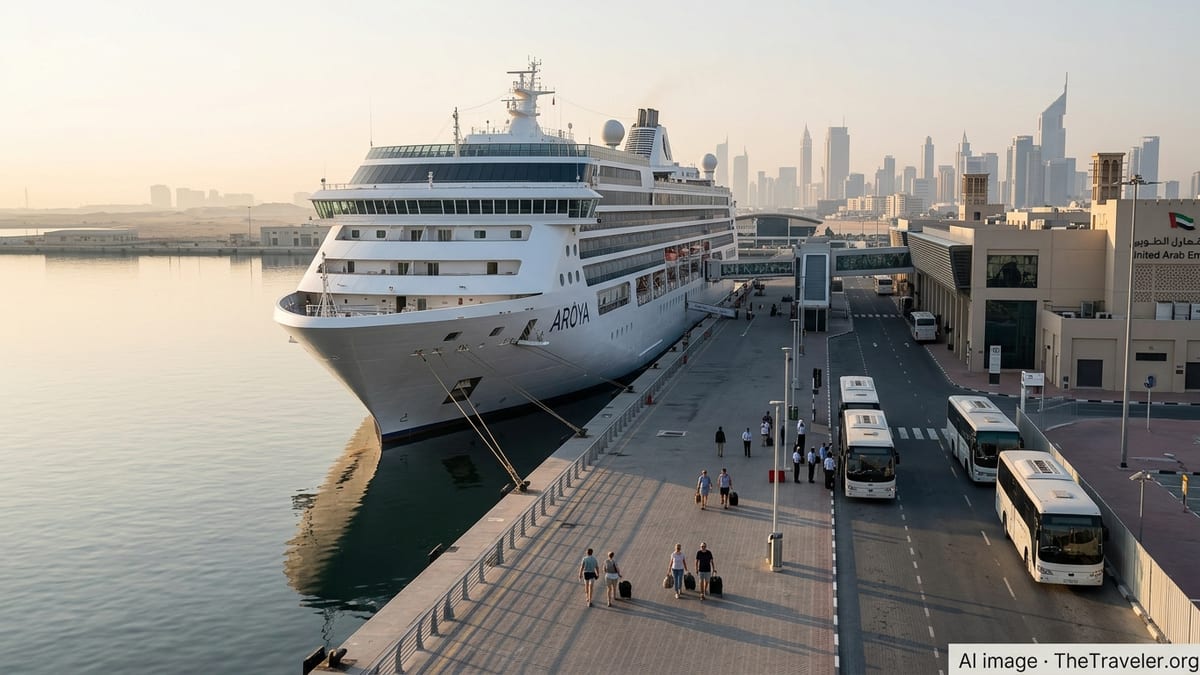
A Political Visit That Cut a Cruise Short
Reports circulating in U.S. and international media indicate that a recent sailing involving American cruise passengers was curtailed after authorities cleared a port area for a scheduled visit by Donald Trump. Coverage describes travelers being required to disembark earlier than planned so that local officials and security teams could prepare for the high-profile arrival, effectively ending the voyage ahead of its published itinerary.
Accounts compiled from news aggregators and social media posts suggest that the decision was driven by security and logistical needs linked to the former president’s event. While details such as the exact sailing and ship involved have not been fully standardized across all public reports, the core narrative is consistent: the port call and turnaround schedule were reshaped around Trump’s appearance, leaving passengers to complete their journey home by air rather than by sea.
The incident echoes earlier instances in which major political or security developments disrupted travel plans, but this case stands out because the change appears tied directly to facilitating a single political visit rather than to broader crises such as storms, strikes, or public health emergencies. For cruise passengers, it has become a prominent example of how quickly a holiday can be affected by events far beyond the control of the operator or guests.
Public discussion has focused less on Trump’s role and more on the chain of decisions that led to the early disembarkation, including how much advance notice passengers received and what forms of assistance or compensation, if any, were provided once the voyage was cut short.
How Cruise Contracts Allow Sudden Itinerary Changes
The episode has prompted many travelers to reexamine the fine print of cruise contracts. Publicly available ticket contracts from major lines state that operators retain broad discretion to alter routes, skip ports, or end voyages early when they deem it necessary for safety, security, operational, or other reasons. The contracts typically emphasize that itineraries are not guaranteed and that the company may substitute ports or adjust schedules without liability for additional costs passengers incur ashore.
Industry coverage of recent weather and geopolitical disruptions shows how routinely this flexibility is used. In October 2026, several North Atlantic and Caribbean sailings were rerouted or had port calls canceled because of developing storms, with lines pointing to safety and port-access issues. In other cases, cruise operators have altered itineraries to avoid regions affected by political tension or to comply with government advisories, keeping ships away from ports where conditions were considered unpredictable.
Travel-law specialists and consumer advocates quoted in prior reporting on itinerary changes note that, in the United States and many other jurisdictions, cruise passengers have fewer automatic protections than airline customers. While some lines voluntarily offer onboard credit, partial refunds, or future cruise certificates after major disruptions, these gestures are generally framed as goodwill rather than as obligations under the contract.
The Trump-related early disembarkation fits within that legal framework. Even if passengers felt their holiday was cut short for reasons unrelated to safety at sea, the broad language common in cruise agreements gives operators significant room to modify or end voyages when external demands, including government security requirements, make the original plan difficult or impossible to maintain.
Passenger Costs, Compensation and Travel Insurance
For the travelers who were asked to leave the ship ahead of schedule, the immediate challenge was practical. Once disembarked, passengers typically must secure last-minute flights, hotel rooms, and ground transport, all of which can be expensive when booked at short notice. Social media posts linked to the incident reference frustration over added costs, especially among guests who had budgeted for a straightforward roundtrip cruise with fixed dates.
Publicly available information about similar disruptions shows a wide range of responses from cruise lines. In some recent weather-related itinerary changes, operators provided partial fare refunds, onboard credits, or discounts on future sailings. In others, particularly when voyages still operated a substantial portion of their planned route, companies emphasized that the contract did not require compensation and limited assistance to logistical support such as helping rebook flights.
Travel insurance can make a critical difference in such situations, but coverage depends heavily on policy wording. Many standard plans reimburse for “trip interruption” when a voyage is cut short by covered reasons such as severe weather, mechanical failure, or certain security events. Whether a schedule change linked to a political visit qualifies may depend on how the insurer defines covered perils and whether government-mandated closures or security operations are explicitly included.
Advisers who specialize in cruise travel often recommend that passengers review both the cruise contract and their insurance policy before sailing, paying close attention to clauses related to government actions, civil unrest, or port closures. The Trump-linked incident underscores that even when a ship remains mechanically sound and the seas are calm, outside decisions can still force an abrupt end to a vacation, leaving travelers reliant on whatever protections they arranged in advance.
Security Demands Around High-Profile Political Events
While full official details surrounding the port closure tied to Trump have not been made public in a consolidated statement, comparable events offer clues about why authorities may have requested a cleared harbor. High-profile political visits often trigger expanded security perimeters that can include closing nearby roadways, restricting airspace, and tightening access to ports and terminals. Cruise piers, with their large crowds and complex logistics, can be particularly sensitive locations in such circumstances.
Published accounts of recent presidential travel show that security planning typically involves cooperation among local port administrations, law enforcement agencies, and event organizers. When a visiting dignitary’s schedule overlaps with a ship’s planned turnaround time, authorities may view the combination of large passenger movements and VIP arrivals as an unacceptable risk or as a strain on local infrastructure.
In practice, that can mean limiting or rescheduling commercial traffic so that a port is available to accommodate official aircraft, motorcades, or maritime patrols. For cruise ships operating on tight turnaround windows, even a few hours of restricted access can disrupt boarding and disembarkation schedules, potentially forcing an operator to shorten or shift a voyage to keep its broader deployment on track.
The situation connected to Trump’s visit appears to reflect those broader dynamics, in which the requirements of political security planning outweighed the convenience of vacationers. For affected passengers, the experience has highlighted how little visibility they typically have into behind-the-scenes negotiations that determine whether their ship can dock as planned.
What Future Cruise Passengers Can Learn
The early disembarkation tied to Trump’s port appearance has quickly become a talking point among cruise enthusiasts, with many travelers reassessing their risk tolerance for tightly scheduled itineraries. Comment threads on cruise forums and travel sites now commonly reference the case alongside storms, labor actions, and public health orders as examples of disruptions that can reshape a voyage with little warning.
Consumer advocates suggest several practical steps for travelers in light of such events. One is to build financial and scheduling flexibility into post-cruise plans, avoiding nonrefundable same-day flights when possible and allowing a buffer day before time-sensitive commitments. Another is to prioritize travel insurance policies that explicitly address trip interruption, missed connections, and government-related closures or security operations.
There is also growing interest in clearer communication from cruise lines when external events affect port access. While operators are bound by security protocols and may not always be able to provide granular details in real time, some recent cases involving weather and geopolitical tensions have shown that early, transparent notices can reduce confusion and help passengers make timely decisions about flights and additional arrangements.
As more information about the Trump-linked cruise disruption circulates, it is likely to feed into ongoing discussions about passenger rights, the scope of cruise line discretion, and the balance between tourism and security. For now, the incident stands as a reminder that cruise vacations, like other forms of international travel, remain vulnerable to sudden shifts in the political calendar, even when the sea itself is calm.