


For many winter travelers to Finnish Lapland, the Icebreaker Sampo cruise in Kemi is the bucket-list experience that either makes the itinerary or gets cut at the last minute because of the price. Sailing through pack ice on a historic icebreaker, walking on the frozen Gulf of Bothnia and floating in the sea in a survival suit all sound spectacular. But is Icebreaker Sampo really worth it once you factor in the cost, logistics and time? Here is what recent travelers say about this Arctic adventure and how to decide if it belongs on your own Lapland trip.
Get the latest updates straight to your inbox!
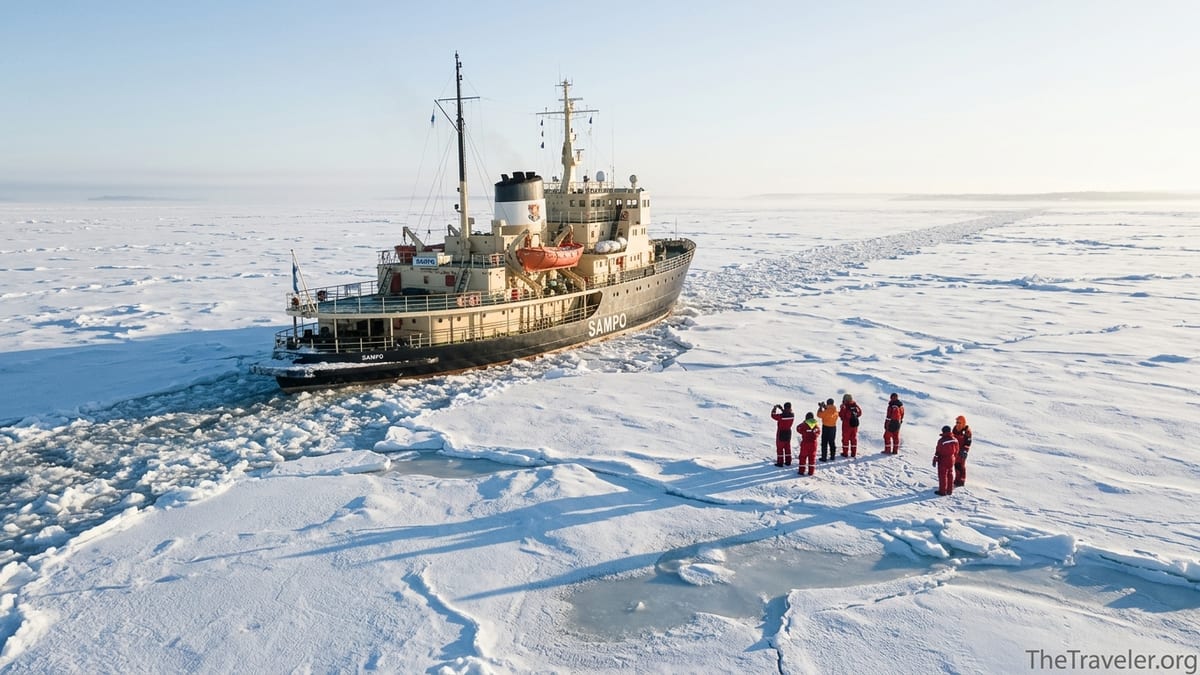
What Exactly Is the Icebreaker Sampo Experience?
The Icebreaker Sampo is a Finnish icebreaker built in 1960 and now operated by Kemi Tourism as a dedicated tourist vessel in the northern Gulf of Bothnia. Today it no longer works as a commercial icebreaker; instead, it runs sightseeing cruises from Kemi during the winter season, when sea ice is thick enough to support its trademark ice-crunching route. The ship typically operates from around late December to early April, depending on ice conditions in that particular winter.
A standard cruise lasts about 3 to 4 hours. Departures usually leave from the harbor in Kemi, a small coastal town on Finland’s northwestern coast, a couple of hours’ drive from Rovaniemi. The core of the experience is hearing and feeling the hull grind through compacted sea ice as Sampo pushes its way into the frozen Gulf of Bothnia. Passengers can explore the decks, warm up in lounges, and follow a guided tour that highlights the engine room, bridge and the ship’s history as part of Finland’s icebreaking fleet.
One of the highlights for many guests is the stop out on the ice, where the ship creates a pool of open water. Those who wish can don bright orange flotation suits, climb down to the ice and literally float in the minus-degree sea, kept warm and buoyant by the insulated suits. Others choose to stay on the ice, take photos and simply enjoy standing on a frozen sea with Sampo looming nearby. A hot meal or buffet on board is usually included in the cruise, and some packages add entry to local attractions like the SnowExperience365 or the seasonal Kemi SnowCastle.
Most travelers who review Sampo describe it as a once-in-a-lifetime style experience that feels quite different from standard fjord or coastal cruises. The slow, powerful motion through ice, the stark white landscape and the surreal feeling of swimming in an Arctic sea in winter are frequently mentioned as the elements that make this cruise memorable.
How Much Does Icebreaker Sampo Cost and What Do You Get?
By Arctic standards, Icebreaker Sampo is a premium excursion. For the 2024–2025 and 2025–2026 seasons, typical advertised prices for the basic 3 to 4-hour cruise are in the range of roughly 350 to 450 euros per adult when booked directly or via major Lapland tour operators. Family packages and child rates are somewhat lower, and bundled tours that include transfers from Rovaniemi or other Lapland towns can take the total per person cost into the 450 to 600 euro range, depending on distance, season and what extras are included.
In practice, travelers commonly report that the cruise ticket covers the guided ship tour, time on deck, the ice stop, use of survival suits for the sea float, and a hot meal on board. Some packages sold through local agencies in Rovaniemi or Levi also include bus transfers of around two hours each way to Kemi and may add entrance to indoor snow attractions or the SnowCastle area. Those booking independently sometimes opt to stay overnight in Kemi or Tornio to avoid a long day trip.
For context, visitors often compare Sampo’s price to other Lapland activities. A small-group Northern Lights chase from Rovaniemi often runs in the 120 to 180 euro range per person. A half-day husky safari with driving your own team usually costs between 150 and 250 euros. A snowmobile tour with two riders per machine can be priced around 130 to 220 euros apiece. In that lineup, Sampo typically sits at or near the top of the price spectrum, which is why so many travelers debate whether the experience justifies the expense.
One practical detail mentioned in recent trip reports is that cruises can sell out weeks in advance around Christmas, New Year and school holidays. Travelers who waited to book on arrival in Rovaniemi or Kemi sometimes found their dates unavailable or only premium tour-operator packages left. If Sampo is a key reason for your Lapland trip, advance booking is strongly recommended, while more flexible travelers may decide based on last-minute availability and weather forecasts.
What Travelers Love About the Sampo Cruise
Guests who rate Icebreaker Sampo as “absolutely worth it” tend to emphasize three main aspects: the physical sensation of icebreaking, the Arctic scenery and the novelty of the survival-suit float. Many reviews describe standing on deck as the bow rides up onto the ice and then crashes down, fracturing it into large slabs. The deep rumble and vibration underfoot, combined with the cracking sounds all around, feel very different from a typical cruise ship experience.
On clear days, the visual impact is another strong point. Travelers recount looking out across a nearly endless white sheet of sea ice broken only by Sampo’s dark, jagged channel. In March and early April, when the sun is higher and days longer, the low-angle light can create beautiful shadows and subtle blue tones in the snow. Photographers in particular praise the chance to capture the vessel from the ice during the stop, with passengers walking around in colorful suits against a stark Arctic backdrop.
The survival suit swim is often described as both slightly intimidating and surprisingly comfortable. After changing on board, guests step down a ladder and gently float in the frigid water, often forming a loose chain of bobbing orange figures beside the ship. Many reviews mention that the suits are very buoyant and warm, though your face and hands will still feel the cold. People who were initially hesitant frequently report that this was the highlight of the day and one of their most unique travel memories.
Finally, those who appreciate maritime heritage often enjoy the guided tour of Sampo’s interior. Seeing the engine room, climbing up to the bridge and learning how the ship used to keep shipping lanes open in winter gives the outing context beyond a simple sightseeing cruise. Several travelers who had previously done icebreaker tours in Sweden or Russia note that Sampo’s smaller size and historic character make it feel more personal and less like a large commercial operation.
Common Criticisms: Cost, Crowds and Conditions
Despite the many positive reviews, Icebreaker Sampo is not universally loved and there are consistent criticisms to be aware of before you book. The most common complaint is the price relative to what some travelers feel is a relatively short experience with limited activities on board. People who had already done husky safaris, reindeer visits and snowmobile tours sometimes felt that Sampo did not add enough extra excitement to justify being one of the most expensive items on their itinerary.
Crowding can also be an issue on popular dates. Travelers who joined fully booked departures sometimes described congested indoor areas, queues for toilets and limited space along the railings during key moments like the initial break into the ice or the survival-suit boarding. Families with young children mentioned that it could be tricky to keep kids engaged during quieter stretches of open-water sailing before the ship reaches thicker ice.
Weather and ice conditions play a big role in how spectacular the cruise feels. In early or late season, when ice is thinner or patchier, the ship may spend more time in open water and less time plowing through thick ice. Some guests who sailed in periods of poor ice coverage described the outing as more of a regular boat trip with a short ice segment rather than a continuous, dramatic icebreaking show. Heavy snowfall or low clouds can also reduce visibility, making the white seascape feel flat and featureless rather than crisp and photogenic.
A few travelers mention motion sickness due to the somewhat lurching movement when Sampo rides up on the ice and then drops down. While the Gulf of Bothnia is usually relatively calm in winter, those who are very sensitive to motion may want to prepare with standard seasickness measures. In general, the majority of guests report feeling fine, but the motion is noticeably different from a large, modern cruise ship, and that can surprise some first-time Arctic sailors.
Is Icebreaker Sampo Worth It for You? Different Traveler Profiles
Whether Sampo is “worth it” depends heavily on what you value in a trip and how much of your budget and time you want to devote to a single headline experience. For die-hard ship enthusiasts, engineers, or anyone fascinated by Arctic maritime history, the answer is often a straightforward yes. For them, walking the decks of a real icebreaker, seeing the machinery at work and feeling the hull grind through sea ice is exactly the kind of once-in-a-lifetime experience they are looking for.
Adventure-focused travelers and photographers also tend to rate Sampo highly, especially when they catch good weather and solid ice. If your dream Lapland trip is full of distinctive, photogenic moments, then standing on a frozen sea beside a working icebreaker or bobbing in the Arctic water in a survival suit might easily justify the price. Couples celebrating special occasions, like milestone birthdays or honeymoons, sometimes choose Sampo specifically as their big splurge, and many report that it lived up to those expectations.
On the other hand, budget-conscious families or larger groups may find the numbers hard to justify, particularly when you multiply the per-person cost across four or five travelers. Some parents say that younger children were more excited by husky sledding, reindeer farms and snow slides at the SnowCastle than by hours on board a ship. For those travelers, allocating funds to several different mid-priced activities rather than one very expensive cruise can feel like a better overall value.
If you have only a short stay in Lapland, Sampo can also eat up a full day once you account for transfers to and from Kemi, check-in times and the cruise itself. Visitors staying mainly in Rovaniemi, Levi or Saariselkä should consider how much daylight they will have at their time of travel, what other experiences they might miss by blocking off a whole day, and whether Sampo is high enough on their priority list to justify that commitment.
Practical Tips: When to Go and How to Get the Best Experience
For most travelers, the sweet spot for the Icebreaker Sampo cruise is mid-winter to early spring, roughly January through early April, when sea ice is thick and conditions are usually more stable. In December, especially early in the month, the ice cover can be less reliable and sailings may involve more open water. By late March and early April, you often get longer days and better light for photography, though exact conditions vary from year to year.
Morning departures can feel colder due to lower air temperatures, but some guests prefer them because the light can be soft and the ship may feel a little less rushed later in the day. Afternoon sailings, particularly in late winter, can offer striking low sun and warm colors reflecting off the ice. If you are sensitive to cold, plan layers accordingly. Travelers commonly wear a thermal base layer, fleece or wool mid-layer and a good winter jacket, plus insulated boots, hat, scarf and gloves. Remember that even if the air temperature is manageable, the wind on deck and the damp cold on the ice can feel much more intense.
Booking strategy matters. Those visiting over December and early January holidays or during school breaks should book weeks or even a few months ahead, especially if you need a specific date or are traveling with children. If you have flexibility, you might wait until closer to your trip to choose a day with a favorable forecast, but expect fewer options for last-minute bookings. Many travelers book Sampo as part of a package from Rovaniemi that includes transfers and possibly other activities in Kemi, which simplifies logistics but may limit your ability to adjust dates if the forecast turns poor.
Finally, consider combining Sampo with other local experiences to make the most of the journey to Kemi. Some visitors plan time at the Kemi SnowCastle area, indoor ice exhibits, or short city walks along the frozen shoreline. Others pair Sampo with nighttime Northern Lights tours back in Rovaniemi on a different day. Thinking of Sampo as the anchor of a broader mini-itinerary, rather than a standalone outing, can help the overall trip feel more balanced and satisfying.
Real-World Alternatives if Sampo Is Out of Budget
If the Icebreaker Sampo price or limited availability do not work for you, there are still ways to get a taste of Arctic ice and winter seascapes without the same level of expense. Some travelers opt for snowmobile or snowcat tours out onto frozen lakes and rivers around Rovaniemi, Levi or Ylläs. These trips often include time to walk on the ice, photograph snow-covered landscapes and enjoy the silence of the frozen north, at a fraction of the cost of the icebreaker cruise.
In Kemi and other coastal areas, guided tours sometimes take visitors walking or snowshoeing out onto the frozen sea in safe conditions. While you will not have the drama of a full-scale icebreaker, standing on sea ice a short distance from shore can still feel thrilling, particularly for travelers from milder climates. Some local operators also offer short boat or hovercraft trips that run along the ice edge or use specialized vehicles to cross areas of broken ice.
Further afield in the Nordics, there are other icebreaker tourism experiences, notably from Swedish ports along the Gulf of Bothnia. These cruises can be similar in concept to Sampo, involving an icebreaking ship, short excursions onto the ice and sometimes survival-suit dips in the water. Prices and trip lengths vary, and a few travelers who have tried both note that Sampo feels more historic and intimate, while some Swedish options use more modern vessels but may operate from ports that better fit certain itineraries.
For some visitors, focusing on quintessential Lapland land-based activities such as husky safaris, reindeer experiences, cross-country skiing or snowshoeing offers more variety for the same budget. While none of these exactly replicate the feel of being aboard an icebreaker, they can collectively deliver an Arctic adventure that feels richer and more diverse, particularly for active travelers and families. The key is to be honest about whether the idea of a ship specifically excites you, or whether you mainly want to experience snow, cold and wilderness in general.
The Takeaway
When travelers are asked whether Icebreaker Sampo is worth it, the most accurate answer is that it is worth it for the right kind of visitor with the right expectations. Those who dream of ships, ice and remote seas almost always consider it money well spent, particularly if they sail during a period of good ice and decent weather. They describe the deep thud of the hull on ice, the surreal sensation of floating in a frozen sea and the stark beauty of the Gulf of Bothnia as unforgettable.
At the same time, the high price, potential for crowds and dependence on weather mean that Sampo is not an automatic must-do for every Lapland itinerary. Travelers on tighter budgets, families with very young children or visitors more interested in animals and forests than in ships may find better value in other winter activities. In many reviews, those who were lukewarm on the experience say not that it was bad, but that it did not stand far enough above their other, cheaper excursions.
If you are considering booking, think about what would make this trip feel personally meaningful. If the idea of a historic icebreaker, Arctic engineering and life at sea thrills you, then Sampo is likely to be a highlight. If you simply want to enjoy snow and Northern Lights, you may be just as happy investing your time and budget elsewhere. With clear-eyed expectations, the Icebreaker Sampo can be either a spectacular centerpiece of your Arctic journey or an experience you comfortably skip in favor of other adventures.
FAQ
Q1. How long is the Icebreaker Sampo cruise?
The standard cruise lasts about 3 to 4 hours, including time for the guided tour on board, the ice stop and the optional survival-suit float.
Q2. How much does the Sampo cruise typically cost?
Recent seasons have seen adult ticket prices commonly in the 350 to 450 euro range for the basic cruise, with higher total costs if you add transfers or packaged extras.
Q3. Is the survival-suit swim in the Arctic sea mandatory?
No. The sea float is optional. You can stay on deck or on the ice to watch and take photos while others enter the water in survival suits.
Q4. How cold is it on the ship and on the ice?
Winter temperatures around Kemi often range from a few degrees below freezing to well below minus 15 degrees Celsius, and wind on deck can make it feel even colder.
Q5. Is the Icebreaker Sampo cruise suitable for young children?
Many families do take children, but the cold, wind and long periods on board may be challenging for very young kids. Older children often enjoy the novelty and the survival suits.
Q6. Can the cruise be canceled due to weather or ice conditions?
Yes. In unusual seasons with poor ice or in severe weather, sailings can be modified or canceled. Operators typically offer rebooking options or refunds in such cases.
Q7. Do I need special clothing or gear for the trip?
You do not need technical expedition gear, but you should wear very warm winter clothing in layers, plus insulated boots, hat, scarf and good gloves or mittens.
Q8. Is the Icebreaker Sampo accessible for people with limited mobility?
Access can be challenging. Steep stairs, narrow passages and icy surfaces may make it difficult for those with mobility issues. It is best to consult the operator before booking.
Q9. Can I see the Northern Lights during the cruise?
The cruise usually operates in daylight, so Northern Lights sightings are uncommon. Aurora viewing is better planned as a separate nighttime activity on land.
Q10. How far is Kemi from Rovaniemi and can I visit on a day trip?
Kemi is roughly 120 to 150 kilometers from Rovaniemi by road, often a 1.5 to 2-hour drive each way. Many tour operators run full-day trips that combine transfers with the cruise.