


More news on this day
Passengers found themselves stranded or facing hours of disruption over the weekend as more than 570 delays and several cancellations rippled across major global hubs, hitting services operated by Air France, Delta, easyJet, Vueling, Emirates and other carriers linking Paris, London, New York, Dubai and beyond.
Get the latest news straight to your inbox!
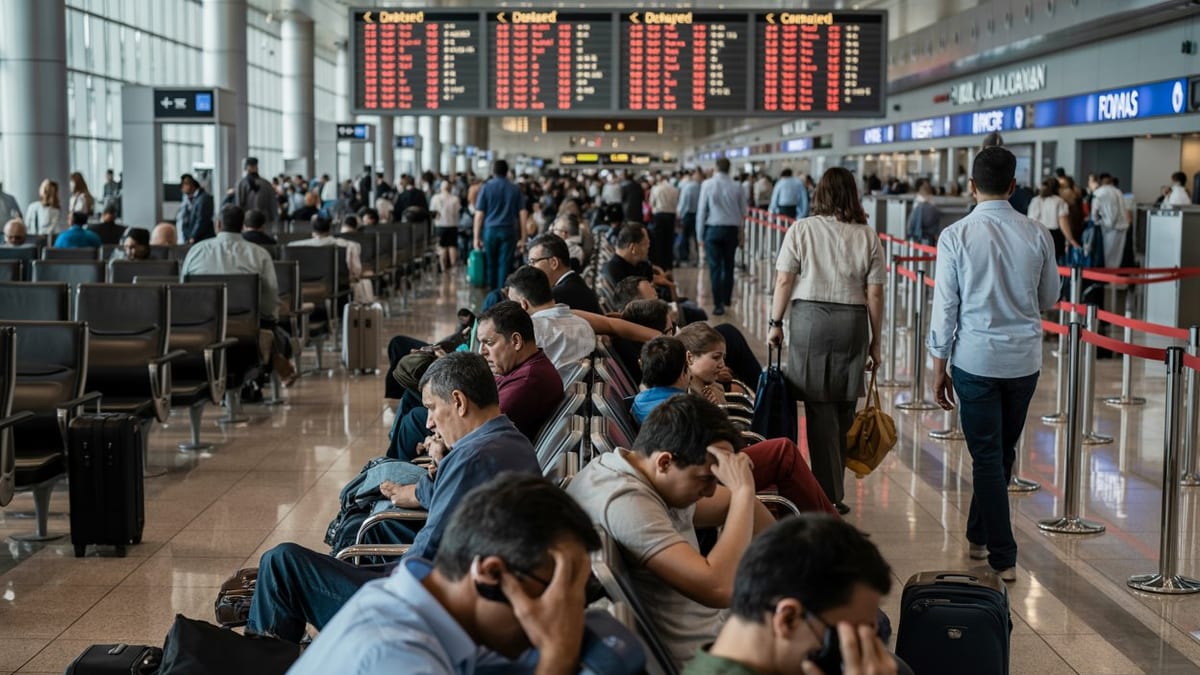
Wave of Disruptions Across Key Transatlantic and European Routes
Flight tracking data and airport operational updates for June 22 and June 23 indicate a sharp spike in delays affecting services in and out of Paris Charles de Gaulle, London Heathrow and Gatwick, New York’s JFK and LaGuardia, and Dubai International. Across these hubs, more than 570 flights were reported delayed and at least eight canceled, leaving passengers queueing at customer service desks and struggling to rebook at the height of early summer travel.
Air France and Delta saw notable knock-on delays on core transatlantic routes between Paris, London and New York, where congested schedules leave little room to recover from earlier disruptions. Publicly available tracking boards showed multiple departures running more than an hour behind schedule, with some long haul services departing late into the night and arriving in the early hours of the following day, complicating onward connections.
Low cost operators easyJet and Vueling also appeared prominently on delay boards at London and Paris airports, where their dense short haul networks across Europe are particularly vulnerable to reactionary delays. A late inbound aircraft or ground handling bottleneck can quickly cascade into widespread disruption, particularly on days of peak demand when spare aircraft and crews are limited.
In the Gulf, Emirates flights connecting Dubai with Europe and North America were not immune to the turbulence in global schedules. While most services operated, late departures on some routes into Europe and the United States contributed to a sense of widespread instability for travelers attempting to navigate already busy terminals.
Weather, Congested Skies and Operational Constraints Combine
Industry data and recent airport performance reports suggest that the latest wave of disruption is the product of multiple overlapping pressures rather than a single failure point. Thunderstorms and unstable weather in parts of North America and Western Europe over the past several days have repeatedly triggered ground delay programs and reduced arrival and departure rates, forcing airlines to hold, reroute or slow flights as air traffic controllers manage saturated skies.
At the same time, operational performance statistics published in recent weeks for major European hubs underline how thin the margin for error has become. Several large airports report that a significant share of delays now fall into the category of reactionary issues, where one late arrival triggers a chain reaction across multiple flights for the same aircraft or crew. Airlines including Air France, Vueling, easyJet and Emirates feature in those reports with dozens of recorded delay incidents tied to a mix of air traffic, airport congestion and servicing bottlenecks.
Airlines have also been operating near full capacity as the summer season ramps up, leaving fewer standby aircraft and crews available to absorb shocks. Publicly available schedules show dense banks of departures to holiday destinations in southern Europe, North Africa and the Middle East from London and Paris, as well as heavy transatlantic traffic linking New York and other North American cities with Europe and the Gulf. When disruption hits at one of these hubs, network effects can quickly spread to secondary airports.
Union actions and labor pressures, which have led to strikes and local work stoppages in parts of Europe earlier in June, continue to cast a shadow over operations. Even in the absence of active strikes on a given day, airlines and airports are still working to rebuild rosters and clear backlogs of displaced passengers and aircraft from previous disruptions.
Passengers Confront Long Queues, Missed Connections and Uncertain Plans
For travelers on the ground in Paris, London, New York and Dubai, the numbers translate into hours spent in terminal queues and waiting areas. Social media posts and local coverage from the affected airports describe long lines at rebooking counters, with passengers attempting to salvage once straightforward itineraries that combined long haul legs with tight regional connections.
In Europe, easyJet and Vueling customers reported particular difficulty securing same day alternatives on busy leisure routes, as remaining seats on later departures quickly sold out. Families heading to Mediterranean destinations for school holidays were forced to weigh the cost of extra nights in transit cities against the price of buying entirely new tickets on competing airlines.
Transatlantic travelers on Air France and Delta encountered similar challenges when missed connections in Paris or London disrupted long planned trips to North America. With hotel rooms near major airports already heavily booked for the summer season, finding last minute accommodation for stranded passengers became an additional stress point for many travelers managing their own arrangements.
In Dubai, Emirates passengers reported delays that complicated onward journeys to Asia, Africa and Australasia. Given that many itineraries through the Gulf rely on tight connecting windows, even relatively modest schedule slippages can result in missed onward flights and the need to rebook across multiple time zones.
Rights, Compensation and the Patchwork of Passenger Protections
The disruptions once again highlight the patchwork nature of passenger protections that apply depending on the route, carrier and jurisdiction. Within the European Union and the United Kingdom, Air France, easyJet and Vueling flights departing from EU or UK airports fall under established compensation regulations that can entitle passengers to meals, accommodation and financial compensation in certain cases of long delay or cancellation that are within the airline’s control.
However, complications arise on itineraries that combine multiple carriers or that originate or terminate outside these regulatory zones. Travelers connecting from Emirates long haul flights in Dubai to European low cost services, or those flying Delta from New York into European hubs before switching to an EU carrier, may find that different rules and obligations apply to each segment of their journey.
Consumer advocates regularly advise passengers to document their disruption by keeping boarding passes, confirmation emails and any written notices of delay or cancellation. Public guidance from civil aviation regulators and consumer organizations notes that claims processes can be complex and time consuming, particularly when travel agencies are involved or when communication between airline and passenger relies on outdated contact details.
Travel insurance policies can provide an additional layer of support, but coverage varies widely. Some policies include fixed payments for long delays or reimbursements for extra accommodation and meals, while others exclude disruptions caused by air traffic control restrictions or severe weather. Passengers affected by the recent wave of delays are being encouraged by consumer groups to review their policy wording carefully before filing claims.
Airlines and Airports Prepare for a Challenging Peak Season
The latest disruptions arrive just as airlines and airports were hoping for a smoother peak season after several summers marked by pandemic aftershocks, staffing shortages and operational strain. Schedules published for July and August show that carriers including Air France, Delta, easyJet, Vueling and Emirates are planning near record levels of capacity on many routes linking Europe, North America and the Middle East.
Airport performance reports indicate that major hubs are investing in additional staff and improved baggage and security processes to keep passengers moving. Nevertheless, the combination of rapidly changing weather patterns, saturated airspace and high demand means that even minor operational issues can escalate quickly into widespread disruption, as seen in the latest cluster of delays and cancellations.
Travel analysts note that resilience will be a key theme this summer, both for passengers and for the aviation system. Airlines are under pressure to build more slack into schedules, diversify crews and improve communication channels with travelers, while airports are expected to coordinate more closely with air traffic control and ground handling providers to reduce chokepoints.
For passengers planning trips through Paris, London, New York, Dubai and other major hubs in the coming weeks, the recent disruptions serve as a reminder to allow ample connection times, monitor flight status frequently and consider contingency plans. With early summer already marked by hundreds of delays across multiple carriers, the remainder of the season is likely to test the limits of global aviation once again.