


More news on this day
Summer air travel across Europe faced another wave of disruption as 211 flight cancellations and 1,995 delays were recorded across Barcelona and 13 other major airports, compounding an already challenging August for passengers moving through some of the continent’s busiest hubs.
Get the latest news straight to your inbox!
Barcelona at the Heart of a Difficult August
Barcelona’s Josep Tarradellas Barcelona El Prat Airport has been one of the focal points of the latest disruption, with the combination of a ground-handling strike and recent operational incidents intensifying pressure on an already busy summer schedule. Publicly available information shows that an indefinite strike by Groundforce staff began on 4 August 2026, affecting check in, boarding and ramp services at the airport at the height of the holiday season.
Reports from local media indicate that the strike has led to mounting operational backlogs, including thousands of unprocessed bags and hundreds of affected flights over several weeks. One recent overview put the number of cancelled services linked to the labour dispute at around 270 in just two weeks, along with major baggage handling delays for arriving passengers. These ongoing issues have left airlines with limited flexibility to absorb additional disruption.
The situation was further complicated on 12 August by an electrical failure in the El Prat control tower, temporarily paralysing movements at the airport and forcing additional cancellations and delays while technicians worked to restore normal operations. Combined with the sustained pressure from the strike, these events have made Barcelona one of the most challenging airports in Europe for on time performance through mid to late August.
Network Effect Across 13 Other European Airports
The disruption has not been confined to Catalonia. Because Barcelona is an important Mediterranean hub, cancellations and extended delays there have rippled across at least 13 other European airports as aircraft and crews fell out of position. Flights operating to and from cities such as Paris, Rome, Milan, Geneva, London and other major gateways have faced knock on effects when aircraft scheduled to depart from Barcelona were delayed or cancelled.
Industry punctuality data for recent summers, including reports compiled by European airport associations, underline how concentrated problems at a single hub can quickly influence performance across a wider network. When one major airport experiences a spike in delays, average departure and arrival times often deteriorate at connected airports as well, particularly on days of peak leisure demand in August.
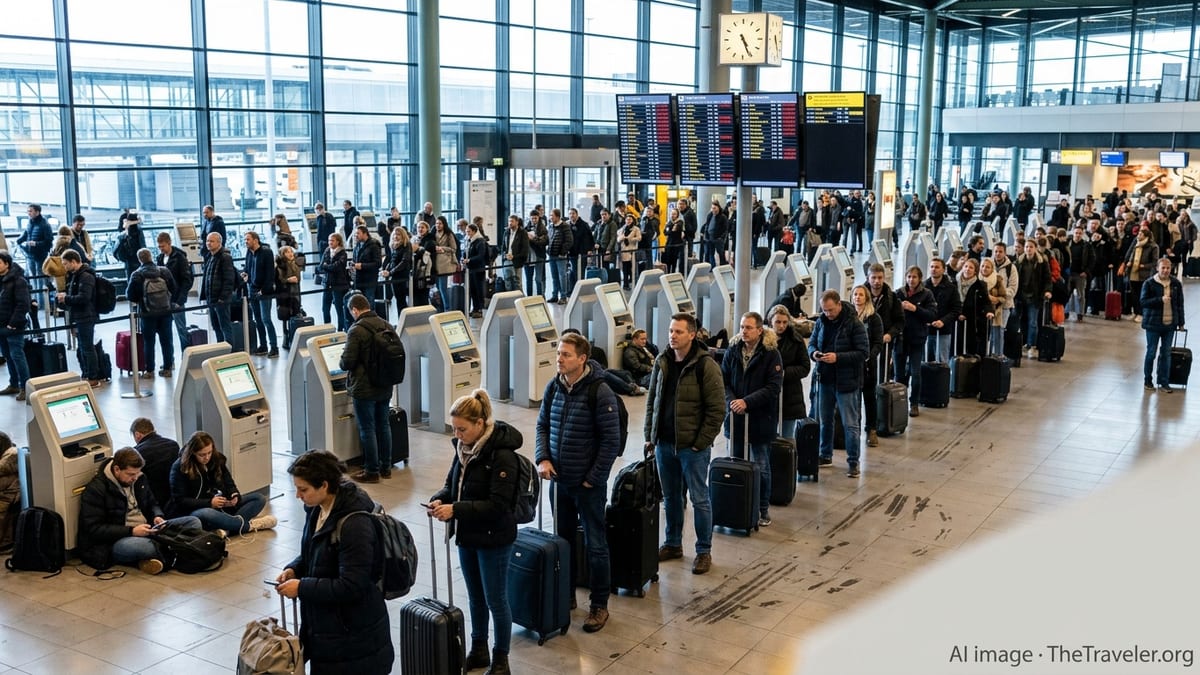
On the ground, this has translated into busy terminals, long queues at customer service desks and departure boards dominated by yellow and red status updates. While many flights have still operated, the cumulative impact of nearly 2,000 delayed services in a short window has made it difficult for airlines and airports in multiple countries to recover smoothly.
Stranded Passengers Face Missed Connections and Lost Baggage
For travellers, the numbers behind this disruption have meant missed connections, overnight stays and extended waits for luggage. Passenger accounts shared publicly in recent days describe delays of many hours for checked bags to appear after landing in Barcelona, with some visitors reporting that their luggage took more than a day to be delivered as handling backlogs grew.
The scale of cancellations and delays has been especially challenging for families and leisure travellers who booked tightly timed itineraries through European hubs. Where connecting flights departed on schedule from onward airports, disrupted services from Barcelona and other affected cities have led to broken journeys and the need to be rebooked, often on already full peak season flights.
Guidance circulated by consumer groups and travel rights organisations has urged passengers to keep boarding passes, booking confirmations and receipts for meals or accommodation, so that they can later request refunds or compensation where European Union air passenger rules apply. Many travellers have also been encouraged to check baggage tracking tools, airline apps and airport information pages frequently, rather than relying solely on departure board screens, to stay ahead of last minute schedule changes.
Why Europe’s Summer Operations Are So Vulnerable
The recent figures from Barcelona and its connected airports come against a broader backdrop of structural strain in European aviation during the high summer period. Airport punctuality reviews for previous Augusts have consistently highlighted how weather, staffing levels and infrastructure constraints combine to reduce on time performance in the busiest months of the year.
Data from earlier seasons, compiled by European airport industry bodies, show that typical arrival punctuality across the region in August can hover around two thirds of flights, while departure punctuality is often lower. Factors such as convective storms over southern Europe, limited spare capacity at major hubs and tight aircraft utilisation patterns leave little margin when unforeseen events such as a strike or a technical failure occur.
Analysts note that while 211 cancellations may represent a relatively small share of overall European traffic on a single peak day, the knock on effect of nearly 2,000 delayed flights can accumulate rapidly, especially when airlines are operating close to capacity and have limited ability to swap aircraft or crews. As a result, individual incidents in one location can cascade into widespread disruption, particularly across short haul intra European networks.
What Travellers Can Do if They Are Affected
With operational conditions remaining fluid, passengers due to travel through Barcelona or other major European hubs in late August are being advised by airlines and airports, through their public channels, to monitor flight status closely on the day of departure. Many carriers are offering the option to move travel dates or reroute journeys where significant disruption is anticipated, subject to seat availability.
Travel experts suggest arriving at the airport earlier than usual, especially for flights departing from Barcelona, to allow extra time for check in and security in case ground handling services remain under pressure. Where possible, travelling with carry on luggage only can reduce exposure to baggage delays, although this is not practical for all journeys.
Passengers whose flights are cancelled or arrive with long delays may be entitled to assistance, meals, hotel accommodation and, in some cases, financial compensation under European air passenger regulations, depending on the cause of the disruption and the circumstances of each case. Travellers are encouraged to consult airline websites and official EU passenger rights information to understand what support may be available.
For now, the immediate focus across the affected airports is on clearing backlogs and restoring more reliable operations. As negotiations continue around the labour dispute in Barcelona and airlines adjust their schedules, the pattern of cancellations and delays in the coming days will provide a clearer indication of whether the situation is stabilising or if travellers should prepare for further turbulence in Europe’s summer skies.
Vaga de Groundforce acumula 6.000 maletes i 270 vols anul·lats
Avería eléctrica en la torre de control del aeropuerto de El Prat
Groundforce staff’s indefinite strike begins at Barcelona BCN airport