


More news on this day
A new wave of travelers is rediscovering the Anchorage to Fairbanks segment of the Alaska Railroad, where glass-domed cars, wilderness vistas, and frontier towns combine into one of North America’s most dramatic rail journeys.
Get the latest news straight to your inbox!
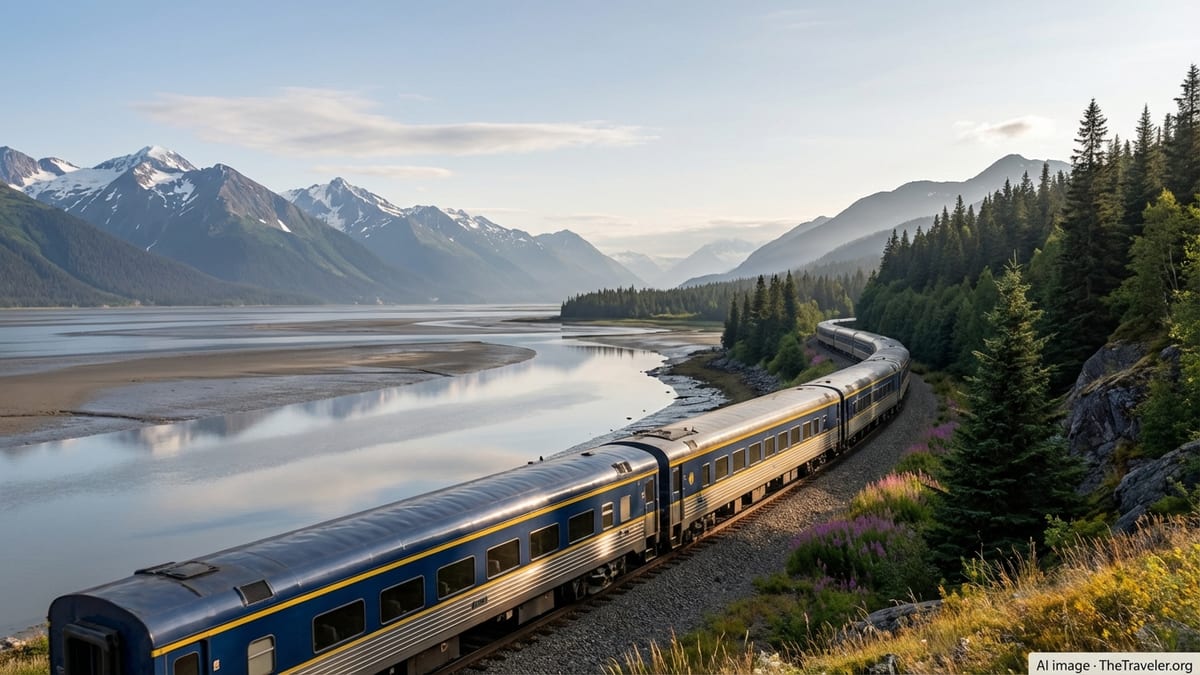
Flagship Denali Star Route Showcases Alaska’s Interior
The main summertime Anchorage–Fairbanks rail connection operates as the Denali Star, the Alaska Railroad’s flagship train. Publicly available route information shows that the train covers more than 350 miles between Anchorage and Fairbanks, with intermediate stops in Wasilla, Talkeetna, and the depot serving Denali National Park. The line effectively stitches together Southcentral Alaska and the state’s Interior, linking its two largest cities with outposts that function as launchpads for backcountry exploration.
Timetables indicate that the Denali Star runs daily in the main summer season, typically mid-May through mid-September, with an all-day schedule that turns the journey itself into a full-scale excursion rather than simple point-to-point transport. The same corridor is served in the colder months by the Aurora Winter Train, which operates a reduced, mostly weekend schedule between Anchorage and Fairbanks when daylight is limited and conditions are more severe.
Travel planners describe this rail corridor as one of Alaska’s essential scenic routes, paralleling the George Parks Highway but often slipping into river valleys and glacial landscapes inaccessible from the road. The alignment has been recognized as part of a National Scenic Byway and as an All-American Road, adding formal designation to what many visitors already treat as a bucket-list rail experience.
Glass Domes, GoldStar Service, and the Slow-Travel Pivot
Onboard, the Alaska Railroad leans into slow-travel demand with upgraded viewing and comfort options. According to published descriptions, the Denali Star offers standard Adventure Class seating along with premium GoldStar Service, which features bi-level dome railcars, open-air viewing platforms, and inclusive meals served in dedicated dining areas. The panoramic glazing and elevated seating are designed to maximize visibility across braided rivers, boreal forest, and mountain ranges that define the route.
GoldStar carriages, highlighted in railroad materials and tour operator brochures, have become a focal point of marketing for travelers prioritizing scenery and photography. Reports indicate that these cars provide priority seating in the upper dome level and access to exterior platforms where passengers can step out for unobstructed views when conditions allow. By blending comfortable seating, table service, and enhanced sightlines, the railroad positions the journey as a moving observation deck across Alaska’s wild interior.
Even in standard Adventure Class, travelers benefit from large windows, café or bistro service, and the ability to move between cars. This level of flexibility appeals to visitors who want to treat the rail segment as a full-day experience, alternating between seats, vestibules, and dining areas as landscapes shift from coastal lowlands to the high country near Denali.
Denali National Park at the Heart of the Journey
Denali National Park functions as the emotional and geographical centerpiece of the Anchorage–Fairbanks route. Travel-planning sites and state tourism guides describe Denali as one of Alaska’s grandest wilderness areas, with the rail depot located near park entrances and hotel zones that dispatch shuttle buses to meet the train. Rail-and-lodging packages commonly bundle the Denali Star with overnight stays, park shuttle bus tours, guided hikes, or flightseeing over North America’s highest peak.
The southbound and northbound journeys both offer the possibility of catching views of Denali itself when weather cooperates, although seasoned travelers note that sightlines often favor south-of-park vantage points around Talkeetna. Even when the mountain remains shrouded, passengers encounter sweeping river basins, tundra benches, and the Lower Tanana and Nenana river valleys, which are often cited as highlights of the trip.
Publicly available itineraries from Alaska travel organizations now frequently slot the Denali Star into multiday loops that connect Anchorage, Denali, and Fairbanks, emphasizing the line’s role as a backbone for land-based tourism. These sample routes show visitors arriving in Anchorage, boarding the Denali Star for an eight-hour journey north to Denali, and then continuing on to Fairbanks, or reversing the sequence for travelers starting in the Interior.
Year-Round Frontier Corridor With Winter Appeal
While summer traffic draws the most attention, the Anchorage–Fairbanks corridor maintains a year-round rail presence that reinforces its frontier character. Alaska Railroad fact sheets and independent compilations of schedules describe the Aurora Winter Train as the off-season counterpart to the Denali Star, serving many of the same communities on a less frequent basis from mid-September to mid-May. This winter operation transforms the journey into a different type of wilderness experience, with potential for snowbound forests, icy rivers, and extended twilight.
Transportation planning documents and state agency materials characterize the Alaska Railroad as a critical Interior link, running alongside the George Parks Highway yet providing an alternative for those who prefer not to drive long distances in changing weather. The same sources underline that the route also connects with other trains and byways reaching Seward and Whittier, turning the Anchorage hub into a node where marine cruises, highway travel, and rail segments converge.
This year-round continuity reinforces the sense of the line as a working frontier corridor rather than a purely seasonal sightseeing product. For travelers, it translates into more options for building shoulder-season or winter itineraries that combine rail travel with northern lights viewing, dog sledding, or hot springs excursions around Fairbanks.
Rising Interest in Rail-Based Alaska Itineraries
Tourism platforms and local visitor bureaus report renewed interest in rail-based Alaska itineraries, with the Anchorage–Fairbanks journey frequently cited as a centerpiece of first-time and repeat trips alike. Travel providers note that many visitors now treat the train as a main attraction rather than a transfer, booking multiday packages that incorporate overnights in Talkeetna and Denali in addition to time in the two gateway cities.
Recent promotional materials from regional travel companies and destination marketing organizations highlight how the Alaska Railroad facilitates access to remote lodges, guided wilderness experiences, and cruise extensions. In this framing, the Anchorage–Fairbanks route becomes part of a broader wild-frontier network where passengers can disembark for rafting, hiking, wildlife viewing, or cultural tours before rejoining the line further along the corridor.
As travelers continue to prioritize scenery, sustainability-minded transport, and experiential journeys, the Anchorage to Fairbanks Alaska Railroad segment is emerging as a showcase for how traditional rail lines can captivate modern audiences. The combination of dome cars, frontier towns, and vast, largely roadless backdrops positions the route as one of the continent’s most compelling examples of wild-frontier rail travel.
Sources: Alaska Railroad Denali Star route map; Alaska Railroad train schedules; Alaska Collection overview of Alaska Railroad routes; Travel Alaska Denali by rail itinerary; State of Alaska scenic byway description of the Alaska Railroad