


More news on this day
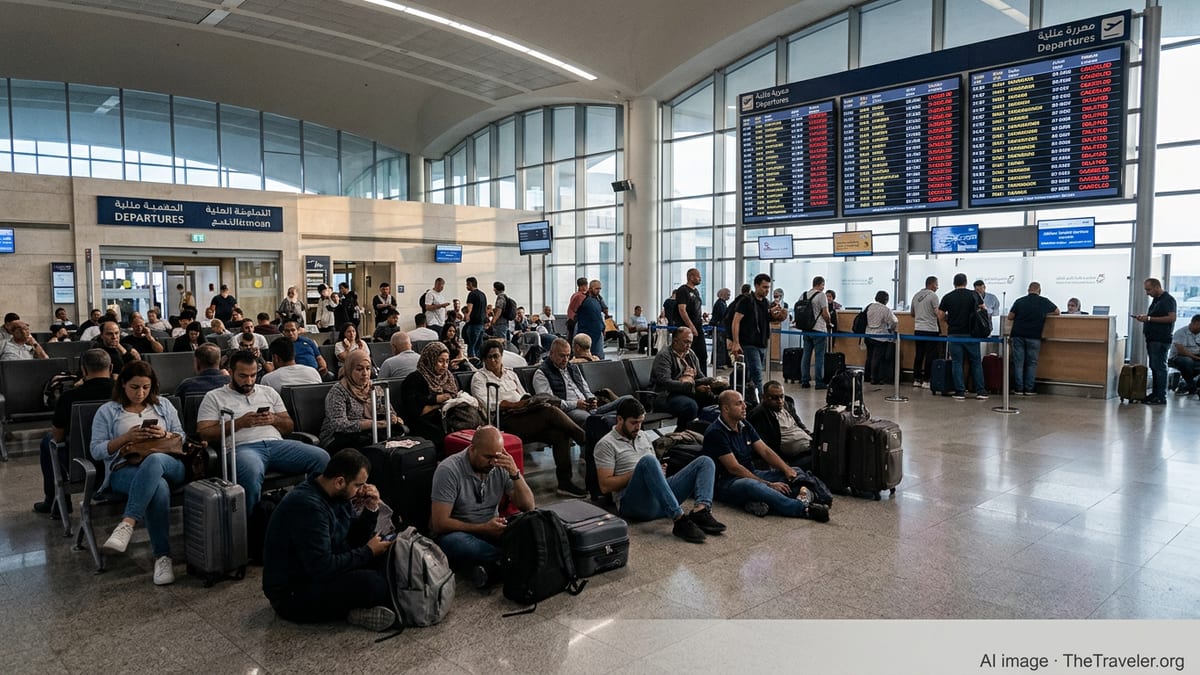
Hundreds of passengers across Bahrain, Qatar, the United Arab Emirates and Saudi Arabia have been left stranded after a fresh wave of cancellations and delays at four of the region’s busiest airports, compounding months of instability in Gulf air travel.
Get the latest news straight to your inbox!
Targeted Cancellations Across Four Strategic Gulf Airports
Publicly available operational data and regional travel advisories indicate that at least 166 flights have been cancelled and 103 delayed across Bahrain International Airport, Doha’s Hamad International Airport, Dubai International Airport and Riyadh’s King Khalid International Airport over a series of disruption peaks in recent weeks. While individual days of disruption have varied from hub to hub, the combined effect has been to severely limit capacity on many of the Gulf’s most heavily used routes.
Reports tracking airport performance show that Bahrain International has endured repeated stop-start operations as its airspace moved from full closure to limited reopening, leading airlines based in the kingdom to trim or suspend selected services even after restrictions were eased. Hamad International, meanwhile, has experienced several intense 24-hour periods in which hundreds of flights were either cancelled outright or subject to long delays, reflecting its role as a central transfer point for traffic between Asia, Europe and Africa.
Dubai International, one of the world’s busiest long-haul hubs, has also faced rolling disruption linked to regional airspace constraints, previous infrastructure incidents and knock-on effects from schedule reshuffles at neighboring airports. In Saudi Arabia, King Khalid International in Riyadh has seen more targeted disruption, with selected services to and from other Gulf states reduced or retimed as carriers attempt to work around shifting restrictions and aircraft availability.
Although precise tallies change by the hour, aviation analytics platforms and rights organizations consistently describe a pattern in which isolated cancellations at one airport quickly trigger further schedule changes at others, creating a combined total of more than 260 affected flights across the four hubs during the latest phases of the crisis.
Regional Airspace Limits Drive a Chain Reaction of Disruption
Travel-industry briefings and port and aviation advisories point to ongoing airspace limits and evolving security assessments as the primary drivers of the current wave of disruption. Temporary closures and routing restrictions over parts of the Middle East have forced airlines to cancel some services entirely and reroute others, putting strain on already crowded air corridors and complicating crew and aircraft rotations.
Updates from regional coordination bodies describe periods in which Bahrain’s airspace was fully closed and later reopened on a restricted basis, while Qatar began a gradual resumption of operations at Hamad International after an initial near-complete shutdown. Airlines have responded with a mix of wholesale suspensions on certain Gulf routes and partial resumptions using alternative paths, often via secondary hubs or longer routings that avoid higher-risk zones.
In the United Arab Emirates, Dubai International has oscillated between heavily reduced operations and a limited restart as carriers adjusted to changing overflight permissions and to earlier infrastructure-related disruptions. Saudi Arabia’s aviation notices show a more selective impact, with some routes from Riyadh operating normally while others to nearby Gulf cities are cut back or temporarily paused, reflecting differing risk assessments and commercial priorities.
This shifting patchwork of airspace access means that even when a specific airport is technically open, flight schedules can change at short notice. As a result, cancellations and delays recorded at Bahrain, Doha, Dubai and Riyadh often reflect conditions far beyond any single terminal or runway, extending the impact to passengers who are nowhere near the areas directly affected by security events.
Passengers Face Missed Connections, Overcrowded Halls and Lengthy Rebookings
For travelers, the combined effect of 166 cancellations and over a hundred delays across the four hubs has translated into missed connections, extended airport stays and complicated rebooking experiences. Reports from passenger-rights organizations and travel forums describe crowded departure halls and packed transfer desks at peak disruption periods, particularly in Doha and Dubai, where long-haul itineraries depend on tight connection windows.
Multi-leg journeys that route through more than one affected hub have been especially vulnerable. When a feeder service into Bahrain or Doha is cancelled, passengers booked onward to Europe, Africa or Asia can find their entire itinerary unraveling, forcing them either to wait for scarce replacement seats or to seek completely new routings through alternative hubs such as Istanbul, Singapore or regional secondary airports.
Airlines operating from the four hubs have adopted a variety of approaches, from operating limited “relief” rotations focused on rebooked passengers to offering waivers that permit free date or routing changes within defined disruption windows. However, travel-industry reports indicate that customer-service channels have been heavily congested at peak times, and that some passengers have opted to postpone or abandon trips rather than accept long detours or multi-day delays.
Accommodation and welfare provisions have also varied widely depending on the carrier, the route and the legal framework governing the journey. Passenger-advocacy groups note that while some travelers have secured hotel stays, meal vouchers and ground transport, others have relied on personal funds while waiting for clarity on new departure times or alternative itineraries.
Ripple Effects on Gulf Tourism, Business Travel and Cargo
The concentration of cancellations and delays at Bahrain International, Hamad International, Dubai International and King Khalid International has broader economic implications, given the centrality of these airports to tourism, business travel and cargo flows in the Gulf. Aviation and logistics briefings highlight that even short periods of widespread disruption can create bottlenecks in regional supply chains and discourage short-notice corporate travel.
Tourism stakeholders in Bahrain, Qatar, the UAE and Saudi Arabia rely heavily on predictable connectivity, particularly during major events and peak vacation periods. When flights are abruptly cancelled or retimed, inbound visitors may choose to rebook to later dates, reroute through competing hubs, or divert to alternative destinations entirely, affecting hotel occupancy and local spending in the short term.
Business travelers are experiencing similar uncertainty. Companies with teams shuttling between Gulf capitals report longer transit times and increased reliance on virtual meetings whenever key links are disrupted. For sectors such as energy, construction and finance, where in-person site visits and negotiations remain important, sudden schedule changes at one or more of the four hubs can delay projects or force costly last-minute itinerary changes.
Cargo movements have not been immune. Industry advisories reference delays and rerouting for high-value and time-sensitive shipments, particularly those that usually transit via Doha and Dubai. While freighter operations and alternative routings can absorb some of the pressure, the combination of passenger-flight cancellations and constrained airspace has reduced flexibility, with knock-on effects for inventory planning and delivery times across the wider region.
What Travelers Can Do If Their Gulf Flight Is Affected
With disruptions at Bahrain, Doha, Dubai and Riyadh evolving from day to day, travel experts recommend that passengers adopt a proactive approach when planning or managing trips through the four hubs. Publicly available guidance from passenger-rights organizations suggests that affected travelers should monitor airline apps and airport departure boards frequently, as schedules may change multiple times before departure.
When a flight is cancelled, travelers are generally encouraged to secure written confirmation of the disruption, keep copies of boarding passes and receipts, and explore rebooking or rerouting options as early as possible. Depending on the airline and the origin or destination of the journey, some passengers may be entitled to meal vouchers, accommodation, ground transport or financial compensation, particularly on itineraries that fall under European or UK passenger-protection rules.
Travel advisers also note that flexible booking conditions have become more valuable in the current environment. Many recommend choosing tickets that allow date or routing changes with minimal penalties, considering slightly longer connection times when planning itineraries through the four hubs, and avoiding tight same-day commitments at the destination whenever routes cross regions affected by airspace restrictions.
As regional authorities and airlines continue to adjust operations, observers expect further fluctuations in the number of cancellations and delays affecting Bahrain International, Hamad International, Dubai International and King Khalid International. For now, the clustering of at least 166 cancellations and 103 delays across these key hubs underlines how quickly conditions in the Gulf’s interconnected air network can shift, and how vulnerable travelers remain to decisions made far beyond the airport where they check in.