


More news on this day
Summer holiday travel faces fresh disruption across Europe as airport and ground handling staff prepare coordinated strike action in early July, with aviation analysts warning of "significant delays" and a growing risk of flight cancellations at some of the continent’s busiest hubs.
Get the latest news straight to your inbox!
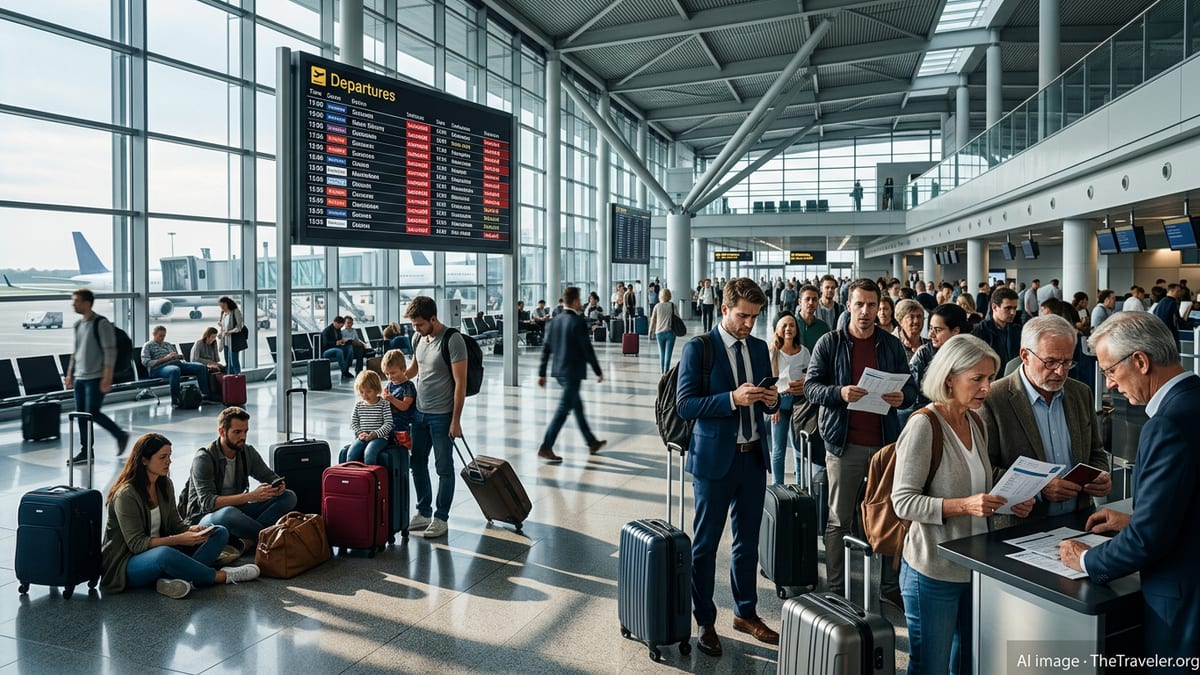
Italy prepares for nationwide airport walkouts
Publicly available information shows that Italy is heading into one of the most disruptive aviation weekends of the summer, with a 24-hour national strike by transport and airport workers scheduled for 5 July. Notices from airlines and industry outlets indicate that the stoppage is expected to affect ground handling teams, security staff and some air traffic control functions at multiple airports, including key gateways such as Rome Fiumicino and Milan Malpensa.
Travel advisories from European carriers describe the potential impact as substantial, warning of longer queues at check-in and security, slower baggage processing and a heightened risk of schedule changes. Some airlines have already begun adjusting timetables and consolidating services on routes to and from Italy in an effort to reduce day-of-travel disruption.
Italian media and aviation trade publications also highlight that the 5 July action is part of a wider pattern of industrial disputes in the sector, tied to pay, staffing levels and working conditions. Further strike dates later in July have been flagged by unions representing ground crew and airport-based staff, increasing the likelihood that disruption will not be limited to a single day.
For travelers, the practical consequence is that even flights which ultimately operate may do so with heavy delays, especially at airports where multiple providers of ground services take part in the strike. Industry data from earlier walkouts suggests that knock-on effects can continue into the following day as aircraft and crews fall out of position.
French and wider European airspace under renewed pressure
The strike risk in Italy comes against a backdrop of existing strain in European airspace, particularly over France, where repeated industrial action by air traffic control staff earlier in the year led to hundreds of cancellations and lengthy delays. Recent operational briefings from Eurocontrol, the continent’s air traffic management network, show that France continues to generate a large share of en-route delays, with staffing and capacity constraints still prominent factors.
While the latest actions in France have largely involved controllers rather than terminal staff, any fresh walkouts at French facilities can quickly ripple across Europe. Flights between Ireland, the United Kingdom, Spain, Italy and Greece are heavily dependent on French airspace, and prior strikes have forced airlines to cancel services that merely overfly the country, even when departure and arrival airports were unaffected by local disputes.
Analysts note that when strike activity coincides with peak holiday traffic, the effect on punctuality can be dramatic. Past network reports for Europe show that industrial action often ranks among the leading causes of air traffic flow management delays, with average hold-ups for impacted flights running well beyond half an hour and, in some cases, more than an hour.
The current mix of staffing issues, strong seasonal demand and emerging strike calendars is therefore being watched closely by airlines and airports. Many have already signaled that they intend to build more slack into schedules and may preemptively trim frequencies on marginal routes to preserve resilience on core services.
New EU border checks add to congestion at key hubs
Simultaneous pressure is building at passport control across the European Union, where the phased introduction of the new Entry/Exit System for non-EU travelers is contributing to long waits at some airports. Published coverage in European media describes queues of up to several hours at border checkpoints, with staff struggling to manage fingerprinting and photo capture requirements at peak times.
Airline groups and airport associations have jointly warned that the combination of new biometric procedures and limited staffing risks overwhelming terminals in July and August. Industry bodies have publicly urged EU institutions to delay or slow the rollout for the peak holiday period, arguing that current infrastructure and staffing levels in several states are not yet sufficient to handle full implementation.
Where upcoming airport staff strikes intersect with these border-control challenges, the risk of delays multiplies. Passengers may encounter bottlenecks at check-in, security and immigration, each of which depends heavily on adequately staffed airport teams. Travel analysts point out that even modest slowdowns at one stage of the journey can quickly cascade into missed connections and late departures when terminals are already operating near capacity.
Some airports have begun issuing guidance encouraging travelers to arrive significantly earlier than usual for flights to or within the Schengen area, particularly where additional biometric checks are required. However, consumer groups caution that earlier arrival alone cannot fully offset the combined impact of industrial action and systemic processing changes at the border.
What passengers can expect if strikes go ahead
Based on recent experience with similar airport and ground handling strikes in Europe, travelers passing through affected hubs in early July are most likely to encounter long queues at security and check-in, delayed baggage delivery and a higher incidence of last-minute gate changes. Aviation data from previous years indicates that on intensive strike days, some airports have seen average delays for disrupted flights extend well beyond 30 minutes, with a proportion of services cancelled outright when staffing levels became insufficient.
Airlines typically respond by combining lightly booked flights, adjusting departure times and, where possible, rerouting aircraft around the most congested airspace. Publicly available advisories for the current wave of industrial action encourage passengers to monitor their booking closely, as advance schedule changes made several days before travel can reduce the chance of severe disruption on the day.
In jurisdictions covered by passenger-rights legislation, such as the European Union and the United Kingdom, travelers on flights that are significantly delayed or cancelled may be entitled to care, re-routing and in some cases financial compensation, depending on the cause of the disruption. Recent court decisions and regulatory guidance in Europe have generally treated airline staff strikes as events within the carrier’s control, while walkouts by some categories of airport or state employees may fall into a more complex legal area.
Consumer organizations advise passengers to keep detailed records of boarding passes, delay durations and any out-of-pocket expenses during strike-related disruption, as this documentation can be important when pursuing claims. At the same time, legal commentators stress that entitlement to compensation is not automatic, especially where delays are linked to wider industrial disputes that airlines cannot directly resolve.
Planning strategies for summer travelers
For travelers who have not yet departed, publicly available guidance from travel agents, aviation analysts and consumer groups converges on a few practical steps. Checking strike calendars for Italy and other European destinations, monitoring airline and airport alerts closely in the 48 hours before departure, and allowing extra time at the airport are widely recommended measures.
Where plans are flexible, some experts suggest avoiding departures during the busiest midday windows at strike-affected airports, or considering early-morning flights, which historically have a higher chance of operating on time before delays accumulate through the day. Passengers with connecting itineraries may also wish to build in longer layovers to compensate for possible ground delays.
Travelers are being encouraged to complete as many pre-departure formalities as possible before arriving at the airport, including online check-in where available, advance seat selection and digital document upload for destination requirements. Such steps do not eliminate the impact of strike action, but can help reduce time spent in queues managed by understaffed ground teams.
As Europe moves deeper into the peak summer season, the interaction between industrial disputes, structural staffing shortages and new border rules is likely to remain a central theme for air travel. With further strike dates already announced or under discussion in several countries, industry observers expect that warnings of potential "significant delays" at airports will continue in the weeks ahead.