


More news on this day
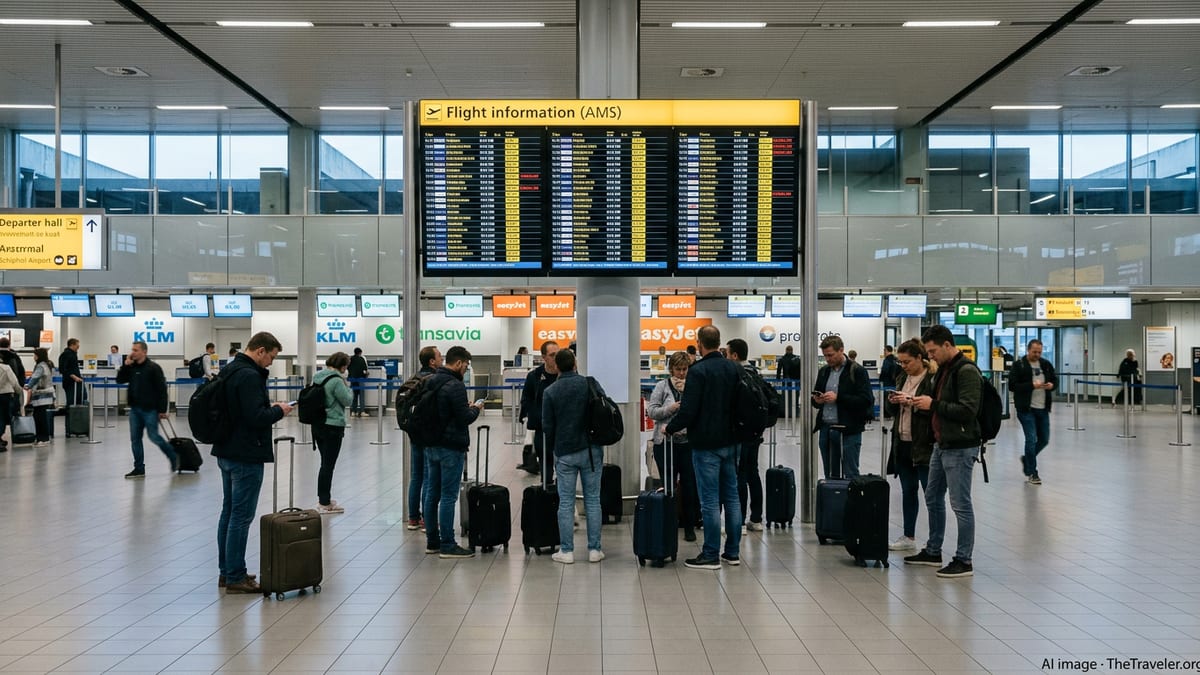
Hundreds of passengers were left stranded at Amsterdam Schiphol Airport as operational data showed 353 flights delayed and 34 canceled in a single day, disrupting a broad mix of European and long haul routes for major airlines and their partners.
Get the latest news straight to your inbox!
Wave of Disruptions Hits One of Europe’s Busiest Hubs
Publicly available flight tracking boards for Amsterdam Schiphol indicated an unusually high concentration of disruption, with more than 350 scheduled services running late and several dozen withdrawn from the timetable. The turbulence in the schedule affected traffic throughout the day, from early morning departures to late evening arrivals, leaving travelers facing long queues at departure gates, crowded customer service desks, and limited options for immediate rebooking.
The disruption rippled across Schiphol’s role as a key European hub. Major carriers including KLM, Delta Air Lines, British Airways, Lufthansa, Air France, easyJet, Emirates, United Airlines and other operators saw services to and from Amsterdam affected. The problems extended across both intra-European routes and intercontinental links, including connections to London, Paris, Frankfurt, New York, Dubai, Barcelona, Rome, Singapore and other long haul destinations.
Operational metrics compiled from airport departure and arrival boards showed that even flights that ultimately departed were frequently subject to significant delays. In some cases, aircraft pushed back far behind schedule, while others remained on the ground awaiting inbound crews or aircraft rotations. These timing shocks contributed to a growing number of missed connections, particularly for passengers relying on short transfer windows at Schiphol.
Although detailed breakdowns of the underlying causes were not immediately available, recent patterns at Schiphol and other European hubs highlight a mix of factors that can trigger such days of disruption, including weather constraints, air traffic flow restrictions, and tight crew and aircraft utilization that leave limited margin for recovery when schedules begin to slip.
Hub-and-Spoke Networks Amplify the Impact
Amsterdam Schiphol functions as a central hub in the network strategies of several major airlines, most notably KLM and its transatlantic partners. When a large number of departures from a hub airport are delayed or canceled within a short window, the effects can quickly multiply, impacting travelers who may be nowhere near the Netherlands but depend on a smooth connection through Amsterdam.
Reports from recent disruption days at Schiphol show how a delayed regional flight into the hub can lead to passengers missing onward departures to North America, the Middle East or Asia. Once those longer sectors reach crew duty time limits or run out of available connection passengers, airlines are often forced to retime or cancel subsequent rotations, further constraining capacity for travelers attempting to rebook.
Codeshare arrangements between airlines, such as those among KLM, Air France and Delta, can help by widening the pool of possible replacement flights. However, on days when hundreds of services are affected, the number of stranded travelers quickly outpaces the spare seats across the network. This leads to cascading effects in which some customers secure same-day alternatives while others face overnight stays or multi-stop routings that add many hours to their journeys.
Observers of recent events at Schiphol note that congestion at key hubs also places additional stress on baggage handling and airport infrastructure. When flights are canceled after bags have been checked, luggage often must be located, unloaded and either stored or redirected to new itineraries, increasing the likelihood of delayed or misplaced baggage for days after the initial disruption.
Passenger Experience: Long Queues, Missed Connections and Overnight Stays
Accounts shared in public forums and prior coverage of disruption at Schiphol describe a now-familiar pattern for affected passengers. Travelers first encounter departure boards dominated by red and orange status updates indicating delays and cancellations, followed by long lines at airline service counters, self-service kiosks and transfer desks as large groups simultaneously seek new options.
Those with onward connections frequently face the additional challenge of re-aligning multi-leg itineraries. A missed feeder flight can invalidate carefully planned connections at Amsterdam, particularly for services bound for North America, the Middle East or Asia that operate only once daily or at limited frequencies. This often results in involuntary overnight stays, with travelers scrambling for airport hotels or accommodation in the city as room availability tightens.
Publicly shared experiences from previous disruption episodes at Schiphol also illustrate the strain on customer support channels. Airline apps and websites may slow under heavy demand as thousands of passengers attempt to change bookings at once, while call center wait times extend. For some travelers, securing a workable rebooking option through digital tools proves faster than joining service desk queues that can stretch across terminal concourses.
The knock-on effects extend beyond the airport environment. Travelers arriving late or on alternative flights may miss rail connections, tours or business meetings in destination cities, while those stranded in Amsterdam incur additional expenses for food, lodging and local transport that they later seek to claim back through airlines or travel insurance.
Rights and Options Under European Air Passenger Rules
Public guidance on European Union air passenger regulations indicates that many travelers affected by Schiphol disruptions may have protections when flights are significantly delayed or canceled. Under these rules, passengers departing from an EU airport or flying into the bloc with an EU-based carrier can, in certain circumstances, be entitled to care in the form of meals, refreshments, hotel accommodation and local transport.
In addition, when cancellations or long delays are not attributed to extraordinary circumstances, regulations allow for potential financial compensation, the amount of which is typically linked to flight distance and the length of the delay at final destination. Travelers are usually offered a choice between rerouting at the earliest opportunity, rerouting at a later date of their choosing subject to seat availability, or a refund of the unused portion of their ticket.
Recent cases at Schiphol and other European hubs have shown that determining eligibility can be complex. Airlines may argue that severe weather, air traffic control restrictions or broader infrastructure issues fall outside their direct control. Passengers, for their part, are encouraged by consumer advocates to retain boarding passes, booking confirmations, receipts for reasonable expenses and any written communication about delays or cancellations to support later claims.
Travel industry observers also note that when disruption on the scale of hundreds of delayed and dozens of canceled flights occurs, processing claims and reimbursements can take weeks. During that period, travelers often turn to travel insurance policies, credit card protections or employer travel departments to bridge immediate costs while longer-term compensation is assessed.
Practical Advice for Upcoming Travelers Through Schiphol
In light of the latest wave of delays and cancellations at Amsterdam Schiphol, publicly available travel advisories and operational data suggest several practical steps for passengers with upcoming itineraries. First, travelers are widely encouraged to monitor flight status closely via airline apps and airport information feeds, both in the 24 hours before departure and again on the day of travel.
Allowing additional time at the airport has also become a recurring recommendation, particularly for those with checked baggage or complex itineraries involving separate tickets. Longer connection windows can provide a buffer when earlier legs are running late, reducing the risk of missed onward flights and the need for extensive rebooking.
Passengers connecting through Schiphol on long haul journeys may wish to familiarize themselves in advance with alternative routings offered by their airline alliance or partner carriers. On disruption days, options via other European hubs can sometimes provide faster arrivals than waiting for limited direct capacity from Amsterdam, especially when multiple flights on the same route are affected.
Finally, recent disruption patterns underscore the value of preparing documentation ahead of time. Keeping electronic copies of itineraries, receipts and relevant policy information, as well as understanding the basics of EU air passenger rights, can help travelers respond more quickly when plans change suddenly, whether due to operational issues, weather or wider constraints on Europe’s crowded air traffic network.