


I came to Cape May with a simple plan: claim a patch of sand, listen to the waves, and unplug. Instead, I found myself wandering brick walkways, ducking into century-old porches, and lingering over cocktails in a converted gas station. By the time I shook the sand from my shoes, it was clear. The beach was beautiful, but the town itself was the real reason I did not want to leave.
Get the latest updates straight to your inbox!
A Classic Beach Town Arrival, With a Twist
The day in Cape May began the way most Jersey Shore trips do: with beach tags and sunscreen. In summer 2026, daily beach tags in Cape May cost about ten dollars per person, with weekly and seasonal options that make more sense if you are staying longer. You can still buy physical tags at kiosks along the promenade or at the little beach tag office on Beach Avenue, though many visitors now use the city’s digital system to purchase and show passes on their phones.
I headed for the sand near Congress Street, where the elevated promenade frames a long run of pale, fine-grained beach. Families spread out under striped umbrellas, college kids hauled soft coolers and spikeball sets, and just off to the west, surfers floated in the lineup waiting for small summer waves. It was everything I wanted from a shore day: organized chaos, the smell of salt and sunscreen, and the steady thunder of the Atlantic.
But from my towel I could not ignore the backdrop behind the dunes. Instead of high-rises or generic condos, a row of exuberant Victorian houses and gingerbread-trimmed inns watched over the scene. Turrets, wraparound porches, and stained-glass windows peeked above the sea oats, their paint colors running the full pastel spectrum. The beach was what had brought me here, but that skyline of 19th-century rooftops was what made me pack up early and go exploring.
By late morning, the sand felt interchangeable with any pretty strip of coast. The streets above the beach did not. They felt particular, layered, and human in a way you rarely find steps from a popular shoreline.
Washington Street Mall: The Beating Heart of Town
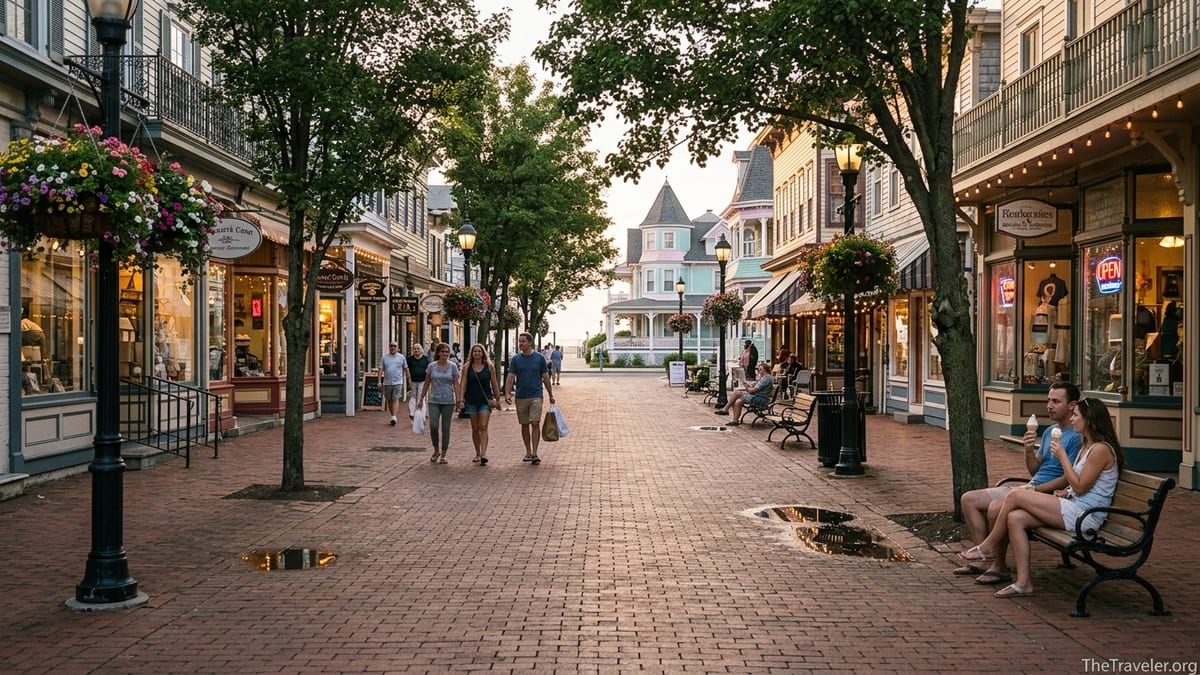
My first step off the beach was onto the brick paths of Washington Street Mall, a three-block, car-free stretch laid out in the early 1970s that now functions as the town’s living room. Benches circle flower beds, trees cast dappled shade over cafe tables, and shopkeepers prop open their doors so the smell of coffee, sunscreen, and fudge mingles in the summer air.
On a typical afternoon, you might see a street musician playing acoustic covers near Ocean Street, kids lined up for ice cream, and couples debating which local art print to bring home. The stores lean small and independent: a long-standing bookshop with sand-scuffed paperbacks, a specialty olive oil and vinegar store offering tiny paper cups for sampling, boutiques selling Cape May-branded sweatshirts softer than they look, and an old-school candy shop with trays of saltwater taffy in flavors from classic vanilla to more modern choices like birthday cake.
What surprised me was how easy it was to spend hours here without doing much of anything. I ordered an iced latte at a mall cafe, took it to a bench near one of the fountains, and simply people-watched. Nearby, a family debated flavors at a gelato counter, an older couple compared greeting cards under a shop awning, and a group of friends pored over a map, deciding between renting bikes or booking a trolley tour. The beach, just a few blocks away, started to feel like ambient background rather than the main event.
Later, as evening lights flicked on and string lights over patios glowed warm against the dusk, the mall shifted again. Restaurants rolled out outdoor seating, musicians tuned guitars, and shoppers turned into diners. The gentle clink of dishes and low conversation carried along the bricks, making Washington Street Mall feel less like a tourist strip and more like a small-town main street that simply happens to end at the ocean.
Victorian Architecture That Feels Like a Movie Set
Step a block or two in any direction from the mall, and Cape May’s historic district begins to unfold. The entire city is part of a designated historic district, covering hundreds of preserved Victorian-era buildings. It is one thing to read that in a guidebook and another to wander down Columbia Avenue or Hughes Street and realize how immersive it feels. This is not just one or two carefully restored mansions. Street after street carries ornate porches, fretwork, bay windows, and turreted roofs.
I followed a self-guided walking route I picked up from a local shop, though guided trolley tours can point out details you might miss on your own. On one block, a deep red inn with white trim showed off a double-decker porch lined with rocking chairs. Around the corner, a lavender and mint-green bed-and-breakfast had stained-glass panels glowing beside its front door. Many of these buildings, once summer homes for Philadelphia families, are now guesthouses and inns that remain busy well beyond peak beach season.
One afternoon, I detoured to see the Emlen Physick Estate, an 18-room Victorian house museum set a bit inland along Washington Street. The mansion’s stick-style architecture, with sharp angles and dark trim, stands out from the more whimsical seaside cottages. Tours walk visitors through parlors and bedrooms filled with period furniture, offering a glimpse into what life was like for an upper-class family here in the late 1800s. The house is surrounded by lawns and outbuildings that host seasonal events, from craft fairs to spooky-themed tours in shoulder season.
What anchors all this is how closely the historic fabric presses against everyday life. Locals walk dogs past houses that would be stand-alone tourist attractions in most towns. Historic churches share blocks with coffee shops. Real estate listings in broker windows showcase late-19th-century homes now priced firmly in the 21st century. Even if you came to Cape May with no particular interest in architecture, it is hard not to be drawn in by the way history frames every stroll.
Cape May’s Food and Drink Scene: Beyond Boardwalk Fare
Beach towns are not always known for serious food, but Cape May makes an effort. The town’s dining scene ranges from casual taco shacks to white-tablecloth rooms where reservations are a smart idea weeks ahead in high season. One of the easiest places to start is at the working harbor along the Cape May Canal, where seafood restaurants cluster near commercial fishing boats.
At The Lobster House, a long-running institution overlooking the docks, you can choose between a full-service dining room and the more relaxed raw bar or outdoor schooner with picnic tables on deck. A typical order might include a bowl of chowder, a steamed lobster plate, or a fried seafood combo, paired with a glass of local wine or a beer. It is not the cheapest option in town, but the combination of fresh seafood and harbor views checks most boxes for a shore vacation meal.
Closer to the center of town, places like the Blue Pig Tavern in the historic Congress Hall hotel deliver comfort dishes in a candlelit brick-walled dining room and on a lively outdoor patio. Brunch plates might feature fluffy pancakes and locally roasted coffee, while dinner brings braised short ribs or seasonal fish, often with produce from nearby farms. A few blocks away, the Rusty Nail, in a converted motel, leans beachy, with sandy outdoor space, fire pits, and burgers and fish tacos served alongside frozen cocktails and local brews.
For something a little different, Exit Zero Filling Station, set in a repurposed gas station, has become a local favorite for globally inspired comfort food, strong cocktails, and a playful atmosphere. The menu might jump from curries to burgers, and its mix of locals and visitors keeps it feeling grounded rather than touristy. Between these anchors are dozens of other options: casual seafood markets where you can pick up steamed shrimp to go, Italian trattorias, coffee shops with house-made pastries, and wine bars pouring bottles from Cape May County wineries just a short drive away.
Arts, Culture, and Nightlife in a Small Package
As the sun dropped toward the horizon one evening, I realized the day was not anywhere close to over. Cape May’s compact size hides a fairly busy cultural calendar, especially from late spring into early fall. The Exit Zero Jazz Festival, held twice a year, is perhaps the best-known example. For a long weekend each spring and fall, jazz and related genres spill out from tents and venues scattered across town, drawing both serious music lovers and casual listeners who wander in while looking for a drink.
Even outside festival dates, live music is easy to find. Hotel bars, waterfront restaurants, and wineries in West Cape May and Lower Township host local acts on most summer weekends, often with no cover charge. At a farm-based winery on the edge of town, I joined locals sitting at picnic tables under string lights while a singer-songwriter worked through a set of originals and covers, the sound blending with the chirp of crickets and distant traffic on Route 109.
Theater is unexpectedly strong here as well. Cape May Stage, housed in a historic church building downtown, stages a mix of contemporary plays and classics, while East Lynne Theater Company focuses on American classics and lesser-known works, often leaning into the town’s historic character. On a drizzly evening when the beach lost its appeal, I found myself in a small theater watching a sharply acted two-person play, emerging afterward to wet brick streets and the warm glow of the mall’s shop windows.
Nights in Cape May do not usually go late in a thumping-nightclub sense, and that is part of the charm. You might finish the night with a slow walk down Beach Avenue, ice cream in hand, listening to the surf, or tucked into a bar stool sampling a local craft beer before heading back to an inn with a creaky staircase and ceiling fan whirring overhead.
Seasons Beyond Summer: Why the Town Shines All Year
During peak July and August weekends, Cape May’s beaches are undeniably busy, and traffic on the main routes in can be heavy. Yet the town’s personality really comes into focus in the shoulder seasons. In May and June, before school lets out, you can stroll the Washington Street Mall in a light jacket, share sidewalks mostly with locals and retirees, and grab restaurant reservations that would be far more competitive a month later.
Come fall, festivals roll through town. The biannual jazz festival returns, farm stands on the approach roads pile pumpkins and late-season tomatoes, and the air cools enough that long walks through the historic district feel comfortable all day. Weekends in October often bring themed events, from ghost tours that highlight Victorian-era lore to harvest celebrations at nearby farms and wineries. The ocean may be too cold for long swims, but you will see surfers in wetsuits taking advantage of storm-driven swells.
Winter, too, has its audience here. Cape May leans into classic holiday charm with decorated inns, candlelight house tours, and a community Christmas parade passing down Perry Street and Carpenter’s Lane. Many shops and restaurants stay open on weekends, unlike in some shore towns that go almost entirely dark in the off-season. A December visit trades beach days for brisk walks along the promenade, hot drinks in cafes, and evenings spent by fireplaces in Victorian parlors.
In all of these seasons, the town’s scale works in its favor. You can park the car once and spend days moving on foot or by bike, something that makes Cape May feel more like a small European seaside resort than a drive-everywhere American beach strip.
Practical Tips to Let the Town Steal the Show
If you are planning a first visit, it helps to think of Cape May not as a place where the beach is the only attraction, but as a compact coastal town that happens to have an excellent beach attached. Booking an inn or hotel within walking distance of both the shore and Washington Street Mall, especially around streets like Perry, Ocean, or Jackson, makes it easy to drift between sand and shops without touching your car keys.
Budget-wise, remember to factor beach tags into your plans if you are visiting between Memorial Day and Labor Day, when badges are required during lifeguard hours. Seasonal tags offer value for long stays, while daily or three-day options suit weekend trips. Many vacation rentals include a couple of seasonal tags left from owners or previous guests, which can save a family a noticeable amount over a week.
Dining in peak summer can be competitive, so for popular spots such as The Lobster House or some of the higher-end restaurants in historic buildings, advance reservations are worth making. At the same time, it pays to leave room for spontaneity. Some of my favorite meals were unplanned: a spur-of-the-moment fish taco and local beer at a beach bar after watching a thunderstorm roll offshore, or an early-morning coffee and pastry at a bakery that I had never heard of but wandered into because the door was open.
Finally, build in time that is not scheduled. Put aside an afternoon to wander side streets, peek down alleys framed by climbing roses, or sit quietly on a bench and watch the town move around you. That unstructured time is often where Cape May reveals itself most clearly as something more than a beach destination.
The Takeaway
By the end of my stay, I realized I was planning a return trip that had nothing to do with lying on the sand. I was thinking about which streets I wanted to photograph in evening light, which cafes looked like good winter refuges, and whether I could time a visit with the next jazz festival or holiday house tour.
The beach in Cape May is lovely. It is wide, clean, and well-managed, with lifeguards, convenient access points, and easy views of the horizon. But what lingers in memory is everything behind it: the Victorian porches layered with ferns and wicker chairs, the soft glow of Washington Street Mall at dusk, the clink of glasses in century-old dining rooms, and the easy friendliness of a town that welcomes visitors without feeling like it exists only for them.
I came for the shore. I left already missing the streets.
FAQ
Q1. Do I need a beach tag to use Cape May’s beaches?
Yes. From Memorial Day weekend through Labor Day, beach tags are required for anyone 12 or older during lifeguard hours, with daily, multi-day, weekly, and seasonal options available.
Q2. When is the best time of year to visit Cape May if I care more about the town than the beach?
Late spring and fall are ideal. May, early June, September, and October offer mild weather, open shops and restaurants, and smaller crowds, so you can enjoy the historic district and Washington Street Mall at a slower pace.
Q3. Is Cape May walkable, or will I need a car once I arrive?
Cape May is very walkable. If you stay near the historic district, you can reach the beach, Washington Street Mall, many restaurants, and cultural venues on foot. A car is useful mainly for arriving, departing, and exploring nearby wineries or neighboring towns.
Q4. Are there things to do in Cape May on a rainy day?
Yes. You can tour the Emlen Physick Estate, visit small museums and galleries, browse Washington Street Mall’s covered shops, catch a performance at Cape May Stage or East Lynne Theater Company, or linger over meals and drinks in the town’s many cafes and restaurants.
Q5. What kind of food can I expect beyond typical boardwalk fare?
Cape May has a varied dining scene, from harborfront seafood spots like The Lobster House to taverns such as the Blue Pig and Rusty Nail, as well as international menus, casual cafes, bakeries, and wine bars pouring local bottles.
Q6. Is Cape May suitable for travelers without children?
Very much so. Couples and solo travelers come for the historic architecture, dining, live music, wineries, and theater. The town’s relaxed pace and walkability make it appealing even if you never set foot in a mini-golf course or arcade.
Q7. Can I enjoy Cape May in winter, or is everything closed?
While some seasonal businesses close, many inns, restaurants, and shops remain open on weekends, especially around the holidays. Winter brings decorated Victorian houses, special events, and a quieter, more intimate version of the town.
Q8. How expensive is a trip to Cape May compared with other Jersey Shore towns?
In general, Cape May sits toward the higher end of the price range, especially for summer lodging and sit-down dining. However, costs can be managed by visiting in shoulder seasons, choosing simpler accommodations, mixing restaurant meals with takeout from seafood markets, and using weekly or seasonal beach tags if you stay longer.
Q9. Do I need to book restaurants and accommodations far in advance?
For peak summer weekends and popular holidays, yes. Many of the most sought-after inns and restaurants fill weeks or months ahead. In shoulder seasons or midweek, you will usually find more flexibility and same-week availability.
Q10. Is Cape May a good destination if I do not like to spend all day on the beach?
Absolutely. The town’s historic streets, shopping, dining, live music, theater, and seasonal festivals mean you can easily fill a trip with little or no dedicated beach time, which is exactly how many visitors end up falling in love with Cape May.