


Cape May is the kind of place people visit “just once” and somehow find themselves booking again the moment they get home. Tucked at the southern tip of New Jersey, this small seaside city blends storybook Victorian streets, walkable beaches, and a quietly sophisticated food and wine scene. The result is not a flashy resort that comes and goes with trends, but a town that seeps into visitors’ routines and memories so deeply that returning feels less like planning a vacation and more like going home.
Get the latest updates straight to your inbox!
America’s Original Seaside Resort With a Human Scale
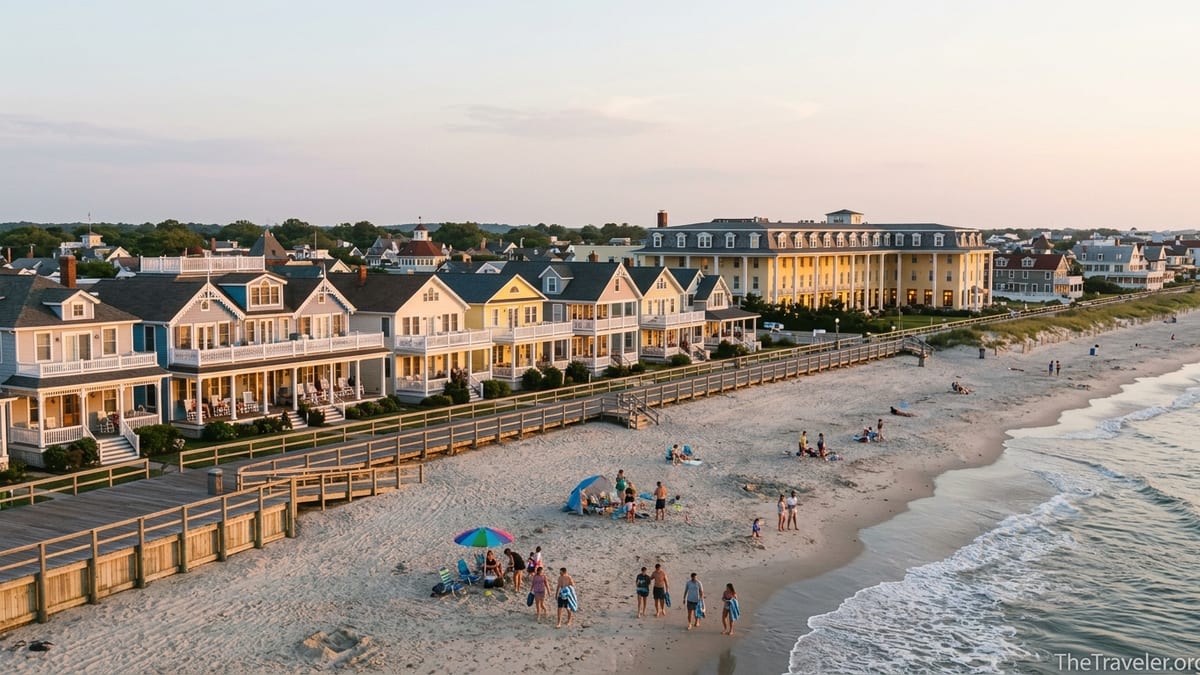
Part of Cape May’s pull lies in its proportions. This is not a high-rise shore town dominated by parking garages and neon. The city is compact, with a year-round population in the low thousands, and most of what travelers want lies within an easy walk or short bike ride. Visitors can stay at a waterfront hotel on Beach Avenue, such as the historic Congress Hall across from the sand, then stroll a few blocks inland to the low-slung streets of the historic district without ever crossing a highway.
That scale creates a feeling of calm. There is a small boardwalk along Beach Avenue instead of a sprawling amusement strip, so even summer evenings tend to feel like a promenade rather than a carnival. Families push strollers past pastel houses, couples carry folding chairs to catch the last light at The Cove, and regulars recognize the same ice cream stand they visited the year before. Many travelers describe Cape May as “relaxing but not boring,” the kind of destination where the rhythm of the day becomes its own attraction: beach, walk, dinner, repeat.
It also helps that Cape May, unlike many coastal destinations, is a functioning community as well as a resort. Longtime visitors often come back in shoulder seasons and discover their favorite barista, server, or shop owner still there. That continuity creates relationships. When guests return and the front desk clerk at a small inn remembers the room they liked last time or asks about their kids, Cape May stops being a generic beach and starts feeling like “our” place.
Victorian Storybook Streets That Never Get Old
Cape May’s architecture is the image most travelers carry home, and it is the reason many come back in different seasons. The entire city is listed as a National Historic Landmark, with roughly 600 preserved buildings in and around the Cape May Historic District. Many are exuberant late Victorian cottages trimmed with gingerbread detailing, painted in color schemes that range from dignified deep greens to playful pink-and-cream combinations. Walking down Columbia Avenue or Jackson Street, visitors pass porches dressed with wicker rockers and overflowing flower boxes, each house slightly different yet part of a coherent streetscape.
Because these houses are not just museum pieces but active inns and rentals, repeat travelers get to “live inside the postcard.” A couple might book a turret room at a small Victorian bed-and-breakfast for a December holiday tour, then return a few years later with children and reserve a whole house rental just off the historic district. The exterior gingerbread remains the same, but the trip’s meaning changes with each life stage. That interplay between timelessness and personal change is a powerful reason people keep coming back.
The city leans into this heritage with experiences that reward repeat visits. Organizations based in town run rotating trolley tours that highlight different stories: one ride might focus on architectural details, another on local ghost lore, another on African American history and the restoration of the former Franklin Street School into a cultural center. Travelers who thought they “did” Cape May years ago often discover a completely different vantage point when they return for a new tour or step inside a historic house they had only admired from the sidewalk.
Washington Street Mall: The Familiar Heartbeat
Ask frequent Cape May visitors what anchors their trips, and Washington Street Mall is almost always on the list. Dedicated in 1971, this three-block pedestrian mall transformed what used to be a traffic-clogged street into a brick-lined plaza that feels like a small-town living room. Today more than 70 shops and restaurants line the mall and its surrounding lanes, from long-running fudge shops to contemporary clothing boutiques and small bookstores. In summer, flower planters spill over the edges of benches where people linger with ice cream after dinner.
Because cars are kept out and buildings remain low, the mall feels safe and inviting for multi-generational groups. Grandparents can settle on a bench near the fountain, teens drift toward surf and souvenir shops, and parents duck into a wine bar or jewelry store, all within calling distance of one another. Many families return to the same stops year after year: grabbing breakfast sandwiches from a corner café, letting kids pick a toy at the same store each August, then meeting up for seafood at a casual restaurant tucked just off the mall. These rituals become part of the vacation’s emotional architecture.
Washington Street Mall also gives repeat visitors a sense of evolution without erasing nostalgia. A new coffee bar might appear where a card shop once stood, or a seasonal pop-up might join the lineup in late spring. Yet stalwarts such as old-fashioned candy counters, family-owned clothing boutiques, and casual pizza joints remain. Travelers who first discovered the mall in the 1990s can still recognize its bones today, while returning each year to find new menus and window displays. That combination of consistency and slow change is a major reason people speak of “our mall” in the same breath as “our beach rental.”
Sun, Sea, and Nature That Reward Every Season
The beaches initially lure many first-time travelers to Cape May, but it is the way the coast and surrounding nature change with the seasons that keeps them returning. In high summer, the main beaches along Beach Avenue are watched by lifeguards and supported by rental stands that offer chairs and umbrellas for a daily fee. Families appreciate that they can pay the modest seasonal or weekly beach tag rate, settle in for full days by the water, then rinse off at showers along the promenade before heading back to their hotel.
Beyond the primary stretch of sand, however, Cape May’s shoreline has distinct personalities that invite exploration over multiple trips. The Cove, at the town’s southwestern end, offers a dramatic sweep of beach with views toward the lighthouse. At the opposite side of the island, Poverty Beach tends to be quieter and attracts regulars looking for a more spacious feel. A short drive away, Sunset Beach on the Delaware Bay side becomes a nightly gathering point in summer as visitors collect “Cape May diamonds” in the sand and watch the sun drop behind the wreck of the concrete ship visible offshore.
Nature experiences extend beyond the water’s edge, and many of them are best appreciated on repeat visits. Whale and dolphin watching cruises run in season from the harbor, with several local operators offering three-hour trips. Travelers might see pods of bottlenose dolphins skimming alongside the boat one year and migrating humpback whales on a later visit. Birders return in spring and fall for the region’s famous migrations at spots like Cape May Point State Park, while casual walkers can enjoy newly developed nature trails closer to town that weave through wetlands and quiet wooded pockets.
Because the town operates year-round, experienced visitors also learn that Cape May in January is an entirely different destination from Cape May in July. Winter weekends bring brisk walks on nearly empty beaches, pop-up hot chocolate bars at local cafés, and holiday lights tours past inns trimmed in wreaths and garlands. In fall, the air cools, crowds thin, and wineries in the surrounding countryside host harvest events. As travelers discover these different moods, many shift from thinking of Cape May as a summer-only spot to treating it as a four-season escape.
Food, Wine, and Evenings Meant for Lingering
Another reason travelers stay loyal to Cape May is that the town rewards lingering. Its food scene is quietly ambitious for a city of its size, with long-established fine-dining rooms tucked into Victorian houses alongside casual crab houses and modern farm-to-table bistros. On peak summer evenings, visitors might reserve a white-tablecloth dinner in a historic inn dining room, then the next night enjoy fried seafood baskets on a covered porch where kids can wander without fuss.
Wine and beer are part of the area’s evolving appeal. Just a short drive from downtown, local wineries set among vineyards offer tastings, lawn seating, and live music nights where visitors spread blankets and watch the sunset over the vines. Breweries in and around Cape May have built loyal followings with taprooms that welcome both vacationing families and groups of friends. For many repeat visitors, an afternoon flight at a favorite brewery or an evening under the string lights at a winery has become just as essential to the trip as time on the sand.
Evenings in town tend to be relaxed but never dull. On some nights, visitors catch a professional-level play at an intimate local theater company housed in a restored church, or a concert on the lawn of a historic hotel. On others, they settle into porch rockers at a bed-and-breakfast with a glass of local wine and simply watch the horse-drawn carriages roll by. These small rituals, often costing far less than big-city entertainment, create memories that lodge more deeply than any one blockbuster attraction.
Traditions, Rituals, and the Comfort of Returning
What truly distinguishes Cape May is the way it encourages visitors to build personal traditions. Families who first visited when children were small often return as empty nesters, walking the same stretch of Washington Street Mall or revisiting the same seafood restaurant where kids once fidgeted in booster seats. Couples who got engaged on the beach near The Cove come back to celebrate anniversaries, order the same champagne at a hotel bar, and compare sunset photos taken a decade apart.
Part of this continuity is practical. The town’s lodging mix includes everything from well-known beachfront hotels and historic inns to condo-style suites and entire-home rentals. That flexibility lets travelers adapt the same destination to different life stages and budgets without feeling they have to “graduate” to somewhere else. A young couple might begin with a modest room in an older motel one street off the beach, then upgrade to a Victorian suite with a fireplace for a winter getaway years later, all while staying in the same few blocks they know well.
There is also a psychological comfort in returning somewhere that is both familiar and gently evolving. Travelers learn which parking lots are easiest, which side streets are shaded for morning walks, which coffee shop opens earliest, and which lifeguard stand is best for watching kids in the surf. Instead of spending the first day of vacation figuring out logistics, repeat visitors can drop straight into relaxation. That sense of competence and belonging is surprisingly addictive. Cape May becomes not just a place on the map but part of the family story.
The Takeaway
Cape May’s magic is not built on one blockbuster attraction, but on the cumulative effect of many small, enduring pleasures. The walkable Victorian streets, the intimate scale of Washington Street Mall, the variety of beaches and nature experiences, and the evolving food and wine scene all play their part. But the real reason travelers fall in love with Cape May and keep returning is that the town invites them to slow down, form rituals, and feel known.
On a return visit, it is rarely the lighthouse climb or even the perfect beach day that visitors talk about first. It is the way the light hits a familiar row of gingerbread porches in late afternoon, the shared glance with a shop owner who recognizes them from last year, or the feeling of slipping back into a well-worn summertime rhythm. In a world of ever-changing destinations and restless travel trends, Cape May offers something increasingly rare: the chance to come back, again and again, and find that your favorite place has grown with you without losing itself.
FAQ
Q1. Is Cape May worth visiting if I have already been to other Jersey Shore towns?
Cape May offers a very different experience from more commercial boardwalk resorts. Its preserved Victorian architecture, quieter beaches, and strong dining scene make it feel more like a small European seaside town than a typical Jersey Shore stop.
Q2. When is the best time of year to visit Cape May?
Summer is ideal for full beach days and evening strolls, but many repeat visitors prefer late May, June, September, or early October for warm weather with fewer crowds. Winter weekends are popular for holiday lights, cozy inns, and quieter streets.
Q3. Do I need a car to enjoy Cape May?
A car is helpful for reaching wineries, breweries, and outlying attractions, but many travelers park once and walk for most of their stay. The historic district, Washington Street Mall, and main beaches are all within a compact area that is easy to navigate on foot or by bicycle.
Q4. Is Cape May family friendly?
Yes. The town’s lifeguarded beaches, pedestrian Washington Street Mall, and mix of casual restaurants make it popular with families. Many hotels and rentals provide beach tags in season, and kids enjoy simple pleasures such as bike rides, mini golf nearby, ice cream on the mall, and dolphin cruises.
Q5. What makes people keep returning instead of trying somewhere new?
Visitors often return because Cape May offers both familiarity and small changes each year. Favorite restaurants, shops, and beaches remain, while new cafés, events, or tours add fresh experiences. Over time, families build traditions here that are difficult to replicate elsewhere.
Q6. Is Cape May expensive compared with other beach destinations?
Prices vary by season, but Cape May generally sits in the mid-to-upper range for the region, especially in peak summer. Travelers who return regularly learn to visit in shoulder seasons, choose midweek stays, or book smaller inns or motels one block off the beach to keep costs manageable.
Q7. What are the can’t-miss experiences for a first visit?
Most first-timers combine a day on the main beach, an evening stroll and dinner around Washington Street Mall, a visit to the lighthouse area and Sunset Beach, and at least one boat trip or trolley tour. Those experiences give a good sense of why so many visitors end up coming back.
Q8. Is Cape May enjoyable in the off-season?
Very much so. In fall and winter, the town shifts from beach culture to fireside cocktails, historic house tours, birdwatching, and quieter walks. Many inns offer off-season packages, and restaurants remain open with a more local, relaxed atmosphere.
Q9. How many days should I plan for my first trip?
A long weekend is usually enough to visit the beach, explore Washington Street Mall, see the lighthouse area, and sample a few restaurants. Repeat visitors often extend to four or five nights so they can add winery visits, nature walks, and more leisurely downtime.
Q10. Is Cape May a good choice for couples looking for a romantic getaway?
Yes. Couples are drawn to porch-front Victorian inns, candlelit dinners in historic dining rooms, sunset walks on The Cove or Sunset Beach, and slow mornings over coffee on quiet side streets. Those simple routines are a big part of why so many couples choose Cape May for engagements, anniversaries, and return trips.