


I landed at Newark Liberty International with the same expectation many travelers have: I would pass through as quickly as possible. To me, Newark was an airport, a tangle of highways, and maybe a distant view of Manhattan’s skyline. Then I made the mistake that turned into a revelation. I booked a night in the city instead of rushing into New York. Over the next 24 hours, Newark quietly, and then emphatically, proved that it is far more than an airport city.
Get the latest updates straight to your inbox!
The Moment Newark Stopped Being Just an Airport Code
The shift began at Newark Penn Station, a few minutes on the AirTrain from the airport. Instead of the grim, utilitarian transfer hub I expected, I stepped into vaulted ceilings, busy bakeries, and the kind of commuter choreography you normally associate with bigger-name terminals. From here, you are a short walk or light-rail ride to most of what a first-time visitor can manage in a day: downtown’s cultural core in one direction, the Ironbound’s food and nightlife in the other.
It was a small decision that changed the entire tone of my trip. Rather than drag my luggage straight onto a New York-bound train, I walked outside and followed signs toward the Prudential Center, the glassy arena that anchors a growing entertainment district. Game nights bring waves of New Jersey Devils jerseys and Seton Hall basketball fans, but even on an off night the area buzzes with diners heading to bars and restaurants before a concert or family show.
That first walk revealed something my mental picture of Newark never included: public spaces that invite you to linger. A few blocks past the arena, Mulberry Commons opens up as a modern urban square, with lawns, seating, and a pedestrian bridge that is gradually stitching downtown to the Ironbound and eventually the riverfront. In the late afternoon, office workers sat on benches with coffee, families paused at the playground, and the city felt more like a neighborhood than a transit corridor.
By the time the sky turned pink over the brick warehouses and new apartment towers, Newark had already complicated my assumptions. I had come for a convenient overnight near the terminal. Instead, I found myself planning how to stretch a layover into a full day on the ground.
Discovering a Serious Food City in the Ironbound
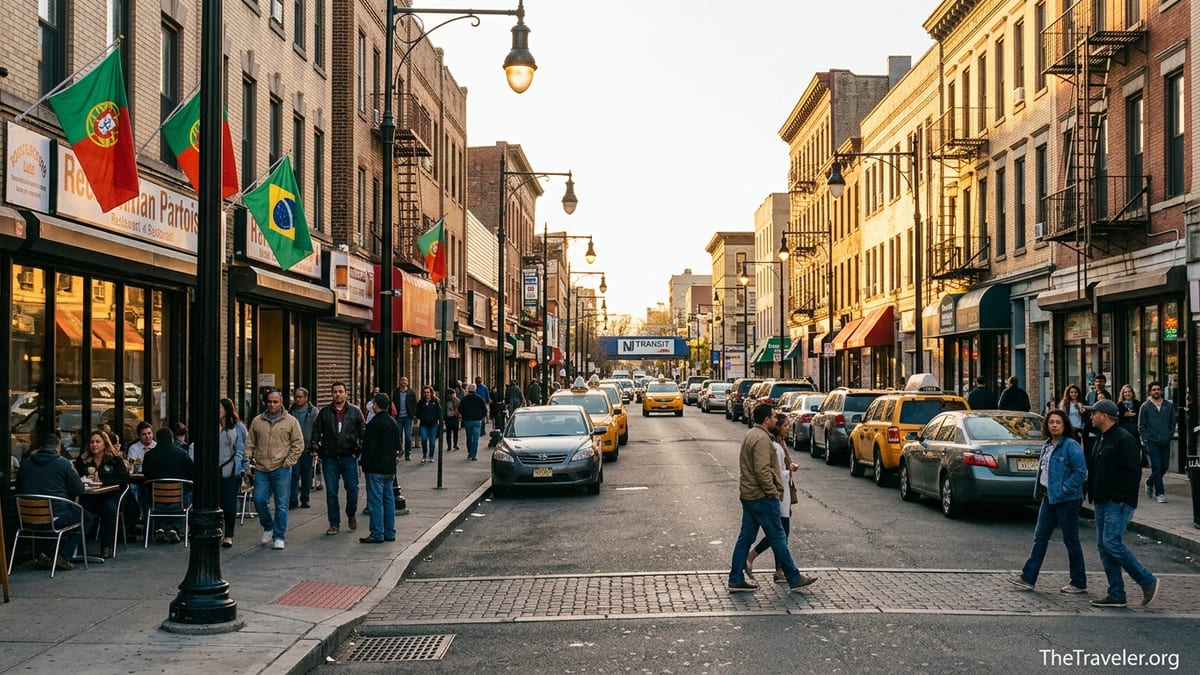
If Newark has a beating heart, it is the Ironbound. Cross the tracks southeast from Penn Station and the atmosphere changes almost immediately. Street signs switch languages as quickly as accents. Portuguese bakeries perfume the air with pastéis de nata. Brazilian steakhouses rotate skewers of grilled meat in front windows. Spanish taverns spill warm light and the sound of clinking glasses onto Ferry Street, the neighborhood’s main commercial artery, which runs for blocks lined with markets, cafés, and restaurants.
My first Ironbound meal was at a classic Iberian spot on Ferry Street where the portions seem designed with longshoremen in mind. A seafood paella for one could easily feed two; the waiter set down a brass pan heavy with saffron rice, clams, mussels, and shrimp for a price that, compared with midtown Manhattan, felt almost anachronistic. Around me were families sharing pitchers of sangria, airline staff still in uniform grabbing a late dinner between flights, and couples splitting plates of grilled octopus and garlicky shrimp.
Walk a block or two and the flavors shift but the generosity stays the same. At a Brazilian churrasqueira, I ordered a plate of picanha, the prized sirloin cap, sliced off a skewer and served with rice, beans, farofa, and salad. It cost little more than an airport food court combo but tasted like a slow Sunday lunch. Late at night, 24-hour Brazilian snack bars offer pressed ham and queijo minas sandwiches, pastel pastries, and strong coffee to cabdrivers, hospitality workers, and jet-lagged travelers who cannot quite adjust to Eastern Time.
What surprised me most was not just the density of good food but how embedded it is in daily life. Small groceries stock Portuguese olive oil, chouriço, and tins of seafood that locals buy as casually as cereal. Wine shops feature shelves of vinho verde and Douro reds. On weekend mornings you see families walking home with fresh bread under one arm and roast chicken from a takeaway counter in the other. For a traveler, it makes the Ironbound feel less like a themed restaurant row and more like a functioning, flavorful urban village that simply lets you join in for a meal.
From Arena Nights to Art Museums: Newark’s Cultural Core
Newark’s reputation as a place to change planes has long overshadowed its role as a cultural hub. Spend an afternoon downtown and that imbalance feels overdue for correction. On Lafayette Street, the Prudential Center pulls big-ticket events you would expect to find across the river: NHL games, major concerts, international tours, and family productions. On any given evening, you might step off a train with a crowd headed to see a K-pop group, a legendary R&B double bill, or a professional wrestling spectacular.
What makes the arena appealing for travelers is how close it sits to the rest of the city’s attractions. A ten-minute walk north brings you to Military Park, a historic green space that has been refreshed with gardens, seating, and seasonal events. In summer, food trucks line the edges and outdoor yoga classes share the lawn with office workers on lunch break. The park’s monuments and old trees are a reminder that Newark is one of the oldest European-founded cities in the United States, with layers of history beneath its current redevelopment.
Continue a few more blocks and you reach the Newark Museum of Art, a surprisingly ambitious institution for a city that many outsiders struggle to picture beyond its airport. Inside, galleries range from American paintings and decorative arts to one of the country’s more notable collections of Tibetan art. An attached historic house offers a glimpse of 19th-century Newark, while contemporary exhibitions spotlight local and global voices. On a recent visit, I shared galleries with school groups, graduate students sketching, and families taking advantage of free-admission hours.
In the evening, the cultural conversation shifts to stages. The New Jersey Performing Arts Center, on the river side of downtown, hosts everything from orchestral concerts and jazz festivals to comedy tours and community events. For a traveler willing to linger an extra night instead of rushing back to the airport, coordinating your stay with a performance transforms Newark from a stopover into a destination with a ticketed anchor, dinner before, and drinks after.
Green Spaces and River Views a Short Ride from the Terminal
The map around Newark Liberty suggests nothing but pavement and freight. On the ground, the reality is softer. Along the Passaic River, Newark Riverfront Park has been taking shape in phases, turning former industrial edges into promenades, lawns, and sports fields. It is not yet a continuous, polished waterfront like in some larger cities, but that is part of its charm. You walk past murals under highway overpasses, then emerge onto bright orange boardwalk sections where locals jog, push strollers, or simply sit and watch the water.
For travelers, the riverfront offers something rare in an airport city: a place to pass the time that feels intentional rather than improvised. With a longer layover and a small daypack instead of full luggage, it is entirely feasible to ride the AirTrain to Newark Penn Station, walk or take a short rideshare to the park, and spend an hour strolling the river paths before heading back for your next flight. On warm evenings, pickup soccer games and community events animate the fields, and the skyline of downtown rises just behind the trees.
Closer to the arena, Mulberry Commons acts as a gateway between the entertainment district and future extensions that will eventually connect to the riverfront more seamlessly. Even in its current form, it gives the city something many travelers do not expect when they hear “Newark”: a modern plaza with lawns, seating, and a playground that feels designed for people rather than cars. It is the kind of space where a solo traveler can read a book in the sun or a family can let kids burn off energy between a matinee show and dinner.
Layered with older green spaces like Military Park, these new parks are gradually eroding Newark’s old image as concrete from curb to horizon. Instead, they invite you to see the city at walking pace, with enough breathing room between venues and restaurants that those short strolls become part of the experience, not just time spent in transit.
Street-Level Life: Markets, Bakeries, and Everyday Newark
What ultimately changed my view of Newark was not a single sight or venue but the accumulation of small, ordinary encounters. In the Ironbound, I stopped into a corner bakery on a weekday morning and watched as a line of regulars ordered coffee in Portuguese, Spanish, and English. Construction workers grabbed paper bags of still-warm rolls. An elderly couple took their time over espresso at a tiny table by the window. My bill for a strong coffee and two custard tarts was less than what an airport café would charge for a bottled water.
On Ferry Street, markets sell codfish by the salt-encrusted slab, strings of chouriço, and entire shelves of imported olive oil. Nearby, Brazilian shops display sacks of farofa, guaraná sodas, and jars of doce de leite. Even without a kitchen, browsing these stores gives a sense of how Newark’s immigrant communities have shaped the city’s palate. For travelers on a budget, a bag of fresh rolls, a wedge of cheese, and some cured meat can become an impromptu picnic in a nearby park.
Downtown, the rhythm changes. Around Broad Street and Market Street, storefronts mix longtime local businesses with national chains. Weekdays see a tide of office workers and students from nearby universities. Food trucks park near major corners, serving everything from halal plates to tacos at prices closer to campus dining than corporate expense accounts. It is easy to walk a few blocks, grab a six or seven dollar lunch from a truck, and eat it on the steps of a church or on a bench in Military Park while you watch the city go about its day.
Evenings bring another layer of street life. On event nights, fans in team jerseys or concert T-shirts pour out of Newark Penn Station and fan across downtown toward the Prudential Center. Police and security are visible, street vendors fire up grills, and local bars switch from quiet happy hours to full-throttle pre-game. If you are staying nearby, it is an easy, mostly indoor walk back to the station through the Gateway Center complex after the show, a convenience visitors often discover only after a first trip.
Rethinking the Newark Layover: Practical Tips for Travelers
The biggest mental shift for me was recognizing Newark not as a necessary inconvenience on the way to somewhere else but as an add-on destination that can make a trip richer. If you have a half day or longer between flights, it is entirely realistic to escape the terminal. The AirTrain connects the airport to Newark Liberty International Airport Station, where frequent NJ Transit trains continue to Newark Penn Station in roughly ten minutes. From there, you can walk to downtown hotels, the arena district, or cross into the Ironbound without needing a car.
Safety is a common concern, and like any city, Newark requires basic urban awareness. The areas around Newark Penn Station, the Prudential Center, and the main stretches of Ferry Street are busy and well-trafficked, especially during the day and on event nights. Stick to main routes, avoid isolated blocks late at night, and keep valuables out of sight, just as you would in parts of New York or Philadelphia. For late returns after a concert, many visitors opt for rideshare back to their hotel or directly to the airport, which is typically a ten to fifteen minute drive without heavy traffic.
Costs can also be less intimidating than in neighboring cities. Hotel rates in downtown Newark and the Ironbound are often lower than comparable properties in Manhattan or even Jersey City, especially outside peak event dates. A sit-down dinner at a classic Portuguese or Brazilian restaurant in the Ironbound might run twenty to forty dollars per person depending on drinks and shared plates, while lunch from a local spot can easily come in under fifteen dollars. Add a museum visit or a matinee performance, and you have the makings of a full city break stitched onto an existing itinerary.
The main adjustment is mental. Instead of asking, “How quickly can I get through Newark?” try asking, “What is the most I can get out of these few hours?” Once you experience the city’s food, parks, and culture even briefly, it becomes harder to explain why so many travelers still choose to wait out their layovers at the gate instead.
The Takeaway
Newark surprised me not because it tries to imitate New York but because it quietly ignores the comparison. The city does not pretend to be a glossy postcard. It is more interesting than that. It is a place where Portuguese families have built restaurants that draw food lovers from across the region, where a major arena and performing arts center sit walking distance from century-old parks, and where an evolving riverfront is turning old industrial edges into public space.
If you only ever know Newark as an airport code, you will miss all of this. You will miss the smell of roasted garlic wafting down Ferry Street on a winter evening, the buzz of a sold-out game spilling onto downtown sidewalks, the calm of an hour spent by the Passaic watching the sun reflect off glass towers and brick warehouses alike. You will miss a city that has done the hard, unglamorous work of reinvention and is still in the middle of the story.
On my last visit, boarding the AirTrain back to the terminal felt less like escape and more like a brief intermission. Newark had shifted in my mind from “that place near the airport” to “a city I need to come back to with more time.” For travelers willing to trade a few hours of gate-side waiting for real streets, real meals, and real conversations, Newark is ready to surprise you too.
FAQ
Q1. Is Newark safe for visitors who want to leave the airport?
Newark’s main visitor areas, including downtown, the Prudential Center district, and the central stretches of the Ironbound, are generally busy and feel comfortable during the day and on event nights. As in any city, stay on well-lit main streets, be aware of your surroundings, and use rideshares or reputable taxis late at night if you are unfamiliar with the area.
Q2. How much time do I need to explore Newark during a layover?
With a layover of six hours or more, you can realistically ride the AirTrain and NJ Transit into Newark Penn Station, have a sit-down meal in the Ironbound, and take a short walk through downtown or a nearby park before returning to the airport. For museum visits or evening events, aim for at least eight to ten hours, allowing time for security and potential delays.
Q3. What is the easiest way to get from Newark Airport to downtown Newark or the Ironbound?
The most straightforward option is to take the AirTrain from your terminal to Newark Liberty International Airport Station, then transfer to an NJ Transit train bound for Newark Penn Station. The ride is short, trains run frequently, and from Penn Station you can walk to downtown hotels, the Prudential Center, and the Ironbound without needing a car.
Q4. Are there good food options near Newark Penn Station?
Yes. Newark Penn Station sits at the edge of the Ironbound, one of the region’s best districts for Portuguese, Brazilian, and Spanish food. Within a 10 to 15 minute walk you will find countless bakeries, casual barbecue spots, and classic sit-down restaurants along Ferry Street and surrounding blocks, offering everything from grilled picanha to seafood stews and pastries.
Q5. What cultural attractions are worth visiting in Newark?
Key cultural stops include the Newark Museum of Art, which houses diverse collections and rotating exhibitions, Military Park with its historic monuments and seasonal programming, and major venues like the Prudential Center and the New Jersey Performing Arts Center, which host professional sports, concerts, and performing arts events.
Q6. Can Newark be a base for visiting New York City?
For some travelers, yes. Staying in downtown Newark or the Ironbound can be more affordable than Manhattan, and NJ Transit and PATH trains connect Newark Penn Station to New York Penn Station and lower Manhattan in roughly 20 to 30 minutes. It works especially well if you also plan to attend events or explore dining in Newark itself.
Q7. What are typical costs for dining out in Newark?
Prices vary, but many Ironbound restaurants offer generous portions at moderate prices. A casual sit-down meal with a main dish and a drink might range from 20 to 40 dollars per person, while takeout or lunch specials can be significantly less. Bakeries and snack bars are especially budget friendly for coffee, pastries, and sandwiches.
Q8. Are Newark’s parks and riverfront areas easy to reach without a car?
Several green spaces are accessible on foot or via short rides from Newark Penn Station. Military Park and Mulberry Commons are both walkable from downtown hotels and the arena district. Newark Riverfront Park is a bit farther but can be reached with a longer walk, light rail, or a brief rideshare from the station, making it feasible even for car-free visitors.
Q9. What kind of accommodations are available in Newark for an overnight stay?
Newark offers a mix of chain hotels near the airport, business-oriented properties in downtown, and smaller hotels and guesthouses in the Ironbound. Airport hotels are convenient for early flights, while downtown and Ironbound stays put you within walking distance of restaurants, cultural venues, and transit connections.
Q10. When is the best time of year to visit Newark as more than an airport stop?
Spring and fall are particularly pleasant, with comfortable temperatures for walking through downtown, enjoying outdoor dining in the Ironbound, and spending time in parks and along the riverfront. Summer brings festivals, concerts, and busy event calendars, while winter can still be rewarding if you focus on indoor dining, museums, and arena or performing arts events.