


Ask most visitors to New York where they are flying into, and many will shrug and say “Newark” as if it were just a cheaper back door to Manhattan. Others know Newark mainly from a quick train change on the way to somewhere else. Yet this city of more than 300,000 residents is not simply an overflow valve for New York City. Newark is one of the most strategic and underrated pieces of the entire New York metropolitan puzzle, shaping how people move, work, invest, and increasingly, how they travel for pleasure.
Get the latest updates straight to your inbox!
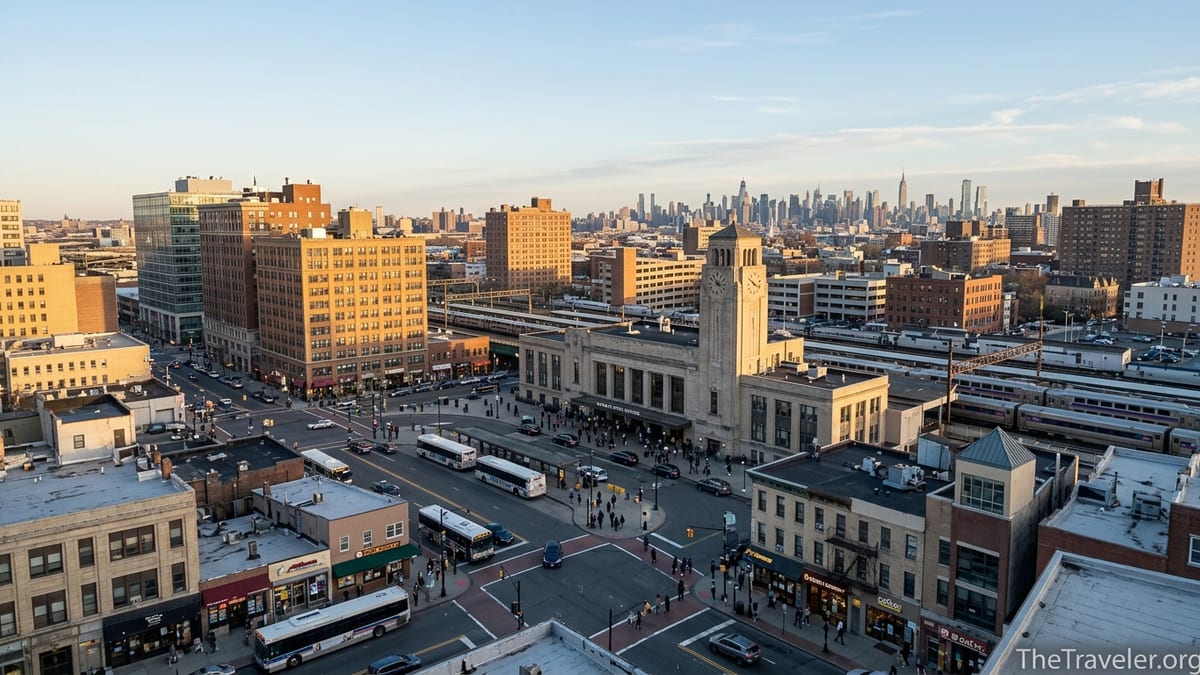
Newark: The Quiet Engine of a Mega-Region
Newark is the largest city in New Jersey and a principal city of the New York metropolitan area, with a population estimated at just over 317,000 in 2024 and a metro of more than 2.2 million people. Beyond the numbers, its location is what makes it indispensable. Newark sits less than ten miles west of Midtown Manhattan, at the junction of the Northeast Corridor rail line, interstate highways, the Passaic River, and New York Harbor. For travelers, that translates into something simple but powerful: an unusual density of ways in and out.
The New York Federal Reserve estimates that the Newark metro produced roughly 200 billion dollars in economic output in 2023, comparable to many standalone states in the US. Logistics, port activity, higher education, health care, and a growing tech sector all feed into that figure. For visitors, this economic reality shows up in concrete ways: you can land at Newark Liberty International Airport in the morning, reach a corporate meeting in Manhattan before lunch, and still be back in Newark’s Ironbound neighborhood for a late Portuguese dinner without ever getting in a car.
Crucially, Newark offers something the core of New York increasingly struggles to provide: relative affordability. Hotel rooms near Newark Penn Station commonly run 30 to 50 percent less than comparable mid-range properties in Midtown. A traveler staying at a business hotel a block from Military Park can often find weekday rates in the 160 to 220 dollar range, while a similar chain hotel near Times Square may be closer to 300 dollars or more. That price gap is one of the reasons budget-conscious visitors and long-stay business travelers are quietly gravitating to Newark as a base.
Because of this mix of location, infrastructure, and cost, Newark functions as a pressure release valve for the wider region. It absorbs traffic that would otherwise choke New York’s already stressed transit systems, houses companies that need access to Manhattan but do not want Manhattan costs, and gives visitors a place to sleep, eat, and explore that still feels plugged into the “New York” experience.
Newark Liberty: More Than a “Secondary” Airport
Newark Liberty International Airport is one of the key reasons the New York region manages to host so many visitors and business travelers. Operated by the Port Authority of New York and New Jersey, it ranks as one of the busiest airports in the United States. In 2023, the Port Authority reported a record 144 million passengers across its three major airports, with Newark Liberty contributing a substantial share and setting new highs in domestic traffic. When you consider that many of these travelers are choosing Newark over John F. Kennedy International or LaGuardia, the airport’s role in balancing demand across the region becomes clear.
For travelers, Newark Liberty often means shorter security lines compared with JFK at peak times, a compact airfield layout, and ever-improving terminals. The new Terminal A, which fully opened in 2023, has been singled out with international design awards for both its architecture and passenger experience. Inside, you will find local New Jersey food names alongside national chains, spacious gate areas, and large floor-to-ceiling windows that look over the runways toward the Manhattan skyline. It feels much more like a flagship facility than a “third choice” airport.
Connectivity is where Newark Liberty really punches above its weight. The AirTrain system links the terminals with Newark Liberty International Airport Station on the Northeast Corridor, where travelers can board both NJ Transit and Amtrak trains. A combined AirTrain and NJ Transit ticket from the airport to New York Penn Station typically runs in the mid teens in US dollars, with frequent service and a travel time of around 30 minutes. For those heading just into Newark itself, local NJ Transit buses from all three terminals cost only a few dollars and reach downtown in roughly 25 minutes, giving budget travelers an unusually cheap airport-to-city connection in a region known for high prices.
The Port Authority is now working on a full replacement of the AirTrain system and additional rail access projects intended to improve connections to Newark and neighboring Elizabeth. For future visitors this will mean smoother transfers, more reliable service when catching early-morning flights, and better access for residents who currently depend on less predictable bus routes. In very practical terms, every improvement here increases the likelihood that travelers will consider Newark not only as a fly-in point, but as a place to actually stay.
Newark Penn Station: The Unsung Heart of Regional Mobility
If Newark Liberty is the region’s airborne gateway, Newark Penn Station is its rail nerve center. This Art Deco landmark, opened in the 1930s, now serves almost every major mode of urban and regional transit in northern New Jersey. Amtrak’s Northeast Corridor trains, NJ Transit commuter lines, PATH rapid transit to Manhattan and Jersey City, Newark Light Rail, intercity and local buses, and even airport-bound trains all pass through a relatively compact footprint. State transportation plans have repeatedly singled out the tracks and junctions around Newark Penn as some of the most critical rail infrastructure in New Jersey.
Estimates from rail advocates and planning documents suggest that Newark Penn handles tens of thousands of passengers per weekday on NJ Transit alone, plus more on PATH, Amtrak, and local transit. For many commuters from the Jersey Shore, the Raritan Valley, and central New Jersey, this station is the transfer point that makes their daily trips possible. The importance is such that virtually every Amtrak and NJ Transit train on the Northeast Corridor between Trenton and New York is scheduled to stop here, despite the station being less than 10 miles from Manhattan.
For visitors, Newark Penn Station is not just a place to dash through. It is what makes using Newark as a base feasible. An NJ Transit ride from Newark Penn to New York Penn Station typically takes about 20 minutes. Off-peak one-way fares are generally under 10 dollars, and trains run roughly every 15 to 20 minutes during most of the day. PATH trains, which depart from a separate underground concourse, reach the World Trade Center in Lower Manhattan in about 25 minutes and cost less than a typical New York City subway fare plus surcharge. That means a traveler staying in a Newark hotel can be in Midtown for a Broadway matinee and in Lower Manhattan for dinner without ever touching a car or rideshare.
The station itself is in the middle of a slow but meaningful evolution. NJ Transit has launched a multi-year program to restore and modernize the facility, focusing on everything from historical interior details to brighter lighting, digital signage, and improved accessibility. There is still plenty of grit here, and travelers should stay aware of their surroundings, particularly during late-night hours. Yet the practical reality is that Newark Penn is one of the few places in the New York area where so many different transit systems intersect under one roof, and that makes it invaluable for both residents and visitors who want to move efficiently.
Economic Muscle: From Port Cranes to Tech Startups
Look east from downtown Newark and you will see the seaport cranes of Port Newark and Elizabeth, part of one of the largest container ports on the East Coast. Thousands of trucks a day move goods from these terminals onto the New Jersey Turnpike and into warehouses across the Meadowlands. For the traveler, much of this economic power is invisible, but it shows up in the form of steady hotel demand, a busy airport, and a growing roster of restaurants and services that cater to business travelers who never set foot in Manhattan.
Newark’s economy was once defined by manufacturing, but over the last two decades it has steadily shifted toward services, logistics, and technology. Major employers include Prudential Financial, Public Service Enterprise Group (PSEG), Horizon Blue Cross Blue Shield of New Jersey, and NJ Transit, all of which keep downtown office towers full during the workweek. These companies anchor a daytime population that is considerably larger than the city’s resident count, sustaining everything from coffee shops near Military Park to after-work bars in the Ironbound.
Tech has become one of the city’s most intriguing growth stories. Audible, the audiobook and spoken-word company owned by Amazon, moved its headquarters to Newark in 2007. The company has since converted a historic cathedral into a modern technology hub known as the Innovation Cathedral and has helped establish Newark Venture Partners, an early-stage venture capital fund and startup accelerator. Together with local universities, this has attracted a stream of small but ambitious startups working in logistics software, health technology, fintech, and audio products, many of which base their offices within walking distance of Newark Penn Station.
Recently, Audible also opened a 15,000-square-foot retail and community space called The Pillars in the city’s Arts and Education District, providing subsidized storefronts and mentorship for local entrepreneurs. For visitors, these initiatives translate into very concrete experiences: new coffee roasters appearing on side streets near Washington Park, pop-up markets organized by early-stage brands, and a general sense that the city’s downtown is no longer just a nine-to-five corporate zone. It is increasingly a place where you might spend a Saturday afternoon shopping, eating, and exploring even if your main reason for visiting the region is a meeting in Midtown.
Culture, Food, and Neighborhoods Worth a Detour
Newark’s cultural scene does not receive nearly the same attention as Brooklyn or Queens, but for travelers willing to look beyond the typical New York itinerary, it offers strong returns. The New Jersey Performing Arts Center (NJPAC), a short walk from Newark Penn Station, is one of the largest performing arts venues in the United States. Its calendar ranges from major touring acts and symphony concerts to comedy shows and community festivals. Travelers who plan ahead can sometimes find last-minute tickets here for prices significantly lower than Broadway, while still enjoying professional-level productions in a modern riverside complex.
Across the street, you will find a cluster of institutions that make up the Arts and Education District. Rutgers University–Newark, the New Jersey Institute of Technology, and several smaller colleges bring tens of thousands of students into the city. The Newark Museum of Art, housed in a series of historic and modern buildings just north of Military Park, offers well-regarded collections of American art, decorative arts, and outsider works. A traveler staying nearby can spend a morning at the museum, grab a sandwich at a student-frequented café on Halsey Street, and still be at New York Penn Station in time for an evening train to Boston or Washington.
No discussion of Newark is complete without mention of the Ironbound, the district just east of Newark Penn Station known for its Portuguese, Brazilian, and Spanish heritage. Here the city’s global roots come alive in a dense grid of low-rise streets filled with bakeries, churrascarias, and tapas bars. On a typical Saturday night, lines form outside long-established spots like Iberian-style steakhouses, while families queue at bakeries for trays of custard tarts and crusty bread. For many New Yorkers, the Ironbound has become a deliberate dining destination, reached by a 20-minute train ride rather than a subway journey to Queens.
Sports and entertainment are another part of the story. The Prudential Center, home to the NHL’s New Jersey Devils and a busy year-round concert schedule, sits only a five-minute walk from Newark Penn Station. Fans from across the region can attend a weeknight game or show and be back on a late NJ Transit train to Manhattan, Montclair, or the Jersey Shore the same evening. During major events, the streets around the arena fill with jerseys and band t-shirts, providing a very different kind of nightlife energy than you will find in Midtown but one that underscores Newark’s role as a regional gathering point.
Gateway for Education and Everyday Life
Newark’s importance is not only in how people pass through it, but in how they live, study, and work there every day. The city hosts a significant cluster of higher education institutions, including Rutgers University–Newark, the New Jersey Institute of Technology, Essex County College, and Seton Hall University’s law school. Together they create a sizable student population that supports bookstores, budget dining options, and cultural events that can be a pleasant surprise for visitors expecting a strictly corporate downtown.
For families considering the region, Newark’s role as a transit and education hub can be decisive. A parent working in Midtown, a partner working at a hospital in Newark or the nearby suburbs, and a child attending university classes downtown can all realistically commute by transit rather than car. This is rare in many American metro areas and one reason professionals priced out of Manhattan and Brooklyn are increasingly looking at Newark’s brownstones and pre-war apartments, especially in neighborhoods like Forest Hill and parts of the Central Ward.
The city’s parks add another layer. Branch Brook Park, just north of downtown, is home to one of the largest collections of cherry blossom trees in the United States, drawing sizable crowds each April for its annual festival. On a spring weekend, it is common to see families from across North Jersey and New York spreading picnic blankets among the blossoms, photographers setting up portraits, and cyclists using the park’s long pathways. For an out-of-town traveler, a morning walk here can feel like a quieter, more local alternative to the crowds of Central Park.
Daily life in Newark is not without challenges. Like many cities, it contends with concerns about safety, uneven development, and aging infrastructure. Travelers should use the same common-sense precautions they would in any large urban center: staying in well-reviewed accommodations, being mindful at night around transit hubs, and keeping valuables secure. However, the persistence of local residents, small business owners, and institutions has steadily reshaped the city’s trajectory in recent years, and that slow transformation is much of what makes Newark so interesting to experience now.
Why Travelers Should Care: Practical Advantages of Choosing Newark
From a traveler’s point of view, Newark offers a combination of cost savings, convenience, and authenticity that is increasingly hard to find near New York City. Start with accommodation: a business-class chain hotel within a short walk of Newark Penn Station may cost 150 to 220 dollars on many nights when Manhattan properties with similar amenities are pushing 280 dollars or more. Over a four-night stay, that difference can easily cover theater tickets, a special meal in the Ironbound, or a side trip to Philadelphia, which is only about 75 minutes away by Amtrak from Newark Penn.
Transit costs tell a similar story. A round-trip NJ Transit ticket between Newark Penn and New York Penn typically stays under 20 dollars, and PATH fares are even lower. Travelers who plan their day to cluster activities by location can make one or two round trips into Manhattan while using Newark as a quiet base for evenings. This setup works especially well for remote workers and digital nomads who only need to visit clients in the city occasionally but want more space and lower rent, or for families who prefer a hotel with a pool and parking, which are easier to find at reasonable prices on the Newark side of the Hudson.
There is also a psychological benefit: using Newark as a base can make the New York region feel more manageable. Instead of confronting Manhattan’s density at every moment, travelers can step back each night into a smaller downtown where it is easier to find a table for dinner, where streets clear out after office hours, and where local residents still outnumber tourists in most neighborhoods. Having the option to walk to a corner bodega in the Ironbound for a late-night pastel de nata or to sit in a quiet corner of Military Park with a coffee can provide a welcome contrast to the intensity of Times Square or Fifth Avenue.
For travelers interested in seeing how major cities reinvent themselves, Newark is also a living case study. Walk along Halsey Street or through the area around Harriet Tubman Square and you will see a mix of new apartment towers, long-established barbershops, street art, and students heading to class. Pop into a coworking space or a café filled with laptops and you are likely to overhear conversations about logistics tech, community organizing, or urban policy. In this sense, Newark offers not only savings and convenience, but also a grounded, contemporary urban experience that complements the iconic sights across the river.
The Takeaway
Newark is far more than the place where your plane happens to land or where you change from a commuter train to the subway. It is a central node in the New York metropolitan region’s transportation web, a significant economic engine in its own right, and a city with cultural, culinary, and educational assets that reward anyone willing to look beyond the usual postcard views of Manhattan.
For travelers, recognizing Newark’s role changes how you might plan a visit. Instead of treating it as a necessary inconvenience on the way to somewhere else, you can use it as a strategic base that saves money, cuts travel time, and opens up experiences that most visitors to New York never see. A day that starts with coffee near Rutgers, continues with meetings in Midtown, and ends with grilled seafood in the Ironbound is entirely realistic here, stitched together by trains that take minutes rather than hours.
In a region that depends on constant movement of people and goods, cities like Newark tend to be overlooked precisely because they work. Trains arrive, planes depart, freight moves, students head to class, and office towers fill each morning. But for those who pause to step out of the station or leave a few hours between flights, Newark reveals itself as a place worth exploring on its own terms, not simply as New York’s overlooked neighbor.
FAQ
Q1. Is Newark a safe place to stay when visiting New York City?
Newark’s safety profile varies by neighborhood and time of day, much like any large city. Downtown areas near Newark Penn Station, Military Park, and the Prudential Center are generally busy with commuters and students, especially on weekdays. Travelers should use normal urban precautions: stay in well-reviewed accommodations, keep valuables secure, avoid poorly lit side streets late at night, and be aware of your surroundings at transit hubs.
Q2. How long does it take to get from Newark to Manhattan by train?
On NJ Transit, the ride from Newark Penn Station to New York Penn Station typically takes about 20 minutes. PATH trains from Newark to the World Trade Center in Lower Manhattan usually take around 25 minutes, though you should allow extra time for walking within stations and possible waits during peak periods.
Q3. Is it cheaper to stay in Newark than in Manhattan?
In most cases, yes. Mid-range hotels in downtown Newark often cost 30 to 50 percent less than comparable properties in Midtown Manhattan. Even after adding daily train fares into Manhattan, many travelers find that a Newark base results in meaningful savings over a multi-night stay.
Q4. Can I easily reach Newark Airport from downtown Newark without a car?
Yes. NJ Transit buses connect downtown Newark with all three terminals at Newark Liberty International Airport for a low single-digit fare. Alternatively, you can take an NJ Transit or Amtrak train from Newark Penn Station to Newark Liberty International Airport Station and then connect to the AirTrain, which serves all terminals.
Q5. What neighborhoods in Newark are most interesting for visitors?
The Ironbound is popular for its dense concentration of Portuguese, Brazilian, and Spanish restaurants and bakeries. Downtown around Military Park, Halsey Street, and the Arts and Education District offers museums, cafés, and university life. North of downtown, Branch Brook Park is notable for its cherry blossoms in spring.
Q6. Is Newark worth visiting if I am only in New York for a few days?
If your time is very limited and you want to focus strictly on Manhattan’s major sights, you may only pass through Newark. However, even a half-day visit can be rewarding: for example, exploring the Ironbound for lunch or dinner, visiting the Newark Museum of Art, or catching a concert at NJPAC before heading back to Manhattan.
Q7. How reliable are trains between Newark and New York?
NJ Transit and PATH both run frequent service between Newark and New York, especially during weekday peak hours. Delays can occur, particularly on the busy Northeast Corridor, so it is wise to build in extra time when catching flights or ticketed events. Overall, rail remains one of the most efficient and predictable ways to move between the two cities.
Q8. Are there good food options near Newark Penn Station?
Yes. Within a short walk of Newark Penn Station you will find everything from quick-service chains to local cafés and bars. Cross under the tracks into the Ironbound and you will reach Ferry Street, lined with Portuguese and Brazilian restaurants offering grilled seafood, rodizio, and bakeries with pastries and strong coffee.
Q9. Can Newark be a base for exploring other cities like Philadelphia or Boston?
Newark Penn Station sits on Amtrak’s Northeast Corridor, with direct trains to Philadelphia, Washington, and Boston. Travel times to Philadelphia are typically around 75 minutes, making day trips feasible. For Boston and Washington, Newark can serve as a convenient starting point without needing to backtrack into Manhattan.
Q10. What is the best way to experience Newark like a local?
Spend time walking rather than only passing through stations. Grab coffee on Halsey Street near the universities, stroll through Military Park or Branch Brook Park, explore the Ironbound’s side streets, and attend a game at the Prudential Center or a performance at NJPAC. These everyday spaces offer a more authentic view of the city than an airport layover alone can provide.