


I used to roll my eyes at app based luggage storage. Why would I pay to leave a suitcase somewhere when I could just keep it with me? Then I landed in a European hub with a six hour layover, a heavy checked bag, and a sudden realization that I was trapped between an airport food court and a city I actually wanted to see. That was the day I opened the Radical Storage app for the first time, and my view of layovers quietly changed for good.
Get the latest updates straight to your inbox!
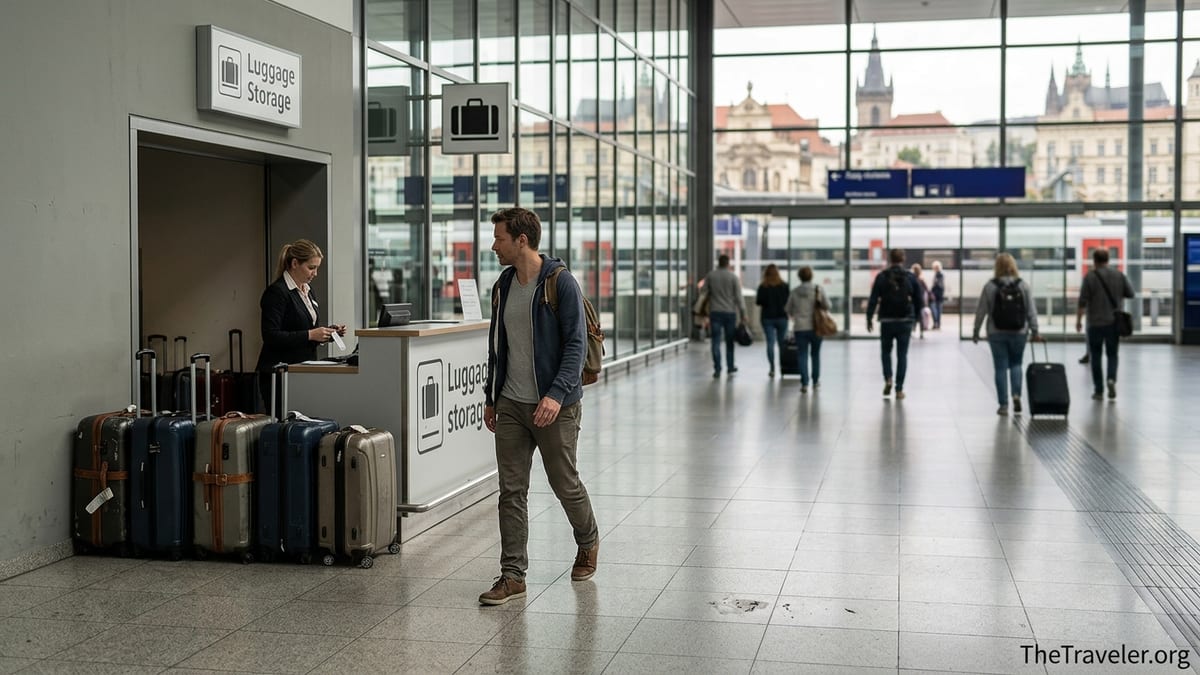
The Layover That Changed My Mind
My turning point came on a gray afternoon at Rome Fiumicino. I had six hours between flights, too much time to sit at the gate but not quite enough to justify booking a day room at an airport hotel. My checked suitcase had been tagged only to Rome, so I had to collect it, trundle it through arrivals, and then face a simple question: now what?
Like many travelers, my default instinct was to keep my bag with me. But the idea of dragging a 23 kilo suitcase onto the Leonardo Express into Termini, then down into the metro just to grab a plate of cacio e pepe near the Colosseum felt ridiculous. I considered the classic fallback of camping out in the terminal, but Fiumicino’s public seating was crowded, noisy, and nowhere I wanted to spend half a day.
Scrolling my phone out of boredom, I stumbled onto Radical Storage, a platform that connects travelers to local businesses that will hold their bags for a few hours or a day. Until that moment I had mentally filed it alongside airport massage chairs and premium Wi-Fi: nice in theory, not something I needed. Yet the promise of walking into central Rome with nothing but a daypack kept tugging at me.
Ten minutes later, I had done something I had never done before on a layover. I booked a storage spot through Radical at a small hotel a block from Roma Termini, locked my suitcase behind a reception desk, and stepped back into the city unencumbered. For the first time in years of flying, a midlength layover felt like bonus travel rather than wasted time.
How Radical Storage Actually Works
Radical Storage is straightforward once you understand the model. Instead of running its own lockers, the company partners with existing businesses hotels, hostels, cafés, shops and lists them in its app and on its website. These partners, which Radical calls “Angels,” accept your bag, tag it, and store it in a back room or dedicated space while you go about your day.
Availability is wider than many travelers expect. The company reports more than 13,000 partner locations in over 1,000 cities and upwards of 70 countries, with dense coverage in places like London, Paris, Rome, New York, Barcelona, and Tokyo. In London, for example, you can find Angels within a short walk of major hubs like King’s Cross, Victoria, Waterloo, and Paddington, as well as around big sightseeing areas such as the British Museum or the South Bank. In New York, partners cluster around Penn Station, Grand Central, and Midtown, where lockers in stations are no longer available.
Pricing is typically a flat daily rate per bag rather than an hourly locker fee. In many European cities Radical’s rate often falls around the equivalent of 5 to 6 euros per bag for up to 24 hours, which can compare favorably with airport operated storage counters that might charge by the hour or according to size. Unlike many traditional facilities that set different tiers for backpacks and oversized suitcases, Radical generally does not impose strict size or weight limits, which is particularly helpful if you are hauling an awkward duffel or ski bag.
For a traveler stuck in that awkward six hour window, the model fits neatly. You search your destination, see a map of storage points, check opening hours and user ratings, prepay for the number of bags you have, then show a digital receipt when you drop them off. There is no need for coins, keys, or deciphering locker instructions in another language. The whole transaction is designed to take less than five minutes.
Why a Six Hour Layover Is the Perfect Test Case
Not every layover justifies paying to store your bag, but the midrange window of around six hours is where services like Radical Storage show their real value. Shorter connections often disappear in airport security lines and boarding queues. Long overnight layovers sometimes make a transit hotel or lounge pass more sensible. Six hours sits in that in between space: enough time to leave, but not enough to waste.
Consider an afternoon connection at Madrid Barajas with around six hours between flights. With checked luggage in hand, you have three basic options. You can remain in the terminal and spend half a day moving between coffee shops and plastic chairs. You can attempt to tow your suitcase onto the metro into central Madrid, then keep one eye on your watch and the other on your belongings. Or you can use a storage service either the official airport counter in the arrivals hall or a Radical Storage partner downtown and explore places like Plaza Mayor or the Prado Museum without dragging wheels across cobbles.
The math often works out in favor of dropping your bags. A staffed storage counter at a major airport such as Miami or Narita might charge a flat fee per day based on bag size, while off airport services like Nannybag or Bounce at some hubs start around a few dollars per bag per day. Radical Storage’s city center locations generally sit in the same ballpark. By comparison, the cost of losing an afternoon in an airport, or accidentally damaging a suitcase on stairs and metro escalators, is harder to quantify but no less real.
Six hours is also just long enough to recover from travel fatigue. On my Rome layover, storing my bag meant I could walk the short stretch from Termini to the Monti neighborhood, linger over espresso in a quiet café, circle the Colosseum at my own pace, and still return to the airport unhurried. Without storage, I would almost certainly have opted for a limp panini at the gate and a sore shoulder from keeping my suitcase within arm’s reach.
Safety, Security, and What Happens to Your Bag
The question most travelers ask before using any third party storage service is simple: is my luggage safe? Radical Storage’s answer rests on two pillars. First, the platform says it screens its partner businesses, favoring established hotels, hostels, and shops with fixed addresses rather than informal drop points. Second, bookings include insurance coverage per bag, advertised to protect against theft or damage up to a certain limit, though it is always worth checking the current terms and regional differences before you book.
In practice, experiences vary, as they do with most global platforms. Independent review aggregators in 2026 show a large volume of satisfied customers who praise quick check in, central locations near train stations or major sights, and the relief of not hauling gear for hours. Some reviewers mention using Radical multiple times in different cities, dropping bags at a café near Paris Gare du Nord one month and at a small luggage shop near Milan Centrale the next, with largely consistent routines of tag, store, and go.
There are also cautionary stories, and they are important to weigh. A minority of negative reviews describe arriving to find a listed partner closed for a midday break, or returning to collect bags only to discover that the shop had shut earlier than its posted hours, forcing travelers to adjust flights or return the next morning. These complaints are not unique to Radical; they appear across similar services. But they underline that you are handing your belongings to an individual business with its own staffing quirks and local customs around opening times.
The safest approach is to treat storage like any other travel booking that involves valuables. Choose locations with strong, recent reviews and clear photos, favor hotels or reputable shops over anonymous storefronts, double check hours for both drop off and pick up, and aim to collect your bags well before closing rather than at the last minute. If you are storing items of higher value such as cameras or laptops, consider carrying them in a daypack that stays with you or using the platform’s protection as a backstop rather than your only line of security.
Comparing Radical Storage to Airport Lockers and Counters
To understand when Radical Storage shines, it helps to compare it with more traditional luggage options. Many large airports still operate left luggage counters or locker banks, though availability has tightened over the past two decades for security reasons. In Tokyo, for example, major hubs like Haneda and Narita offer staffed luggage desks that charge a daily fee that varies by bag size, with smaller items priced lower and larger suitcases priced higher. In Miami, airport baggage services charge tiered rates by the inch at counters before security. These facilities usually sit in arrivals halls, close to ground transport but far from the city’s main attractions.
Airport storage makes the most sense when you have a short layover and no interest in straying far from the terminal. If your onward flight leaves late in the evening and you are booked at an airport hotel, dropping bags at a nearby counter allows you to move between check in, food courts, and your room without wrestling with luggage. Families with strollers and multiple suitcases often prefer this option, because it keeps everyone close to their bags and to their departure gate.
Radical Storage and similar platforms, by contrast, excel when your layover plan involves heading into the city itself. Instead of returning all the way to the airport to retrieve your suitcase before your onward leg, you can pick a storage point near a major train station, metro hub, or landmark. For example, travelers on a daytime layover in London might leave bags at a Radical partner near King’s Cross, explore the British Library and nearby streets, then hop on the Heathrow Express or Piccadilly Line in the late afternoon. In Paris, a location near Gare de Lyon or Montparnasse lets you wander the Seine or the Latin Quarter until early evening before collecting your bag and catching the RER back to Charles de Gaulle.
Coverage also matters. In some cities, such as New York, public lockers disappeared from major train stations after heightened security concerns, leaving travelers with few official options. In these contexts, app based storage platforms fill a gap, partnering with luggage shops or hotels around Midtown and lower Manhattan to offer short term storage at flat per bag rates. For a traveler with a six hour layover and a desire to take the AirTrain and subway into the city, leaving a roller bag near Penn Station can turn a cramped terminal wait into a slow walk through Bryant Park or Times Square.
Real World Scenarios Where It Makes a Difference
Once you start looking for them, real world scenarios where luggage storage smooths out a trip appear everywhere. A family flying from Atlanta to Europe with a connection in Boston might have a six hour gap between flights and two children who have no interest in sitting at an airport gate. Leaving roller bags at a Radical Storage partner near Boston’s South Station while they walk the Freedom Trail or visit a children’s museum transforms a tedious afternoon into part of the holiday.
Solo travelers and digital nomads see similar gains. One recent traveler planning a long layover in Seoul debated whether to keep bags at Incheon’s official storage facility or drop them in the city center through a platform like Radical Storage so they could explore neighborhoods like Myeongdong and Hongdae without doubling back. Others passing through Istanbul or Madrid on multi day stopovers have used app based storage to leave nonessential luggage in the city while they take side trips, returning days later to pick everything up on their way to the airport.
In New York City, where post security lockers are absent at major stations, some visitors arriving early on red eye flights book Radical Storage near Penn Station or Grand Central while they wait for hotel check in. Instead of lingering in a hotel lobby for hours, they can stroll Central Park or grab brunch in a neighborhood café with only a small day bag. Similar stories play out in Rome, where travelers arriving by train at Termini store bags and then spend a few hours in the Monti district, and in Paris, where travelers choose between station operated consigne counters and independent storage partners a few streets away.
Of course, there are moments when the calculus flips. If your onward connection involves tight timing, multiple re clearances of security, or travel with mobility constraints, staying close to the airport and your luggage is often the smarter choice. The point is not that Radical Storage is always the answer, but that it creates an option where once there was only a hard tradeoff between roaming with heavy bags and not roaming at all.
Practical Tips for Using Radical Storage on a Layover
For travelers curious about trying Radical Storage on their next midlength layover, a few practical habits go a long way. Start by running a search for both your airport city and your main transit hubs. In many destinations, you will find clusters of partner locations around central train stations and popular districts. Look carefully at each listing’s opening hours, keeping in mind local customs such as midday closures or reduced Sunday schedules.
Ratings and recent reviews are your best guide to reliability. Give preference to locations with a substantial number of recent positive comments and clear photos that show the storefront or hotel lobby. When in doubt, large chain hotels, recognized hostels, or established luggage shops often provide a more predictable experience than tiny businesses that might shut unexpectedly in the afternoon.
Timing is everything on a six hour layover. Allow generous margins for transit in and out of the city, for bag drop off, and for collection. If your next flight boards at 18:00, aim to be back at your storage point by 15:30 or 16:00 at the latest, so that even if trains are delayed you still have time to clear airport security. Do not plan to collect your bags right at closing time; aim for at least an hour before, especially in places where staff might leave early once customers thin out.
Finally, pack with storage in mind. Place essentials such as passports, medication, chargers, and one change of clothes in a small daypack that you will keep with you. Treat your checked suitcase as something you can comfortably hand over for the day. That mindset shift making your big bag optional for a few hours or a full afternoon is the quiet superpower that luggage storage offers to anyone with a layover long enough to breathe.
The Takeaway
Before that six hour stopover in Rome, I had never given Radical Storage more than a passing thought. It felt like one convenience too many in a travel world already crowded with apps. But standing in an arrivals hall with a heavy suitcase and a city I loved just a short train ride away, the appeal of luggage freedom suddenly became concrete.
Services like Radical Storage do not eliminate every frustration of modern air travel, and they are not a universal solution. They depend on reliable partner businesses, on your willingness to trust a third party with your belongings, and on your own discipline in planning enough time for drop off and pick up. Yet when the pieces line up especially during a midlength layover they can transform what used once to be dead time into real travel.
Today, when I see a six hour gap between flights, I no longer resign myself to airport chairs and fast food. I check where I can leave my bag, run the numbers in my head, and ask one simple question: is this connection long enough to actually live a little? More often than not, the answer is yes, and it starts with handing my suitcase to someone else for a few hours.
FAQ
Q1. What exactly is Radical Storage, and how is it different from airport lockers?
Radical Storage is an app based platform that lets you book short term luggage storage with local businesses such as hotels, hostels, cafés, and shops. Instead of using self service lockers inside a station or airport, you leave your bag with a staffed location in the city or near transit hubs, typically at a flat per day rate per bag.
Q2. How much does it usually cost to store a bag with Radical Storage?
Pricing varies by city and currency, but many locations charge an amount roughly equivalent to a modest flat daily fee per bag, often competitive with or slightly below what staffed airport storage counters might charge per day, especially for medium and large suitcases.
Q3. Is my luggage insured when I use Radical Storage?
Bookings include a level of insurance protection per bag against theft or damage, up to a stated limit that can vary by region and policy. Travelers should always review the latest terms on the platform before booking and avoid storing irreplaceable items whenever possible.
Q4. How do I know if a storage location is trustworthy?
Check recent user reviews, photos, and ratings in the app, and favor established hotels, hostels, or well known shops with clear signage and consistent opening hours. Locations with many recent positive comments and detailed descriptions tend to be more reliable than new or sparsely reviewed listings.
Q5. Can I store oversized items like sports equipment or very large suitcases?
In many cities Radical Storage partners accept a wide range of bag sizes, including large suitcases and sports gear, without strict weight limits. That said, capacity varies by location, so it is wise to read each listing’s notes and contact the host through the app if you plan to store unusually bulky items.
Q6. Is using Radical Storage safe during a tight layover?
It can be, provided you build in generous time buffers for travel, drop off, and pick up. For a six hour layover, aim to be back at your storage point several hours before boarding starts, and avoid any plan that requires you to collect bags close to closing time or during rush hour traffic.
Q7. What happens if the storage location closes before I pick up my bag?
If you arrive after posted hours and the business has closed, you may have to wait until it reopens, which can disrupt onward travel plans. To minimize this risk, always double check opening and closing times, plan to retrieve your luggage at least an hour before closing, and contact the host in advance if you anticipate any delay.
Q8. Can I use Radical Storage for multi day storage, or is it only for a few hours?
Many locations allow you to store bags for multiple days by booking consecutive calendar days through the app, which can be useful for side trips or multi day stopovers. Prices scale with the number of days, so it is worth comparing the total with other options such as hotel storage or dedicated long term facilities.
Q9. Is Radical Storage available in smaller cities, or only in major hubs?
The platform has dense coverage in major international hubs and popular tourist cities, and is gradually expanding into smaller destinations. In some towns there may be only one or two partner locations, while in larger capitals dozens cluster around train stations and landmarks, so availability depends heavily on where you are traveling.
Q10. When does using Radical Storage on a layover not make sense?
It is usually not worth booking storage if your layover is very short, if you need to remain airside, or if you are traveling with mobility challenges that make extra transfers stressful. In those cases, staying in or near the terminal with your luggage, or relying on hotel baggage rooms, can be simpler and less risky than trying to fit a city excursion into a tight connection.