


A decade ago, the question "Where do I leave my bags?" could quietly ruin a travel day. Flight lands at 8 a.m., Airbnb check-in is at 3 p.m., station lockers are full or nowhere in sight, and suddenly you are dragging 20 kilos of luggage through cobblestones or subway turnstiles. In 2026, that pain point has quietly been engineered away for many travelers, and one name keeps surfacing in real-world itineraries: Radical Storage. What started as a niche idea has become a go-to hack for smart travelers who want to use every hour of a city, bag-free.
Get the latest updates straight to your inbox!
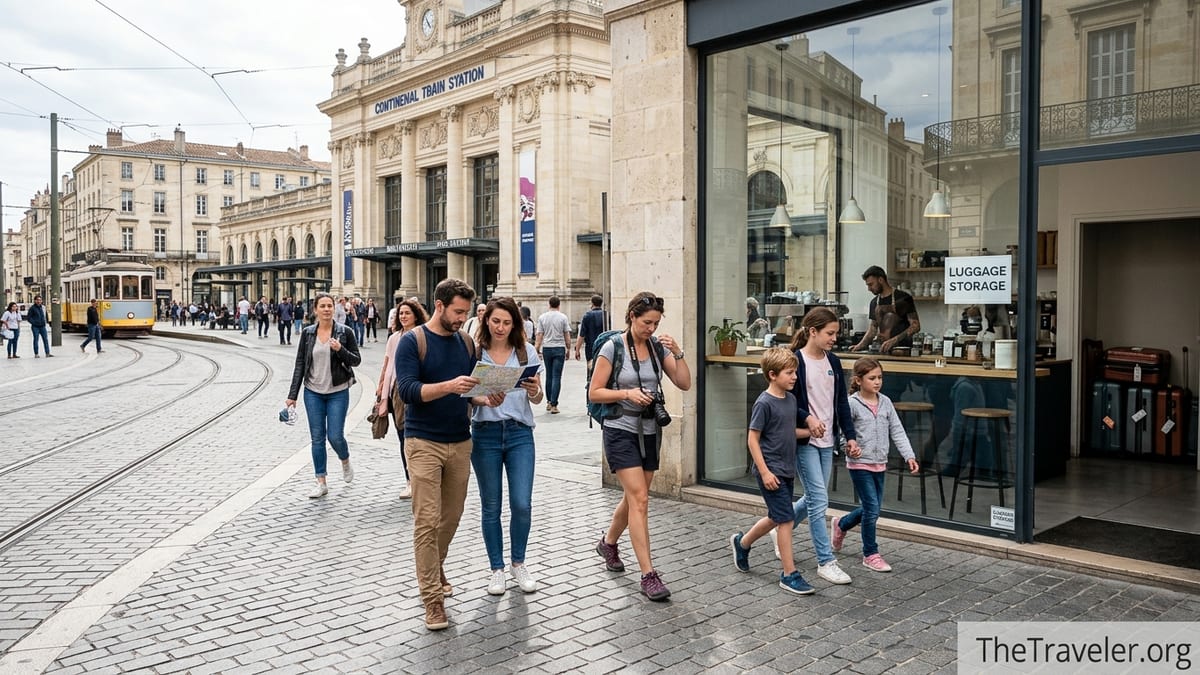
From Awkward Gap Hours to a Global Network
Radical Storage, originally launched as Bagbnb, emerged to solve one very specific problem: the dead time between check-out and departure that most itineraries never show. Today the platform connects travelers with thousands of partner businesses across more than 70 countries and hundreds of cities worldwide, from Rome and Barcelona to New York, Tokyo and Bali. Instead of hunting for rare station lockers, you open an app, see nearby “Angels” (Radical’s term for partner locations), and book a slot for your bags at a flat daily price per item.
In practice, that means a couple flying into Rome’s Termini Station in the morning can drop two suitcases at a cafe a few minutes’ walk away for roughly the cost of a casual lunch, then spend the day at the Colosseum and Trastevere unencumbered. A solo traveler changing trains in Milan can stash a backpack at a hotel near Milano Centrale and explore the Duomo rather than guarding their luggage on a station bench. These are not abstract use cases; they mirror the way real travelers now talk about Radical Storage in online forums and app store reviews.
Part of the appeal is how little mental overhead the system requires. The model is simple: pay a daily flat rate per bag, show your booking code, hand over your luggage, and retrieve it during the partner’s opening hours. Most locations charge around 5 to 6 euros per bag per day, depending on the city and demand, with no weight or size limits in many cases. For a family carrying a stroller, ski bag, or oversized backpack, that predictability and lack of size surcharges can tip the scales over traditional station lockers.
Why Smart Travelers Love Radical Storage’s Pricing and Flexibility
Travelers who describe themselves as "light packers" or "points hackers" tend to look for tools that give them flexibility without requiring new habits. Radical Storage fits that mindset because its pricing is straightforward. Instead of paying by the hour or negotiating with a hotel concierge, you see the full price for your dates and number of bags inside the app before confirming. In major European hubs, that is typically a flat 5 to 6 euros per bag for a calendar day, which often undercuts hotel porter tips or station locker fees for larger suitcases.
That flat, per-bag structure is especially useful on multi-stop trips. Imagine a week-long rail loop through Italy. You might drop two big suitcases at a Radical Storage partner in Florence for the day while taking only a small daypack to Pisa, or leave winter gear in Milan while you fly carry-on to a warmer side trip. In each case, you know in advance you will not be surprised by “oversize” charges, a not uncommon frustration with traditional facilities that charge per locker rather than per item.
Smart travelers also use the service tactically to extend the value of budget flights and accommodation. A low-cost flight that lands at 6 a.m. or departs at 10 p.m. is much easier to justify if you can store your bags for a single modest fee and enjoy a full extra day in the city. Instead of wasting hours in airport seating, you might leave your suitcase with an Angel near a central station, have brunch, visit a museum, and collect your bag just in time to catch the airport train. The extra storage cost often feels minor compared to the savings from a cheaper flight or an extra night of hotel.
Coverage Where It Matters: Cafes, Hotels and Corner Shops
Radical Storage’s rise is closely tied to the fact that it does not rely on owning physical lockers. Instead, it partners with small and medium businesses that already have spare space. These “Angels” include independent cafes a block from major museums, boutique hotels on quiet side streets, bike rental shops near coastal promenades, and even convenience stores a few steps from busy metro hubs. For the traveler, the benefit is not theoretical coverage on a map but practical, walkable options near where you actually want to be.
Consider a typical first day in Paris. You step off the train at Gare du Nord with a rolling suitcase and a cabin bag, but your hotel in the Marais will not hold your room until the afternoon. Radical Storage might show a bakery five minutes from the station, open from early morning to evening, offering daily storage at a familiar flat rate. You drop your bags, grab an espresso, and catch the RER to central Paris without trying to maneuver a big suitcase down metro stairs at rush hour.
Coverage has also expanded beyond classic capital cities. On Mediterranean ferry routes, travelers planning island-hopping itineraries have used Radical Storage partners near ports such as Catania, Split, or ferry piers in Bali to leave non-essential bags while they cross to smaller islands. In Japanese cities, where coin lockers sometimes fill up quickly or limit size, some visitors report using Radical Storage at hostels in neighborhoods such as Asakusa to store large bags for several days while taking side trips, then returning to the same location to continue their journey.
Security, Insurance and the Reality of Handing Your Bag to a Stranger
The idea of dropping your belongings in a corner shop or cafe can feel counterintuitive the first time you try it. Radical Storage has invested heavily in reassuring travelers that their bags are not simply stacked behind a public counter. Partner locations are vetted and must meet basic standards of security and storage space. The company offers built-in protection that, according to its help materials, can insure each bag for up to around 3,000 euros in case of theft or damage, with an optional low-cost add-on in some markets for extra peace of mind.
In practice, the safety experience varies by location, just as it does with traditional left-luggage rooms at stations or hotels. Many recent user reviews describe staff attaching tags, recording scan codes in the app, and storing bags in locked back rooms or dedicated storage spaces away from customer areas. One traveler who used Radical Storage repeatedly over several cities in Europe and South Africa reported consistently smooth service: clear drop-off instructions in the app, quick handover, and bags waiting exactly where they were supposed to be at pick-up.
At the same time, more critical reviews point out legitimate caveats, such as occasional confusion at partner sites about how to use the app, limitations of the insurance process, or mismatches between opening hours and traveler expectations. Smart travelers treat Radical Storage as a convenience tool rather than a place for their most irreplaceable items. A common-sense approach is to pack passports, cash, jewelry, and essential electronics into a small day bag you keep with you, and use Radical Storage for clothing, shoes, souvenirs, or non-urgent gear.
How Radical Storage Compares to Station Lockers and Hotel Luggage Rooms
Traditional solutions still have their place. Station lockers remain useful in cities like Tokyo or Zurich, and hotel luggage rooms will often store your suitcase before check-in or after check-out at no extra charge. However, both options come with practical limits that become clear once you start moving through multiple cities or accommodation types.
Hotel luggage rooms, for example, are usually available only to guests and only on the day of check-in or check-out. If you change to a short-term rental or low-cost hotel without a staffed lobby, that option vanishes. Station lockers can be scarce or suspended due to security regulations, particularly near major events, and often charge by locker size. Travelers with one large suitcase and one backpack may be forced to rent two separate lockers, increasing the cost beyond what a per-bag network such as Radical Storage charges for a similar period.
Radical Storage occupies the middle ground between these extremes. It may not always be the absolute cheapest option if a hotel will store your bag for free, but it offers coverage and flexibility that those legacy solutions cannot match. You can book storage near a museum instead of detouring back to a station, choose a partner with opening hours that match a late flight, or leave bags for multiple days with clear daily pricing instead of guessing how much a locker will cost after 72 hours. For digital-nomad travelers who move frequently between cities, that predictability is often worth more than saving a few extra euros.
Real-World Itineraries Where Radical Storage Shines
To understand why Radical Storage has become a go-to hack, it helps to look at the kinds of itineraries where it keeps appearing. One common pattern is the “last-day in the city” scenario. A family staying in Lisbon might need to check out of their apartment by 11 a.m. but only fly home at 9 p.m. Rather than paying for another night’s stay or dragging bags to the waterfront, they could drop three suitcases at an Angel near Baixa for a flat daily fee. They then ride Tram 28, visit the Time Out Market, and watch the sunset in Belém, picking up their luggage by early evening with time to reach the airport.
Another scenario involves one-way trips or repositioning segments. Take a traveler catching a morning train from Barcelona to Valencia and boarding a cruise the next day. They might not want to bring a full set of luggage on a side trip to a nearby town. With Radical Storage, they can leave a large suitcase at a luggage partner in Barcelona’s city center for a day while carrying only a small duffel to Sitges or Tarragona, returning later to collect the stored bag before continuing their journey.
In some cases, Radical Storage even enables more ambitious planning. A cyclist crossing the Alps may store a bike case and spare gear in a shop near Milan for a week while completing a point-to-point ride, then return by train to retrieve everything. A digital nomad flying to Southeast Asia for a month might leave winter clothing and bulky items in a storage point in Berlin for several days while waiting for a next-leg flight, instead of renting a full-sized self-storage unit.
Tips for Using Radical Storage Like a Pro
Experienced users tend to approach Radical Storage with a few simple rules. The first is to check the details of each location carefully before booking. Opening hours, weekend availability, and bag-size notes are all listed in the app, and choosing an Angel that matches your schedule is more important than shaving off one extra euro in price. For instance, a late-evening flight out of Madrid might make a partner open until 10 p.m. near Atocha Station more useful than a slightly cheaper option that closes at 7 p.m. in a different neighborhood.
Second, travelers recommend taking a quick photo of your bag and any tags applied at drop-off. While the app records your booking, having a visual record of the luggage and the storage area can make both you and the staff more comfortable, especially in busy urban locations. It also helps you remember which bag you left where when juggling multiple cities in a short period.
Third, think about how you pack if you know you will use Radical Storage multiple times on a trip. Consolidate valuables and essentials into a carry-on or backpack you always keep with you, and treat checked suitcases as “bulk storage” that can safely be left with Angels when needed. This approach lets you drop bags without worrying about suddenly needing an item that ended up in storage.
Finally, smart travelers keep an eye on reviews. Since Radical Storage has thousands of partner locations worldwide, the experience can naturally differ from place to place. Recent ratings and comments can highlight Angels known for friendly staff and secure back rooms, or warn you away from locations that are hard to find or have confusing handover procedures.
The Takeaway
Radical Storage has become a quiet staple in the toolkit of savvy travelers because it tackles a stubborn logistical problem with a simple, scalable solution. By turning underused space in cafes, hotels, and shops into short-term luggage storage, it gives travelers more usable hours in every destination. Flat daily pricing per bag, wide coverage in popular cities, and a built-in layer of insurance make it easier to justify squeezing in one more museum visit, seaside lunch, or last walk through a historic district.
Like any travel tool, it is not perfect, and smart users still apply common sense about what they store and where they book. Yet the overall pattern in 2026 is clear: for countless real-world itineraries, from long layovers in New York to ferry waits in the Mediterranean and late check-outs in Asian megacities, Radical Storage has shifted luggage from a constant burden to a solvable detail. For travelers who value flexibility, hands-free exploration, and making the most of limited time, that shift is more than a convenience. It is a genuine upgrade to the way we move through the world.
FAQ
Q1. What exactly is Radical Storage and how does it work?
Radical Storage is an online platform and app that lets you book short-term luggage storage at partner businesses such as cafes, hotels, shops and hostels. You choose a nearby location in the app, enter your drop-off and pick-up times, see the total price per bag, pay online, then show your booking code at the location to hand over your luggage. You return within opening hours to collect your bags.
Q2. How much does Radical Storage usually cost?
Pricing varies slightly by city, but in many European destinations you can expect to pay roughly 5 to 6 euros per bag for a full calendar day. In some higher-cost cities, the rate may be a bit higher, and prices in local currency are shown in the app before you confirm. The key difference from station lockers is that you pay per bag instead of renting a whole locker.
Q3. Is Radical Storage safe for my luggage?
Radical Storage partners are vetted and provide designated spaces, often back rooms or locked areas, where bags are stored away from public access. The company includes a level of insurance protection for each bag, typically up to around 3,000 euros, though terms and conditions apply. As with any storage service, travelers are advised to keep passports, cash and high-value electronics with them and use the service mainly for clothing, shoes and non-essential items.
Q4. Where can I find Radical Storage locations?
Radical Storage operates in dozens of countries and hundreds of cities worldwide, especially across Europe but also in North America, Asia and popular beach and ferry hubs. Locations tend to cluster around major train stations, tourist districts, ports, and central neighborhoods. When you open the app in a city, you will see a map view with available “Angel” partners near your current location or any address you search.
Q5. How is Radical Storage different from traditional station lockers?
Station lockers are tied to specific transport hubs and usually charge per locker with strict size limits. Radical Storage, on the other hand, uses spare space in everyday businesses across the city and charges a flat rate per bag. This often means more convenient locations near attractions, cafes or neighborhoods where you actually plan to spend time, and it can be cheaper and more flexible for families or travelers with bulky items such as ski bags.
Q6. Can I store large or unusual items with Radical Storage?
Many Radical Storage partners accept items that might not fit into standard station lockers, such as large suitcases, sports equipment or baby strollers, because they are storing bags in rooms rather than fixed-size boxes. However, acceptance of very large or unusual items can vary by location, so it is wise to check the notes for each Angel in the app or contact support if you are unsure.
Q7. How long can I leave my luggage with Radical Storage?
Most travelers use Radical Storage for a single day to bridge the gap between check-out and a late train or flight, but the service can also be used for multi-day storage if the partner’s policies allow it. When you select your dates in the app, you will see the total price for the entire period. For trips longer than several days, some travelers compare this cost with local self-storage options to decide what makes the most sense.
Q8. What happens if my travel plans change or I am delayed?
Radical Storage’s policies include options for modification and cancellation that vary by location and timing. In many cases you can adjust your booking in the app if your arrival time shifts, and some protection add-ons include free cancellation. If you expect a significant delay, it is best to contact the Angel location or Radical’s support team as early as possible to confirm they can hold your bag beyond the original time window.
Q9. How does Radical Storage compare to competitors like Bounce or Nannybag?
There are several similar services in the market. Radical Storage is particularly strong in many European cities and mid-sized destinations, while some competitors have denser coverage in North America or specific countries. Pricing and insurance levels differ between platforms, but the basic concept is the same: partner with local businesses to store bags at a daily rate. Travelers often choose based on coverage in their specific city, recent reviews, and individual price quotes on the day they need storage.
Q10. When is using Radical Storage not the best option?
If your hotel will store your bags for free on the day of check-out and the location is convenient for your plans, you may not need a separate service. Likewise, if you are only traveling with a small backpack that you are comfortable carrying, Radical Storage may be unnecessary. The service is most valuable when you have bulky luggage, awkward time gaps, or need storage in a part of the city that is not near your accommodation or main transport hub.