


Luggage storage apps like Radical Storage have quietly become part of modern travel, especially in big hubs such as Rome, Paris, New York and London. For a few euros or dollars per bag, you can drop everything at a nearby café or hotel and explore hands free. Yet when you look at reviews, forum posts and complaints, the problems that arise are rarely due to the storage itself. They usually come from misconceptions travelers had before clicking “Book.” Understanding what Radical Storage is, and what it is not, is the difference between a smooth day in the city and a stressful argument over closing times, insurance or refunds.
Get the latest updates straight to your inbox!
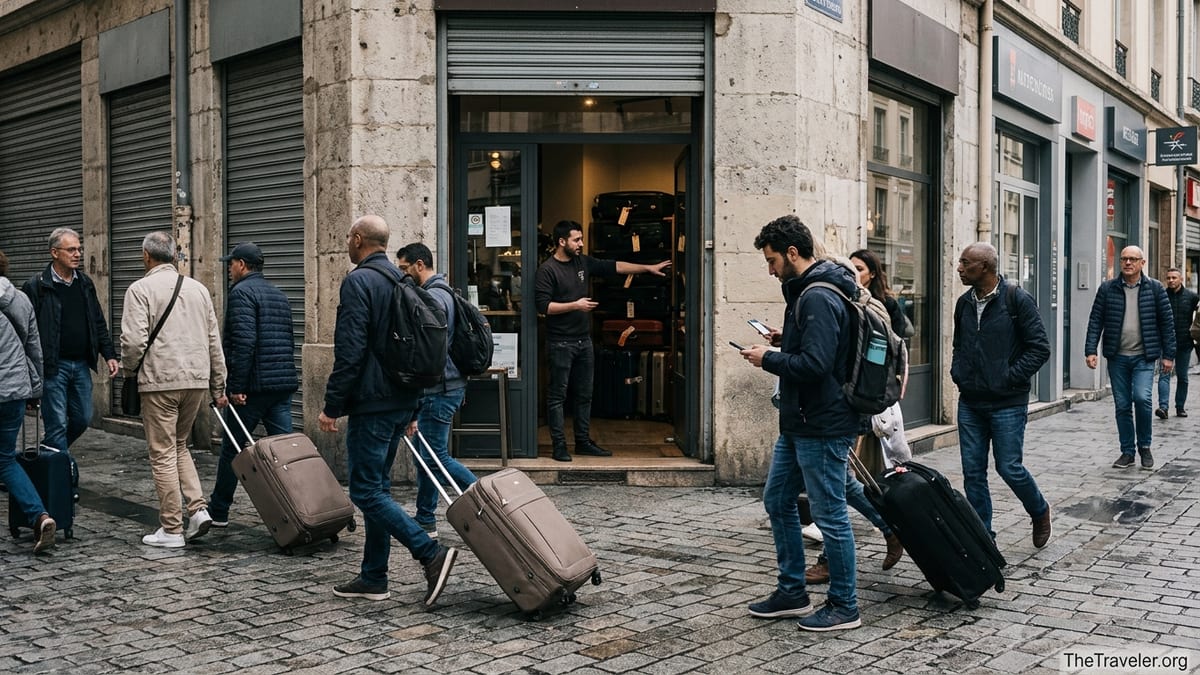
Radical Storage Is a Platform, Not a Traditional Locker Service
One of the biggest misconceptions is assuming Radical Storage operates its own staffed lockers or depots, like the left-luggage counters you see inside major train stations. In reality, Radical Storage is a marketplace-style platform. It partners with thousands of independent businesses worldwide, from hotels near New York’s Penn Station to corner shops in Barcelona, which agree to hold bags for a fee. These partners are called “Angels” in Radical’s own terminology, and you’ll see that label throughout the booking process.
This distinction matters because your on-the-ground experience depends heavily on the specific Angel you choose. A 24-hour hotel reception in Rome’s Termini district will feel very different from a small convenience store in Lisbon that closes at 8 p.m. Radical Storage vets partners and provides digital vouchers and centralized customer support, but the person who physically locks your suitcase away is a receptionist, barista or shopkeeper working for that particular business, not an employee of Radical Storage.
Real-world experiences show this clearly. Travelers on community forums describe dropping bags at a Paris café through Radical Storage before an evening flight, or at a bike rental shop in Amsterdam for the day. When things go well, it feels like magic: three taps on your phone, a quick scan of your QR code and you are back out in the street. When things go wrong, it is almost always because the traveler assumed the Angel operated like a staffed station locker, open all day with dedicated baggage staff, when in fact it was a regular shop with its own quirks and schedule.
Before you book, remind yourself that you are choosing a partner business, facilitated by Radical Storage, rather than a uniform chain of storage kiosks. That mental reset will shape more realistic expectations about service level, location and communication.
Pricing: Flat Daily Rate, Hidden Extras and Comparisons
Another common misunderstanding revolves around price. Many travelers see a headline figure such as “from about 6 euros per bag per day in Europe” and assume that is the fixed total they will pay. In practice, Radical Storage typically uses a flat day rate per item, with a separate protection fee that activates its warranty coverage. On its own comparison pages, the company highlights pricing that often starts from around 1.60 euros per bag in some European cities or roughly 4.90 dollars per bag in the United States, depending on local rates and promotions. However, the optional protection fee of about 1.75 in the local currency is what unlocks up to roughly 3,000 euros of coverage per item.
Travelers used to traditional station lockers, which might charge by the hour, sometimes expect similar flexibility. Instead, Radical Storage’s model is closer to a daily parking pass: pay once and you are covered for a block of hours within that calendar day. If you just need to stash a small backpack at a café near Milan Centrale for three hours, the flat rate will not feel cheap compared with paying by the hour at a station locker. On the other hand, if you drop two large suitcases at 10 a.m. in Barcelona and collect them at 8 p.m., a single flat rate per bag generally works out to be good value.
Comparisons with competitors can clarify expectations. For instance, Bounce often lists prices starting around 3.50 euros in Europe or close to 5 dollars in the United States, with insurance limits that can be significantly higher but also with service or protection fees layered on at checkout. Other rivals like LuggageHero promote hourly pricing that appeals for short layovers but can end up more expensive than Radical Storage once the mandatory fees and daily caps apply. The key mistake many travelers make is not clicking all the way through to the final checkout page to see the actual total with currency, taxes and protection fee included before they mentally compare options.
To avoid surprise charges, treat the initial price shown in search results as an estimate. Tap on at least one or two locations, select your exact date and time window, and let the system calculate the final total for your specific bags. Do this before you decide that Radical Storage is automatically cheaper or more expensive than the left-luggage office a few blocks away.
Insurance and the 3,000 Euro Coverage: What It Really Means
Radical Storage prominently advertises that bags are protected by a warranty of up to about 3,000 euros per item. Many travelers interpret that as a guarantee that every loss or damage incident will be fully compensated, without conditions. In reality, the coverage functions like a travel insurance policy, with eligibility rules, documentation requirements and exclusions. The help center explains that deposits are insured to this limit, but only when the optional protection fee has been paid and when the user follows the proper claims procedure.
In practice, this means that if your suitcase is lost or damaged while in storage, you must document its contents and their approximate value, provide receipts where possible and cooperate with both Radical Storage and the insurance provider. Items that are difficult to verify, such as loose cash, professional equipment or jewelry, may be harder to claim for, just as with airline baggage insurance. Also, the process is not instant: it can involve forms, investigation and correspondence, particularly if the loss involves theft from the partner premises.
Mistakes usually arise when travelers treat the 3,000 euro figure as a blanket replacement promise. A traveler who leaves a high-end camera and laptop in an unchecked backpack at a café near London Victoria might reasonably expect coverage, but if they do not list those items or cannot produce receipts, the actual payout may be lower than they assumed. Conversely, everyday travel gear like clothes, toiletries and standard electronics are generally easier to value within that total limit, which is why Radical Storage’s coverage is usually most appropriate for standard holiday luggage rather than irreplaceable valuables.
If you are traveling with expensive photography equipment, musical instruments or specialist gear, a better strategy is to combine Radical Storage with a broader travel insurance policy that explicitly covers those items. That way, you are not relying solely on a platform-specific warranty, and you reduce the risk of misunderstandings about what the 3,000 euro headline figure truly covers.
Location Choice, Opening Hours and Access: The Details People Skip
When a trip is in motion, convenience tends to trump everything else. Many users searching Radical Storage type in a landmark such as “Colosseum” or “Gare du Nord” and immediately book the closest Angel by distance. This is where some of the worst mishaps begin. Each partner location has its own opening hours, rules about early or late pickups, and capacity. Some Angels are 24-hour hotels where reception is always staffed. Others are small shops that close for lunch, for Sunday rest days or for local holidays, even in peak tourist season.
Real-world examples from traveler forums highlight typical scenarios. One visitor to Paris flying out of Charles de Gaulle booked a Radical Storage location near a Metro station in the afternoon, only to realize later that the shop closed at 7 p.m. Their evening flight was delayed, and they found themselves sprinting back across town, worried they would not retrieve their bags in time. Another traveler in New York City used an Angel attached to a boutique hotel in Midtown and had no such issue: the front desk was open well past midnight, and they collected their bags after a late Broadway show without stress.
Before booking, it is essential to drill down into the listing details for each Angel. Look not only at the map but also at stated opening hours, any notes about last drop-off or pickup times, and recent customer reviews that might mention practical issues such as steep staircases, basement storage or limited space for oversized items. Radical Storage partners are generally required to store baggage in a secure area away from public customers, but the exact setup varies: some use dedicated storerooms or locked offices, while others may rely on back rooms that double as stock cupboards.
If your schedule is tight, consider prioritizing Angels located inside hotels with round-the-clock reception or those clearly stating extended hours over ultra-cheap cafés that close early. A slightly longer walk from a central station to a 24-hour hotel Angel in Madrid or Berlin is usually a better trade-off than risking a missed pickup because the nearest tabac shop rolls down its shutters at 6 p.m.
What Safety and Vetting Really Look Like on the Ground
Radical Storage emphasizes that it carefully verifies partners and that all deposits are secure and guaranteed. The company notes that millions of bags have been stored worldwide through Angels such as local restaurants, grocery stores, hotels and rental shops. This reassurance is important, but travelers sometimes assume it means a uniform security standard equivalent to an airport baggage room, with CCTV, metal doors and dedicated lockers. In practice, security conditions vary by venue.
For instance, a hotel near West Hollywood’s Norma Triangle listed by Radical Storage might keep bags in a locked luggage room behind the front desk, similar to what in-house guests use. A small electronics shop in central Athens may designate a back room where staff place tagged suitcases but rely mainly on staff presence and store locks rather than individual lockers. Both can be perfectly safe in normal circumstances, but they will feel very different to a traveler used to large station locker banks in cities like Tokyo or Zurich.
Common mistakes include failing to photograph your bag at drop-off, not using a name tag or AirTag, and not checking how the Angel identifies each item. Radical Storage uses digital vouchers rather than physical claim tickets, which works smoothly as long as your phone battery is healthy and your internet connection is stable. If you arrive to pick up bags in a rush, only to realize your battery is dead and you never noted the address, you may have a stressful few minutes that could have been avoided by a simple screenshot or written note.
To make the most of the vetting Radical Storage has done, add your own practical checks. Take a quick look at where staff are placing bags, ask politely whether the storage area is locked, and confirm that the name on your booking matches the tag they attach. These simple actions, combined with the platform’s insurance, dramatically reduce the risk of issues and give you a more realistic sense of how secure your belongings will be during the day.
Refunds, Cancellations and Flexibility: Not Always Instant
Another area where expectations and reality often diverge is around cancellations and refunds. Radical Storage markets an optional protection fee that includes free cancellation, and many travelers interpret that as meaning they can cancel at any time, for any reason, and receive an immediate full refund. The actual terms are more nuanced. You typically need to cancel before the scheduled drop-off time to receive a full refund through the platform, and the free cancellation benefit is tied to that paid protection.
Real itineraries rarely run to the minute. Flights are delayed, train strikes pop up and hotel check-in options appear unexpectedly. In these situations, travelers sometimes cancel at the last minute or simply do not show up at all. Some then expect to be refunded automatically even if they never notified the platform. Like airlines and hotels, Radical Storage generally treats a no-show without cancellation as a completed booking, because the Angel reserved space and staff time for that bag, especially during busy hours near major stations.
There is also the question of partial refunds. Suppose you have booked storage for three bags at a café near Florence’s Santa Maria Novella station but end up taking one bag with you. Unless you adjust the booking in advance, the Angel and the platform still expect to receive payment for the reserved number of items. Similarly, if you book from 9 a.m. to 9 p.m. but collect everything at lunchtime, you do not receive a discount for unused hours. The pricing is per day, per bag, not on an hourly metered basis.
To avoid disappointment, build some slack into your plans. Book only for the bags you are certain you will store, schedule the time frame based on your latest realistic pickup, and make any changes or cancellations as soon as plans shift. Think of Radical Storage bookings more like timed museum tickets than casual “drop in whenever” lockers. The more intentionally you book, the less likely you are to be frustrated later.
The Takeaway
Used with clear expectations, Radical Storage can be one of the most useful tools in a traveler’s kit. It solves a real problem: what to do with your luggage when check-out and departure do not line up. The service has grown into a large global network, particularly strong across European city centers, and its flat daily pricing per bag is competitive in many markets, especially compared with traditional station left-luggage counters.
Where travelers run into trouble is in treating Radical Storage as if it were a homogeneous chain of locker depots with identical hours, facilities and policies, or in assuming the headline 3,000 euro coverage and cancellation promises apply without conditions. The reality is more nuanced: Radical Storage is a technology platform connecting you to independent businesses, each with its own constraints, while layering on optional protection and centralized customer support.
Before your next trip, take a few extra minutes to read the details on opening hours, location type and included coverage for at least two or three Angels rather than booking the very first pin on the map. Confirm the final price at checkout, verify that your insurance expectations match what is actually provided, and think realistically about your schedule. Those small steps will turn Radical Storage from a potential headache into exactly what it is meant to be: a simple, affordable way to unlock a few extra carefree hours in the city you came to see.
FAQ
Q1. Is Radical Storage safe for my luggage?
Radical Storage partners with vetted local businesses and offers optional warranty coverage, but security conditions vary by location. To stay safe, choose well-reviewed Angels, favor venues like hotels with dedicated storage rooms, and tag or track your bags so you can identify them easily at pickup.
Q2. How much does Radical Storage usually cost?
Pricing is typically a flat daily rate per bag that varies by city, often comparable to a few euros or dollars per item, plus an optional protection fee that activates warranty coverage. Always check the final amount at checkout, including currency and fees, before you compare it with alternatives like station lockers or other apps.
Q3. What does the 3,000 euro coverage actually include?
The advertised coverage is a maximum limit per item, not an automatic payout. It generally applies when you pay the protection fee and follow the claims process with documentation of what was in your bag and what it was worth. Items such as jewelry, large amounts of cash or highly specialized equipment may be harder to recover fully under this type of warranty.
Q4. Can I store valuable electronics or documents with Radical Storage?
You can, but it is not ideal. The service is best suited to standard travel luggage such as clothes, shoes and basic electronics. If you must store laptops, cameras or sensitive documents, use tracking tags, back up data, and consider supplementary travel insurance that explicitly covers these items rather than relying only on the platform’s warranty.
Q5. What if my flight is delayed and I pick up my bags late?
Late pickups are only possible if the Angel is still open and willing to release your bags. Radical Storage’s daily pricing does not guarantee after-hours access, so a delayed flight can cause serious problems if you chose a location with early closing times. To reduce risk, favor 24-hour hotels or longer-opening venues, and allow extra time between pickup and your airport transfer.
Q6. How do Radical Storage’s locations compare with traditional station lockers?
Station lockers are usually inside transport hubs with standardized metal lockers and clear opening rules, but they can be more expensive or limited in number. Radical Storage locations are scattered through city neighborhoods and can be cheaper or more flexible, yet they depend on individual businesses’ security and schedules. Many travelers use a mix of both, choosing the option that best fits their route and timetable on a given day.
Q7. Can I show up without a booking and pay in person?
In most cases, no. Radical Storage is designed as an online-first platform where you book and pay through the website or app, receive a digital voucher, and then present that voucher at the Angel. Some locations may try to help walk-ins, but availability and pricing are only guaranteed for confirmed online bookings.
Q8. What happens if I need to cancel my Radical Storage booking?
If you added the protection option and cancel before the scheduled drop-off time, you can generally expect a full refund processed through the platform. If you cancel very late, or simply do not show up, you are less likely to receive money back because the Angel reserved space for you. Check the specific cancellation terms shown during booking for the location and date you select.
Q9. How should I choose the best Angel in a new city?
Look beyond the closest pin on the map. Read recent reviews, check the opening hours, confirm wheelchair or stroller access if needed, and consider what kind of business it is. A well-reviewed hotel or established café near a main station can be a safer bet than an unfamiliar shop with sparse feedback, even if it is a few minutes farther away.
Q10. Is Radical Storage better than competitors like Bounce or Stasher?
It depends on your route, budget and priorities. Radical Storage often has very strong coverage across European cities and straightforward daily pricing with its own warranty. Bounce may offer higher insurance limits and more locations in some parts of North America, while Stasher and others lead in specific markets such as the United Kingdom. Before booking, compare a couple of apps for your exact city and dates rather than assuming one brand is always best.