


I checked into my first Waldorf Astoria with more skepticism than excitement. The brand’s mythology, from New York’s Gilded Age grandeur to its modern outposts in places like Cabo and the Maldives, had started to feel like marketing more than reality. I expected high prices, pretty public spaces, and the sort of service that photographs well but feels oddly impersonal once you are the one handing over a credit card. Instead, over several stays, I discovered that when Waldorf Astoria is done right, it delivers a kind of low‑key, deeply human luxury that feels far more substantial than the hype.
Get the latest updates straight to your inbox!
Arriving Expecting Gloss and Finding Quiet Confidence
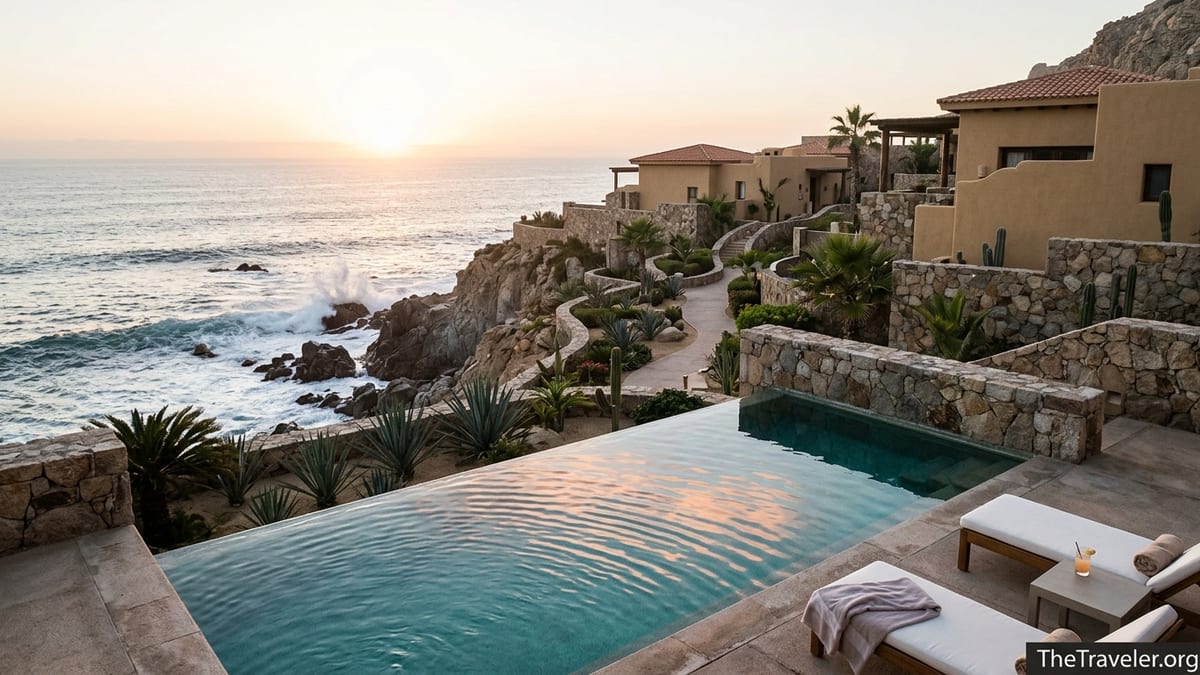
My turning point with Waldorf Astoria started at Los Cabos Pedregal, the cliffside resort carved into the rocks just outside Cabo San Lucas. Photos of the dramatic tunnel entrance and crashing Pacific swells had been all over social media. It looked cinematic to the point of cliché, and I was prepared for an overstyled set that would not quite match the price tag. Yet the first surprise came before I had even stepped out of the airport. A driver holding a simple Waldorf Astoria placard greeted me, took my bag without fanfare, and handed over a cool scented towel and bottled water. Nothing flashy, just the sort of practical, quietly observant service most luxury brands promise but few execute consistently.
The approach to the resort is undeniably theatrical: a private tunnel drilled through the mountain, emerging onto a sweep of sand and sea where desert cliffs tumble into the Pacific. What impressed me was what happened next. Instead of a scripted welcome routine, check‑in took place on a shaded terrace overlooking the surf, with a tasting of small‑batch tequila for those who wanted it and chilled fruit water for those who did not. Staff confirmed details like food allergies, preferred language and housekeeping timing in a way that felt conversational instead of box‑ticking.
In that moment, Waldorf Astoria’s brand story began to feel less like a throwback to New York’s Park Avenue and more like a modern interpretation of what luxury can be: not louder, but more attentive. The prices were absolutely in line with five‑star resorts in Los Cabos, but I started to understand why repeat guests describe the property as a place they return to, rather than a one‑time “bucket list” splurge.
Rooms That Feel Designed for Living, Not Photographing
At Waldorf Astoria Los Cabos Pedregal, every room comes with a private plunge pool and a view of the ocean, a detail that sounds like brochure copy until you are actually standing on the terrace. Instead of maximizing bed count, the standard rooms here are set up more like compact suites, with indoor and outdoor living spaces flowing together through wide sliding doors. The plunge pool is not an ornamental basin suitable only for a feet‑in photo; it is heated, large enough to float in, and set at a depth that encourages actual swimming.
Inside, the design balances regional character with modern comfort: hand‑carved wooden headboards, woven lamps and cool stone floors, but also plentiful power outlets and strong Wi‑Fi that actually reaches the terrace. The minibar is stocked with Mexican snacks, local craft beer and decent espresso pods rather than a generic global line‑up. Turn‑down service brings small but thoughtful touches like house‑made chocolates or a printed sheet with the next day’s tide times and sunset hour, which is useful when your terrace is the best seat in the house.
Experiences at other Waldorf Astoria properties reinforce the same pattern. Overwater reef villas at Waldorf Astoria Maldives Ithaafushi, for example, are laid out to prioritize privacy and usable outdoor space instead of just a dramatic photo from the bathtub. Terraces are deep enough to include both shaded loungers and a dining table, and the pools are long enough for a genuine swim. In urban properties like Waldorf Astoria Las Vegas or Chicago, rooms tend to favor oversized bathrooms, proper workspaces and solid soundproofing rather than flashy, fragile finishes that will not age well. The common thread is that these are rooms you can live in for a week or more, not just stage for a weekend.
Service That Anticipates Needs Without Performing Luxury
Service is where overhyped luxury brands are most likely to stumble. Highly choreographed greetings can impress at first contact but often collapse when the property is busy or when a guest needs something nonstandard. Across several Waldorf Astoria stays, what stood out was not a single dramatic gesture, but a series of small, consistent acts of attention. At Los Cabos Pedregal, servers at breakfast remembered coffee orders after the first morning. When I mentioned I was writing and preferred a quieter table, the host steered me to the same sheltered corner the next day without prompting.
On the beach, attendants did not just offer towels but also warned guests about the strong currents typical of this stretch of Cabo, explaining why the resort’s main swimming happens in pools set back from the surf. That candor matters in a region where photos of people standing in the waves can be misleading. When a windy afternoon made the main pool deck feel exposed, staff proactively suggested guests move to a more sheltered pool by the spa, where service continued with the same pace and polish.
At Waldorf Astoria Maldives, the brand’s service ethos takes on a more logistical dimension. Reaching the resort involves a yacht transfer from Malé, and staff use that time not just as a photo opportunity but to confirm details like pillow preferences, restaurant reservations and activity interest. By the time you reach your villa, bicycles are already sized to your height and snorkel gear is waiting by the pool. These may sound like small wins in isolation, but together they create an environment where you stop thinking about what needs to be requested and instead simply enjoy the place you have paid dearly to experience.
Even in city properties where guests may stay only one or two nights, the same approach shows up. At Waldorf Astoria Chicago, for example, doormen are as adept at flagging a rideshare and giving quick neighborhood directions as they are at arranging a chauffeured car. The aim is less to perform luxury and more to smooth out the frictions that make travel tiring, whether that is a late check‑out before an evening flight or a last‑minute shirt pressing before a business dinner.
Eating and Drinking: Prices That Sting, Quality That Softens the Blow
No one books a Waldorf Astoria expecting bargain dining. Dinner for two at a signature restaurant like El Farallón in Los Cabos, set into the cliffside overlooking the Pacific, can easily rival a high‑end tasting menu in a major U.S. city once you factor in wine. Multi‑course seafood menus, Champagne by the glass and fresh shellfish towers carry the kind of pricing that leads many guests to assume they will dine off‑property most nights.
What shifts the equation is consistency and context. At El Farallón, you are not just paying for a view but for a kitchen that sources local fish and shellfish daily, often laid out on ice so you can see exactly what you are choosing. Sommelier‑guided Champagne tastings at the cliffside bar feel indulgent, but they also double as an education in lesser‑known grower labels alongside the famous houses. In the Maldives, breakfast spreads that include everything from sashimi to made‑to‑order Maldivian curries and fresh tropical fruit justify the decision to build an unhurried morning into each day.
Elsewhere in the brand, the food and beverage picture varies but leans ambitious. Waldorf Astoria New York, freshly reopened after its long restoration, aims to restore the property as both a hotel and a culinary destination, with dining rooms that reference the building’s Art Deco heritage in decor and menu. You pay Midtown prices for a cocktail in the Peacock Alley lounge, but you drink it under restored metalwork, murals and chandeliers that took craftspeople years to bring back to life.
For travelers watching their budget, it is still realistic to mix on‑property indulgence with more economical meals. In Cabo, that might mean breakfast and a special‑occasion dinner at the resort, paired with tacos in town and a less formal beach club lunch on other days. In city locations, it is easy to walk a block or two for a quick coffee or casual dinner, saving the hotel’s bar and restaurant for nights when you actually feel like lingering.
The Legacy Factor: History, Architecture and a Sense of Place
What differentiates Waldorf Astoria from other big‑name luxury brands is its origin story. The name traces back to the original Waldorf and Astoria hotels in New York, which merged in the late 19th century and eventually re‑emerged on Park Avenue in 1931 as a towering symbol of Gilded Age glamor. The modern Waldorf Astoria New York, reopened after a multiyear, multibillion‑dollar restoration, leans into that history with interiors that revive its Art Deco ballrooms, grand lobbies and public salons. Walking through the restored Grand Ballroom, with its metallic balconies and intricate ceiling details, you feel the property’s ambition to be more than just another five‑star hotel.
That legacy gives the brand a different starting point when it expands elsewhere. Rather than imposing a single global design language, many Waldorf Astoria properties interpret their locations through materials and layout. In Los Cabos, the design draws from Baja’s desert palette and emphasizes outdoor living, with pathways that meander down cliffs and courtyards scented by native plants. In the Maldives, villas are low‑slung and airy, built to maximize cross‑breezes and framed views over clear water instead of towering above the lagoon.
At the same time, Waldorf Astoria intentionally positions itself at the very top of Hilton’s portfolio, which shapes everything from staffing ratios to minimum room sizes. New projects, such as forthcoming properties in European capitals and a planned Nile river vessel, are pitched as “ultra‑luxury,” with rates that often start at levels normally associated with independent grand hotels. That context matters when you are deciding whether a Waldorf Astoria is worth the premium over sister brands like Conrad or LXR in the same destination.
Is It Worth the Splurge for Real Travelers?
On paper, nightly rates at many Waldorf Astoria resorts hover in the same stratosphere as other marquee luxury names. In Cabo, entry‑level rooms at Los Cabos Pedregal often price well above midrange beachfront hotels and even some competitors in the five‑star space. In the Maldives, villa rates can move into eye‑watering territory, especially during peak season. For a traveler who cares less about brand loyalty and more about value, the question is simple: what do you actually get for that premium?
The answer, based on recent stays and comparison shopping, is that Waldorf Astoria delivers best when you plan to use what it specializes in. If you are the type of traveler who spends most of your time off‑property exploring, you may not extract full value from a resort whose strengths are its rooms, pools, spa and dining. On the other hand, if your goal is to settle in for a long weekend or a week where the hotel itself is the destination, the details start to justify the cost. In Cabo, that might look like daily use of your private plunge pool, lingering breakfasts with ocean views, couples’ treatments at the indoor spa and sunset cocktails followed by dinner overlooking the surf.
For Hilton loyalists, the calculus also involves points and elite benefits. Waldorf Astoria properties typically sit at the top end of Hilton’s award chart, so redemptions can represent strong value during peak dates when cash rates soar. Diamond members may receive benefits such as complimentary breakfast, room upgrades and later check‑out, though policies vary by property and are not guaranteed in the same way they might be at less exclusive brands. Even without loyalty status, booking a Waldorf Astoria through a reputable luxury travel advisor can unlock amenities like resort credits or airport transfers, softening the impact of high nightly prices.
Ultimately, the brand is not the right fit for every trip. It is, however, a more grounded experience than its image might suggest, particularly at flagship properties that combine a strong sense of place with service that feels personal rather than performative. For milestone celebrations, restorative escapes or trips where you plan to lean fully into the hotel as your base, Waldorf Astoria deserves a place near the top of the list.
The Takeaway
I arrived at Waldorf Astoria convinced that the brand’s reputation outpaced its reality. After days of watching staff quietly orchestrate airport transfers, restaurant reservations, spa appointments and in‑room surprises without a single scripted “luxury moment,” I left with a different perspective. The signature views, pools and architecture are all part of the equation, but the real value lies in how livable these hotels make indulgence feel.
There are certainly caveats: prices that demand careful budgeting, locations that sometimes favor seclusion over easy exploration, and the occasional inconsistency between properties in the same brand. Yet when Waldorf Astoria gets it right, the experience feels less like chasing an Instagram dream and more like settling into a well‑run household where every practical detail has been considered for you.
If you arrive expecting glossy excess, you may be surprised by the restraint. If you come seeking a blend of heritage, location and service that supports how you actually travel, you are more likely to walk away as I did: not only convinced that the hype is justified, but quietly planning when you might return.
FAQ
Q1. Is Waldorf Astoria worth the higher nightly rates compared with other luxury hotels?
For travelers who plan to spend significant time on‑property using the pools, spa, dining and in‑room amenities, Waldorf Astoria often justifies its premium, especially at flagship resorts like Los Cabos Pedregal or the Maldives. If you mainly want a comfortable base to explore a city or region, a less expensive five‑star option may provide better value.
Q2. How does Waldorf Astoria compare to other Hilton luxury brands like Conrad or LXR?
Waldorf Astoria sits at the very top of Hilton’s portfolio, with larger average room sizes, higher service ratios and more elaborate public spaces than Conrad or LXR in most markets. In practice, that can mean more personalized service, more ambitious dining and a stronger focus on design and sense of place, though quality still varies by property.
Q3. Can I use Hilton Honors points for a stay at Waldorf Astoria?
Yes, most Waldorf Astoria properties participate in Hilton Honors, and award nights are often priced at the upper end of the program. During peak dates when cash rates are high, redeeming points can represent solid value, especially if you book well in advance and are flexible with travel dates and room types.
Q4. Are Waldorf Astoria resorts suitable for families, or are they mainly for couples?
Many Waldorf Astoria resorts, including Los Cabos Pedregal and the Maldives, welcome families and offer kids’ clubs, children’s pools and larger suites or villas. That said, the atmosphere leans more toward quiet, refined relaxation than high‑energy family entertainment, so they suit families looking for calm rather than theme‑park style activity.
Q5. Do Waldorf Astoria hotels have strict dress codes in restaurants and public spaces?
Dress codes vary by property and venue, but most Waldorf Astoria restaurants follow a smart casual guideline in the evenings, favoring collared shirts and closed‑toe shoes over formalwear. Pool and beach areas remain casual, provided guests use cover‑ups and footwear when moving through indoor public spaces.
Q6. How far in advance should I book a Waldorf Astoria stay to get the best rates?
Booking several months in advance usually offers the widest choice of room types and promotional rates, especially for peak seasons in destinations like Cabo or the Maldives. Flexible dates, midweek arrivals and shoulder‑season travel can also help secure better value while still enjoying favorable weather.
Q7. Are there more affordable ways to experience Waldorf Astoria without staying overnight?
In some cities, you can experience Waldorf Astoria through a spa day, afternoon tea or a special‑occasion dinner in the main restaurant or bar. While still pricey, these experiences let you enjoy the architecture, service and atmosphere for a few hours without committing to an overnight rate.
Q8. What kind of traveler will appreciate Waldorf Astoria the most?
Waldorf Astoria tends to resonate with travelers who value understated, detail‑oriented service, strong design and a sense of local character in their hotel. If you prefer high‑energy social scenes and loud nightlife, you may find some properties too serene, whereas travelers seeking restorative, design‑driven stays often become repeat guests.
Q9. Are Waldorf Astoria properties all consistent in quality worldwide?
While the brand sets high standards for location, design and service, there is still some variation between properties due to differences in ownership, age and local management. Reading recent, detailed traveler reviews for the specific hotel you are considering is wise, particularly in destinations with several competing luxury options.
Q10. How important is location when choosing between different Waldorf Astoria hotels?
Location should be a major factor in your decision. Some Waldorf Astoria resorts prioritize seclusion and dramatic natural settings, which can mean longer transfers and fewer nearby dining options, while urban properties offer immediate access to city attractions. Matching the hotel’s setting to your plans will do as much for your enjoyment as the room category you book.