


I used to lump travel insurance into the same category as extended warranties and airport lounge scams: a nice-sounding extra that rarely pays off when you actually need it. TravelSecure was just another brand name on a long list of policies I clicked past when booking flights. Then a couple of close calls forced me to look more closely at what these policies really cover, what they cost, and how they behave when a trip goes wrong. Comparing TravelSecure against other options, and talking to travelers who had filed real claims, changed my view far more than any brochure ever could.
Get the latest updates straight to your inbox!
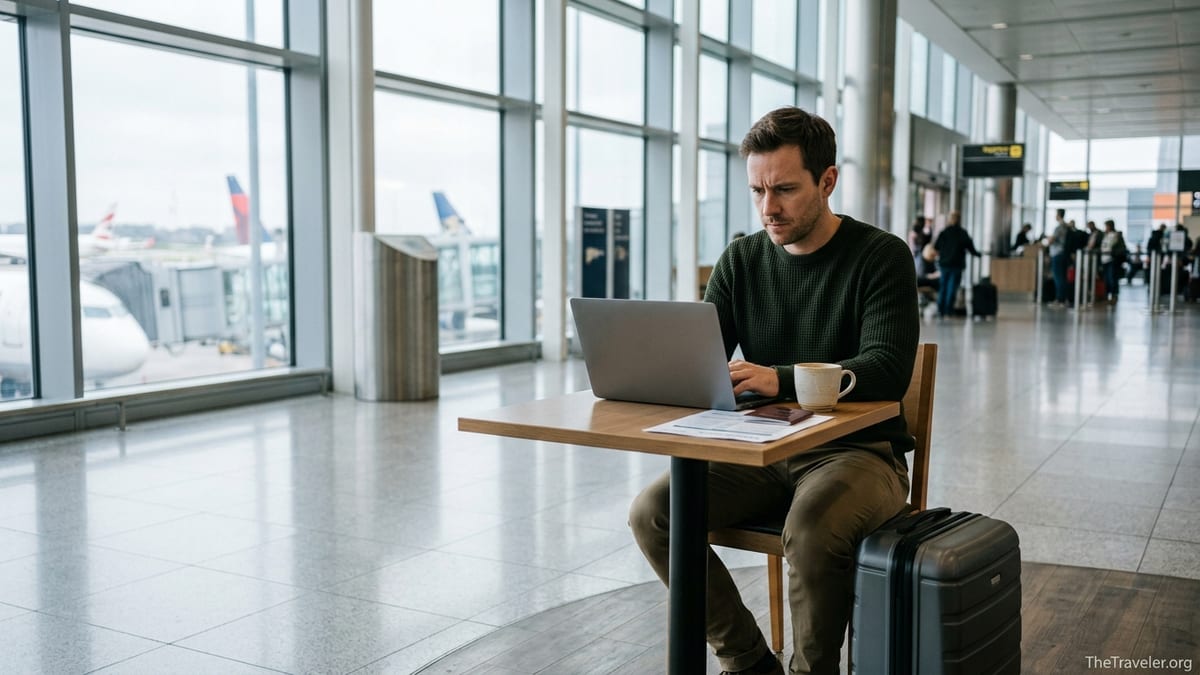
Why I Initially Doubted TravelSecure
My skepticism about TravelSecure started the way it does for many travelers: with online reviews. If you search for “travel insurance reviews” and sort by most helpful, you are met with horror stories about denied medical bills, delayed reimbursements, and companies that stop answering emails the moment you submit a claim. On Reddit travel forums, for instance, long threads describe months-long disputes with well-known providers where travelers fought to get hospital stays covered or trip cancellations honored. Reading those experiences, it is easy to conclude that all travel insurance, whatever the brand, is stacked against you.
TravelSecure did not stand out at first glance. It was another unfamiliar name in a sea of options, sitting alongside bigger players like Travelex, Trawick International, Generali, and Travel Guard. I saw references to a German provider called TravelSecure, the travel insurance brand of Würzburger Versicherungs AG, which offers international travel health insurance, cancellation cover, baggage, and accident protection with a 24-hour assistance hotline and a high volume of verified customer reviews in German. That sounded reassuring, but I wondered whether this would translate into a good experience for an English-speaking traveler, and whether it really worked as smoothly as the marketing suggested.
What really kept me from buying any policy, including TravelSecure, was the fear that the small print would undo the promises printed in large type. I imagined buying coverage for a long-planned trip to Japan, only to learn that my particular medical emergency or airline meltdown fell into a gray area. Until I could see how benefits, exclusions, and pricing stacked up against concrete scenarios, TravelSecure was just another logo I distrusted on principle.
The turning point came when I started planning more complex trips: a long weekend in Lisbon with tight connections, a three-week workation in Mexico with nonrefundable accommodations, and a multi-country rail itinerary through Central Europe. With more money on the line, I could no longer shrug off the risk. That was when I began comparing TravelSecure against competitors in detail rather than dismissing it on instinct.
Who Is Behind TravelSecure and What Do They Actually Cover?
One reason TravelSecure can be confusing is that the name appears in several contexts. In German-language markets, TravelSecure is the travel insurance brand of Würzburger Versicherungs AG, an insurer founded in 1989 that focuses on tailored travel cover. Their TravelSecure products are sold across Europe and are often bundled with accommodation providers. A typical package combines international medical coverage, trip cancellation insurance, luggage cover, and travel accident benefits, all backed by a worldwide 24-hour assistance hotline that helps policyholders locate doctors abroad or get emergency support if something goes wrong during a trip.
You will also see the TravelSecure label in other branded programs. For example, WorldMark TravelSecure is a private-label protection package for timeshare owners, offering medical and travel assistance, medical evacuation when you are at least 100 miles from home, roadside help if your car breaks down on the way to a resort, and limited baggage cover if your luggage is lost or delayed. There is also a Marsh TravelSecure program in Asia, built around comprehensive travel insurance and arranged by a global insurance broker. The key is that “TravelSecure” is sometimes a standalone retail product line, and sometimes a brand name attached to a broader membership or corporate plan.
Despite these variations, the core idea is consistent: TravelSecure-style products are meant to wrap several important protections into one bundle. In practice, that usually means emergency medical coverage abroad, support for medical evacuation, some form of trip cancellation or interruption reimbursement, baggage cover, and non-insurance travel assistance via a 24/7 hotline. While coverage limits and fine print differ by country and policy, the backbone is that if you are traveling outside your home system and something serious happens, you are not left negotiating with a foreign hospital alone.
It is also worth stressing what TravelSecure is not. Even in programs that sit alongside your regular health insurance, such as WorldMark TravelSecure, the documents specify that it is not intended to replace primary health insurance at home and may function as secondary or excess coverage. That means in a real emergency you might first use your domestic policy, and TravelSecure would cover out-of-pocket expenses, medical evacuation, or costs your main plan excludes. Understanding this relationship is crucial when comparing policies, because it affects both what you can realistically claim and what your total risk exposure looks like.
Putting TravelSecure Side by Side With Other Insurers
To see whether my distrust was justified, I compared TravelSecure-style offers with a few recognizable names Americans often encounter. Travelex, for example, sells retail travel protection plans that combine trip cancellation and interruption, emergency medical cover, and baggage protection. In a recent plan brochure for a custom Travel Secure branded product in the U.S. market, Travelex outlines classic inclusions like reimbursement if you cancel for a covered reason shortly before departure, emergency medical benefits up to a fixed limit, and non-insurance services such as travel assistance and concierge support. Similarly, companies like Trawick International bundle emergency medical coverage with benefits like political evacuation and accidental death, along with a menu of assistance services available worldwide.
On the European side, TravelSecure by Würzburger positions itself most strongly in the area of international medical cover. A typical policy for trips up to one year focuses on covering outpatient and inpatient treatment abroad, medically necessary return transport to your home country, and 24-hour emergency assistance. Trip cancellation or baggage cover can often be added as separate modules. Pricing is structured per travel day and varies depending on whether the United States and Canada are included or excluded, reflecting the much higher cost of healthcare in those regions. A sample rate list shows that for a traveler under 35, a work and travel health policy without U.S. or Canada might cost around one euro per day, while adding those countries can roughly triple the daily premium.
Compared to North American competitors that often package everything together under a single brand, TravelSecure’s modular approach can actually be a strength for travelers who are primarily worried about medical costs. Instead of paying for a large bundle of cancellation and baggage benefits you may never use, you can focus your budget on high-quality overseas health insurance and evacuation cover, then decide separately whether you want strong trip cancellation insurance from the same provider or from a specialist. There is no universally best approach, but understanding how TravelSecure’s structure differs from one-size-fits-all U.S. policies makes the decision more intentional.
Customer feedback is another angle where TravelSecure stands out from some peers. The German TravelSecure brand has accumulated thousands of verified reviews through independent providers in recent years. A large majority of those ratings are positive, with travelers praising fast reimbursement of outpatient bills, quick handling of claims submitted online, and friendly telephone support during stressful situations. That does not guarantee your own claim will go smoothly, but it contrasts sharply with the comment sections of some global brands where the loudest voices are often those who spent months fighting for reimbursement.
Real-World Scenarios That Changed My Mind
My theoretical comparison would have remained just that if I had not looked at real trip scenarios in detail. The first was a simple city break: a four-day trip from Chicago to Lisbon for a couple in their early thirties. Their flights and nonrefundable apartment rental together cost about 2,400 dollars. They were relatively healthy, but they were traveling in the middle of winter, when respiratory infections and airline disruptions are far more common. In that situation, they were primarily worried about a last-minute illness forcing them to cancel, or a sudden medical issue in Portugal leading to a hospital visit.
For this trip, a standalone international health policy from a provider like TravelSecure’s German brand, focused solely on medical cover and assistance, would have been inexpensive. Daily premiums in similar products for travelers under 35 who exclude the U.S. and Canada can run in the low single digits in euro terms per day for short trips. The couple could then add a modest trip cancellation policy from any reputable insurer to cover the 2,400 dollars of nonrefundable costs. The combined premium still came in far below ten percent of the trip cost, which is a rule of thumb many travelers use when judging whether insurance is reasonably priced.
The second scenario was more complex. A 23-year-old student planned a ten-month work-and-travel year split between Australia and Southeast Asia. Her primary concern was long-term medical coverage abroad: routine doctor visits, emergencies like appendicitis, and the possibility of being medically evacuated back home if something catastrophic happened. For her, a long-term TravelSecure-style work-and-travel health plan priced per day made more sense than a short-term trip cancellation heavy policy that assumes you return home after two or three weeks. Given her age and the fact that she did not need initial coverage for the United States, a daily premium around one euro for medical cover alone was competitive with global youth-focused packages from other brands.
The third case that switched my mindset was a real claim, not just a hypothetical. A German family insured under the TravelSecure Young product for their daughter’s gap year abroad described how minor outpatient treatment costs were reimbursed quickly after online submission and how a more complicated emergency hospital visit required more back and forth with the insurer but was ultimately covered. Their experience mirrored some of the more detailed reviews in German that mention both frustrations and eventual successful payouts. What struck me was not perfection, but the absence of outright refusal to engage. Even in more complex cases, TravelSecure’s assistance and claims teams did eventually come through.
By mapping these examples onto my own travel style, I realized that my blanket skepticism was not entirely fair. Yes, some travelers have bad experiences with every insurer, including those operating under the TravelSecure label. But when you dig into the specifics, you see patterns: those who understand the difference between medical-only policies and bundled trip protection, who choose plans aligned with their actual risk profile, and who document their claims meticulously, are far more likely to obtain the promised benefits.
Key Benefits Where TravelSecure Stood Out
As I read policy documents and customer stories side by side, a few strengths repeatedly pushed TravelSecure higher on my list. The first was the emphasis on emergency medical and evacuation cover, which is arguably the single most critical element of any travel policy. In multiple TravelSecure-branded products, from the German international health plans to private-label programs in North America, the documentation highlights 24-hour access to a medical assistance provider that can locate suitable hospitals, coordinate admissions, and, if necessary, authorize medical evacuation back to your home country when it is medically justified.
This matters in real life. Imagine you break your ankle while hiking in the Austrian Alps, or develop sudden severe abdominal pain on an island in Thailand. Without a robust assistance network, you might be left searching online for the nearest clinic, struggling with language barriers, and fronting thousands of dollars in deposits. With a TravelSecure plan that prioritizes medical care, you can call a toll-free or collect number, reach a multilingual coordinator, and have them direct you to an appropriate facility while they liaise directly with the hospital on payment and guarantees. Travelers who have filed claims under TravelSecure’s health policies frequently mention this back-office help as more valuable than the reimbursement itself.
The second strength is flexibility. Because TravelSecure is often modular, you can decide whether to add trip cancellation, baggage, or accident coverage based on your itinerary and budget. For a quick weekend in a neighboring country where your out-of-pocket cost is limited to a low-cost carrier ticket and a hotel that allows cancellation up to 24 hours before arrival, you might reasonably skip cancellation cover and only buy medical insurance. By contrast, for a nonrefundable safari package in Kenya or a luxury cruise in the Mediterranean booked a year in advance, opting into a higher-level cancellation and interruption module becomes far more attractive. The ability to scale up or down helps you avoid both underinsurance and unnecessary premiums.
Customer service reputation is a third area where TravelSecure particularly in its European incarnation compares well against some global competitors. Independent review platforms that aggregate TravelSecure customer feedback show a very high share of positive ratings in recent years, with many reviews explicitly mentioning quick processing of claims and courteous telephone support. For instance, travelers report submitting doctors’ bills online after treatment abroad and receiving reimbursement within days, not months. While any insurer will have some negative reviews, the overall tone is markedly more positive than the uniformly grim comment sections attached to certain other brands discussed frequently in English-language travel forums.
Finally, TravelSecure’s positioning as a travel specialist rather than a generalist insurer plays in its favor. Because these products are built around travel risk rather than bolted onto a broad property and casualty portfolio, the coverage language is often clearer about what happens when you are more than 100 miles from home, how pre-existing conditions are handled, and what constitutes a covered medical emergency. That specificity reduces the gray areas that often fuel disputes and helps both travelers and claims adjusters align their expectations.
Where the Fine Print Still Demands Caution
None of this means TravelSecure is flawless or that you can ignore the small print. If anything, spending more time with their documents made me more insistent on reading every clause before buying, regardless of insurer. For example, pre-existing conditions are a common flashpoint. Some travel policies, whether branded TravelSecure or otherwise, exclude coverage for medical issues that were diagnosed or showed symptoms before you purchased the insurance. Others may cover stable, well-managed conditions but not flare-ups that could reasonably have been anticipated. If you have chronic asthma, a heart condition, or are recovering from recent surgery, you must study how your chosen plan defines and treats pre-existing conditions and consider whether a waiver is available.
Coverage limits are another area that can mislead the unwary. A headline may mention a seemingly large figure for emergency medical cover, but the sub-limits for specific types of treatment, dental care, or evacuation may be much lower. For instance, one policy might advertise high overall medical coverage but cap ambulance costs or limit return transport to a set maximum that would be insufficient for an air ambulance flight from a remote region. Before relying on any TravelSecure-style product, you should ask yourself whether the stated limits would realistically cover a worst-case scenario in your planned destinations, especially in countries with expensive private healthcare systems.
Cancellation and interruption benefits also come with strings attached. Whether you purchase those modules from TravelSecure or another insurer, they usually require that your reason for canceling fall into a list of “covered reasons” such as serious illness certified by a doctor, death in the immediate family, significant damage to your primary residence, or certain types of strike or severe weather. Fear of travel, change of mind, or minor inconveniences are almost never covered. Some policies offer “cancel for any reason” upgrades at a higher premium, but even those often reimburse only a percentage of your lost trip cost and require you to buy the coverage within a tight time window after your first trip payment.
The final caution is administrative rather than legal. Even insurers with a strong reputation, such as TravelSecure, rely on travelers to provide complete documentation. That means keeping receipts for every bill, asking doctors abroad for detailed treatment reports, saving boarding passes, and recording the reasons for delays, cancellations, or missed connections. Many of the most frustrated reviews about travel insurance stem from incomplete paperwork or missed deadlines. Insurers are strict about those rules because they are the backbone of their fraud prevention systems. If you are not prepared to act as your own record-keeper, no brand no matter how well-reviewed will feel smooth during a claim.
How to Decide if TravelSecure Is Right for Your Trip
By the time I finished comparing TravelSecure to other major travel insurers, my position had shifted from blanket suspicion to conditional trust. The conditional part is important. TravelSecure can be an excellent fit if you understand what it is particularly good at, if your trip profile aligns with its strengths, and if you are willing to do a small amount of homework before buying. It is not a magic shield that makes every risk disappear, and in some cases another provider may offer a better match for your needs or residence country.
Start by mapping your trip risks. If you are a student or digital nomad planning months abroad with a focus on affordable but reliable international health coverage, a TravelSecure-style medical policy may serve you better than a cancellation-heavy package from a cruise-focused brand. Look for products specifically designed for long stays, work and travel programs, or study abroad, and pay attention to whether coverage extends beyond the first few weeks. If, on the other hand, you have a single, very expensive package trip such as a Galapagos cruise or a luxury expedition cruise to Antarctica, your primary worry may be losing tens of thousands of dollars to an unexpected illness right before departure. In that case, a policy whose cancellation and interruption benefits are more generous, even at a higher premium, could be the smarter choice.
Your home country matters as well. TravelSecure’s strongest, most established offerings are in German-speaking markets, where policy wordings, customer support, and claims processes are optimized for residents there. If you live in the United States or Canada, you may encounter TravelSecure branding attached to programs administered by different companies, each with their own underwriting and claims departments. Before you buy, confirm which insurer is actually standing behind the plan, which assistance company handles the 24/7 hotline, and whether claims are managed domestically or overseas. This will affect response times, payment methods, and how easily you can escalate issues if something goes wrong.
Finally, consider how much hand-holding you want if an emergency happens. Some budget policies focus on reimbursement only: you pay everything upfront, then apply for repayment when you get home. TravelSecure-branded products that emphasize assistance can sometimes arrange direct payment to hospitals or at least provide guarantees that reduce your need to front large sums. If you are worried about finding English-speaking medical care in rural areas or dealing with foreign hospital administrators, that assistance component is arguably as important as the raw financial limits listed on the brochure.
The Takeaway
My journey with TravelSecure began in the same cynical place many frequent travelers occupy. Surrounded by threads describing nightmare claims and fine-print exclusions, I assumed every insurer was essentially the same. Yet once I started comparing real policy documents, pricing examples, and genuine customer experiences, TravelSecure in its various incarnations emerged as more than just another brand name. Its focus on robust emergency medical and evacuation cover, modular structure that lets you choose add-ons like cancellation and baggage, and a generally strong service reputation in its core markets set it apart from some of the better-known names that dominate English-language advertising.
That does not mean you should buy the first TravelSecure-branded product you see without reading the small print. Pre-existing condition rules, coverage limits, and claim documentation requirements still demand careful attention. Nor is TravelSecure automatically superior to every competitor for every traveler. A U.S.-based family taking a complex cruise itinerary, a Canadian backpacker on a shoestring, and a German digital nomad spending a year in Southeast Asia will each need different combinations of benefits and may find a better match with different insurers.
What changed for me was the realization that skepticism needs to evolve into informed scrutiny rather than blanket refusal. After comparing TravelSecure to its rivals and looking closely at real-world cases, I would now be comfortable recommending it as an option worth serious consideration, especially for travelers prioritizing medical protection and reliable assistance overseas. In a world where one unlucky accident or illness can turn a dream trip into a financial crisis, a carefully chosen travel insurance policy is less of an optional extra and more of a safety net. TravelSecure, used thoughtfully and matched correctly to your trip, can be a solid part of that net.
FAQ
Q1. Is TravelSecure a single insurance company or just a brand name?
TravelSecure is primarily a brand name used for travel insurance products. In Germany it is the travel insurance brand of Würzburger Versicherungs AG, while in other regions the TravelSecure label can appear on private-label programs administered by different insurers or brokers.
Q2. What types of coverage does TravelSecure typically include?
Most TravelSecure-branded products focus on emergency medical treatment abroad, medical evacuation, and 24/7 assistance services. Many also offer optional trip cancellation and interruption benefits, baggage cover, and accidental death or disability protection, though the exact mix depends on the specific plan and country of residence.
Q3. How does TravelSecure compare on price with other travel insurers?
TravelSecure’s pricing is competitive, especially for medical-focused policies in European markets. For younger travelers and those excluding high-cost regions like the United States and Canada, daily premiums for international health coverage are often in the low single digits in euro terms, which compares favorably with many global competitors.
Q4. Does TravelSecure cover pre-existing medical conditions?
Coverage of pre-existing conditions depends on the specific policy. Some TravelSecure-style plans exclude medical issues that existed before purchase, while others may cover stable, well-controlled conditions under certain conditions. It is essential to read the pre-existing condition section of the policy wording carefully and, if needed, ask the insurer for written clarification before you buy.
Q5. Can I buy TravelSecure if I live in the United States?
TravelSecure’s flagship products are marketed primarily to European residents, particularly in German-speaking countries. Travelers in the United States may encounter TravelSecure-branded plans through private-label programs or partner offerings, but availability, benefits, and underwriting insurers will differ. Always check eligibility rules and confirm which company is actually issuing the policy.
Q6. How reliable is TravelSecure when it comes to paying claims?
No insurer pays every claim, but TravelSecure’s German brand in particular has accumulated a high proportion of positive customer reviews, with many travelers reporting quick reimbursement after submitting medical bills and generally responsive service. As with any insurer, outcomes depend on whether the claim falls within the policy’s terms and whether documentation is complete.
Q7. Does TravelSecure offer long-term coverage for digital nomads or students abroad?
Yes, some TravelSecure-branded policies are specifically designed for long stays, such as work-and-travel programs, gap years, or study abroad. These plans can provide international health coverage for several months up to a year or more, often with pricing calculated per travel day, which can be attractive for digital nomads and students.
Q8. Is trip cancellation always included in TravelSecure policies?
Not always. In many cases, TravelSecure treats cancellation as a separate module that you can add to a core medical policy. This modular approach lets travelers who are mainly concerned about health costs abroad buy only medical cover, while those with expensive nonrefundable bookings can opt in to cancellation and interruption benefits at an additional premium.
Q9. How important is the 24/7 assistance service in a TravelSecure plan?
The 24/7 assistance service is one of the most valuable components of any TravelSecure-style policy. Beyond financial reimbursement, it connects you with multilingual staff who can help locate nearby doctors or hospitals, arrange transportation, coordinate with medical providers, and advise on next steps in an emergency, which is particularly useful when you face language barriers or unfamiliar health systems.
Q10. What should I do before buying any TravelSecure policy?
Before buying, review your trip itinerary, total nonrefundable costs, and personal health situation. Read the full policy wording, focusing on medical limits, pre-existing condition rules, cancellation reasons, and claim documentation requirements. Confirm your eligibility based on residence and age, and if anything is unclear, contact the insurer or broker and request written clarification so you know exactly what you are purchasing.