


More news on this day
A global aviation industry group is urging airline passengers to rethink one deeply ingrained habit during in flight emergencies, warning that pausing to retrieve carry on bags in an evacuation can slow escape, block exits and ultimately cost lives.
Get the latest news straight to your inbox!
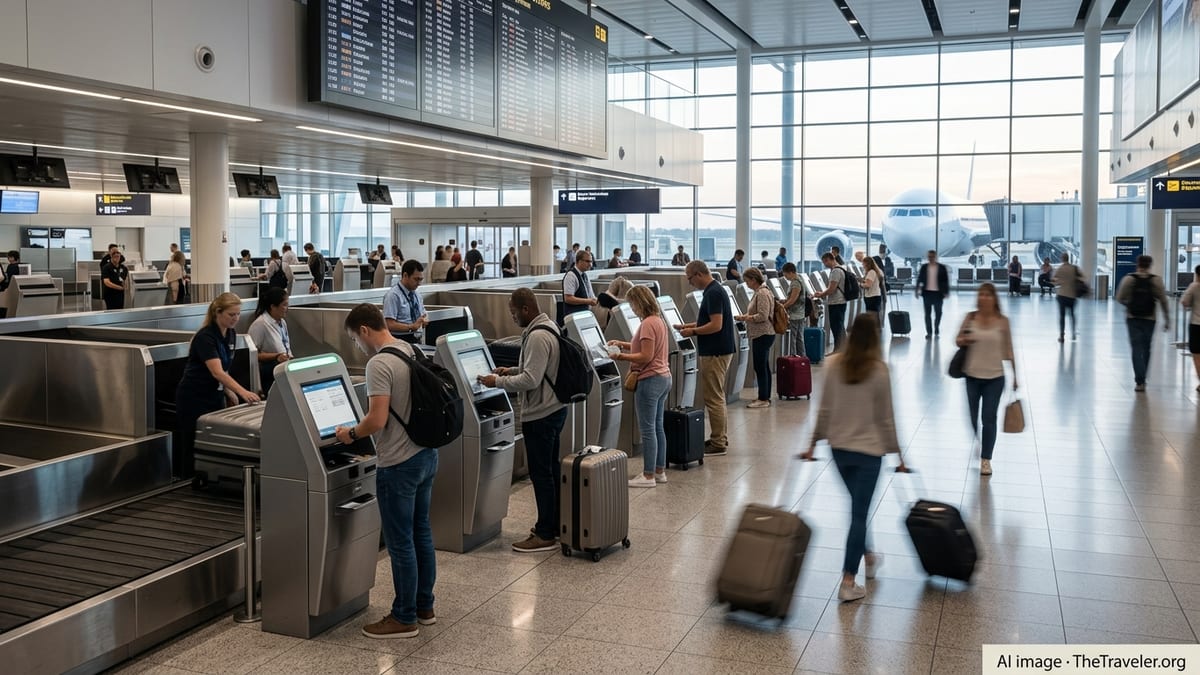
New IATA campaign targets a persistent safety risk
The International Air Transport Association has launched a global awareness drive focused on what it calls a critical but preventable risk during emergency evacuations. Publicly available information shows that the campaign, branded with the message “Save a Life, Not a Bag,” is aimed at persuading passengers to leave all personal belongings behind when ordered to exit an aircraft.
According to published coverage, the initiative follows growing concern that real world evacuations are taking longer than certification tests anticipate, partly because passengers stop to reach into overhead lockers or under seat spaces for items such as backpacks, roller bags and laptops. Industry data and incident reports indicate that even a small number of people delaying their exit can have a knock on effect as queues form in narrow aisles and at emergency exits.
IATA, which represents most of the world’s major airlines, has been highlighting evacuation behavior in successive annual safety reports. The latest documents emphasize that passengers are expected to move quickly to the nearest usable exit, follow cabin crew instructions and abandon all bags, regardless of their monetary or sentimental value.
Public messaging around the new campaign stresses that evacuations remain rare events in commercial aviation, but that when they do occur every second can make a difference to survival, particularly in situations involving smoke, fire or structural damage to the aircraft.
Evidence that passengers still reach for luggage
Safety reports, social media clips and investigations into recent incidents indicate that attempts to retrieve carry on luggage remain common despite repeated briefings and cabin announcements. Industry analyses summarized in IATA’s 2025 safety documentation note continuing accounts of travelers leaving the aircraft while still carrying suitcases, handbags and rucksacks, or pausing in the aisle to open overhead bins.
Footage shared after several high profile evacuations in recent years has shown passengers stepping onto slides with wheeled bags or large backpacks in hand. Commentaries in aviation trade media describe how such behavior can reduce the capacity of evacuation slides, create trip hazards, and in some cases risk puncturing or damaging the slide surface. Each delay can also slow passengers further back in the cabin who may be exposed to smoke or fire for longer periods.
Analysis of training scenarios cited in specialist coverage suggests that crew efforts to enforce the “no baggage” rule are sometimes undermined by the speed at which passengers move once an exit is opened. In tightly packed cabins, even one person turning back for a bag can disrupt the flow and encourage others to do the same, compounding the delay.
Observers point out that the rapid spread of video recorded in emergencies has added a modern twist, with some travelers choosing to film the evacuation on mobile phones. The new campaign explicitly reminds passengers that recording or searching for devices during an evacuation is incompatible with moving quickly and keeping aisles clear.
From warnings to potential design changes
Beyond public messaging, industry discussions are increasingly turning to whether aircraft interiors may need to adapt if passenger behavior does not change. Reporting in European and regional outlets indicates that IATA has flagged the possibility of lobbying for lockable overhead bins that would automatically secure in an emergency, preventing last minute access to cabin baggage.
The idea of physically restricting access to bags has been debated in aviation forums for several years, with some supporters arguing that it may be the only effective way to guarantee compliance in a real crisis. Others have raised concerns about the practicality and cost of retrofitting existing fleets, as well as the need to ensure that any locking system does not itself become a hazard or impede crew access to safety equipment.
For now, the association appears focused on education rather than hardware changes. Publicly available statements associated with the campaign suggest that IATA plans to work with member airlines on refreshed safety videos, clearer pre flight announcements and potentially new visual symbols on boarding passes or cabin signage that reinforce the instruction to leave everything behind during an evacuation.
Regulators and manufacturers are also tracking the debate, as evacuation performance is a key factor in the certification of new aircraft types. Any move toward redesigned cabin features would need to align with existing evacuation standards and testing methods.
Why seconds matter in an evacuation
International safety data show that commercial air travel remains one of the safest forms of transport, with fatal accidents extremely rare relative to the billions of passengers carried each year. However, when accidents or serious incidents do occur, the timeline for safe evacuation can be unforgiving, particularly if fire, smoke or structural damage are involved.
Accident summaries published by IATA and other aviation bodies emphasize that in many events, crews have only minimal warning before an emergency landing or runway overrun. Cabin staff are often unable to carry out more than standard pre landing checks, which means the initial safety briefing and passengers’ prior awareness become crucial.
Analyses of both real incidents and training exercises suggest that keeping aisles and exits clear is one of the most important determinants of a rapid evacuation. Bags in the aisle or carried on the body can narrow already tight spaces, slow the process of sliding and moving away from the aircraft, and risk injuries if they strike other passengers or crew.
Some recent investigations have also drawn attention to contrasting examples where strong compliance with evacuation instructions appeared to contribute to successful outcomes. Coverage of serious incidents in which all passengers escaped notes that rapid movement to exits, with no visible hand luggage, helped avoid blockages and allowed evacuation slides to operate at near maximum capacity.
What travelers are being urged to do
Through the new campaign, IATA and its member airlines are seeking to shift passenger expectations long before any emergency occurs. The core message, summarized in public information materials, is that travelers should mentally prepare to abandon all personal items, including valuables and passports, if cabin crew ever issue an evacuation order.
Passengers are being reminded to pay attention to safety demonstrations, review the briefing card in their seat pocket and identify the nearest and alternative exits on every flight. The campaign materials reiterate three basic instructions for emergencies: follow crew directions without delay, move quickly to the nearest usable exit, and leave all baggage behind in the cabin.
Aviation commentators note that the effort sits alongside other education drives on topics such as lithium battery risks, turbulence related injuries and unruly behavior on board. Together, these initiatives aim to ensure that, in rare moments when something does go wrong, passengers’ first instinct supports safety procedures rather than undermines them.
With peak summer travel approaching in many regions, industry observers suggest that the timing of the campaign is intended to reach as many travelers as possible. Whether warnings about the dangers of grabbing a bag in an emergency will translate into changed behavior may become apparent only in future incident reports, but the message from the sector is clear: in a crisis, lives must take precedence over luggage.