


Dark Hollow Falls is one of the most photographed waterfalls in Shenandoah National Park, and also one of its busiest. With a steep, short trail that starts right off Skyline Drive near Big Meadows, it is easy to reach but surprisingly tricky to time. Visit at the wrong moment and you may find a thin trickle of water and a line of people waiting for the same shot. Choose your season, day, and hour carefully, however, and this 70-foot cascade becomes a dream subject for waterfall photography, with cool forest light, strong flow, and enough quiet to work a tripod in peace.
Get the latest updates straight to your inbox!
Understanding Dark Hollow Falls and Its Seasons
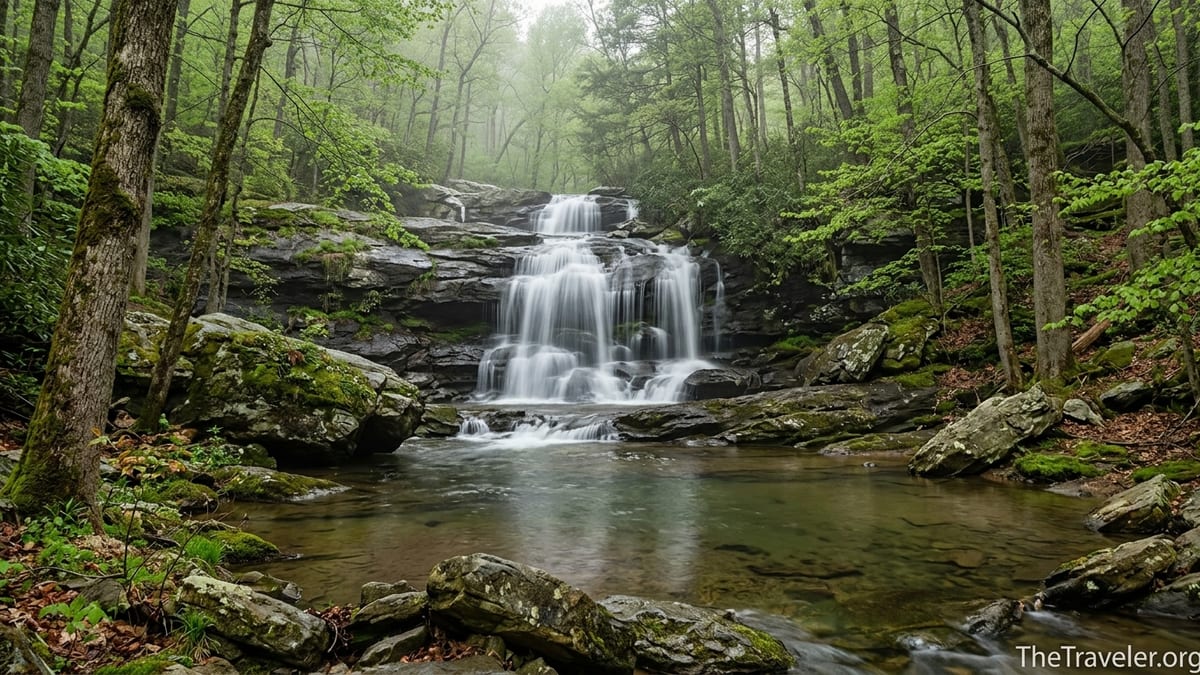
Dark Hollow Falls sits in the central district of Shenandoah National Park, a short but steep 1.4 mile round-trip hike from a small parking lot at mile 50.7 on Skyline Drive. The trail follows a perennial stream down through mixed hardwood forest to the base of a 70-foot cascade, where the water fans over mossy rock ledges before collecting in shallow pools. Because it is close to the road, relatively short, and offers a big visual payoff, it is one of the most popular waterfall trails in the park.
The character of the falls changes noticeably with the seasons. In late winter and spring, snowmelt and frequent storms typically feed strong, fast-flowing water that fills every ledge. Summer can bring lush greenery but also lower flows between rain events, especially after dry spells. By late fall, leaf color and filtered light become the main attractions, while winter can alternate between bare-rock trickles and striking ice formations, depending on recent temperatures and precipitation.
These shifts mean there is no single “best” time that suits every photographer. If your priority is dramatic water volume, your ideal window is usually different from a traveler hoping for golden foliage or empty trails. The good news is that with a bit of planning, you can stack the odds in your favor, choosing both season and time of day that match your priorities for water flow, lighting, and crowd levels.
Short-term conditions matter just as much as the calendar. A modest spring storm that drops steady rain for a day or two can temporarily transform an otherwise modest late April flow into a powerful white curtain. Conversely, a hot, dry week in July can significantly reduce volume, leaving more exposed rock but also offering good opportunities for close-up compositions of rivulets and textures.
Spring: Prime Season for Water Volume
For most photographers focused on water flow, late March through May is the sweet spot at Dark Hollow Falls. This is when snowmelt from the higher ridges and frequent frontal systems typically combine to keep the stream running high. Hikers often report the falls “roaring” in April, with the main chute filled edge to edge and secondary rivulets running down mossy sidewalls. In wet years, you may hear the sound of the cascade from well up the trail before the first glimpse through the trees.
From a photographic standpoint, spring offers a mix of bare branches, emerging greens, and wildflowers along the trail. Early in the season, the open canopy lets more light reach the stream, which can be helpful on cloudy days but harsh in full sun. By late April and May, leaves start to soften the light, giving you more opportunities to shoot mid-morning or mid-afternoon without direct glare on the water. This is an excellent period for long exposures, with stable rock ledges where you can safely set up a tripod as long as you avoid wet, slippery edges.
Crowds begin to build on weekends as temperatures warm and Skyline Drive becomes more accessible after winter storms. If you travel in April or May and want space to work, plan a weekday visit and aim to reach the parking lot before 9 a.m. Many local visitors from Washington, DC and Charlottesville make day trips that start later in the morning, and arrival patterns at the lot typically reflect that. Early arrivals often have enough time to work multiple angles at the base and intermediate viewpoints before the bulk of hikers reach the falls.
Spring weather can be unpredictable, so flexibility is important. Keep an eye on regional forecasts for the Blue Ridge. If a system brings one or two days of steady rain, the first clear or lightly overcast morning afterward can deliver both rich flow and manageable trail conditions. Muddy sections and slick rocks are common when the trail is wet, so sturdy hiking shoes with good traction are essential both for safety and for confidently positioning yourself for low-angle compositions.
Summer: Balancing Greenery, Flow, and Heavy Visitation
Summer at Dark Hollow Falls brings thick, green foliage and warm temperatures that make the shaded ravine feel pleasantly cool. It is also the period when Shenandoah National Park sees some of its heaviest visitation, especially from late June through August. The falls’ reputation as a short, “must-do” hike near Big Meadows means that on weekend afternoons, the trail can feel like a continuous line of people. For photographers, this can be challenging, but smart timing still makes rewarding images possible.
In many summers, overall water volume is lower than in spring, especially after a prolonged dry spell. You may find the main chute narrowed to a central thread, with more exposed rock shelves. Rather than seeing this as a disadvantage, treat it as an invitation to focus on intimate scenes: a single ribbon of water slipping past bright green moss, reflections of leaves in calm pools, or close-ups of cascades framed by rhododendron and ferns. A polarizing filter becomes especially valuable in these conditions, cutting glare and deepening color in wet rock and foliage.
The key to escaping crowds in summer is to work the edges of the day. Arriving just after sunrise on a July weekday, for instance, you might find only a few cars in the parking lot and have the base of the falls nearly to yourself for 20 to 30 minutes. Similarly, starting down the trail after 4 or 5 p.m. often puts you out of sync with most visitors who are wrapping up their hikes or heading to dinner at Big Meadows Lodge. The forest canopy also means late-afternoon light tends to be filtered and soft, ideal for smoothing the water with quarter-second to multi-second shutter speeds.
Another effective strategy is to build Dark Hollow Falls into a longer circuit that includes Rose River Falls, which shares the same drainage and offers additional cascades. Some photographers park at Fishers Gap Overlook and hike the Rose River Loop to reach the base of Dark Hollow Falls from downstream. This approach spreads out your time and gives you multiple locations along the creek to work with, so if Dark Hollow itself is crowded, you can focus on quieter stretches of the stream before returning later in the day.
Fall: Foliage, Soft Light, and Strategic Timing
Autumn might be the most visually rewarding time to photograph Dark Hollow Falls, particularly in early to mid-October when Shenandoah’s central district often reaches peak or near-peak color. The mix of yellow, orange, and occasional red leaves framing the falls can transform otherwise modest flow into a painterly scene. Even when the water is not at spring volume, the combination of foliage and soft, slanting light can yield striking compositions.
Fall also coincides with one of the busiest periods on Skyline Drive. Weekend leaf-peeping traffic can back up at entrance stations, and small trailhead lots like Dark Hollow’s often fill quickly by mid-morning. To keep focus on photography rather than parking, check into lodging at Big Meadows Lodge or the nearby campground if possible, and walk or drive the short distance to the trailhead well before the day’s first big wave of visitors. Sunrise hikers frequently report having the trail largely to themselves on otherwise crowded October Saturdays.
From a lighting perspective, fall works in your favor. The sun sits lower in the sky, and the mixed canopy of color helps diffuse direct rays. Overcast days are actually an advantage here, enriching saturation in the leaves and allowing slower shutter speeds without filters. On brighter days, aim for early and late windows: perhaps a 30-minute shooting session at the base of the falls shortly after sunrise, then a return visit in late afternoon as the ravine falls into open shade.
Falling leaves introduce additional creative possibilities. As the season progresses, look for eddies in the pools where yellow and orange leaves spin in slow circles. With a multi-second exposure and a stable tripod, these moving leaves can create subtle, glowing arcs around the base of the cascade. Be prepared to wait patiently for people to clear your frame; at this time of year, even early and late visits can bring a steady trickle of hikers eager to pause on the rocks for their own photos.
Winter: Quiet Trails, Ice Formations, and Safety Considerations
Winter is the least predictable but often the quietest season at Dark Hollow Falls. Access along Skyline Drive can be intermittent, as the road sometimes closes temporarily after snow, sleet, or ice. When conditions allow the drive and trail to remain open, however, January and February can offer a very different photographic experience: bare-branched trees, hushed air, and if you are lucky, intricate ice formations clinging to the rock face.
Water flow in winter varies depending on recent weather. Prolonged freezes can reduce open water to thin streams framed by ice, while milder stretches or rain-on-snow events can briefly boost the cascade to a powerful rush. Because the forest canopy is bare, direct sunlight can reach the falls for parts of the day, creating high contrast that is better handled either early in the morning, late in the afternoon, or under a fully overcast sky.
The biggest advantage for those seeking smaller crowds is solitude. On a cold weekday with stable conditions, it is not unusual for photographers to have long stretches on the trail without seeing anyone else. This gives you the freedom to experiment with angles, set up tripods in narrow spots, and wait for changing light without feeling in the way. The trade-off is the increased risk of ice on rocks and steps, especially near the water and in shaded portions of the trail.
Good winter preparation is essential. Microspikes or similar traction devices can make a dramatic difference in stability on compacted snow or hidden ice patches. Waterproof boots with warm socks help keep you comfortable when kneeling near the water’s edge for low compositions. Because daylight is short, aim to start your descent with plenty of time to climb back to the trailhead before dusk, especially if temperatures are forecast to drop rapidly in late afternoon.
Time of Day: When Light, Water, and People Align
Regardless of season, time of day is the single most powerful lever you can pull to reconcile water flow, light quality, and crowd levels at Dark Hollow Falls. The geometry of the ravine and the surrounding forest means that the falls are rarely in full, harsh sun for long, but mid-day visits on clear days can still produce patchy light and strong contrasts. For most photographers, the best windows are early morning and late afternoon, especially on partly cloudy or overcast days.
If your priority is minimizing crowds, aim to reach the parking area soon after sunrise, particularly on weekends and holidays in spring, summer, and fall. Many visitors staying at Big Meadows will not begin hiking until breakfast hours at the lodge or campgrounds, creating a reliable lull in the first hour or so of daylight. With a quick descent, you may have the base of the falls to yourself or share it with only one or two other early risers. This is also a good time to capture mist rising from the water on cool mornings.
Late afternoon and early evening provide a second opportunity. Families with small children often finish hikes earlier in the day, and many day-trippers aim to exit the park or line up sunset viewpoints from roadside overlooks rather than deep in the woods. Starting your hike around 4 to 5 p.m. in summer, for instance, can place you at the base around the time the ravine falls into soft open shade. Plan enough time for your return climb, factoring in a slower pace with gear and frequent stops to shoot on the way up.
For those who enjoy experimenting with long exposures, overcast days often outperform clear blue skies. Even in mid-morning, cloud cover keeps contrast manageable and allows you to stretch shutter speeds without stacking too many filters. If bright patches of sky peek through the canopy, consider compositions that minimize or eliminate them, focusing instead on water, rock, and forest. This not only simplifies exposure but also keeps attention on the falls themselves.
Practical Tips for Photographers: Gear, Angles, and Etiquette
Dark Hollow Falls is popular with everyone from phone photographers to serious hobbyists carrying full-frame DSLR or mirrorless kits. You do not need specialized equipment to capture strong images, but a few targeted gear choices can help you make the most of your visit. A compact tripod or travel-friendly carbon-fiber model is useful for long exposures, as are a circular polarizing filter and, if you plan to shoot in brighter conditions, a neutral density filter in the 3 to 6 stop range.
A wide to standard zoom lens, such as a 16–35 mm or 24–70 mm equivalent, covers most compositions at the falls. Wider focal lengths work well from the lower viewing area, allowing you to include foreground rocks or flowing water as a leading line, while mid-range focal lengths are effective for framing sections of the cascade or isolating patterns in the water. Many photographers find themselves working in the 20 to 35 mm range for classic views, shifting to 50 to 70 mm for tighter abstracts of the main chute.
Angles are constrained by the narrow ravine and designated viewing areas, but there is still room for variety. From the main lower platform, you can shoot straight on to capture the entire falls, or step slightly downstream to frame the cascade diagonally with the creek flowing out of the frame. Just upstream from the base, a side path leads to an intermediate viewpoint that offers a different perspective on the upper tiers. Always respect railings, closures, and any posted warnings; both rocks and logs near the water’s edge can be unexpectedly slick year-round.
Because the trail is busy in most seasons, good trail etiquette is key to a smooth session. Keep your gear compact when other hikers are present, step aside promptly to allow people to pass on narrow sections, and avoid blocking key viewpoints for long periods when others are waiting. Many visitors appreciate a quick word if you plan a longer exposure series, and brief collaboration often leads to informal “turn-taking” that allows everyone a chance at the classic angles.
Planning Your Visit: Logistics, Closures, and Weather Checks
Before you commit to a specific day for photographing Dark Hollow Falls, it is worth checking a few practical details. Skyline Drive occasionally closes sections during and after major storms for fallen trees, ice, or road damage, and maintenance projects can temporarily affect popular trails. In August 2024, for example, the park announced a partial closure of the Dark Hollow Falls Trail to repair washed-out sections, underscoring how quickly conditions can change after heavy rain. Checking official park updates in the days before your trip helps avoid surprises at the gate.
Because Dark Hollow Falls is near the Big Meadows area, it integrates well into a broader photo-focused itinerary in central Shenandoah. Many photographers book a night at Big Meadows Lodge or the nearby campground so they can shoot sunrise or sunset from an overlook, then walk or drive a short distance to the falls in the early morning. This arrangement minimizes driving in low light and gives you flexibility to adjust plans if weather changes suddenly, such as fog rolling in along the ridge.
Weather plays a double role, affecting both water flow and photographic conditions. A strong thunderstorm line that passes through the Blue Ridge can leave the creek running high for a day or two, but it can also drop limbs and wash debris onto the trail. Light, steady rain over several hours is often more ideal for photographers: it builds water volume without severe runoff and deepens colors in the forest. Many visitors choose to hike Dark Hollow Falls in a light drizzle or shortly afterward, wearing simple rain shells and using microfiber cloths to keep lenses clear of drops.
It is also important to plan for the physical effort of the hike, especially if you are carrying camera gear. Although the distance is short, the 440 feet of elevation gain on the return climb feels demanding for some visitors, particularly on hot or humid summer afternoons. Pack water even if you expect to be out for only an hour, and consider trekking poles if you prefer extra stability on steep descents and ascents with a loaded backpack.
FAQ
Q1. When is the single best month to photograph Dark Hollow Falls for strong water flow?
April is often the best balance of strong water flow from snowmelt and spring storms, moderate temperatures, and increasingly green surroundings, though exact conditions vary year to year.
Q2. What time of day usually has the fewest people on the Dark Hollow Falls Trail?
Just after sunrise on weekdays typically sees the fewest hikers, with a second quieter window in late afternoon as day-trippers leave and families finish earlier hikes.
Q3. Is summer still worth it for photography if water levels are lower?
Yes. Summer offers lush greenery and cooler temperatures in the ravine; lower flows lend themselves to intimate compositions of rivulets, moss, and forest details rather than broad waterfall scenes.
Q4. How early should I arrive in peak fall color season to avoid parking issues?
During October weekends, aim to reach the Dark Hollow Falls parking area around sunrise or within the first hour of daylight, before leaf-peeping traffic fills smaller lots along Skyline Drive.
Q5. Are tripods allowed on the Dark Hollow Falls Trail and at the viewpoints?
Tripods are allowed, but you should keep setups compact, avoid blocking the trail or railings, and be ready to move aside promptly when other hikers need to pass or view the falls.
Q6. What lens is most useful if I only want to carry one for this hike?
A wide-to-standard zoom in the 24–70 mm range on a full-frame camera, or its equivalent on other systems, is the most versatile choice for both full-falls views and tighter compositions.
Q7. Is winter a realistic time to plan a dedicated photo trip to Dark Hollow Falls?
It can be, but winter visits require flexibility because Skyline Drive may close after storms. When open, winter offers quiet trails, bare-forest views, and occasional ice formations around the falls.
Q8. How much time should I budget if I want to work multiple compositions at the falls?
Most photographers should allow at least two hours, which covers a steady descent, unhurried shooting at lower and intermediate viewpoints, and a slower return climb with gear.
Q9. Are there good alternative spots nearby if Dark Hollow Falls is too crowded?
Yes. The Rose River Falls area, reachable from Fishers Gap Overlook, offers additional cascades along the same drainage and is often quieter, especially on busy weekends and holidays.
Q10. Do I need special permits for professional-style photography at Dark Hollow Falls?
Casual landscape photography for personal use does not require a permit, but organized commercial shoots or workshops may need authorization under Shenandoah National Park regulations.