


More news on this day
Iberia has added Bucharest to its European network for summer 2026, unveiling new seasonal flights between Madrid and the Romanian capital that target rising leisure demand and strengthen east–west connectivity across the continent.
Get the latest news straight to your inbox!
Key Details of Iberia’s Madrid–Bucharest Launch
The new Madrid to Bucharest route entered service in early June 2026 as a seasonal operation. Publicly available information shows that flights are scheduled to run through late September, directly targeting the peak European holiday period and positioning the connection as a must-book option for summer travelers between Spain and Romania.
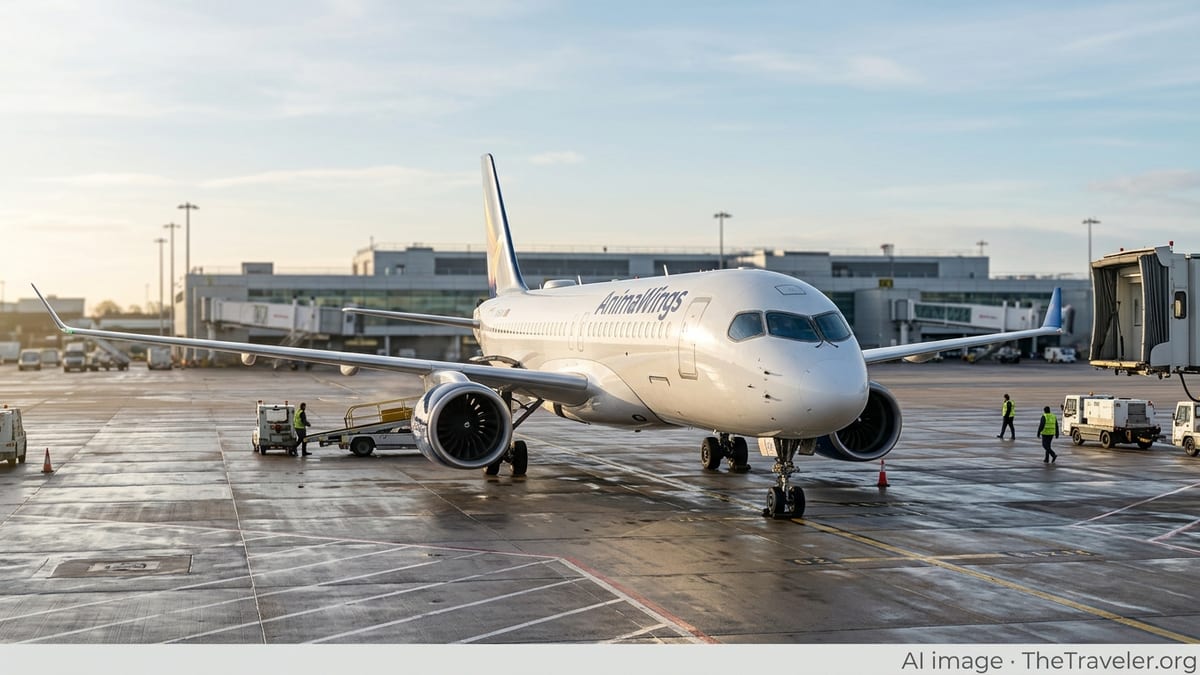
According to published coverage, the route is operated between Adolfo Suárez Madrid–Barajas Airport and Bucharest Henri Coandă International Airport, Romania’s primary international gateway. Flight data indicates that services are being flown with Airbus A320 family aircraft on a non-stop basis, with a block time of a little over four hours each way.
Reports indicate that Iberia has opted for a two-weekly schedule, with departures typically spread across the week to capture both short city breaks and longer holidays. The pattern is designed to support weekend trips from Spain to Romania as well as inbound tourism from Bucharest to the Spanish capital and onward destinations.
The seasonal nature of the launch reflects a broader trend in European aviation, where airlines increasingly deploy capacity flexibly during the summer peak. In this case, Iberia is focusing on June to September 2026, when demand for both city tourism and escape-to-nature trips in Romania is expected to be strongest.
A Strategic Addition Under Iberia’s Flight Plan 2030
The new Bucharest route forms part of Iberia’s wider Flight Plan 2030, the multi-year strategy that is reshaping the airline’s network across Europe and the Americas. Public information from the carrier highlights a clear focus on using Madrid as a central hub to connect emerging and established markets, including new European cities that can feed long-haul traffic.
As part of this roadmap, Bucharest joins other recent additions such as new North American and Latin American services. Reports on the strategy note substantial investment in fleet renewal and network expansion, with new and existing Airbus aircraft enabling Iberia to open thinner seasonal routes while maintaining efficiency and schedule flexibility.
Industry analyses suggest that Bucharest has been selected both for its local point-to-point potential and its ability to generate connecting flows. Travelers from Romania gain easier access to Iberia’s long-haul network via Madrid, while passengers from Spain and Latin America are offered a new gateway into Eastern Europe without the need to connect through central European hubs.
The decision to schedule the route over the height of summer is also aligned with Iberia’s broader commercial priorities. By concentrating capacity when demand is most robust, the airline can capture higher load factors, attract leisure travelers with competitive pricing, and test the route’s performance ahead of any potential extension or frequency increase in future seasons.
What the Route Means for Travelers in Spain and Romania
For travelers based in Spain, the direct Madrid–Bucharest flights open a convenient gateway to one of Eastern Europe’s most intriguing capitals. Bucharest combines grand boulevards and Belle Époque architecture with post-war modernism, while also serving as a jumping-off point for visits to Transylvania, the Carpathian Mountains, and Romania’s wine regions.
From Romania’s perspective, the new service deepens connectivity with Spain’s capital and the wider Iberian Peninsula. Passengers in Bucharest gain streamlined access to Spanish coastal destinations, as well as onward flights to Latin America, North America, and parts of Africa via Iberia’s Madrid hub, often with coordinated schedules and through-ticketing options within the oneworld alliance ecosystem.
Travel trend reports for 2026 point to continued growth in multi-country European itineraries, with visitors combining city and nature experiences in a single trip. The Madrid–Bucharest link fits neatly into this pattern, making it easier for visitors from the Americas to pair a Spanish getaway with an exploration of Romania on the same ticket and within a single network.
The route also supports growing diaspora and business links between Spain and Romania. Several hundred thousand Romanian nationals live and work in Spain, and direct flights during the busy summer period are expected to see strong demand from travelers visiting family, attending events, or returning home for holidays.
Competitive Landscape on the Madrid–Bucharest Corridor
The Madrid–Bucharest market is already served by low-cost and full-service carriers, and publicly available schedule data shows multiple operators offering non-stop flights between the two capitals. Iberia’s entry adds a legacy carrier option that integrates the route into a global network, differentiating itself through connectivity, frequent flyer benefits, and coordinated schedules at Madrid.
Observers note that competition on this corridor has intensified over recent years, with both established national airlines and low-cost groups vying for price-sensitive leisure travelers. Iberia’s decision to operate seasonally allows it to enter the market in a measured way, focusing on the months when competition is strongest but demand is also at its peak.
From a consumer perspective, increased competition typically translates into a broader range of departure times, fare options, and service standards. Travelers can now choose between ultra-low-cost offerings with minimal inclusions and a full-service product that includes network connectivity, tier benefits, and additional services within a single booking.
Market analysts suggest that Iberia’s presence could encourage further adjustments in capacity and pricing across the route as airlines respond to seasonal demand swings. Over time, performance during summer 2026 is likely to determine whether the new service returns in subsequent seasons with similar or expanded frequencies.
How to Make the Most of the New Summer Route
For travelers looking to book, the timing of the Madrid–Bucharest operation is particularly attractive for planning summer escapes. June offers milder temperatures and fewer crowds, July and August bring festival seasons and holiday buzz in both capitals, while September can provide lower fares and more temperate weather as the peak season tapers off.
Industry reports on fare trends note that seasonal routes often see a surge in bookings shortly after schedules are loaded, with prices typically rising as departure dates approach and aircraft fill. Travelers hoping to secure the most competitive fares on Madrid–Bucharest are therefore encouraged to monitor availability early in the season and be flexible with midweek departures when possible.
From Madrid, passengers can easily pair a Bucharest stay with stopovers in other Spanish cities before or after their Romanian trip, taking advantage of Iberia’s extensive domestic network. In the opposite direction, Romanian travelers can use the route as a springboard for itineraries that combine Spain with long-haul destinations, leveraging same-day or next-day connections at Iberia’s hub.
With the 2026 summer schedule now underway, the new Iberia service between Madrid and Bucharest stands out as one of the more notable seasonal additions in Europe, offering travelers on both sides of the continent a timely new option for city breaks, cultural exploration, and multi-country journeys.