


More news on this day
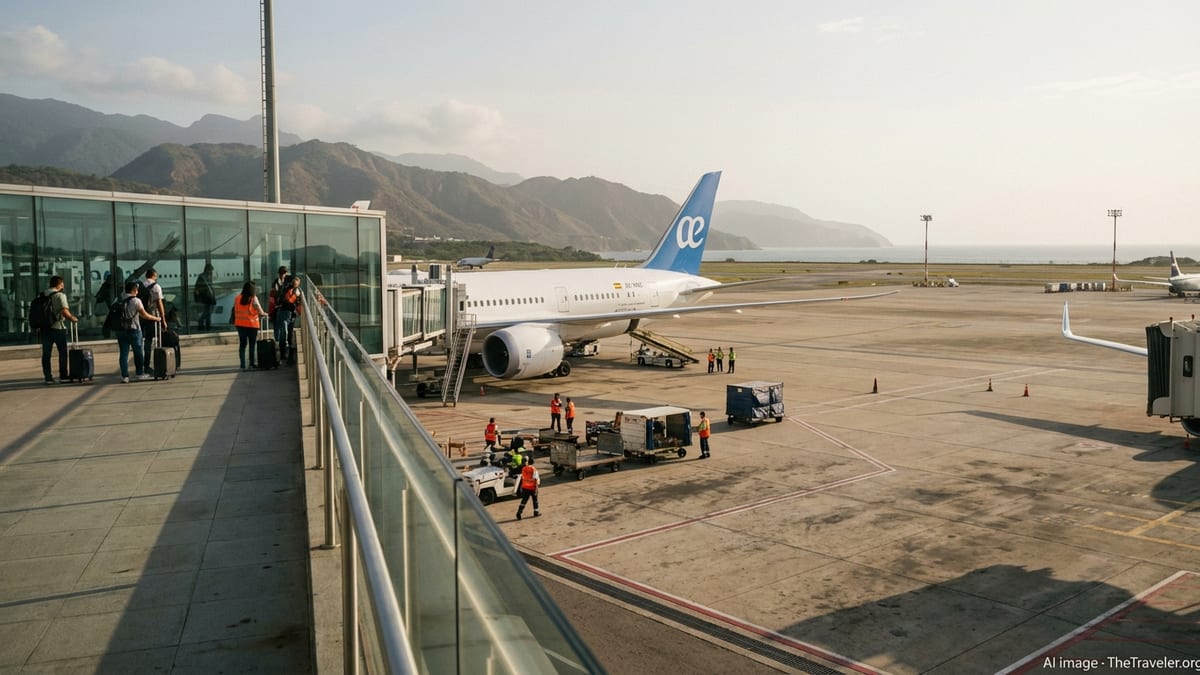
Madrid’s role as a bridge between Europe and Latin America is set to strengthen in summer 2026, as Iberia prepares a record seasonal schedule that adds capacity on key routes to Mexico City, Buenos Aires and São Paulo while opening a second Mexican gateway in Monterrey.
Get the latest news straight to your inbox!
New Monterrey route deepens Mexico connectivity
The headline change on the Mexico side of Iberia’s network is the launch of nonstop services between Madrid and Monterrey from 2 June 2026. Publicly available information shows that the route will operate three times a week during the summer season, giving northern Mexico a direct long haul link to Spain alongside existing services from Mexico City.
Industry coverage notes that Iberia already operates three daily flights between Madrid and Mexico City, a level typically associated with long established trunk routes. The addition of Monterrey is expected to push the airline’s total Mexico capacity beyond previous records for the market in 2026, with a focus on both business and visiting‑friends‑and‑relatives travel.
For travelers in Europe, Monterrey’s entry into the network provides a new one‑stop option into northern Mexico via Madrid, rather than backtracking through Mexico City or the United States. For Mexican travelers, it also offers more direct access to Iberia’s European and North African network, particularly for those based in the country’s industrial heartland.
According to published schedules, the Monterrey flights will be operated by widebody aircraft configured with business and economy cabins, aligning the product offering with Iberia’s other long haul Latin American services.
Mexico City, Buenos Aires and São Paulo get record summer capacity
Alongside the new Monterrey service, Iberia is framing summer 2026 as another capacity milestone on its core Madrid–Latin America routes. Company releases and trade coverage indicate that Mexico City, Buenos Aires and São Paulo will remain among the most heavily served destinations in its long haul portfolio.
On Mexico City, public information confirms that Iberia is maintaining three daily frequencies between the Mexican capital and Madrid into the 2025–2026 season, positioning the route as one of the busiest transatlantic city pairs in the airline’s network. When combined with Monterrey, this structure is designed to give Iberia a broad geographic footprint in Mexico without diluting frequencies on its flagship route.
In Argentina, Iberia has been steadily building frequencies to Buenos Aires in recent years. The latest summer plans point to up to 23 weekly flights in peak months of June, July and August 2026, compared with 21 weekly frequencies previously. That translates into more daily options in both directions and increased resilience in case of disruptions, as additional departures make it easier to re‑accommodate passengers.
São Paulo, Brazil’s largest city, has similarly emerged as a high priority market. Iberia has already lifted the route to two daily flights and, according to route and capacity summaries, is planning to sustain that level across the first half of 2026. Together, the Madrid–São Paulo and Madrid–Rio de Janeiro services underpin a broader expansion in Brazil, where overall capacity is set to rise by about a quarter compared with earlier years.
Madrid consolidates its hub role between Europe and Latin America
The 2026 schedule developments are part of a longer term strategy in which Madrid functions as a primary connection point between Europe and Latin America. Iberia’s published data for upcoming seasons highlight record overall capacity on this corridor, with millions of seats on offer and more than 350 weekly flights to the region in the 2025–2026 winter alone.
Summer 2026 extends that pattern by layering additional flights onto high demand routes while adding new destinations such as Monterrey and Brazilian secondary cities. The approach is intended to allow travelers from across Europe to reach Latin American cities with a single connection through Madrid, using carefully timed banks of arrivals and departures.
Travel industry analyses describe Madrid Barajas as one of the few European hubs where Latin American traffic outweighs other long haul segments, giving Iberia an incentive to keep expanding in markets like Mexico, Argentina and Brazil. The airline’s current strategic roadmap, branded as a multi‑year growth plan, foresees annual capacity increases and further reinvestment in fleet and product to support this focus.
For tourism boards and local economies in Latin America, the increased seat supply from Madrid is expected to support both inbound European tourism and outbound travel to Europe. Additional frequencies tend to improve connectivity beyond the main gateways as well, since regional flights can be timed more flexibly around the long haul services.
Fleet renewal and competitive dynamics behind the expansion
Fleet modernization is a central factor enabling Iberia’s summer 2026 Latin America build‑up. Public filings and investor presentations highlight the arrival of new long range aircraft, including additional Airbus A350s and A321XLR narrowbodies, which offer lower operating costs and extended range compared with older models.
The A350s, deployed on high demand routes such as São Paulo and Rio de Janeiro, add capacity and improve fuel efficiency, while also providing a more modern onboard product. On thinner or newly developed routes, long range narrowbodies like the A321XLR are expected to play a growing role, making it financially viable to serve destinations that might not sustain a daily widebody service.
Competitive pressures across the Atlantic also underpin Iberia’s strategy. Other European and Latin American carriers are adding capacity in key markets, and low cost long haul operators continue to probe transatlantic opportunities. By reinforcing routes such as Mexico City, Buenos Aires and São Paulo with multiple daily frequencies, Iberia aims to secure market share and maintain Madrid’s status as a preferred gateway for connecting traffic.
Analysts note that higher capacity can translate into more fare options for travelers, though final pricing will depend on demand, exchange rates and broader economic conditions in Spain, Mexico, Argentina and Brazil. Early indications from booking trends suggest that leisure and visiting‑friends‑and‑relatives segments remain robust, even as corporate travel continues to recover.
What the changes mean for travelers in summer 2026
For travelers planning trips between Europe and Latin America in summer 2026, the Madrid‑centered expansion translates into more choice and potentially smoother itineraries. Additional departures on the Madrid–Mexico City, Madrid–Buenos Aires and Madrid–São Paulo routes increase the chances of finding schedules that align with onward connections within Europe or Latin America.
The new Monterrey service is likely to appeal to passengers in northern Mexico who previously faced domestic connections through Mexico City or routings via U.S. hubs. At the same time, European leisure travelers gain a more direct entry point into a region of Mexico that has been underrepresented on long haul maps compared with beach destinations and the capital.
Observers point out that greater capacity does not necessarily guarantee lower fares across the board, especially during peak travel periods such as European summer holidays or major events in Latin America. However, the presence of multiple daily flights on core city pairs can help keep markets competitive and give travelers more flexibility to adjust plans when needed.
As schedules for summer 2026 continue to firm up across the industry, Iberia’s moves on the Mexico City, Buenos Aires and São Paulo routes, combined with the launch of Monterrey, underline how important the Madrid–Latin America axis has become for both tourism and business travel on the Atlantic corridor.