


More news on this day
Athens International Airport is grappling with a fresh wave of disruptions as reduced arrival capacity, mounting flight cancellations and parallel transport stoppages combine to create severe travel chaos for passengers across Greece at the start of the peak summer season.
Get the latest news straight to your inbox!
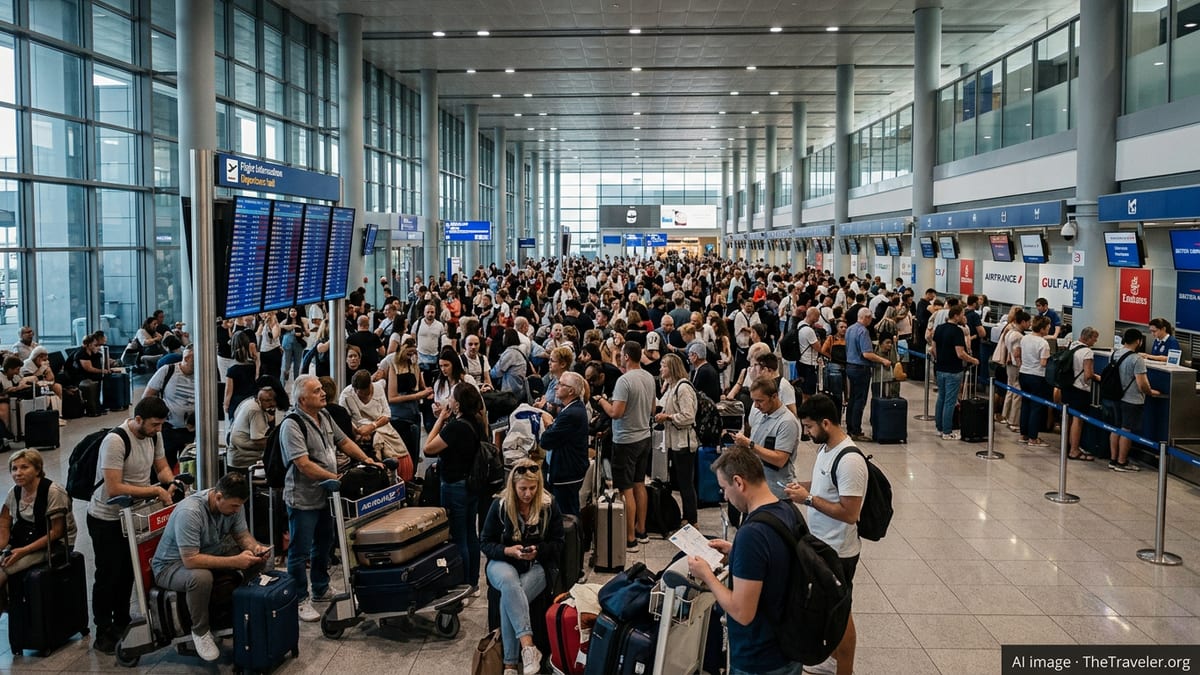
Capacity Squeeze at Athens Turns Routine Delays Into Systemic Gridlock
Publicly available operational notices indicate that arrival capacity at Athens International Airport has recently been reduced by roughly one quarter, a change that has sharply constrained how many aircraft can land each hour. While departures continue, this reduced flow of inbound flights is creating knock-on congestion on the ground and in surrounding airspace, especially during busy morning and evening banks.
Tracking data and passenger reports show a growing cluster of delayed and cancelled services on key domestic and regional routes, including flights linking Athens with island gateways such as Mykonos, as well as services to major hubs like Rome and other European capitals. Even where flights are not fully cancelled, extended holding patterns and late aircraft rotations are leading to missed connections and last-minute rebookings.
Airport statistics released for the first four months of 2026 already documented a rise in total traffic compared with the previous year, leaving fewer margins in the system to absorb any capacity restrictions. Against this backdrop of higher volumes, the latest operational squeeze is amplifying the impact of each individual disruption, turning localised problems into wider schedule instability.
The situation comes only months after a nationwide airspace shutdown linked to interference on aviation radio frequencies, an episode that highlighted the vulnerability of Greece’s aviation infrastructure. Although the current disruption at Athens is more limited in scope, the memory of that earlier stoppage is adding to traveller anxiety and magnifying concern about system resilience just as summer demand accelerates.
Cancellations Cascade Through Greece’s Domestic and Island Networks
As Athens struggles with reduced arrival slots, domestic links that depend on tight aircraft rotations are proving particularly fragile. Flight-planning databases show that carriers serving popular island destinations operate many short legs per day using the same aircraft, which means that a single heavily delayed arrival in Athens can ripple through an entire daily schedule.
Reports from regional airports suggest that some services to and from Athens are being cancelled outright when delay margins are exhausted, leaving passengers stranded overnight or forced to accept multi-stop routings via other European hubs. Travellers heading to islands for holidays, weddings or cruise departures are among those most exposed, as alternative same-day connections are often limited or fully booked in early June.
In response to mounting pressure on peak-season capacity, at least one leisure-focused carrier has already moved to wet-lease additional aircraft ahead of the main summer months, with the stated goal of preventing further cancellations and shoring up schedules to and from Athens. This strategy underlines how seriously airlines view the risk of continued disruption, even as they emphasise that most flights are still operating.
Travel forums and social media posts from the past few days reflect a sharp rise in last-minute itinerary changes, with passengers describing rebookings through secondary regional airports, extended layovers in Athens and uncertainty over baggage handling when switching carriers at short notice. For many visitors, the combination of fragmented information and evolving schedules is proving as stressful as the delays themselves.
Strikes, Sea Disruptions and Infrastructure Bottlenecks Deepen the Paralysis
The aviation problems are unfolding in parallel with transport disruptions in other parts of Greece’s network, intensifying the sense of a country-wide travel squeeze. On Friday, an Attica-wide strike by seafaring unions led to the suspension of sailings from the key ports of Piraeus, Rafina and Lavrio, interrupting ferry links that many travellers rely on as a backup when flights are delayed or cancelled.
Simultaneously, new airspace notices have imposed stricter movement limits at heliports feeding Athens and the islands, effectively bottlenecking much of the country’s helicopter traffic. Aviation-focused coverage notes that heliports funnelling a large share of island-bound helicopter transfers are now operating under tighter slot controls during the core summer period, curbing one of the fastest alternatives for high-end travellers and urgent transfers.
These overlaps mean that when passengers lose a seat on a domestic flight from Athens, traditional fallback options such as ferries or helicopter transfers are not always available on the same day. For travel planners tasked with moving tour groups, cruise passengers or conference delegates, the combination of constrained air operations and curtailed sea links is creating an unusually complex puzzle.
The disruptions are also reverberating into ground transport, as travellers scramble to secure last-minute hotel rooms around the capital and nearby ports, or turn to intercity buses and car rentals to bridge gaps in their schedules. Urban traffic around Athens and port approaches has intensified during strike windows and peak arrival waves, adding another layer of unpredictability for those trying to connect between modes.
Tourism Sector Faces Test as Peak Season Begins
Industry data for early 2026 points to robust growth in passenger numbers across Greek airports, with Athens International Airport and regional gateways all reporting year-on-year increases. Hotel occupancy projections for June and July in key destinations such as the Cyclades and Crete have been strong, indicating high dependency on a smoothly functioning aviation system to deliver visitors on time.
Tourism bodies and local business associations are closely monitoring how prolonged disruption at Athens, combined with intermittent strikes in other sectors, might affect travel sentiment. Recent international coverage of European-wide flight cancellations and fee-related schedule cuts has already fuelled concerns among some travellers about reliability across the continent, and Greece’s current challenges risk becoming part of that broader narrative.
Travel insurers and consumer groups are reminding passengers to review policy terms around strikes, air traffic issues and cascading cancellations, noting that coverage can vary widely depending on whether disruptions are deemed extraordinary. While airlines continue to offer rebookings and, in some cases, accommodation, the burden of navigating complex claim procedures often falls heavily on individual travellers.
For now, publicly available booking data still suggests that demand for Greek holidays remains strong, but the coming weeks are likely to determine whether this early-season turbulence becomes a short-lived shock or a sustained drag on the country’s vital tourism revenues.
What Travellers Need to Know as the Situation Evolves
Passenger guidance from airport and airline channels continues to emphasise early arrival at Athens International Airport, with recommendations typically starting at least two and a half hours before departure and longer for long-haul or self-connecting itineraries. Given the heightened risk of disruption, travel planners are increasingly advising against tight self-made connections through Athens, particularly when linking low-cost domestic flights with separate long-haul tickets.
Observers suggest that travellers build additional time buffers into itineraries involving island connections, consider overnighting in Athens before important international departures, and prepare for potential last-minute changes to aircraft types or routings as carriers adjust operations day by day. Flexible hotel bookings and refundable ground-transport reservations are also being encouraged where possible.
For those already in Greece, monitoring airline apps, airport information boards and official communication channels remains essential. In recent days some passengers have reported receiving rebooking notifications only a few hours before departure, underlining the importance of staying reachable by email and mobile and checking flight status repeatedly in the 24 hours before travel.
With summer travel now ramping up, the evolving situation at Athens International Airport has become a key barometer of how well Greece’s wider transport system can withstand operational shocks. Whether the current wave of cancellations and capacity cuts will ease in the coming weeks or harden into a defining feature of the 2026 holiday season is likely to depend on how quickly underlying constraints in air traffic management and intermodal connectivity can be addressed.