


More news on this day
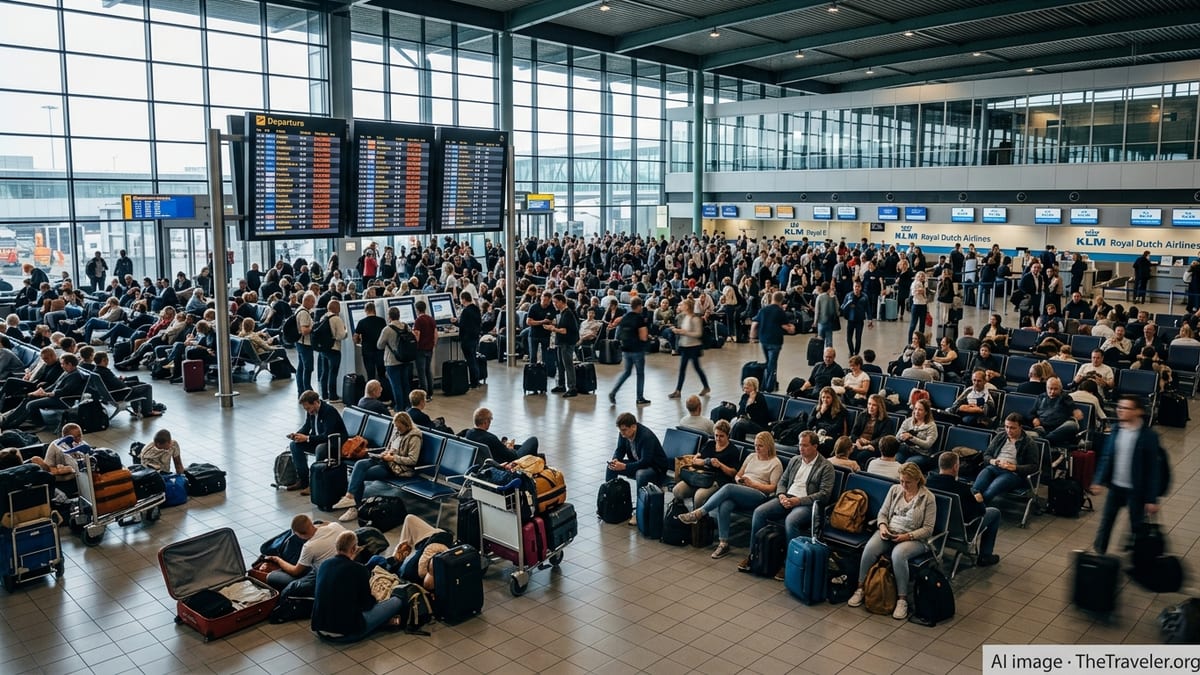
A new surge of KLM flight cancellations at Amsterdam Schiphol on June 5 has triggered fresh scenes of confusion and disruption, with passengers facing long delays, missed connections, and an already stretched hub once again under pressure.
Get the latest news straight to your inbox!
Fresh Disruptions Hit Europe’s Busiest Transfer Hub
Amsterdam Schiphol began Friday, June 5, with a noticeably disrupted departure board, as multiple KLM services were marked cancelled or severely delayed. Flight information services showed several KLM-operated routes from the Dutch hub, including regional European services, withdrawn from the schedule at short notice while others departed late after extended ground holds.
One example was KLM flight KL1363 to Budapest, scheduled to depart at 08:40 local time and later listed as cancelled, highlighting how early-morning schedule changes rippled into the rest of the day’s operations. Other KLM flights, such as KL1503 to Madrid, did depart, but against a backdrop of irregular operations that left travelers uncertain about whether their own services would operate.
The latest disruption follows a difficult year for Schiphol. Earlier in May, Dutch media and aviation trackers reported hundreds of delayed flights as security queues and border checks slowed passenger processing, further eroding confidence in the hub’s reliability. Those earlier delays provided a stark preview of how quickly Schiphol’s tightly timed system can seize up when any part of the operation comes under strain.
Travel forums and social media posts on Friday echoed familiar complaints, including long lines, scarce information at gates, and confusion over rebooking options. While some passengers were automatically reassigned by the airline’s systems, others reported extended waits and uncertainty over when they might continue their journeys.
From Targeted Cancellations to Network Strain
The latest round of cancellations at Schiphol comes on top of a complex set of pressures already facing KLM’s network. In recent days, the carrier has been adjusting long-haul schedules in response to evolving health and regulatory developments, including a temporary suspension of services between Amsterdam and Uganda amid Ebola-related travel restrictions. Publicly available reporting indicates that several flights on this route, including services on May 30, June 1, and June 3, were cancelled as part of a two-week operational halt.
These targeted long-haul cancellations have added to a year marked by weather disruptions and operational bottlenecks at KLM’s home base. In January, heavy snow and icy conditions forced the cancellation of hundreds of flights at Schiphol over several days, prompting the airline to proactively cut dozens of services in an attempt to stabilize the operation and preserve remaining connections. Passengers at the time described days of queues and rebookings, with some travelers stranded in the terminal while bags piled up in storage areas.
Industry-focused analyses of KLM’s performance in early 2026 note that the airline has increasingly relied on preemptive cancellations to avoid cascading delays across its banked hub structure. While such decisions can protect safety and reduce system-wide gridlock, they also concentrate the impact on specific departures, leaving affected passengers searching for alternatives at short notice and sometimes facing overnight stays.
The result is a network under sustained stress. Each new wave of cancellations or schedule changes reduces the margin for recovering subsequent rotations, especially during peak travel periods. For connecting passengers who rely on Amsterdam as a European gateway, even a single missed link can unravel complex itineraries spanning multiple continents.
Schiphol’s Structural Vulnerabilities Resurface
The renewed travel chaos on June 5 underlines persistent vulnerabilities at Amsterdam Schiphol. Despite ongoing efforts to improve capacity planning and passenger flow management, the airport remains sensitive to staffing fluctuations, security bottlenecks, and weather-related constraints that can all trigger widespread schedule disruption.
Recent reporting from Dutch outlets has highlighted the impact of contractor transitions and staffing shortages at security checkpoints, which contributed to almost 300 delayed departures on a single day in mid-May. Long queues at security, combined with tight departure windows, created a knock-on effect that spilled into airline punctuality statistics and forced carriers like KLM and Delta to juggle aircraft and crews throughout the day.
These latest KLM cancellations revive memories of earlier crises, when snow, de-icing shortages, or rapid shifts in demand left Schiphol struggling to cope. During past episodes, hundreds of flights were scrapped in a matter of days, exposing the limits of the airport’s resilience and sparking debates in the Netherlands about infrastructure investment, environmental constraints, and the optimal size of Schiphol’s operation.
For travelers, the distinction between airport and airline responsibility can be hard to parse. Discussions on public forums during previous disruptions frequently blurred the line between Schiphol’s control of security and runway capacity and KLM’s decisions on which flights to prioritize, rebook, or cancel outright.
Passenger Fallout and Rebooking Challenges
As Friday’s cancellations accumulated, the human impact became clear in firsthand accounts shared online. Passengers described scrambling to rebook flights through airline apps, call centers, and airport desks, often competing for the same few remaining seats on alternative departures. Some travelers reported being advised to arrange their own accommodation while awaiting updated itineraries, adding to the financial and emotional toll of the disruption.
Recent experiences detailed in travel communities suggest that automatic rebooking systems can be slow to respond during major irregular operations, particularly when multiple days of flights are affected. Travelers who proactively seek alternative connections or even switch to rail for short- and medium-haul segments sometimes fare better than those waiting passively for updates.
Guidance published by KLM emphasizes that passengers should monitor flight status closely in the airline’s app or their booking profile, especially when traveling via Schiphol during periods of known disruption. In previous weather-related crises, the carrier has urged customers not to come to the airport until they have a confirmed departure, in an attempt to avoid overcrowding terminals with travelers whose flights are unlikely to operate.
However, the experience of many passengers during past and current waves of cancellations suggests that communication gaps remain. Uncertainty over entitlement to hotel stays, meal vouchers, and compensation under European regulations continues to spark frustration, particularly among international travelers unfamiliar with local rules.
What Travelers Should Expect in the Coming Days
While Friday’s disruption originated with a cluster of cancellations and delays concentrated on June 5, the effects are likely to extend beyond a single day. Experience from earlier episodes at Schiphol indicates that once rotations are disrupted, aircraft and crews can be out of position for several days, complicating scheduling and reducing spare capacity for recovery.
Passengers due to travel through Amsterdam in the near term may encounter tight seat availability on popular routes, longer minimum connection times, and a higher risk of missed onward flights if inbound services arrive late. Reports from recent disruptions show that even when the airport’s departure board appears relatively stable, residual delays can continue to affect baggage delivery and turnaround times.
Travel analysts note that the combination of regulatory health measures, weather volatility, staffing challenges, and tight hub schedules has left many European airlines with little operational slack. For KLM, whose business model is built around dense waves of connections through Schiphol, that means even localized issues can quickly balloon into wider network problems.
For now, publicly available information points to a familiar set of recommendations for anyone transiting Amsterdam. Monitoring flight status repeatedly before leaving for the airport, considering longer connection windows, and having contingency plans such as rail alternatives on key European legs can all help reduce the risk of becoming stranded if another round of cancellations hits the hub.